What if Satan wants to destroy the Church more than the country?

In the book of Revelation the Church is not called to react to the End or the antichrist by moralistic, militaristic, or political means. The Church is called to return to Messiah Jesus, remembering that those who continue faithful to the End will receive the “crown of life.” The way of resistance of evil, is the way of Christ. That is, loving Christ Jesus, and loving others. Taking up our crosses and following Jesus and loving others, even when it hurts, is a sure sign that we don’t and won’t have the “mark of the beast.”
What if the clearest mark of the beast is the mark of hatred and hostility? Many have thought it stood for Nero (the numerical value of 666), and perhaps it did in a way. He was, as history showed, marked by the beast. He was, as history showed, like his father the devil. He was proud and unloving, destructive and devilish.
Is not the mark of the Messiah, the mark of beatific love?1 Do not His followers, follow Him? If Jesus is love, should not His followers be loving?!2
“Love is patient, love is kind. It does not envy, it does not boast, it is not proud. It does not dishonor others, it is not self-seeking, it is not easily angered, it keeps no record of wrongs. Love does not delight in evil but rejoices with the truth. It always protects, always trusts, always hopes, always perseveres” (Corinthians 13:4-7).
And would it not make sense that the converse also follows? If the mark of the Messiah is true sacrificial love, is not the mark of the antichrist hatred? And what if the serpent of old, the father of lies, the great deceiver, is adept at what he does? And what if he wants to destroy and divide even what Messiah Jesus died to bring together? And what if he even uses the means of media and the marketplace and various views on certain medical opinions regarding COVID-19? What if?…
And what if the worst thing that can happen to Christians is not that they’d lose earthly freedom(s), but that they’d lose heavenly crowns? not that their earthly country would be divided, but that their heavenly one would be? not that they’d have to wear a mask, but that they’d have a mask put over their eyes? What if Satan’s not primarily trying to destroy a country, but what if he desires to destroy Christians and Christian witness? What if Satan doesn’t want the nation to descend into debauchery, but wants Christians to be desensitized to their hatred and fear?
Revelation also talks a lot about Babylon. Babylon was what a lot of people cared about and had their hopes fixed on. However, Christians, are marked by and are members of a different city. Christians have their hope wrapped up in a city, but it’s a different city, a city that comes down from heaven, a city that couldn’t be built here. It’s beyond and better than here.
Christians live, labor, and love in Babylon, but they’re waiting for something better. They’re waiting for Jerusalem to come down.
Christian brothers and sisters, are you showing the mark of your Savior? The characteristics of Christ? The mark of your true city? Or, are you too wrapped up here? Are you betting on Babylon3 or are you “looking forward to the city with foundations, whose architect and builder is God”?!
We, as Christians, are sojourners here in Babylon. Our time is short. Let’s be a blessing as Scripture exhorts us (Jeremiah 29:7). But, let’s remember, any castle we build with our hoarded cash, will soon wash away with the tide of time. Let’s not lay up hoards here or place our hope here. But in heaven.
1 Ephesians 1:13 tells us that all who are in Messiah Jesus have been sealed (or marked?!) with the promised Holy Spirit. Notice also that it is the Holy Spirit in Jesus followers who produces the fruits of the Spirit, one of those fruits being love.
2 God alone provides access to the Garden of Eden and the pathway there is through the Golgotha of sacrificial love.
3 If politics has you overly down, perhaps it’s because you placed your hope in a ship that must inevitably sink.
How to Evaluate Christian Leaders?

Recently, I’ve seen a lot of Christian leaders be criticized or criticize, and even call other Christian leaders names because of disagreement on such things as politics, the pandemic, and policies regarding justice. And not surprisingly, those who are not leaders are also jumping into the fray and lobbing grenades too.
How many people, however, actually think through the appropriate way to evaluate Christian leaders? And how many people know what reasons Scripture gives for concern? How many Christians have a sort of theological triage they use to evaluate and make these important decisions?
There are doctrines of “prime importance and great weight” that we must insist on.[1] “There is a time to fight. There are certain hills that must not be surrendered, even if the cost is losing our lives.”[2] Some of the hills that we must be willing to die on are the deity, life, death, resurrection, and Second Coming of the Lord Messiah Jesus.
Other doctrines, beliefs, and convictions are, or should be, a little further down the list of importance. Just as a doctor would jump to help the patient with a gunshot wound to the chest before she would help someone with a broken pinky finger. It is not that the pinky finger is not important; it is that the gunshot wound is more important and dire.
So, let’s look at some biblical criteria by which to evaluate Christian leaders. It should be understood that these criteria do not have the same weight. The criteria of “Christology,” for example, should be given more weight of importance than “Clarity.”
1. Christology (& sound doctrine)
Christian leaders have the duty to communicate God’s transforming truth, exalt Jesus Christ, teach the Bible so that people understand and apply what God has said, and encourage conformity to Christ (see e.g. Neh. 8:7-8; 1 Tim. 3:2). Faithfulness to the revelation of God and preaching Christ are paramount (Col. 1:28). If the word of God and Jesus the Messiah are not being preached then you have reason for concern.
If false or unhealthy things are said or taught about God, His word, or Jesus the Messiah then you have great reason for concern and should share your concern and likely leave that individual’s leadership. It is important that we are aware that leaders sometimes don’t preach the truth. Peter told us that there will be false teachers among us, who will secretly bring in destructive heresies, even denying the Master who bought us (2 Pet. 2:1).
“If anyone teaches a different doctrine and does not agree with the sound words of our Lord Jesus Christ and the teaching that accords with godliness, he is puffed up with conceit and understands nothing. He has an unhealthy craving for controversy and for quarrels about words, which produce envy, dissension, slander, evil suspicions” (1 Tim. 6:3-4).
So, in evaluating a Christian leader, ask yourself:
- “Does this person preach/teach true, healthy doctrine? Does this person preach/teach the goodness and glory of Messiah Jesus?”
Don’t ask:
- “Do I like the style etc. of the person?”
See also: Deut. 13:1-5; 1 Jn. 4:1-3; 1 Cor. 12:3; Col. 1:28; 2:8 2 Thess. 2:15; 1 Tim. 1:10; 2 Tim. 1:13; 4:3; Titus 1:9, 13.
2. Character
The leaders own life should be in order. That is, the leader should have Christ-like character. Leaders and teachers can “profess to know God” and yet “deny Him by their works” (Titus 1:16). That’s partly why it’s so important that Christian leaders meet the biblical qualifications (1 Tim. 3:1-13; Titus 1:1-9).
Rule #2: Don’t worship fake gods, they’re fake.

“You shall not make for yourself an image in the form of anything in heaven above or on the earth beneath or in the waters below. 5 You shall not bow down to them or worship them; for I, the Lord your God, am a jealous God, punishing the children for the sin of the parents to the third and fourth generation of those who hate me, 6 but showing love to a thousand generations of those who love me and keep my commandments” (Exodus 20:4-6).
Rules are given for a reason. We may not always like them but as we saw last week, rules are good. It is no different this week as we look at rule #2.
The rule this week—don’t worship fake gods, they’re fake—just kinda makes sense. We can just see that it makes sense. We may not at first see, however, how common it is for us to disregard this rule. We disregard it all the time. Even though we may not even know it.
This rule comes with caution. If we don’t listen there’s trouble. So, we’ll look at the warning. But, on the positive side, it also comes with a promise of blessing to those who keep it.
1) The Rule (v. 4)
“You shall not make for yourself an image in the form of anything in heaven above or on the earth beneath or in the waters below. 5 You shall not bow down to them or worship them.”
What’s the big deal? I mean, I get not bowing. That seems weird. But why can’t week make stuff?
The Bible does not mean we can’t make things like painting, portraits, or sculptures. We know this because just a little bit later in Exodus God tells His people to make various things (e.g. Ex. 25:18-20, 33-34). The Bible means don’t make things that will lead you or someone else away from worshiping God, and worship Him in the right way, the way He has told us to worship Him.
As John Frame has said, “It is the misuse of an image that God condemns, not its existence or presence.”[1]
God is invisible so we are not to try to make visible by making images of Him (cf. Deut. 4:15-19). God is living (e.g. Deut. 5:26; Josh. 3:10) so we can’t represent Him with something that is not. Unlike idols, for the one true God, “there is no assembly required.”[2]
God is. He is that He is.
As Acts 17:24-25 says, “The God who made the world and everything in it is the Lord of heaven and earth and does not live in temples built by human hands. And He is not served by human hands, as if He needed anything. Rather, He himself gives everyone life and breath and everything else.”
It is important that we worship God in the way He has told us to. For one reason, as Albert Mohler has said, “The wrong worship implies the wrong god.”[3] It implies that He is not Lord of the universe. But He is. So, we must worship Him in the right way.
The Work of the Spirit | pt. 3
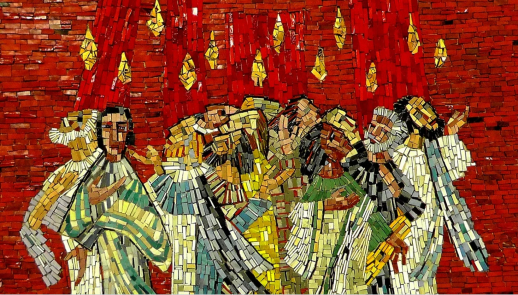
In the last post, we looked at “God the Spirit and the Filling of the Spirit.” In this post, we will be looking at…
Grace Gifts
Next, we need to understand that God the Spirit gives “grace gifts.”[1] God’s abundant grace that we see demonstrated all throughout redemptive history issues in grace gifts.[2] God expresses His grace concretely in the rich number of grace gifts He bestows upon the Church for its upbuilding.[3] Schreiner observes this and says, “I would define spiritual gifts as gifts of grace granted by the Holy Spirit which are designed for the edification of the church.”[4]
The Spirit was vital at the beginning of the church and He continues to be on through to the consummation. He brought the birth of the Church, He hovered over the Church like He hovered over the water at the beginning. The Spirit does not bring charismatic chaos but the creation of order. That was the Spirit’s work at the beginning and it is the Spirit’s work today. There is no biblical warrant for believing in some big discontinuity between the work of the Spirit then and the work of the Spirit now in the last days. Actually, Scripture says, “in the last days I will pour out my Spirit on all flesh” (Acts 2:17). We are in those latter days today and we still need the empowering presence of the Spirit.
The hodgepodge, unlearned, and often unimpressive group of Jesus followers did not see the messianic movement die. Instead, the people of the way (Acts 9:2) actually exploded in growth, this group of people that followed a crucified and cursed man who claimed to be God, this group of people who had no leader on earth. How did this group survive let alone thrive?
Because Jesus did not leave His disciples without what they needed. Jesus sent the Helper.
Jesus said, that it was better that He go. That seems shocking. As it should. And as it did for the first disciples. We are left asking, how could it be better that Jesus’ bodily presence not be with us?
Thankfully Jesus answers that question. He tells us that He will not leave us as orphans. He gives us the Helper, the Holy Spirit, to be with us (See John 14).
The Grace Gifts Continue Today
“You shall receive power when the Holy Spirit comes upon you; and you will be My witnesses” (Acts 1:8[5]). Will we? Will we receive power?
“Hello, My Name is ______ and I am Transformed”

This post is from chapter 11, “Hello, My Name is _____ and I am an Addict Transformed,” from my book, Gospel-Centered War: Finding Freedom from Enslaving Sin.
The Bible does not deny that we were various things—addicts, homosexuals, hateful, prideful, pornographic masturbators—but that is what we were (past tense) (1 Cor. 6:9-11; Titus 3:3-5). The emphasis in Scripture is on what we are and what we are called to be. The Christian does not say, “Hello, my name is _____ and I am an X Y or Z.” The Christian says I was dead, but now I am alive. The Christian says I am a struggling sinner, yet I am a saint. The Christians says, I am a new creation; I am transformed.
We must remember however that we are “simultaneously saint and sinner.” This is the biblical balance. We are holy in Christ and yet we are progressively becoming holy (see 1 Cor. 1:2; Heb. 10:14). I like how John Owen says it: We, who are freed from the condemning power of sin, ought yet to make it our business all our days to kill the indwelling power of sin.[1]
Paul wrote a letter to a church located in Ephesus back in the day. The people there had many struggles. Many of them use to worship various false gods and perhaps were even involved in cult prostitution. But you know what Paul called them when he wrote to them? He called them “God’s beautiful creation,” “God’s masterpiece” (Eph. 2:10). He didn’t say, “Now church, make sure that you are constantly reminding yourselves that you were part of the occult. In fact, when you meet together say, ‘Hello, my name is ______ and I am an occultist.’” No! He said, “You are new! In Christ! Transformed!”
One of the problems in claiming the identity of “addict,” “alcoholic,” or “overeater” is that we deny that addiction is a habit that can be finally overcome. I am not saying it won’t be a struggle. I am not even saying that it will even finally be overcome in this life. Yet, the Bible teaches the freeing and empowering truth that in Christ we are currently a new creation. It says we are adopted children of God. We are even God’s beloved; His treasure.
Labeling may not seem like a big deal but it is. In hospitals, it is important for people to be labeled correctly. If someone has a gunshot wound on their leg, they should not be taken to a cardiologist and someone that has the flu, they should not be life-flighted. Labels are important for treatment. Labels are important for our own treatment. The treatment of ourselves. How we look at ourselves, talk to ourselves, think of ourselves.
He is the Faithful God

“Know that the LORD your God is God, the faithful God who keeps His gracious covenant loyalty for a thousand generations with those who love Him and keep His commands” (Deuteronomy 7:9).
How surprising and sad that we need to be reminded so often of God’s truth. And yet we do. I’m thankful that God accommodates to our forgetful ways.
We are told to know something. Our knowledge is not to be merely intellectual. Though it is intellectual. We need to know actual things about God. In this verse, we are to grasp with our minds that the LORD God is actually God.
It is not only that the LORD is really God but that the LORD your God is really God. There is a relational aspect to our knowledge of God. The LORD your God is the supreme being and Creator of the universe. The LORD is not distant and uncaring, He is not a god, but our God.
Wow. That’s a game-changer.
It doesn’t stop there, though.
The supreme being and Creator of the universe that is our God is also faithful. Amazingly faithful.
Deuteronomy 7:9 heaps good news upon good news. If you have the LORD as your God then that means that God—The supreme being and Creator of the universe—is your God. It means the Faithful One is your God.
Our intellectual knowledge of God has a huge practical impact on our lives. It means we do not need to be afraid because the LORD our God is powerful (Deut. 7:18).
So, fight forgetfulness. Work to remember and intimately know your faithful God. And don’t be terrified because the LORD your God, a great and awesome God, is among you (Deut. 7:21).
The ten most popular posts of 2019…

An Easter Devotional
I wrote the blog series, “Psalms of our Suffering Savior,” to help us “remember Jesus Christ, risen from the dead” (2 Tim. 2:8)…
A Brief Theology of Emotions

We all have emotions. How often do we consider emotions from a biblical perspective though?… Yet, what better place to turn than God’s word! So, what does the Bible say about emotions?…
Holding on to Hope: 10 Actions Steps to Fight Depression
 1. Call out to God
There are all sorts of Psalms in Scripture in which the psalmist calls out to God in distress. The Bible encourages us to call out to God and be real with Him about where we’re at…
Proof of God’s Grace #1: Planned Grace

The Bible shows us over and over again proof of God’s abundant grace. Here we are going to look at the acronym PROOF[1] to look at God’s grace. We are going to look at: Planned grace, Resurrecting grace, Outrageous grace, Overcoming grace, and Forever grace.
Why is it important that we consider the proof of grace? First, because when we understand all the proof of God’s grace we praise and glorify God for His abundant grace. Second, anything that is the teaching of Scripture is important and profitable for us to understand (2 Tim. 3:16-17). Third, when we understand the extent of God’s grace it humbles us. Fourth, when we understand more of the extent of our desperation we will (or should) love God more (Lk. 7:47).
The Hospitality of God and our Hospitality

First, what even is hospitality? What does it mean? It means “love for the stranger” or “to befriend a stranger.”[1] One definition says hospitality is having “regard for one who comes from outside one’s group.” That is exactly what God has done for us. God is perfectly holy and exalted and yet He has regard for us.
The Lord God has regarded us—loved us—even welcomed us into the Triune fellowship (see e.g. Jn. 20:17), we who were sinners and strangers. And He did so with great cost to Himself.[2] And we see from the Gospels that Jesus was a friend (philos) of those we would expect to remain strangers and outsiders, people like tax collectors and other sinners (see Matt. 11:19), sinners like you and me.[3] And so Paul says, “welcome one another as Christ has welcomed you, for the glory of God” (Rom. 15:7).
When we understand the amazing hospitality of God we will find it easier to love and welcome people in. Understanding the hospitality of God is essential as we think about the hospitality that we are called to practice. Because, in one sense, hospitality is supernatural. It is certainly not natural to us. We need to meditate on the hospitality of God if we hope to be hospitable as we are called to.
It is true, however, that even “secular people” who don’t know God’s love show surprising generous hospitality (cf. Acts 28:2,7[4]). So, how much more should Christians, who have been welcomed in by God with great expense, welcome in and love others?
The LORD has shown undeserved love to us in Christ may we show love to others (Ex. 23:9; Lev. 19:18, 34; Deut. 10:17-20).
Theology of Public Worship

Worship must be carried out according to God’s revealed will. We want to worship God in the way that He has prescribed as best as we possibly can.[1] So, we want our worship to be drenched in Bible. We want every aspect to pour out biblical truth.
Public worship must succeed as much as possible in carrying out what God has given us in His word to do. We should acknowledge, however, that “The New Testament does not provide us with officially sanctioned public ‘services’ so much as with examples of crucial elements.”[2] Even though it is true that the New Testament does not give us “a complete manual of liturgics,”[3] it does gives us clear things that we are to do.[4]
The Great Commission in Matthew 28 tells us a few things that are essential for disciples of Jesus. Matthew 28:19-20 says: “Go therefore and make disciples of all nations, baptizing them in the name of the Father and of the Son and of the Holy Spirit, teaching them to observe all that I have commanded you.” We will look at implications from the Great Commission first and then turn to other crucial aspects of what it means to be the called out ones of God.
First, the church is given a command. Something we must collectively work at carrying out. We must make disciples and that includes sharing the good news of Jesus with others (Matt. 28:19-20; Acts 1:8). Public worship then is to facilitate discipleship (which includes encouraging evangelism).



 in X
in X 