How is being hated by the world motivating?
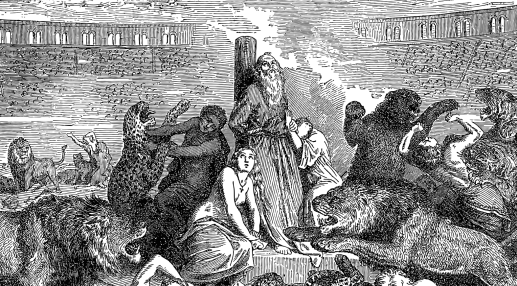
“You will be hated by all for My name’s sake. But the one who endures to the end will be saved” (Matthew 10:22).
Wow. What an encouraging word. Not!
You will be hated by a ton of people. But, if you can take it long enough, if you endure until you die… Well… Well, then you’ll be saved!
How is that good news? Isn’t it too late for good news at that point? How is this verse at all motivating?
Being hated by all and enduring that hatred makes no sense. At least, it makes no sense if you don’t believe in who Jesus is or what He says. If, however, you experience the truth of who He is you are positioned to endure the reality of what He says. You are positioned to practice sacrificial love as He did and so many of His followers have.
We who have seen Jesus’ blooded limbs outstretched for us on the tree are in a position to take a similar posture. We know “a disciple is not above his teacher, nor a servant above his master” (v. 24). We know the Lord of the universe took up His cross and we must too (v. 38).
We know singleminded devotion is not only required, it is right. It is in line with the grain of the universe. To be suffering for the Savior is to be in rebellion against a rebellious world. To be hated by the world is, in a sense, is to be Frodo and Luke Skywalker and Princess Leia; it is to be on the right side. The dark side, with the contemptuous orcs, are wrong.
The world’s very fury is a sign of victory. As the world hated Him so must the world hate us. And as we are hated as He was, so we are His. And so share His victory. So, the more we look like the victims of this world, the more we are the victors.
Thus, it actually is good news that those who endure to the end will be saved. Because the reverse is also true: those who don’t endure, will not be saved. So, we don’t have to fear (v. 26). We do “not fear those who kill the body but cannot kill the soul.” Instead, we “fear Him who can destroy both soul and body in hell” (v. 28).
If we know—truly know—who Jesus is, we will acknowledge. If we love Him, we will live for Him. If we delight in Him, we will die for Him. If we don’t, we won’t. But it’s important that we do. Jesus Himself says: “everyone who acknowledges Me before men, I also will acknowledge before My Father who is in heaven, but whoever denies Me before men, I also will deny before My Father who is in heaven” (v. 32–33).
Our endurance of hatred and a thousand hostilities is just what it means to be in the cosmic fight that we are in. No, it is not a fight we fight with fists and fury but with love. But a fight it still is. And it demands endurance. The endurance of Frodo and Sam on their mission to Mordor and the sometimes awkward encouragement of Leia and Luke.
So, endure. Fight to the finish. We’re in a real battle that is bigger than guns. There’s not always a happy ending. And there’s no reset. We’re in reality. And the stakes are high.
*Image by Gordon Johnson
In the shelter of the Most High

Sunday morning in church we were looking at Luke chapter one and my attention was drawn to verse 35. The angel said to Mary, “the power of the Most High will overshadow you.”1
This phrase brings us to Psalm 91 verse 1: “Those who live in the shelter of the Most High will find rest in the shadow of the Almighty. “
If we go on and read the entire Psalm. We have some serious food for thought regarding the present situation we are in regarding COVID.
“For he will rescue you from every trap and protect you from deadly disease” (v. 3).
“Do not dread the disease that stalks in darkness” (v. 6).
“No plague will come near your home” (v. 10).
“The Lord says, “I will rescue those who love me” (v. 14).
There are many other promises in this powerful Psalm but the one regarding disease and plague stands out. These promises are contingent on sheltering in the shadow of the Almighty.
So does this mean no true believers in the Almighty will get COVID? We know this is not true. Many believers have contracted COVID and been healed—100% recovery rate. Some recovered on this planet in this time and space and others are now experiencing the ultimate recovery and healing—instant healing—in eternity. In thinking of a friend with COVID, he will be healed; it is a confirmed fact, one way or the other he will be healed. The Almighty has said so—Psalm 91 ends with the final and ultimate shelter: “and give them my salvation”.
So what does it mean to shelter in the shadow of the Almighty? To me sheltering in the shadow of the Almighty means being always conscious of God’s presence and “shadow” around me. He is always there and by faith, I see His shadow. He has said, “I will never live you nor forsake you.”
Isaiah put it this way, “You will keep in perfect peace all who trust in You, all whose thoughts are fixed on You! Trust in the Lord always, for the Lord God in the eternal Rock” (Is. 26:3-4).
To abide in the shadow of the Almighty means to have our heart, minds, and faith fixed, fastened securely to the promises of the Almighty. Not fixed ultimately on medical science, our insurance policy, the government, our diet and health regiment, a vaccine, but fixed on the Almighty.
My prayer for all of us this season will be that we are sheltering under the Almighty—not mainly sheltering in place but under the shadow of the Almighty.
1 Using the New Living Translation for all of this.
Societal Analysis

It’s very interesting and perplexing to me that as a society we want and we are begging for and demanding what is good. We are acknowledging that things are very wrong in society. That seems to be the case no matter where you are politically, whatever side you find yourself on.
We acknowledge there’s a problem, but as Plato pointed out a very long time ago, good people make for a good society. That seems to make clear sense. Yet, society seems soiled. Thus, we have found the problem, and it’s me.
When someone is sick there’s a medical analysis. This entails five different elements:
- The Ideal (of what’s healthy)
- Observation (of symptoms/signs)
- Diagnosis (or analysis of disease/disorder)
- Prognosis (or prediction of cure/remedy)
- Prescription (or instruction for treatment/action for a cure)
I believe that society is in need of an analysis. What are we observing? What’s the problem? Can it be fixed? If so, how?
We are observing a lot of problems or symptoms: violence, racism, inability to patiently discuss important issues, pride, etc. What is the disease? The disease seems to be a problem with people. Many people lack goodness. What’s the cure? We must be good. What then is the solution? We must learn to be good. That is the prescription. That is the treatment.
This seems very shallow and very simple. But it is not. Stick with me.
If we want a good society, we must have good people. Yet, I’m not sure we even have an understanding of what “good” or healthy even is. Do we even have a starting place for what constitutes good or healthy? If not, how could we possibly arrive at a prognosis or prescription let alone be in a place to give a diagnosis?!
The English writer and philosopher, G.K. Chesterton, once said, “What is wrong is that we don’t ask what is right.” We have no way by which to measure what is wrong and what is right. That is an obvious problem. You can’t build much with a standard that’s not standard.
If good individuals make for a good society, as seems to make sense. Perhaps the first and foundational prescription is to return to the conviction that there is such a thing as “good.” And not merely what is good for the subjective individual, but a good beyond and above us that corrects us.
In any field of work you have to have a standard, a means to measure; a way to know what is healthy and what is not. We have an idea of when one is overweight because we understand that there is a range of healthy weight. How can we prescribe a cure when there is no standard for what is good or healthy? And how can there be hope when there is no standard of healthy?
We, as a society, for the most part, don’t have a clear way to say what is good. And we don’t have a pathway to make good people. If anything, we have many conflicting things shaping people. Porn is prevalent and it makes objects of people and materialism is too and it plays down the importance of people in place of the value of objects. Ours is a conflicted society.
I believe the disorder in society comes from a plague more destructive than any pandemic, and that plague is sin. Its signs are everywhere. In my heart and actions, and yours too.
The diagnosis is deadly if not dealt with. The plague exponentially increases if not dealt with. It wreaks havoc on the scale of the Tsar Bomb. It leaves devastating effects on generations. It leaves gaping holes in individuals and is the downfall of society if not dealt with.
The prognosis, however, thankfully reveals that progress is possible. But it will be slow and painful. And it entails admitting there’s a problem; a problem, a plague, not just out there in the world, out there in others, but in me.
When someone observes a ghastly problem and knows the cure we inherently know the right thing to do in that case. It is to cure. Humans often fumble around talking about problems and we hustle around trying to cure. But all the while only grasping at what it meant to be truly healthy. We half see and so we get the diagnosis, prognosis, and prescription wrong. We always have.
I believe, however, that hope is not lost. I believe Messiah Jesus, the Healthy One, has brought the cure. He who did not have the plague took our problems, our sin, upon Himself on the cross. He showed us the cure, it is Himself. It is love. Death is the only answer. Death to self. We must die to self, we must love.
We must turn from our prideful and sinful ways and trust in Jesus our loving cure. Jesus gives us 1) the ideal of healthy, 2) the observation about what’s wrong, 3) the diagnosis, 4) the prognosis, and 5) the prescription. Without the provision of those five elements the only prognosis is death.
The New Testament on Suffering

“Blessed are those who are persecuted for righteousness’ sake, for theirs is the kingdom of heaven. 11Blessed are you when others revile you and persecute you and utter all kinds of evil against you falsely on my account. 12Rejoice and be glad, for your reward is great in heaven, for so they persecuted the prophets who were before you” (Matthew 5:10-12).
“But I say to you, Love your enemies and pray for those who persecute you, 45so that you may be sons of your Father who is in heaven. For he makes his sun rise on the evil and on the good, and sends rain on the just and on the unjust” (Matthew 5:44-45).
“And you will be hated by all for my name’s sake. But the one who endures to the end will be saved” (Matthew 10:22 cf. 24:9, 13; John 15:18-21; Mark 13:13; Rev. 2:10; Heb. 3:6).
Read More…Living as Canceled Christians (a response to a response)

A reader of my previous post objected to some of what I wrote. Which of course is fine. I remain grateful that we have the freedom to do that. I’m also grateful for the opportunity it provides me to interact with some of his thoughts and critiques. So, here’s my response…
First, he said he didn’t know what “canceled Christians” means. It is a reference to the “popular practice of withdrawing support for (canceling) public figures… after they have done or said something considered objectionable or offensive. Cancel culture is generally discussed as being performed on social media in the form of group shaming” (dictionary.com). Christians are being shut down from sharing their biblically informed views (especially moral issues on sexuality) on social media and often in general conversation as well.
He said that “we are to invest much energy into this world.” I, of course, agree with that. The Bible is replete with examples calling us to do just that. One of the reasons it calls us to invest in this world is actually because of the coming of the next. Our eschatology (study of last things) is a goad to our ethics (e.g. Matt. 24:36ff; 25:13; Col. 3:1ff; 1 Thess. 5:1-2).
He also said that this world is not a “stinky tent. It’s God’s handiwork.” This world is not literally a stinky tent. The Bible doesn’t say that exactly. The Bible does, however, say that “in this tent we groan, longing to put on our heavenly dwelling… For while we are still in this tent, we groan, being burdened… we would rather be away from the body and at home with the Lord” (2 Cor. 5:2, 4, 8). It says, “the creation was subjected to futility… the creation itself will be set free from its bondage to corruption… For we know that the whole creation has been groaning…” (Rom. 8:20, 21, 22 see also 2 Cor. 4:16-18). It thus seems to me that the world is a metaphorical “stinky tent.” It is not our final home. We should have a certain amount of longing for our “lasting city” (Heb. 13:14 cf. 2 Cor. 5:1; Jn. 14:2-3).
God’s creation does show His handiwork and it is an “expression of His creativity.” The first chapter of Genesis says six times that God’s creation is “good” and in the seventh and final announcement God says it’s “very good” (Gen. 1:31). That, however, is not the end of the story. It’s the beginning. Something sinister happens. The Fall (Gen. 3). And because of sin all manner of curse and chaos.
We live in a post-Genesis-3 world. So, while creation still attests to the goodness and creativity of God, it is also riddled with ruin because of sin. Jesus as promised in Genesis 3:15 is the one who finally remakes it. And He is the hope of the world.
I really appreciate that he says, “we are called to imperfectly participate, invest our gifts, to forgive.” That is very true. I am not sure why but it seems like he was led to believe that I would disagree with that truth. I am not sure why, however. No writing of any length can say everything, but especially a blog.[1] Yes, we are to “imperfectly participate, invest our gifts, to forgive.”
I actually believe it’s true that unless Christians live as the campers and exiles they are, they won’t participate, they won’t invest, and they won’t forgive as God would have them. It’s being focused on the Kingdom that makes us effective in whatever kingdom we find ourselves in. It’s the person who realizes the value of the treasure (i.e. all the goodness of the new creation) that will sacrifice all to gain it (Matt. 13:44); even if it means loving those who are sometimes unlovely.
That is why we must “set [our] hope fully on the grace that will be brought to [us] at the revelation of Jesus Christ” (1 Pet. 1:13). That, as Peter explains, will help us “love one another earnestly from a pure heart” (v. 22). It will help us “imperfectly participate, invest our gifts, to forgive.” It will help us with creation care and the Golden Rule.
As C.S. Lewis said,
If you read history you will find that the Christians who did most for the present world were precisely those who thought most of the next. It is since Christians have largely ceased to think of the other world that they have become so ineffective in this.
We can be so earthy minded that we’re no earthly good. And we won’t rightly love our neighbor if we only love ourselves. As we look to Christ and the heaven He’s purchased us we will more and more be drawn to live like Christ, to love and sacrifice ourselves for others (See e.g. 2 Cor. 3:18; 5:14-15; 2 Pet. 3:11-14).
Regarding his comment that “most [my] assertions are not contextualized or elaborated” and that what I wrote is “gobbledegook,” I would say that the assertions in his response are also not “contextualized or elaborated.” And had they been his response would have been much longer. I would not say though that as a result what he wrote was “gobbledygook.” I looked up the definition of “gobbledygook” and apparently it means “language that is meaningless or is made unintelligible by excessive use of abstruse technical terms.” I’m not sure where my post earned the term “gobbledygook” but that is not a noun I want associated with anything I write. I actually wanted my post to be simple and thought provoking. Ironically, it seems to me that writings that are most contextualized and elaborated are the very writings that have the most likelihood of being gobbledygook.
I want to be clear, instructive, and helpful. And this gentleman’s comments are a spur to encourage me in that pursuit. For that I am thankful.
——
[1] Of course, I don’t expect the gentlemen’s brief response to be perfectly nuanced either. Covering every facet is not possible in a brief comment, blog post, or even a book-length treatment. We are both fallible and temporal. Scripture itself, if the whole counsel of God (Acts 20:27) is not rightly considered, can seem lopsided. Matthew and Luke, James and Paul, however, are not at odds even if they are emphasizing different things and coming at issues from a different perspective.
It’s not meant to be this way…

I was just thinking about the phrase, “it’s not meant to be this way.” I recently did a funeral and said those words. And I think right now, with so much that is sad going on, “It’s not meant to be this way.”
There is no such thing, however, as “meant to be” unless there is a “meant.” That is, purpose and meaning. If the world just happened randomly and will likewise run down and dissolve randomly, it doesn’t truly make sense to say something like, “it wasn’t meant to be.” Nothing and everything wasn’t meant to be. It’s all chaotic, random, and meaningless.
I believe that we sense, deep down past our bones, that many things we see and face—even in our own hearts and lives—is not what was meant to be. This world, and we ourselves, our bent.
I believe that is one of the things that points to the reality of purpose. And I’m thankful for that. I believe we can honestly say, “it wasn’t meant to be this way” because there is a way that it was meant to be but isn’t because of rebellion and hate in the human heart.
O’ for what is broken and bent to be mended. For hearts and lives to be whole.
O’ maranatha!
I’m thankful for the Savior, Messiah Jesus, who though whole, bled for this bent world. I’m thankful that He came with healing and promise of wholeness and will soon come with His host to fix every wrong.
Our Hope in the Midst of the Virus

This is a difficult time for many of us. Yet in the LORD we find comfort that transcends our earthly struggles. What hope do we have in the midst of this time of difficulty?
Zephaniah recounts for us a lot of really difficult things. Zephaniah is not a lighthearted read. It is heavy. If Zephaniah was a painter, he wouldn’t have used pastel colors. Instead, the canvas would be filled mainly with black and red.
Yet, there would be a glimmer of light, a glimmer of hope in the darkness. What hope is that and who is it for?
Layout your Lament to the LORD (Psalm 10)

The Bible teaches us that we can layout our lament[1] to the LORD. We can cry out to Him for help or to honestly share our disillusionment. Lament psalms make up around a third of the book of Psalms and is the most numerous type of psalm within Psalms.[2] And so we see, “The vast majority of psalms were written out of a real-life struggle of faith.”[3]
The Bible teaches us that we can layout our lament to the LORD. We can cry out to Him for help or to honestly share our disillusionment.
Tweet
Here we’re looking at Psalm 10.
Cry for Help (v. 1)
The first thing we see the psalmists does in this psalm is cry out for justice. “Why, O LORD, do you stand far away? Why do you hide yourself in times of trouble?”
We too can take our honest wrestling to the LORD. In fact, that is what we must do. We must bring our laments to the LORD.
Statistics and Comfort in Calamity

Photo by Ben White
Does the 2% death rate statistic comfort you? What does the Bible say about comfort during calamity?
Some sources are saying that the mortality rate of COVID-19 looks to be 2%. However, it is too early to say. The percentage will be bigger or smaller depending on various factors (such as the age of the people infected, access to the needed medical treatment, etc.). I think we should acknowledge a few things about the statistic. First, 2% looks like a small number. And it is. At least, relative to a larger number.
Second, to put it into perspective, 2% of the population of the world is around 140 million people. That, as we can see, is a lot of people. COVID-19 could rival the AIDS epidemic. Of course, it seems highly unlikely that everyone in the world will get the virus. But even a fraction of that number is a lot of people. And it’s important for us to see the numbers from this vantage point so that we don’t play the numbers down.



 in X
in X 