Why was the Blind Man Healed Twice?
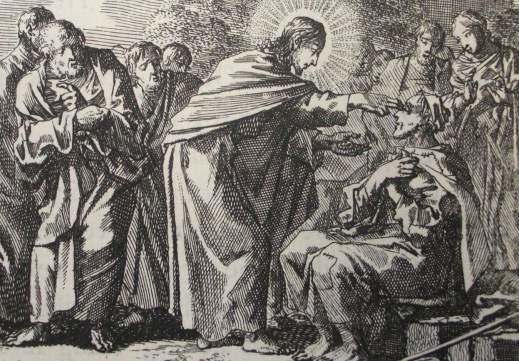
Why would Jesus touch the blind man twice to heal him? Surely He had the power to heal him the first time. So, it would appear to me that there is some significance for why this healing happened this way. Though, in this as with all Scripture we must remember that the hidden things belong to the LORD but the things that have been revealed belong to us (Deut. 29:29). Thus, we cannot take all of the mystery out of this passage but we can offer a few reasons for why this miracle went down as it did (Remember Jesus could have done it much differently cf. Matt. 9:27-31; Jn. 9:1-12). Here is the text under question:
[22]And they came to Bethsaida. And some people brought to him a blind man and begged him to touch him. [23]And he took the blind man by the hand and led him out of the village, and when he had spit on his eyes and laid his hands on him, he asked him, “Do you see anything?” [24]And he looked up and said, “I see people, but they look like trees, walking.” [25]Then Jesus laid his hands on his eyes again; and he opened his eyes, his sight was restored, and he saw everything clearly. [26]And he sent him to his home, saying, “Do not even enter the village.” (Mark 8:14-26)
As with any passage, the context must be considered. This is a cursory look at the passage but we should be able to get at the reason for the double healing. So in the broad context of the New Testament and the Gospels there is quite a lot about spiritual seeing. In Mark chapter four Jesus explains His use of parables. He said (see Mk. 4:10-12) I use parables “so that ‘they may indeed see but not perceive, and may indeed hear but not understand, lest they should turn and be forgiven’” ( cf. Is. 6:9-10).
In the immediate context in chapter 8 we see that Jesus talks about “seeing,” i.e. understanding. He says, “Having eyes do you not see, and having ears do you not hear? And do you not remember? When I broke the five loaves for the five thousand, how many baskets full of broken pieces did you take up?” They said to him, “Twelve.” “And the seven for the four thousand, how many baskets full of broken pieces did you take up?” And they said to Him, “Seven.” And He said to them, “Do you not yet understand?’” (Mk. 8:18-21).
After this the disciples and Jesus (“they”) went to Bethsaida (Mk. 8:22). So there was some time that elapsed between verse 21 and verse 22 in historical reality. Yet Mark places the healing of the blind man directly following the conversation between Jesus and the disciples.
Why? And why such a strange healing? Why would Jesus spit in the blind man’s eyes and yet not completely heal him? Why would he still have poor sight (Mk. 8:24)? Why would Jesus have to touch him again (Mk. 8:25)?
Based on the context I think it reminds us of the disciples and their vision. They “see,” i.e. understand, but their understanding is still very poor. They too will need a second touch. Notice what follows this passage. Jesus asks His disciples, “What do you say that I am?” Peter as the disciples typical spokesman said, “You are the Christ.”
Jesus is essentially asking the disciples, “Do you see, do you understand?” The disciples respond, “Yes, we see you are the Christ.” Yet, they did not know but they didn’t see as clearly as they thought they did. They saw “men , but they look like trees,” you could say (Mk. 8:24). This is proven later especially by the once very vocal Peter as he denies Jesus (Mk. 14:66-72). He truly did not see what it meant for Jesus to be the Christ. He too needed a second touch. He too needed to be healed of his blindness.
Thus I think in retrospect the healing of the blind man in this passage is a type of parable. Jesus asked, “Having eyes do you not see, and having ears do you not hear? And do you not remember?” (Mk. 8:18). The disciple did see and yet they did not see. It is a strange paradox. They had in a sense been healed as the blind man but their vision, their understanding, was still a long way off. Their vision would not be truly “fixed” until they saw the Lord again and He fixed them (Mk. 16:12-14). At the end of Luke, after Jesus’ resurrection, we see that Jesus gave the disciples the correct understanding of the Christ that they lacked (Lk. 24:27, 44-47). After this lens adjustment they could see clearly.
So why was the blind man healed twice? I think to teach something about the disciples. And about us. It appears that way to me based on the immediate context of the passage and the way that blindness and seeing is used in Scripture. It has also been pointed out to me that there is a chiastic structure in this passage. Here’s the diagram:
A: The Apostles don’t see clearly (vv. 14-21)
B: The blind man can’t see clearly (vv. 22-24)
B’: The blind man can see clearly (vv. 25-26)
A’: The Apostles see clearly (vv. 27-30)
We see that the blind man needed a second touch, the Apostles needed a second touch, and we often need second, third, fourth, etc., touches to see as well. We need more contact with Jesus the Lord of life if we are going to see.
Church Membership?

Church membership is often not the priority it should be. There are a few possible explanations for this: (1) lack of understanding of church membership and its importance, (2) lack of commitment, or (3) a lack of desire to submit to biblical authority. This will only cover the first issue, lack of understanding. I think it can be assumed that if you are a Christian you should be committed (see for example Rom. 12:1) and you should submit to biblical authority (see for example Heb. 13:17).
What is Church Membership?
When a person is born again by the Spirit they instantly become a member of the invisible universal Church body. Church membership is a formal covenant of a believer to a local visible church body for mutual growth and accountability.
Reasons for and Advantages of Church membership
There are several reasons to be connected to a local church body: worshiping together (Col. 3:16; Eph. 5:19-21), equipping (Col. 1:28; Eph. 4:12-13), exhortation and teaching (1 Tim. 4:13), exercising spiritual gifts (Rom. 12:6-8; 1 Cor. 12:4-7; 1 Pet. 4:10-11), church discipline (Matt. 18:15-20; 1 Cor. 5), sharing the Lord’s Supper (Luke 22:17-20; Matt. 26:26-28; Mark 14:22-24), celebrating baptism (Matt. 28:19), giving (Matt. 23:23; 1 Tim. 6:17-19), encouragement (Heb. 10:24-25), as well as, having faithful leaders to care for and help you (1 Tim. 3:1-13; Titus 1:5-9).
There are also several advantages to church membership. Church discipline may not seem like an advantage but it is. It may be the very thing to deliver a soul from hell (1 Cor. 5:5), this is a true and gracious advantage. As a church member you can enter into the life of the church in a unique way such as voting on specific church issues. Church membership is a covenant of commitment one to another. Through church membership you clearly know who your brothers and sisters are and pastors/elders know who exactly they are responsible for. Members have church resources available to them that otherwise would not be. Members also very often have more opportunities to serve in the churches various ministries. Lastly, church membership is biblical.
Church Membership is Biblical
“Biblical? Where is the chapter and verse?” you ask. Well, there is no chapter and verse that states explicitly that you must join a church. Yet, I believe we can see it implicit in the New Testament. In the book of Acts we see that the early churches’ practice was to baptize believers and then add them to the church (Acts 2:41, 47; 5:14; 16:5). In fact, those that were saved and baptized in the early church “devoted themselves” (which could have taken the form of a formal covenant) to the apostles’ teaching, fellowship, and prayer (Acts 2:41-42).
There is no explicit text calling believers to belong to a church because it was everywhere assumed and practiced in the early church so there was no need for a formal statement. Also, many of the first churches were smaller house churches so membership or commitment would be more easily recognized (especially under persecution). However, many churches are much larger today so it serves the leadership of the church and the church as a whole to keep track of those who have formally covenanted to church membership.
We see that there was a list of widows that were entitled to financial support (1 Tim. 5:9) and there may also have been a growing list of church members (see for example Acts 2:41, 47; 5:14; 16:5). Churches would also write a letter of commendation (Acts 18:27; Rom. 16:1; Col. 4:10; cf. 2 Cor. 3:1-2) for believers that were moving to a different area. This leads us to conclude that church roles were likely kept in the early church. However, even if they did not have a formal list they obviously knew who was part of the body and this was very important to them and should be to us as well.
We also see a New Testament mandate for godly qualified leadership. Men who are called to shepherd the church (Acts 20:28; 1 Peter 5:2) by laboring (1 Thess. 5:12; 1 Tim. 5:17), and watching over souls (Heb. 13:17). Pastors (a synonym of elders and shepherds) will give an account to God of how they shepherded so it is important that they know who their sheep are.
Church membership is implied from church discipline (see Matt. 18:15-17; 1 Cor. 5:1-13; 1 Tim. 5:20; Titus 3:10-11) and it assumes that the elders of the church will know who the members of the church are. We also see much biblical imagery that points us to church membership. The church is called: body, bride, family, royal priesthood. These things suggest tight connection, even formal covenant. We as the church are to be like an outpost in enemy territory, an embassy amongst a distant land. If you are a citizen of the heavenly Kingdom you should be connected to the local embassy. The church is that embassy, the church represents the Kingdom of God on earth.
Conclusion
Local church membership, though obviously not required for salvation, is vital. It is my prayer that more and more believers would covenant together as the body and bride of Christ to be committed together to be and do what Christ our Lord has called us to do with the short time that we have here to labor for our Lord.
Suggested
Introductory: Jonathan Leeman, Church Membership
In-depth: Jonathan Leeman, The Church and the Surprising Offense of God’s Love
Sin is Not Good #5

Sin Looks Really Good
It is a graphic scene, depicted in the most vivid way. A recent celebrated movie shows the character smiling in glee as he takes his own life. This depiction is sad yet we see it week-in and week-out. The movie is The Return of the King and the character is Gollom. Gollom, previously known as Sméagol, use to be a regular hobbit but was corrupted, enslaved by the ring. His infatuation with the ring started slow (a weekend here and there) but ended desperately. Gollom loved and hated the ring. He was torn, he wanted to be free from the ring and yet relentlessly pursued it.
At the end of the movie, Gollom finally has, as he says, “my precious.” But in getting the ring he has destroyed himself and everyone, indeed, everything around him. Yet his refrain is, “my precious.” Gollom’s last scene is one of great joy (for him). Gollom fights Frodo over the ring, another character that was nearly wholly-destroyed by the ring. Gollom is fierce. He wants the ring at any price. He bites off Frodo’s finger and rejoices over his plunder. He embraces his cruel master as his beloved friend. He falls, seemingly, blissfully in the lava and as he sinks he rejoices that he has comfort from pain, he has everything, he has his “precious.” Then he sinks and he and his “precious” are gone.
This scene, though portrayed differently, is a scene I have seen too often. This scene is the climax and conclusion of far too many stories of sin. Sin looks good. It is so sad to see people enraptured in love with their cruel master and executioner.
Sin is ingeniuine. It makes big promises but never delivers. Truly the world and sin “promises happiness, and nothing less… It promises to satisfy our desires, but only increases them; it gives poisoned pills, but wraps them in sugar.”[i]
Satan sells us lies and blinds our eyes. He would have us contended with filth and miss the glorious Lord who is worthy of all praise and can satisfy our longing soul. Truly Satan is crafty and subtle in his lies (recall the way he talked to Eve; Gen. 3:1ff cf. Lk. 4:1). He is a lion that is crouched low (1 Pet. 5:8). We don’t always see him but his desire is to destroy.
Satan is the god of this world (2 Cor. 4:4; Rev. 2:13) and his worship leads to curses and hatred of neighbor. In him is death and he is the futility of man; whoever lives in his influence shall perish and not have life (reverse of Jn. 1:4; 3:16). The world sits on the back of this evil beast of death (cf. Rev. 17:3). The world doesn’t know it but all people follow the course the beast as set, and it’s a funeral procession, that leads to the grave (cf. Eph. 2:1-3).
So Satan, the lord of this age, is rightly called the “deceiver of the whole world,” the “father of lies” (Rev. 12:9; Jn. 8:44 cf. Rev. 13:14; 18:23; 19:20; 20:3; 2 Cor. 11:3; 2 Thess. 2:9-11; 1 Tim. 2:14). He is a dragon that smites many hosts yet not by the fire of his mouth but by the damning effects of his lies. And what do you expect his children to say? “They promise freedom, but they themselves are slaves” (2 Pet. 2:19 cf. Matt. 24:24; Jn. 8:44; Rom. 16:18; Eph. 4:14). Those that know not Christ are blind and would have us wonder around in darkness too (cf. 2 Cor. 4:4-6). Satan and his children boast of good, but it’s all tainted, and leads to death (cf. Prov. 5:1-6; 7).
Thus, sin is not good because although it can look good, it’s not. It damns and destroys the good world God made. The de-creation voice of Satan pulls us toward death and non-being. It may sound good, as it did to Eve, but it is anything but good. It destroys. It curses and creates confusion. It sends us guilty out of Eden, where our good lays, and into Gehenna.
________________________________
[i] Thomas Watson, Heaven Taken by Storm, 44.
Sin is Not Good #4

Sin, Resulting in the Fall, Explains Humanities Wretchedness and yet Greatness
I think it’s accurate to say that “any viable worldview must successfully explain the seemingly paradoxical nature of the human condition.”[i] The philosopher Blaise Pascal lamented, “What sort of freak is man! How novel, how monstrous, how chaotic, how paradoxical, how prodigious! Judge of all things, feeble earthworm, repository of truth, sink of doubt and error, the glory and refuse of the universe!”[ii]
Look at
“the inexplicable phenomenon of mankind: unquestionably corrupt, subject to inconstancy, boredom, anxiety and selfishness, doing anything in the waking hours to divert the mind from human wretchedness, yet showing the vestiges of inherent greatness in the mind’s realization of this condition. Mankind is also finite, suspended between twin infinities revealed by telescope and microscope, and aware of an inner emptiness which the finite world fails to satisfy. No philosophy makes sense of this. No moral system makes us better or happier. One hypothesis alone, creation in the divine image followed by the fall, explains our predicament and, through a redeemer and mediator with God, offers to restore our rightful state.”[iii]
Human greatness split the atom, human wretchedness uses the same to kill millions of people. A great, though wretched, leader, Adolf Hitler, will lead a nation to slaughter millions. A great leader, Winston Churchhill, will lead a nation in their defense. As much as we are great, we bare God’s image. As much as we are wretched, we bare Satan’s. Ben Carson, with his intelligence, will fight for cures; others will inject poison. Humanity is simultaneously great and wretched. What explains this paradox? We all innately sense it but why is it here?
Humanity is fallen. So “the line between good and evil is never simply between ‘us’ and ‘them.’ The line between good and evil runs through each one of us.”[iv] We are made in God’s image and thus can do fantastic things and fantastic good but we have been marred by the Fall and often reflect Satan so we can also do acts of unbelievable wickedness.
Thus, sin is not good because it wreaks havoc on our greatness, on the fact that we were created in the image of God, and distorts it to evil ends.[v] How sad that we who are capable of exploring the limitless expanse of the sea, the mind, space, and biology so often content ourselves with razing and rioting. How sad that though we as humanity are capable of such good, there is such grave injustice. I’ve read for example that a woman born in parts of South Africa is more likely to be raped then to learn to read.[vi] This surely should not be!
______________________________
[i] Robert Velarde, “Greatness and Wretchedness” “How can one species produce both unspeakable wickedness and nearly inexplicable goodness? How can we be responsible both for the most disgusting squalor and for the most breathtaking beauty? How can grand aspirations and self-destructive impulses, kindness and cruelty, be interwoven in one life? The human enigma cries out for explanation” (Thomas Morris, “Making Sense of It All: Pascal and the Meaning of Life” as quoted in Robert Velarde, “Greatness and Wretchedness: The Usefulness of Pascal’s Anthropological Argument in Apologetics”).
[ii] Pascal, Pensees, 131/434.
[iii] D.G. Preston, New Dictionary of Theology, ed. Sinclair B. Ferguson, David F. Wells, and J.I. Packer (Downers Grove, IL: InterVarsity Press, 1988), s.v. “Blaise Pascal” as quoted in Robert Velarde, “Greatness and Wretchedness: The Usefulness of Pascal’s Anthropological Argument in Apologetics.”
[iv] N.T. Wright, Evil and the Justice of God, 38.
[v] Sadly, “human nature itself, with its vast and mysterious amalgam of capacities to think, feel, supervise, love, create, respond, and act virtuously—that is, with its vast capacities for imaging God—has become the main carrier and exhibit of corruption” (Plantinga, Not the Way It’s Supposed to Be, 30-31).
[vi] Yet how strange and how sad that we hate the thought of this and yet many still struggle with the wickedness of pornography. Most of humanity hates the thought of human trafficking but yet enjoys the very things that feed that market.
Sin is Not Good #2

Sin is a Rebellion and a Rampage
Sin is moral. It is an act against God. It is a transgression against God’s law. But not only His law but also His good plan.[i] Sin is not merely moral or highhanded treason it is also a rampage because it is mad; that is foolish, a form of insanity. It goes against good sense. It is a rampage because sin destroys the good.
We have all seen the pain and sorrow that moral derogation has wrought in our lives. We see it for instance in sins of others against us and those close to us, we see it in sins which we have sinned against others, we see it in the world at large (e.g. my parents were divorced, a very close friend of mine was molested as a child, and a friend of mine that struggled with drug addiction committed suicide). There is, for sure, a law written on all our hearts, we go against it to the shame and suffering of humanity; and yet, we all do indeed go against it.
Humanity has and needs a moral standard. This points us to the Creator who gave it to us when He created us in His image. However, it also points us to the Fall. We all fail to measure up to the standard. We can all think of a hypothetical world where everyone followed these standards and where the result was great happiness. Yet, this is not the case. We do not follow these good (innate) standards. How odd. We know the good we ought to do, or at least that there is “a good,” and yet fail to do it.
Sin leads to terrible depraviltiy, hopelessness, and disregard for humanity or anything good. This is vividly portrayed, for example, in Cormac McCarthy’s post-apocalyptic book The Road. We don’t want to suffer what is portrayed there. We don’t even want to think of the horrors of Dachau and Auschwitz. We all know the wickedness of Adolf Hitler, Pol Pot, and Joseph Kony. Yet perhaps their nearly unbelievable atrocities allow us to belittle (in our conscience) our own wickedness. However, even if our sin is so-called “low-grade wickedness” it is the equivalent of their sin, just on a micro level. It has the same seed, though perhaps it hasn’t came to full bloom yet.
What must be realized is that all sin is a movement towards un-creation.[ii] In C.S. Lewis’ words, through sin man becomes the “unman.” Through sin everything that was very good (see Gen. 1:3, 10, 12, 18, 21, 25, 31) becomes cursed instead. Sin covers beauty, boasts in badness, and hides from the supreme joy we all seek. Sin is a rampage.
Sin is a leech and parasite. It lives off of and feeds on life and vitality.[iii] And it kills it. Bleeding it away little by little until the carrier is completely eaten away and destroyed. Note that this death, though complete, can be imperceptible.
Sin leads to de-creation as well as desecration. Humans were made in God’s own image yet through sin that image has literally been put into dirt; man becomes dirt and ashes from whence he came (hence de-creation). From perfection to misdirection, from shalom[iv] to shattering. Everything has come undone. The creation groans with longing. Sin is not merely moral. It is the decay of all things. Sin wrought a wreak and we are still wheeling and writhing in pain.[v]
Thus, sin is not good not only because it is moral rebellion against a good and all-powerful God but also because it is a rampage against His good creation.
_______________________________
[i] “Sin represents an attack upon the harmony of the created order, and not merely a moral lapse” ((Revd Victor James Johnson, “Illustrating Evil – The Effect of the Fall as seen in Genesis 4-11,” 60 in Melanesian Journal of Theology 11-1&2 [1995]). If Jesus is the exact image of God and we were created in God’s image then as we image Jesus—as we are recreated—then we get closer to our beginning, closer to where we were created to be; actually quite a bit beyond that. So in Christ and His truth we are being renewed but through Satan and his lies we are becoming undone. The cosmos is breaking up and will finally be dissolved because of sin and yet remade in and because of Christ.
[ii] “Evil is the force of anti-creation, anti-life, the force which opposes and seeks to deface and destroy God’s good world of space, time and matter, and above all God’s image-bearing human creatures” (N. T. Wright, Evil and the Justice of God, 89)
[iii] “Sin is always the corruption of something good. Its existence is parasitic; it borrows, or rather usurps, its reality from whatever it corrupts” (H. A. G. Blocher, “Sin,” 784 in New Dictionary of Biblical Theology).
[iv] “In the Bible, shalom means universal flourishing, wholeness, and delight… a state of affairs that inspires joyful wonder as its Creator and Savior opens doors and welcomes the creatures in whom he delights. Shalom, in other words, is the way things ought to be” (Cornelius Plantinga Jr., Not the Way It’s Supposed to Be: A Breviary of Sin (Grand Rapids, MI: Eerdmans, 1995), 10; italics original).
[v] Abnormal, sick, unhealthy, dysfunctional, maladjusted, or pathological—“wherever anything wrong exists in the world, anything we experience as antinormative, evil, distorted, or sick there we meet the perversion of God’s good creation” (Walter M. Wolters, Creation Regained, 55).
Sin is Not Good #1
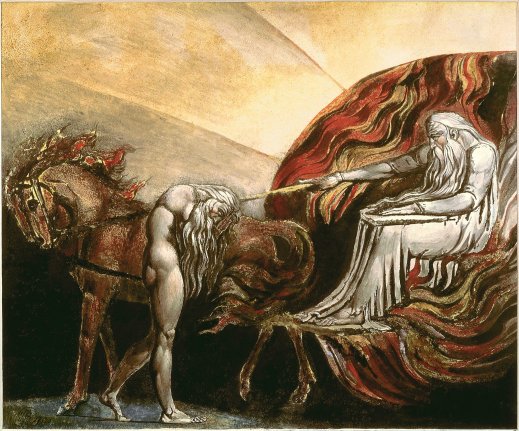
Sin is the Unmaking of Man and a Manifold of Beauties
This world cries out like so much ripe fruit, “I’m good! Eat me! Indulge yourself…” However, much of the fruit here, as in the Garden, leads to cataclysmic clashes, with God, yourself, and humanity. It looks good and much of it is. But much of it has an infectious parasite on it. It’s hard, though not impossible, to consume it without getting “sick.”
In Genesis 3:1-24 we see the Fall of humanity. We see various forms of death given birth to. We see “’an ever-growing avalanche of sin, a continually widening chasm between man and God’. It progresses from disobedience, to murder, to indiscriminate killing, to titanic lust, to total corruption, and uncontrolled violence.”[ii] Sin truly brings a litany of death. “Disease, genetic disorders, famine, natural disasters, aging, and death itself are as much the result of sin as are oppression, war, crime, and violence. We have lost God’s shalom—physically, spiritually, socially, psychologically, culturally. Things now fall apart.”[i]
Through sin we have marred more than the mediocre; we have marred the Michelangelos of the world. We have marred superb beauty and made it unbelievably hideous. Yet, if we see something that is less hideous we look at it as a wonder. Why? Because this world is so tainted and steeped in sin and the effects of sin.
To illustrate, if I ruin a “masterpiece” that my son made with paper, glue, and crayons the ramifications will be far less than if I destroy the Mona Lisa. Well, creation was intended to be a Mona Lisa; that is, it was intended to be supremely glorious. God’s creation was intended to be good, beautiful, and esthetically pleasing to our senses, emotions, and intellect beyond what we can imagine. And so the ramifications of the destruction of such beauty is greater. We often think of this world as the way it is not as the way it was intended to be. If we could see a glimpse of what the Great Creator had in mind for His masterpiece then we’d see that we “paved paradise and put up a parking lot.” We essentially killed a thousand Beethovens and blared white noise. We backfilled the Grand Canyon with gravel. We burned a hundred museums of art. We scorched our taste buds off our tongue. We took a wrecking ball to all the wonders of the world and razed a thousand gorgeous cities. In short, through our “war crimes,” we, as humanity, deserve death. We have brought cataclysmic chaos to the world.
Sin is not a light thing. We, as humans, were created in the image of God. We were to be like Christ, God in flesh (cf. Gen. 1:26-27). The world was meant to be supremely glorious, peaceful, and loving but instead it is disgusting and understandably repugnant to God. So, as we try to grasp the wonder of what has been marred we can begin to understand how serious the situation is and how terrible sin is.
Thus, sin is not good because it is the unmaking of man and a manifold of beauties.
__________________________
[i] Timothy Keller, The Reason for God, 177. “Disunion with God is reflected in disunion with others and with oneself” (Johnson, Foundations of Soul Care, 466 cf. Bonhoeffer, Ethics).
[ii] Revd Victor James Johnson, “Illustrating Evil – The Effect of the Fall as seen in Genesis 4-11,” 57 in Melanesian Journal of Theology 11-1&2 (1995).
Shalom is Slain
O’ for the worlds that lay asunder,
for the shalom that is slain.
We ingrain habits of unrest,
we fester and pass on spoil.
O’ for the earth to break,
for all to be made anew.
For the habits in my heart to pour out,
and for living waters to ensue.
God this world is broken,
we are altogether damaged and damned.
“Destroy the destroyers of the earth,”
destroy what in me destroys.
Shalom was slain
but through the slain Messiah (is/will be) renewed.
O’ God, Maranatha!
The Mission of the Church (in less than 500 Words)
The church is given a threefold mission; upward, inward, and outward. These three things work in unison. They create a helpful cyclical motion. When we worship God as we should we want to build others up in the church, we want to evangelize, and when we build others up they grow, they evangelize, people get saved, and we praise God; and so the cycle repeats in various ways as it is supposed to. For the church to function as it should all three of these aspects of the church’s mission must be being carried out.
Upward: Worship
We are called to sing songs of praise (e.g. Ps., Eph. 5:19; Col. 3:16) but we are not to stop there. We are called to love the LORD our God with all that we are; mind, body, soul, and, strength. Everything! We are to lay our very lives upon the altar in service to the LORD (Rom. 12:1). This is the foundational thing. Upon this the other two aspects of the church’s mission is built. If this is lacking, the church will fall.
Thus, we see the huge importance of godly, sound, and worshipful preaching and singing. If the church is to worship the LORD they must know, see, and taste the wonder of the LORD. It is to this same end that songs of worship are to be sung.
It is when the church, both individually and corporately, are crying out to the LORD in worship, and having the eyes of their hearts enlightened to God’s love, that inward nurture and outward evangelism will flow as a perpetual fountain.
Inward: Nurture
We see from Scripture that one of the non-negotiables is discipleship (Matt. 28:19-20). The Church must equip the saints for the work of the ministry that they may grow up every way into Christ (cf. Eph. 4:11-16). We strive for those we disciple to show the fruits of the Spirit (Gal. 5:22-23), follow the Great Commandment (Mark 12:28-31), and practice the Great Commission (Matt. 28:18-20) themselves by teaching “faithful men who will be able to teach others also” (2 Tim. 2:2). We do this for the building up of the body and the glory of God among all the nations (Rom. 1:5).
Outward: Evangelism
The church is a gathering of the people of God and the people of God are told to proclaim His excellencies (see 1 Peter 2:9). The main way it proclaims God’s excellencies is through the proclamation and teaching of His Word (That is how the church expands cf. Acts 6:7; 9:31; 12:24; 13:49; 16:5; 17:11-12; 19:20). The purpose being to make disciples that are wholly committed to Christ.
We see here the importance of the two other aspects of the mission of the church. It is when we taste of the LORD in worship that we want to tell people of the wonders of the LORD. We tell the good news most naturally when we are impressed with the fact that it is good news.
For a slightly more expanded discussion see: “What is the Church?”
Religious Affections
“For although to true religion, there… must indeed be something else besides affection, yet true religion consists so much in the affections, that there can be no true religion without them. He who has no religious affection, is in a state of spiritual death, and is wholly destitute of the powerful, quickening, saving influences of the Spirit of God upon his heart. As there is no true religion, where there is nothing else but affection; so there is no true religion, where there is no religious affection. As on the one hand, there must be light in the understanding, as well as an affected fervent heart, where there is heat without light, there can be nothing divine or heavenly in that heart, a head stored with notions and speculations, with a cold and unaffected heart, there can be nothing divine in that light. If the great things of religion are rightly understood, they will affect the heart. The reason why men are not affected by such infinitely great, important, glorious, and wonderful things, as they often hear and read of, in the Word of God, is undoubtedly because they are blind; if they were not so, it would be impossible, and utterly inconsistent with human nature, that their hearts should be otherwise, than strongly impressed, and greatly moved by such things”

~Jonathan Edwards, Religious Affections (Yale University, 2009), 120-21
“Holy affections are not without light; but ever evermore arise from some information of the understanding, some spiritual instruction that the mind receives, some light or actual knowledge. The child of God is graciously affected, because he sees and understands something more of divine things than he did before, more of God or Christ and of the glorious things exhibited in the gospel; he has some clearer and better view than he had before, when he was not affected: either he received some understanding of divine things that is new to him; or he has his former knowledge renewed after the view was decayed”
~Jonathan Edwards, Religious Affections (Yale University, 2009), 266
True Knowledge Should Truly Humble

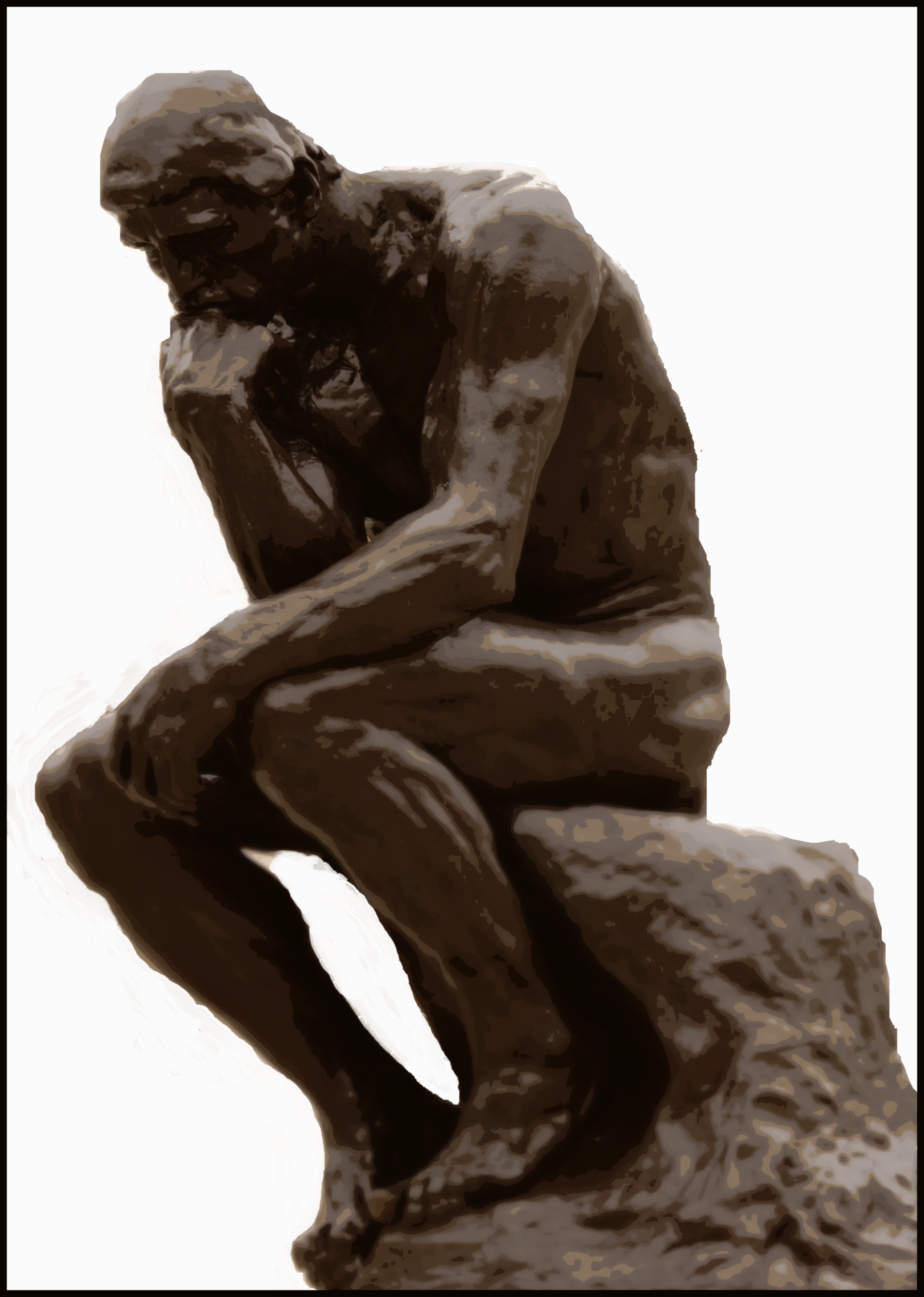
Knowledge[1] is dangerous. Not only the consequence that ideas themselves have but also the tendency that knowledge has to puff up. Truths that should lay us low in humility often conflate our egos. Paradoxically, knowledge is also the very thing that humbles.[2] We may not be proud without knowledge but neither will be humble. We will be ignorant. Knowledge is dangerous. Albeit, a necessary danger.
Knowledge is indispensable to live life rightly. We must understand though, that knowledge is not innate within us. It must be pursued. However, the very fact that knowledge is external should press us to pursue it in humility. It is not ours. We do not have the market on knowledge. Also, if we pursue it arrogantly we will miss much of it (Prov. 3:5-6; 15:14, 22). We should realize that not only is knowledge external from us but so is the desire for knowledge. We should not think we are better than the ignorant because our very desire for knowledge is itself a gift (James 1:17).
The desire for knowledge with the goal of being humbled is good. The fear of the LORD is the beginning of knowledge and humility comes before honor (Prov. 1:7; 9:10; 15:33; Job 28:28). Jesus pronounces woes upon the Pharisees, not for their knowledge, their knowledge is commendable, but on the result that their knowledge had upon them. It did not humble them (Matt 23:5-7, 11-12). The publican had little knowledge but it served to humble him. If we truly understand, if the eyes of our hearts are enlightened, we will praise God and not ourselves. We can have all knowledge but if we have not love, it profits us nothing (1 Cor. 13:1-3).
Thomas A Kempis said in The Imitation of Christ that “On the day of judgment, surely, we shall not be asked what we have read but what we have done; not how well we have spoken but how well we have lived.” That is not to say that knowledge is not important, it is. However, knowledge that does not lead to life change and humility is worthless and condemning. The person that knows the right thing to do and does not do it for that person it is sin (James 4:17). Kempis rightly says, “The more you know and the better you understand, the more severely will you be judged, unless your life is also the more holy. Do not be proud, therefore, because of your learning or skill. Rather, fear because of the talent given you.” God will judge us according to all that He has entrusted to us (see Matt. 25:14-30).
As our minds rise to exalted things, our consciousness of ourselves must fall. Truth humbles, or it is not understood to be truth to ourselves. Again Kempis says,
“What good does it do to speak learnedly about the Trinity if, lacking humility, you displease the Trinity? …I would rather feel contrition than know how to define it. For what would it profit us to know the whole Bible by heart and the principles of all the philosophers if we live without grace and the love of God?”
Knowledge is vital, we cannot serve or know the LORD without it, but knowledge must always humble.
How do we fight the damning affect that knowledge so often has? It all has to do with our motivation from the outset. As J.I. Packer has said, in his classic book Knowing God, “there can be no spiritual health without doctrinal knowledge; but it is equally true that there can be no spiritual health with it, if it is sought for the wrong purpose.”[3] Do we study the Trinity to be in awe and wonder before the God who is three-in-one? Or do we study the Trinity to look astute before our peers? The choices are not restricted to arrogance or ignorance but we have to fight for the last alternative, humility. If we go the way of ignorance we will never know humility, who or what would we be humbled before? And arrogance is the misapplication of knowledge. It is a pursuit of knowledge with the wrong goal in mind. Do we read science journals and Scripture to merely gain knowledge? Or do we do it to be humbled by the God that formed the furthest reaches of the galaxies and yet revealed Himself to us; yea, atoned for our sins (cf. Heb. 1:3)?
Pursue knowledge. Pursue it in whatever field. But do so in humble worship with your ultimate end being to glorify God. May we be amazed by and enraptured in the truths of Scripture as children. May we continually go to God humbly in awe of Him and His truth that is contained everywhere around us for God gives grace to the humble (James 4:6).
~Whatever you study or seek to know, do it all to the glory of God~
______________________
[1] I say “knowledge” and not any specific stream of knowledge because I believe that all truth is God’s truth. What I mean by knowledge is knowledge that is true, true truth, as Schaeffer put it. This could be in the realm of science, math, history, etc. All truth is God’s truth because God upholds the universe by the Word of His power thus all mathematical equations are held together by His hand. Science shows us the extent to which the glory of God is manifested in His universe (as Johannes Kepler said, “science is thinking God’s thoughts after Him”), all history is a story of God unfolding Himself and is actually a testimony of His grace to redeem such as we are.
[2] Richard Baxter rightly says, “If we have any knowledge at all, we must needs know how much reason we have to be humble; and if we know more than others, we must know more reason than others to be humble” (The Reformed Pastor, 144).
[3] J.I. Packer, Knowing God, 22. He further says, “if we pursue theological knowledge for its own sake, it is bound to go bad on us. It will make us proud and conceited” (21). Rather “our concern must be to enlarge our acquaintance, not simply with the doctrine of God’s attributes, but with the living God whose attributes they are” (23).



 in X
in X 