Biography As A Form of Discipleship: Edwards, Spurgeon, & Lloyd-Jones (pt. 2)

Different Levels of Gifting, Same Stewardship
Lloyd-Jones had a profound memory, “it was as if he was unraveling an endless ball of wool.”[1] Edwards had a keen intellect being the foremost of American thinkers. Spurgeon was “the Prince of Preachers.” As we can see by these small examples, these men were especially gifted by God but they were not merely gifted, they were also faithful with the gifts God entrusted to them. We will all be held accountable for what God has entrusted to us but praise God I am not held accountable for the intellect of Edwards. That, however, in no way clears me from being faithful. These men were not merely amazingly gifted but amazingly faithful. We may not be able to preach like Spurgeon but we can seek by God’s empowering to be faithful like him.
We are all stewards entrusted with different amounts, some 30, 60, and a 100 fold, but we must all be faithful (Matt. 13:8; 25:14-30; Luke 12:35-48; 1 Peter 4:10). I have not been entrusted with the same stewardship as the men of whom we are seeking to emulate, and it is highly unlikely that you have either. However, these men were not merely gifted, they were all entirely dedicated to the Lord (we will turn to this in more detail shortly). Michael Jordan, arguably the best basketball player of all time, still worked hard. What made him so great was that he was not just talented but also tough in his discipline. The men we are looking at were gifted, there is no doubt, but they were also incredibly faithful. So the first thing we see to emulate from them is their faithfulness.
They were Consumed with God’s Glory
All three of these men here were greatly concerned for the glory of God, even if this desire came to fruition differently in the lives of each man. They did not all, like Edwards, write The End for Which God Created the World, but they all would have agreed with what he wrote and desired, like him, to glorify God with their utmost ability.
It is said that though “Edwards was intellectually brilliant and theologically commanding, his true greatness lay in his indefatigable zeal for the glory of God.”[2] Likewise, “The chief element of Spurgeon’s entire career” was not his preaching, or anything else; it “was his walk with God.”[3] This was also central to Lloyd-Jones: “A God-centered theology was not an addition to his personal life, it was central to it… His jealousy for God’s glory… flowed from his knowing something of being in the presence of God.”[4] In fact, Lloyd-Jones’ concerned for God’s glory, told Iian H. Murray, his biographer, that the biography should be done “for God’s glory only.”[5]
We should, like these men, seek in whatever we do to glorify God. We must, however, remember that we are all gifted differently and thus the route we take may be different than that of these three men. We are all called to different things, but we are all called to seek to glorify God in whatever we do.
They had an All-Encompassing Commitment to Christ[6]
This section is one of the most significant sections. We must remember, however, that these men’s complete commitment to God was not something they mustered up on their own. God gave even that to them. He showed Himself glorious to them, more glorious than anything else, and their complete devotion followed.[7] These men invested all, their time and talent, indeed, their heart, soul mind, and strength because they had been granted eyes to see that God and His glory were worth it.
Their all-encompassing commitment to Christ flowed out of their understanding of the glory of Christ. Not only did these men see that God was glorious and thus worthy for themselves to entirely comment to but also that He was Lord of all. They understood the language in the New Testament that says that Jesus is our Master/Lord and we are slaves, which clearly implies that we do whatever He says, whenever He says it.[8]
Benjamin B. Warfield said that Edwards committed himself without reserve to God. His whole spirit panted to be in all its movement subjected to God’s government.[9] Edwards explained his reasoning for his total commitment. He said,
If God be truly loved, he is loved as God; and to love him as God, is to love him as the supreme good. But he that loves God as the supreme good, is ready to make all other good give place to that; or, which is the same thing, he is willing to suffer all for the sake of this good.[10]
Edwards was entirely committed to God because He is “the supreme good.”
Spurgeon commenting on first Kings 18:21 said, “If God be God, serve him, and do it thoroughly; but if the world be God, serve it, and make no profession of religion.” Later he goes on to tell us, “Either keep up your profession, or give it up… Let your conduct be consistent with your opinions.”[11] What Spurgeon was saying is, if the Bible and the gospel are true we must live as though they are. We must live in line with what we believe. As the scriptures say, “The LORD is God; there is no other… therefore be wholly true to the LORD our God, walking in His statutes and keeping His Commandments” (1 Kings 8:60-61).
Spurgeon lived out what he said. People told Spurgeon that he would break down his constitution by preaching ten times a week among all his other labors. But Spurgeon’s desire, like Paul’s, was to spend and be spent. Spurgeon could say, “If I had fifty constitutions I would rejoice to break them down in the service of the Lord Jesus Christ.”[12]
Spurgeon gave his money, time, and self completely to the Lord. God used Spurgeon greatly. He wrote over 140 books, penned around 500 letters a week, spoke to thousands of people each week, started an orphanage, started a pastor’s college, and led countless people to Christ among other things. That was all possible because he gave himself entirely to the Lord. One of Spurgeon’s biographers, Arnold Dallimore said, “Early in life he had lost all consideration of his own self, and his prayer that he might be hidden behind the cross, that Christ alone might be seen, had expressed his heart’s chief purpose.”[13] Dallimore also said, “Spurgeon was characterized by an earnestness that almost defies description.”[14]
Lloyd-Jones, too, saw that “our supreme duty is to submit ourselves unreservedly to Him.”[15] In fact, “Essential Puritanism,” Lloyd-Jones argued, “put its emphasis upon a life of spiritual, personal religion, an intense realization of the presence of God, a devotion of the entire being to Him.”[16] You can see that Lloyd-Jones did exactly that all over the place in his life, he gave himself to God and the work that He had for him. “When God calls us,” Lloyd-Jones said, “He is to be obeyed in spite of all natural feelings.”[17] Lloyd-Jones not only said this but practiced it himself because he was entirely commented to Christ.
God is looking for individuals in this generation who will rise above the status quo of contemporary Christianity and say with Lloyd-Jones, Spurgeon, and Edwards, “‘I am completely Yours.’”[18] We must resolve, as Edwards did, to be the jar of clay through which God will display his surpassing power. We must seek for pleasure in God above all things. We must seek to be so heavenly-minded that we can be of some earthly good. We must do all this with all the power that God so mightily works in us by His grace. “If one is to impact this world for Jesus Christ, he must live as Edwards did, with extraordinary purpose and firm determination.”[19]
Notes
[1] Murray, The Fight of Faith, 376 see also 406n1, 453, 759.
[2] Steven J. Lawson, The Unwavering Resolve of Jonathan Edwards (Lake Mary, Florida: Reformation Trust Publishing, 2008), 4.
[3] Arnold Dallimore, Spurgeon: A New Biography, (Carlisle, PA: The Banner of Truth Trust, 1999), 177.
[4] Murray, The Fight of Faith, 764-65.
[5] Ibid., 729 see also xxiv.
[6] See Deut. 6:5; 1 Kings 8:61; Matt. 8:22; 22:37-38; Mark 12:30 (heart, soul, mind and strength, i.e. total devotion); Luke 10:27; 14:25-33; 16:13; Rom. 14:7-8; 1 Cor. 7:35 (Paul wants to secure an “undivided devotion to the Lord”); 10:31; 2 Cor. 5:9; 14-15; Phil. 3:7-8; Col. 3:17, 23, and 1 John 2:3-6 for some examples of the all-inclusive nature of the call of Christ. Also in Romans 12:1, we are told to present our bodies as a living sacrifice because that is our reasonable (logical) worship. Thomas R. Schreiner says, “Paul used the term with the meaning ‘rational’ or ‘reasonable,’ as was common in the Greek language. His purpose in doing so was to emphasize that yielding one’s whole self to God is eminently reasonable. Since God has been so merciful, failure to dedicate one’s life to him is the height of folly and irrationality” (Thomas R. Schreiner, Romans [Grand Rapids: Baker Academic, 1998], 645 [italics mine].). In addition, Schreiner points out that “the word ‘bodies’ here refers to the whole person and stresses that consecration to God involves the whole person… Genuine commitment to God embraces every area of life” (Ibid., 644. Italics mine). Christianity is all-encompassing.
[7] God often shows His glory to us before He calls us to comment to Him in unreserved obedience. Note, for example, in the Decalogue. God gives the commands but first He adds a relational and redemptive element, namely, “I am the LORD your God [relational], who brought you out of the land of Egypt, out of the house of slavery [redemptive]” (Deut. 5:6). This same thing is seen throughout Scripture, both OT and NT.
[8] “Edwards would say that actions do reveal something about a man’s will and heart. Professing Christ implies being subject to him in practice, it entails the promise of universal obedience to him” (Iain H. Murray, Jonathon Edwards: A New Biography, (Carlisle, PA: The Banner of Truth Trust, 2008), 336). Edwards understood that “none profess to be on Christ’s side, but they who profess to renounce his rivals” (Idem, Jonathon Edwards: A New Biography, 337). Lloyd-Jones clearly saw that one cannot “receive Christ as Saviour without receiving Him as Lord” (Idem, The Fight of Faith, 470).
[9] Murray, Edwards, 98.
[10] Jonathon Edwards, Charity and its Fruits, (Carlisle, Pennsylvania: The Banner of Truth Trust, 2005), 257.
[11] C. H. Spurgeon, sermon “Elijah’s Appeal to the Undecided” from 1 Kings 18:21 (italics mine).
[12] Dallimore, Spurgeon: A New Biography, 132.
[13] Ibid., 239.
[14] Ibid., 76.
[15] Murray, The Fight of Faith, 181 (italics mine).
[16] Ibid., 460n1 (italics mine).
[17] Ibid., 588.
[18] Lawson, The Unwavering Resolve of Jonathan Edwards, 60.
[19] Ibid.
Biography As A Form of Discipleship: Edwards, Spurgeon, & Lloyd-Jones (pt. 1)
Introduction
We have clear scriptural warrant for emulation. We see this through Jesus’ earthly ministry; He made disciples and in the Great Commission, He instructed us to make disciples (Matt. 28:19). We see this precedence all throughout the New Testament. We will examine a few examples to establish the usefulness and biblical grounds for Christian biography.
The writer of Hebrews instructs us to be “imitators of those who through faith and patience inherit the promises” (Heb. 6:12). He also encourages us with the thought of all the saints that have gone before us. He says, “Let us also lay aside every weight, and sin which clings so closely, and let us run with endurance the race set before us” (12:1). Of course, he wisely reminds us that our supreme example is Jesus (12:2). Again, he says, “Remember your leaders, those who spoke to you the word of God. Consider the outcome of their way of life, and imitate their faith” (13:7). I think here, we can deduce that many times it is a good principle to wait to imitate leaders until we have considered “the outcome of their way of life.” This also shows us that we should not imitate them wholesale but evaluate them. We can emulate good Christian leaders, and that is fine, but we must always remember that only “Jesus Christ is the same yesterday and today and forever” (13:8).
Paul tells us to “honor such men” (Phil. 2:29)[1] who are faithful in service to the Lord. Paul even urged people to imitate himself (1 Cor. 4:16), but only as much as he imitated Christ (1 Cor. 11:1).[2] I wonder if one reason for this is proximity. It is one thing to ask, “What would Jesus do,” it is another thing to see someone who by our evaluation tends to do things that Jesus would have done had He faced similar circumstances. It is easier to understand what love is when it has flesh on. Paul continues to say imitate me, but not just me, but also those who follow my example (Phil. 3:17). Thus, in as much as Jonathan Edwards, Charles Spurgeon, and Lloyd-Jones follow Paul as he followed Christ we should seek to learn from biography’s and emulate them.[3]
It is helpful for most human beings to see something demonstrated before they attempt to do it themselves; it is just how we tend to learn. This is also what we see when it comes to spiritual matters. We need someone to imitate because we are naturally imitators, but not just anyone. Imitators (mimetes) simply means ones who follow. We see this in some of its related words: a “mime” is someone who acts out an imitation of another person or animal. And a “mimeograph” is a machine that makes copies from a template. Thus, we see the template/person we chose to copy/imitate is vital because if we do our job well we will be a lot like them.
The New Testament shows us the importance of discipleship and there is even a sense in which those who have died can still teach us.[4] Look for example at the impact that Jonathon Edwards has had on John Piper or the impact of both Edwards and Spurgeon on Lloyd-Jones.[5]
Then look at the impact that Piper has had on many others. It reminds me of Paul’s exhortation to Timothy (2 Tim 2:1-2). Obviously, Paul is an apostle and Edwards is not, but the principle still applies. We in the 21st century have an unprecedented opportunity to entrust good teaching to faithful men who will teach others also. Biographies are a good source to use when discipling men. It is helpful for us to see men who though they are dead, still speak by the life of faith they lived. However, we must remember to evaluate them in light of Christ and see where they succeeded in following Him and where they failed.[6] We must learn from both the good and the bad. To this, we will turn momentarily but first, we will look at the unique way that God gifts certain people differently yet expects everyone, though not equally gifted, to be equally faithful.
Notes
[1] In this verse, in the Greek, we see the present imperative so Paul is commanding them to continually honor faithful men, in this case, Epaphroditus.
[2] In both these verses from First Corinthians, we see the present imperative tells us to habitually follow the command. It is to be our long-term commitment, our lifestyle, to imitate Paul as he imitates Christ.
[3] We could look at many other texts here to establish the legitimacy, indeed, the blessing of biographies however; we do not have the space for that here. Here are some further texts to look at Phil. 4:8-9; 1 Thess, 1:6, 7; 2 Thess. 3:9.
[4] The Hebrew writer reminds us that we can learn even from Abel though he has long since been dead. Even Abel “through his faith, though he died, he still speaks” (Heb. 12:4) Even though we do not know very much about him we can still learn from what he “speaks” with his demonstration of faith.
[5] Iian H. Murray, D. M. Lloyd-Jones: The Fight of Faith, (Carlisle, PA: The Banner of Truth Trust, 2009), 421 see also idem, D. M. Lloyd-Jones: The First Forty Years, (Carlisle, PA: The Banner of Truth Trust, 2008), 196n1.
[6] As J. C. Ryle has said, “The best of men are only men at their very best. Patriarchs, prophets, and apostles,—martyrs, fathers, reformers, puritans,—all, all are sinners, who need a Saviour: holy, useful, honourable in their place,—but sinners after all” (Murray, D. M. Lloyd-Jones: The Fight of Faith, 752).
Photo by Aaron Burden
Joseph

“When Joseph woke up he did what the angel of the Lord had commanded him and took Mary home as his wife. But he had no union with her until she gave birth to a son. And he gave him the name Jesus” (Matthew 1:24-25 NIV).
Joseph is a hero of the Christmas story. Generally, at this time of year, we hear about Mary, angels, donkeys, etc. But we rarely talk about a real hero of the birth of Christ. Without Joseph, Mary would have been an outcast and unwed mother. Baby Jesus would have been a victim of a jealous king’s rage. It is not recorded that Joseph says anything, but he does a lot. He does not sing a magnificent. He does not preach or prophesy. He just immediately does what he is told to do. No questions or objections. He just does it.
In Matthew chapter 1 we read that Joseph learned of Mary’s pregnancy. How he learns this news we are not told. From Jewish traditions, we learn that he would have had limited personal contact with Mary at this time of their engagement. So, he most likely would have learned from the village gossip machine. He did not want to embarrass Mary but probably in profound disappointment was going to divorce her.
Then he had a dream and heard an angel telling him the meaning of this pregnancy. This must have been quite a dream. Because Joseph did not hesitate, did not argue, did not ask for further clarification. He did not wait to see what else would happen. He did not put out a fleece. He did not ask for money. It says he woke up and “did” as the angel commanded. He just did it.
Joseph was a man of extraordinary self-discipline. He took Mary to his house and lived with her but did not have sexual relations with her. He was a man of inner strength. An example we desperately need in this day and age of promiscuity and weak men. He was not a man without normal sexual urges as Roman Catholic traditions have us believe. We read later that he and Mary had other children.[1] In fact, we read in Matthew 13:56 there were 4 brothers and some sisters (all his sisters – plural) so this would make a minimum of 6 children besides Jesus (some traditions put the number at 10). After Jesus was born, Mary and Joseph had a normal husband/wife relationship, but not before Jesus was born. The text does not state why Joseph did this but evidently, he understood from the dream that he was to exercise this self-discipline. Joseph was a strong man, strong on the inside and strong on the outside.
Matthew 13 also states that Joseph was a carpenter. This was in the days before sawmills and power equipment. No chainsaws, no table saws, no electric planers, no square straight lumber from the store. Probably just an ax and a soot line. In those days if you made something of wood, you went to the woods with an ax and cut the tree down and hewed the object from a round log. I have lived with people that make boats, and boards from round logs with an ax from standing trees. I have gone with men that make lumber from round trees with just an ax. To hew with an ax all day long makes for tough men – rawhide tough men.
Then when the object has been “roughed out” in the woods, it has to be carried home – no trucks or tractors or forklifts. He put timbers on his shoulder and carried them home. I have known men and boys like this who carry their own weight for long distances – day after day. These are rawhide tough men and in my mind’s eye, I see Joseph as one of these men.
The Pastoral Long-Suffering of Spurgeon and Boyce

Introduction
We see through James P. Boyce’s and Charles Spurgeon’s life that they were entrusted with great gifts but we also see through a survey of their biographies that they also suffered great grief. We have much to glean from them.[1] We will see that we are all called to be faithful stewards of what God has entrusted to us. Though it will be difficult to various degrees we can endure what God has called us to by the grace that He grants us.
Hear Spurgeon’s words:
I know you will tell me that the gold must be thrust into the fire, that believers must pass through much tribulation. I answer, Truly it must be so, but when the gold knows why and wherefore it is in the fire, when it understands who placed it there, who watches it while amid the coals, who is sworn to bring it out unhurt, and in what matchless purity it will soon appear, the gold, if it be gold indeed, will thank the Refiner for putting it into the crucible, and will find a sweet satisfaction even in the flames.[2]
Thus, even as we face difficulties we must entrust ourselves to God, as Spurgeon did. Even in the midst of Spurgeon’s great suffering he “never doubted that his exquisite pain, frequent sicknesses, and even despondency were given him by God for his sanctification in a wise and holy purpose.”[3]
A Great Work At A Great Cost
Spurgeon and Boyce both had great life works but they both suffered great loss in their lives as a result. Boyce, who founded the seminary I went to, said that the seminary may die but that he would die first.[4] He would worked rain or shine for the prosperity of the school. He said that he did not own the seminary but rather it owned him. Boyce kept the seminary alive and fed it with almost his own heart’s blood.[5] Thus we see that Boyce clearly realized that he would have to imitate his Lord’s long-suffering. There was “mammoth energy and sacrifice involved” for Boyce “in setting the seminary securely during the trials of decades.”[6] “Boyce endured the press of ‘anxieties, trials, and labors” during days when the seminary’s future appeared bleak and exerted ‘herculean toils’ to surmount these seemingly invincible difficulties.”[7]
Similarly, Spurgeon was not a martyr, but he chose to die every day.[8] He suffered with gout; he gave his money, his time, and himself completely to the Lord. God used Spurgeon greatly. He wrote over 140 books, penned around 500 letters a week, spoke to thousands of people each week, started an orphanage, started a pastor’s college, and led countless people to Christ, among other things.[9] That was all possible because he gave himself entirely to the Lord. One of Spurgeon’s biographers, Arnold Dallimore, said, “Early in life he had lost all consideration of his own self, and his prayer that he might be hidden behind the cross, that Christ alone might be seen, had expressed his heart’s chief purpose.”[10]
Spurgeon said, “It is our duty and our privilege to exhaust our lives for Jesus.”[11] Boyce, similarly, had an “entire devotion.”[12] Likewise, Paul was greatly used by God because he gave himself unreservedly to Him; even to the point of much affliction. If we are going to be used by God, for His glory, we must unreservedly sacrifice all and He must get all, Christianity is all-encompassing.[13] May our chief boast be Jesus Christ, and Him crucified (Gal. 6:14).
Jesus held the weight of the world on His shoulders, even the sin of the whole world. Yet, Spurgeon and Boyce surely often felt as if the weight of the world was on their shoulders. However, they also felt that their burden was easy (cf. Matt. 11:30), and they knew that through Jesus Christ their reward would be great (2 Cor. 4:17). Both Spurgeon and Boyce knew that the cross came before the crown, trials before the triumphant Kingdom.[14] So, Spurgeon said, for instance, “Good men are promised tribulation in this world, and ministers may expect a larger share than others.”[15]
I would do well to remember the price that godly men and women have paid throughout the centuries when I become discouraged in my work. The writer to the Hebrews wrote about various faithful men and women to encourage the recipients of the letter to endure in the face of persecution (see Heb. 11). I need to remember “the great cloud of witnesses” (Heb. 12:1), including Spurgeon and Boyce, and run on with endurance (cf. v. 1).
Physical Suffering
Martin Luther talked about the theology of the cross.[16] I think both Spurgeon and Boyce had a clear understanding of this theology. In fact, I think Spurgeon could have written his own tome on it.[17] Both Spurgeon and Boyce lived a life of strenuous endeavor, to borrow Theodore Roosevelt’s words.[18] Yet, they did not box as one beating the air (1 Cor. 9:26). Rather, they knew for what they labored, they labored for the Lord, and thus knew their labor was not in vain (1 Cor. 15:58). Spurgeon, as he loved Bunyan’s great work and read it around one hundred times, certainly would have agreed with Lloyd-Jones’s observation: “The great truth in Bunyan’s Pilgrim’s Progress is not that Christian endured great hardships on his way to the eternal city, but that Christian thought it to be worth his while to endure those hardships.”[19]
Spurgeon and Boyce ironically suffered with some of the same physical bodily afflictions. They both suffered with bouts of gout, for instance.[20] Gout is typically the worst when body temperature is lower. Gout very often targets the big toe but can also cause joint pain in wrists and fingers as well as fatigue. Symptoms from gout can actually be so intense that the weight of a sheet can be unbearable. However, the physical pain was multiplied for these great men when you consider all that they were incapable of doing when they were laid up because of their pain. Though they sought to make the best of this time, surely they often felt anxiety and perhaps guilt over what they were unable to accomplish during these bouts.
Yet, their great enemy, to borrow the words of Spurgeon, was also a great teacher. We see in Spurgeon’s biography that his great suffering enabled him to better relate to people (cf. 2 Cor. 1:4).[21] Suffering taught both Spurgeon and Boyce humble reliance on the Lord. This brings to mind Paul’s thorn in the flesh (2 Cor. 12:7). Even as Boyce and Spurgeon were writhing in pain I am sure they thought (1) that God was sufficient to use frail jars of clay (2 Cor. 4:7), (2) that God is sovereign and when they weep He still reigns and cares for His Church, and (3) that though they were indeed experiencing great suffering it was nothing compared to the eternal wrath that the suffering of the Son of God had averted for them. Thus, though these great men knew great suffering, they both grew instead of grumbling. Their gout was a rod that dished out sanctification.
I would do well to look at these men’s example and hear again, “Good men are promised tribulation in this world, and ministers may expect a larger share than others.”[22] I may or may not deal with the physical pain that they dealt with but I can certainly learn from their patience in the midst of it. I must also remember “A disciple is not above his teacher, nor a servant above his master” (Matt. 10:24). If Jesus my Master suffered then I can expect nothing less.
Depression
During one of Spurgeon’s bouts with depression he said, “I could weep by the hour like a child, and yet I knew not what I wept for.”[23] Not only did Spurgeon have a natural disposition to depression[24] but the weight of his position and responsibilities also was heavy upon him.[25] He said,
Our work, when earnestly undertaken, lays us open to attacks in the direction of depression. Who can bear the weight of souls without sometimes sinking to the dust? Passionate longings after men’s conversion, if not fully satisfied (and when are they?), consume the soul with anxiety and disappointment… The kingdom comes not as we would, the reverend name is not hallowed as we desire, and for this we must weep… How often, on Lord’s-day evening, do we feel as if life were completely washed out of us![26]
Thus we see that Spurgeon, “the prince of preacher,” was sometimes even depressed about his sermon on Monday or even as he walked down from the pulpit on Sunday. He said these words to a group of ministers, “We come out of the pulpit, at times, feeling that we are less fit than ever for the holy work. Our last sermon we judge to be our worst.”[27] “We experience dreary intervals of fruitless toil, and then it is no wonder that a man’s spirit faints within him.”[28]
Insights from Hudson Taylor’s Spiritual Secret
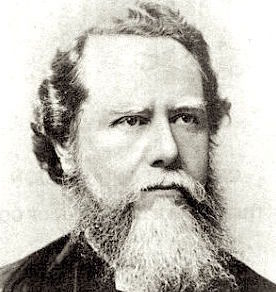
I really enjoyed reading Hudson Taylor’s Spiritual Secret. You should read it. Here are some observations from my reading…
Summary of the book: Trust. Trust and unreserved commitment to the Lord is how I would summarize Hudson Taylor and this book. Before he went to China he said: “‘I shall have no claim on anyone for anything. My only claim will be on God. How important to learn, before leaving England, to move man, through God, by prayer alone'” (33). And that’s what we see happen. He learned to trust God alone. He trusted God even with his children. He said, “‘I find it impossible to think that our heavenly Father is less tender and mindful of His children than I, a poor earthly father, am of mine. No, He will not forget us!'” (125). And in dark days, God enabled[1] Taylor to say: “The battle is the Lord’s, and He will conquer. We may fail—do fail continually—but He never fails” (p. 154).
Insights from the book:
- The impact that one person can have is tremendous when they trust the Lord and have an unreserved commitment to do His will (cite the number of believers in China now, p. 12).
- “We want, we need, we may have, Hudson Taylor’s secret and his success, for we have Hudson Taylor’s Bible and his God” (p. 16). That is such a good reminder. The same God that brought Israel out of Egypt, rose Jesus from the dead, and provided for Hudson Taylor is the same God who is Lord of all now.
- Hudson Taylor wore Chinese clothes even though this was unprecedented and looked down upon by some (cf. e.g. p. 65). This is an important reminder that God and His Word must govern us, not the expectations of others.
- Hudson Taylor had “the Lord’s own yearning of heart over the lost and perishing” (19 cf. p. 32, 112). “We may have more wealth in these days, better education, greater comfort in traveling and in our surroundings even as missionaries, but have we the spirit of urgency, the deep, inward convictions that moved those that went before us; have we the same passion of love, personal love for the Lord Christ? If these are lacking, it is a loss for which nothing can compensate” (p. 127). This reminds me that I need (God help me!) to develop at heart for the lost and love and passion for the Lord Jesus Christ who is their only hope.
- “It was not easy to keep first things first and make time for prayer. Yet without this there cannot but be failure and unrest” (p. 22). Prayer and delighting myself in God is vital.
- “The One Great Circumstance of Life, and of all lesser, external circumstances as necessarily the kindest, wisest, best, because either ordered or permitted by Him” (p. 79). I need to have a bigger view of God. This is vital in part because “The secret of faith that is ready for emergencies is the quiet, practical dependence upon God day by day which makes Him real to the believing heart” (p. 100).
- “’My father sought the Truth,’ he continued sadly, ‘and died without finding it. Oh, why did you not come sooner?’” (p. 95). This quote reminds me of the absolute importance of heralds going to share the good news of Jesus.
- “In these days of easy-going Christianity, is it not well to remind ourselves that it really does cost to be a man or woman whom God can use? One cannot obtain a Christlike work save at great price” (p. 27). This quote—and Hudson Taylor’s life—reminds me and reinvigorates me to seek hard after the Lord.
- “How then to have our faith increased? Only by thinking of all that Jesus is and all He is for us: His life, His death, His work, He Himself as revealed to us in the Word, to be the subject of our constant thoughts. Not a striving to have faith… but a looking off to the Faithful One seems all we need; a resting in the Loved One entirely, for time and for eternity” (p. 158). This quote answers a very important question. How to have more faith? Meditate on Jesus!
- “If God should place me in a serious perplexity, must He not give me much guidance; in positions of great difficulty, much grace; in circumstances of great pressure and trial, much strength? No fear that His resources are mine, for He is mine, and is with me and dwells in me” (p. 165). This is a good reminder that whatever I face, God will be there with me as my ever-present, every-ready, and all-powerful help.
Personal application:
- I need to trust the God who is simultaneously the Lord of the universe and my Father.
- I need to faithfully pray in reliance and desperation to the One who is Lord and Father.
- I need to renew my commitment to spend and be spent for the Lord. I need to renew my commitment to discipline myself for the sake of godliness.
- I need to meditate more on Jesus (His person and work).
- I need to trust that God can use one poor and needy sinner such as I to accomplish great things for His glory.
- I need to develop more of a heart for those who are without hope and without God in the world.
- I need to keep first things first and seek God above all things—even good, healthy, and productive things.
- I need to remember that whatever challenges are in front of me God’s grace is sufficient. God is all-powerful and He is with me. He is my Father!
____________________
[1] Taylor says, “I was enabled by His grace to trust in Him, He has always appeared for my help” (p. 153).



 in X
in X 