Jonathan Tepper, Shooting Up (a book review)

Jonathan Tepper, Shooting Up: A Memoir of Love, Loss and Addiction,
Author Background
Jonathan Tepper seems like a rather amazing and interesting individual. He grew up as a missionary kid among drug addicts. And yet received the Rhodes Scholarship, which is extremely difficult to get. It is one of the most prestigious and competitive awards, and requires exceptional academic achievement, but also outstanding leadership, character, and commitment to serve others. He earned an M.Litt. in Modern History from the University of Oxford. He is now the Chief Investment Officer of Prevatt Capital.
In addition to the book we’re reviewing, he wrote The Myth of Capitalism, which was ranked as one of the Best Books of 2018 in Economics by the Financial Times. Tepper does not mean that capitalism does not exist, but that monopolies ruin the benefits of capitalism. This is true in regard to large-scale markets as well as the local scale of your internet provider. We need a recovery and appropriate enforcement of antitrust laws to protect consumers and competition itself. So, part of the financial problem many families face is not a problem of capitalism but competition. Much of the apparent competition is an illusion. All the while, companies with a monopoly pay what they want and price how they want. The monopoly wins, and competition and the average American lose.
Introduction
Shooting Up tells the story of the author growing up in a drug slum in Spain, where his missionary parents sacrificially loved and cared for heroin addicts. This eventually led to the founding of a groundbreaking drug rehabilitation center. It tells the true tale of care and dedication in the midst of destructive addiction. It recounts one family’s real and gritty love for the forgotten and left behind. It’s honest about the harsh realities of the world and the questions and struggles life brings.
If God could part the Red Sea and multiply loaves and fish, why didn’t God heal His faithful followers dying of AIDS? “Jesus healed the lepers and raised the dead. He spat into the mud and rubbed it into the blind man’s eyes to heal him. But the Bible stories all seemed like a sick joke when the men and women in the center were dying with no healing in sight.” (p. 203)
Here’s my own set of questions: “If Jesus loves the little children so much, then why did Ollie, Paige, MarieAnne, Torry, Terrance, and others need to die? If Jesus brings transformation, why did Mike steal Christmas presents from his kids to buy drugs‽”
I’ve always thought addiction is a microcosm of the sinful world we inhabit. It highlights the effects of sin in high definition and accelerated form. Shooting Up is an honest account of addiction, recovery, and loss seen through the eyes of a young boy coming to grips with the rugged realities we call life. “Shooting Up is a quietly devastating coming-of-age memoir that is as unsettling as it is unforgettable—a haunting exploration of belief, belonging, and the costs of sacrifice.”
The author graciously shared a free copy for me to review. I was immediately interested based on my experience with my heroin addict friends.
Insights and Impact
Overall, I appreciated the real-life story with real-life struggles and wrestling. It reflects the harsh realities we face in life. I also felt compelled to a real, gritty, in-the-trenches with people love. Love like Jesus’ love—Light going into darkness, the Pure entering putrid. Of course, that’s not the full reality. For when we truly enter into others’ lives, we see how alike we are to them, no matter what we thought before. We see our humanity is their humanity.
Four specific lessons stuck out to me…
1) Incarnation is real and painful.
In the house, there was a plaque with a quote from C. T Studd: “Some want to live within the sound of church or chapel bell; I want to run a rescue shop, within a yard of hell.” (p. 6) That’s what the Tepper family did. And in doing so, they imitated our Lord Jesus. Jesus had said, “As the Father has sent me, even so, in the same way, I am sending you.” The Tepper family listened and incarnated themselves into a diffrent people and culture.
In the incarnation, God entered flesh. “Carnal” often has bad connotations. Yet, Jesus became in-carnate—in flesh. Jesus is God with boots on, well, sandals. If Jesus were walking our streets today, He would be talking and making disciples of junkies.
Or as Bono from U2 said, “If Jesus were on earth you’d find him in a gay bar in San Francisco. He’d be working with people suffering from AIDS. These people are the new lepers. If you want to find out where Jesus would be hanging outit’ll be with the lepers.” (Alan Hirsch and Michael Frost, The Shaping of Things to Come, p. 44).
Sadly, very often we as Christians are ex-carnational. We have a come and see mentality that makes those who don’t know Jesus cross borders—whatever those borders are—and be missionaries themselves. That, however, was not the case with the Tepper family. They infleshed the gospel.
The Bible is honest about the brutality of the incarnation. Jesus took on flesh, and His flesh was bruised and battered, and He Himself was tempted (Heb. 4:15). Jesus, the Light, plummeted into our darkness, and the devil threw his worst at Him. When we serve and incarnate ourselves, we should expect no less.
One of the difficult things about ministry, however, is that the whole family is often swallowed up by it. Missionary kids and pastor kids don’t necessarily choose ministry, but they’re still stuck in the thick of it.
“If your parents are engineers, plumbers, or lawyers, it doesn’t matter one bit to your life, but if your parents are missionaries, it changes everything. You can’t pick your parents, but they get to pick your life. They decide where you’ll live, when you’ll pack your bags and go, and you’ll get roped into their work saving the lost.” (p. 9)
2) After repairs, there are still scars.
There’s a theme of repairing what is broken throughout the book. Repairing furniture, cleaning up buildings, and helping addicts. One of the things the drug rehabilitation center did to stay afloat financially was a furniture repair shop. “When the used or abandoned furniture entered through the doorway, the pieces came in with scrapes and dents, disfigured by years of neglect and abuse. The former owners had been unkind to the dressers, wardrobes, and desks. The handles were missing, the mirrors cracked and shattered, and often layers of faded paint covered what had once been solid oak.” (p. 70)
The men “took the furniture apart piece by piece, revealing stains and scratches in the wood, and peeling off all the old coats of paint.” (p. 70) “They loved taking something others thought was rubbish, cleaning it, caring for it and transforming into something new with sandpaper, varnish and care.” (p. 37) Maybe the men saw something in the funiture that resembled themselves.
“As a child,” the author shared, “I believed that no matter how broken and scarred by scrapes the pieces were when they entered the shop, they could always be restored. Now, though, I saw that although the scratches and scars grew fainter, they were never gone. The woodworm remained hidden, but the ravages of time could never fully be reversed. How easily we are damaged, and how hard to put back together.” (p. 180)
The Apostle Paul said in 2 Corinthians 5:17 that if anyone is in Christ, they are a new creation; the old has gone, behold, all things are new. But he also said “before transformed by the renewal of your mind” and that we “are being transformed into the same image from one degree of glory to another” (2 Cor. 3:18). Transformation takes time, and scars remain. It’s true of furniture, and it’s true of each of us in this life.
3) There are blessings and perils to education.
The Tepper family clearly valued education, but there are particular perils to education. The author shares that he couldn’t decide on many things about his life, but with his books and encyclopedias, his mind was free to roam where it wanted. “Books could fit in any backpack, yet they contained entire worlds. They were my magic carpet to change reality and take me wherever I wanted.”
“Books filled every corner of our small apartment. My parents had made a study with bookcases that lined the walls from the floor to the ceiling, as my father had when he was growing up. Books were stacked randomly in piles on the carpet like stalagmites. My parents said books had the power to transport and transform you.” (p. 9)
Education can be a blessing but also baffling. The author quotes Solomon: “For in much wisdom is much grief; and he that increases knowledge increases sorrow” (Eccl. 1:18). “Education can be a bittersweet experience. For all the joy of discovery, sometimes I wished I were a house painter and had skipped school when I was twelve. I would know how to read, but I might not be troubled by questions of belief. (p. 202)
4) Beauty will break forth from the brokenness.
Very tragically, the author’s mother got a brain tumor. After her surgery, she was not the same. She took her own life in 2012. She jumped from the rooftop of the drug rehab headquarters.
“With the added perspective of time, death has made me aware of the preciousness of life, the importance of family and friends, and the overwhelming power of love and memory.” The author goes on to share, “Shattering tragedies have marked my life, but I was always surrounded by a loving family and community. True misfortune and trauma are for those who suffer and are not surrounded by love.” (p. 266)
Yet, in reading the book, a question replayed in my mind. Why, if God is good, is there suffering? More than that, why doesn’t God protect His own faithful servants from suicide? There are many questions beyond my understanding, but I know God is love. And soon sin, and its chorus of chaos will end, and new creation will resound.
As the author said, “My mother suffered a great deal, and now she is suffering no more. I hope people will remember what a wonderful woman she was all her life. I never met a kinder, gentler, more selfless person.” (p. 264)
As Julian of Norwich said, and as is quoted in the book,
All shall be well and
All manner of things shall be well.
That is the Christian hope. We can minister in the dark because the light has come, and soon it will totally overwhelm the darkness.
Favorite Quotes
Suffering itself is meaningless. It is our response to it that gives it meaning, and it is not an easy task to thread the needle of suffering. The answer to suffering is always more love. We can love those who are hurting, and when we are grieving, we can treasure and remember those who have passed.(p. 266)
I could come home in the years ahead, but it would never truly be the same. You cannot turn back the days to the hours of youth and health. Home is not even a place; it is a fleeting state of mind—of innocence—you can never go back to. You can never truly go home. (p. 224)
Why was it that some Christians took parts of the Bible so literally—the seven-day creation, the flood, and the endless genealogies— yet viewed the Sermon on the Mount with its call to meekness, kindness, and love, and the Ten Commandments, as mere suggestions? (p. 117-18)
Suffering itself is meaningless. It is our response to it that gives it meaning, and it is not an easy task to thread the needle of suffering. The answer to suffering is always more love. We can love those who are hurting, and when we are grieving, we can treasure and remember those who have passed. (p. 266)
Every great love story will eventually become one of loss. If we do not love, we will not suffer. We cannot have it any other way. (p. 266)
Hate destroys you, but love transforms us and the world around us. (p. 69)
My mother and father had reason to be proud of all they accomplished over the decades, but not because of the size of the building or the numbers of addicts in the centers. My parents did not set out to create a large organization, seek political influence, or fight any culture wars. They set out to show compassion to one addict at a time. (p. 262)
What a vast gap between knowledge and wisdom! I was no more responsible for my odd, schizophrenic childhood than they were for their normal ones, yet I placed the burden upon them to understand me. It is easier to blame others than to accept our shortcomings and grow. And so I retreated further into my shell. (p. 224)
If only my parents had not taught me how to think, I would not have had the tools to take my own beliefs apart piece by piece and to saw off the branch I was sitting on. (p. 202)
“Thank you, Lord, that while we were stealing from the slot machines last night you didn’t let the police catch us. Thank you, God, for looking after your sheep. Amen.” (p. 39)
Some Christians were the worst possible advertisements for Christianity. (p. 117)
David shared a room with Timmy, and I bunked with Peter, who was only one year, two months, and one day younger than me. But my parents’ books had a room all to themselves. (p. 10)
Quotes from Nancy Pearcey’s book Love Thy Body
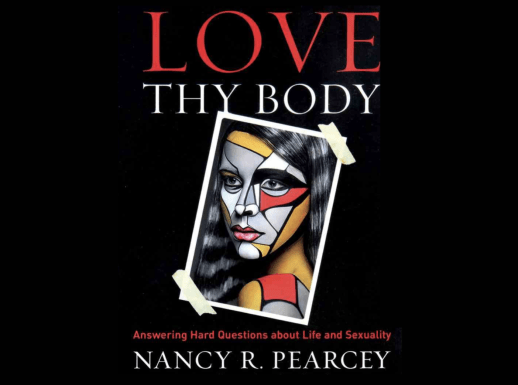
Here are 10 quotes from Nancy Pearcey’s book Love Thy Body: Answering Hard Questions about Life and Sexuality (Grand Rapids: Backer Books, 2018). It’s a really good and timely book.
Quote #1
“A worldview that says human life has no inherent value or dignity will never lead to utopia, no matter how advanced the tools and technology” (Nancy R. Pearcey, Love Thy Body, 101).
Quote #2
The Apostle Paul “would have seen prostitutes on the street and in the doorways of brothels. He probably saw slave auctions, where youths his own age were being sold to local pimps” (Pearcey, Love Thy Body, 187).
Quote #3
“From the beginning, Christians have not defended ‘traditional values.’ They have stood for truth against prevailing cultural norms” (Pearcey, Love Thy Body, 188).
Quote #4
“The biblical ethic says our sexual identity has the high honor of being part of the moral structure of the universe” (Pearcey, Love Thy Body, 189).
Quote #5
“Christians must once again become known as those who honor the whole person. The reason they speak out on moral issues should not be because their beliefs are being threatened or because they feel‘offended.’…. Christians must make it clear that they are speaking out because they genuinely care about people” (Pearcey, Love Thy Body, 190).
Quote #6
“People must be drawn in by a vision that attracts them by offering a more appealing, more life-affirming worldview. Christians must present biblical morality in a way that reveals the beauty of the biblical view of the human person so that people actually want it to be true. And they must back up their words with actions that treat people with genuine dignity and worth” (Pearcey, Love Thy Body, 190).
Quote #7
Pearcey quotes Jean Paul Sartre: “There is no human nature because there is no God to have a conception of it…. Man is nothing else but that which he makes himself.” So, in this view, as Pearcey says, “There is no blueprint for what it means to be human…. And if nature reveals no purpose, then it cannot inform our morality” (Pearcey, Love Thy Body, 206).
Quote #8
“Christianity assigns the human body… much richer dignity and value. Humans do not need freedom from the body to discover their true authentic self. Rather we can celebrate our embodied existence as a good gift from God. Instead of escaping from the body, the goal is to live in harmony with it” (Pearcey, Love Thy Body, 210-11).
Quote #9
“Those who respect science the most should also be the most pro-marriage” (Nancy R. Pearcey, Love Thy Body, 242). Why? Because “children of unmarried or divorced parents are far more likely to suffer emotional, behavioral, and health problems. They are at higher risk for crime, poverty, depression, suicide, school difficulties, unmarried pregnancy, and drug and alcohol abuse” (Pearcey, Love Thy Body, 242).
Quote #10
“Instead of moving out of the state of nature populated by lone, autonomous individuals, we are moving into a state where adults are isolated individuals, connecting with others temporarily and only when it meets their needs. We are regressing to a pre-civilized condition” (Pearcey, Love Thy Body, 248).
.
10 Ways to Read More Books in 2021

I read 70+ books in 2020.[1] Below I’ll tell you how.
“If you ain’t cheating, you ain’t trying.” I don’t think you should cheat. Cheating is wrong. But you should, however, make the most of every advantage you have as best as you can.
That’s what I seek to do with reading. I take advantage of everything I can.
I read all sorts of books for all sorts of reasons. Depending on the reason for reading and the type of book, I will read it in a different way. Some people shun audiobooks. But, I personally don’t get that. There are all sorts of reasons for reading and all sorts of ways that people retain things best.
As I said, I think we should wisely take advantage of everything we can as best as we personally can.[2]
Here are nine things I’ve used to my advantage:
1) Time
Time is the most precious commodity there is. Even little bits of gold have value, how much more small slots of time!
You can get a lot read when you make the most of small time slots. Waiting can easily turn into productive reading. I always have a book on hand. And my wife often listens to audiobooks while doing dishes or laundry.
2) Old fashioned books
Always have one with you. You never know when you’ll be able to get a few paragraphs or a few pages read.
3) Kindle app on my phone
It’s always with me. I always have a book I’m reading on Kindle.
4) Hoopla or Libby
Hoopla and Libby are free apps and one of them should be available through your local library. I’ve used them both at different times to listen to tons of books.
5) Audible
Audible is an audiobook service. My wife and I had a membership for a long time. It was great.
6) ChristianAudio
ChristianAudio is an audiobook service that provides Christian audiobooks. You can signup for a free audiobook a month.
7) Speechify
Speechify is an amazing app. It was created by Cliff Weitzman, someone with dyslexia, to help people with dyslexia.
With Speechify you can take a picture of a page in a book and it will convert it to audio. I will sometimes buy a book on Kindle and take a screenshot of each page of the Kindle book and load it on to Speechify. In this way, I can listen to the book.
I can also still make notes. If something sticks out to me that I want to capture I’ll take a screenshot on the Speechify app. Then I’ll search the keywords from the screenshot on the Kindle book and highlight and make any notes I want to make.
Speechify has been a huge blessing to me. I read very slowly but when I use Speechify I can read over 650 words per minute. Speechify probably triples my reading speed but I’m still able to retain what I read and make notes.
8) A community of book lovers
I have multiple friends (including my wife!) that love to talk books and encourage the reading of good books.
9) Goodreads
Goodreads is a social media site for reading. Goodreads allows you to track and review books you’ve read as well as receive recommendations from friends. You can see my Goodreads account here.
10) Pocket (very helpful but not for books)
Pocket is an app that allows you to save articles to your “pocket.” It’s a great way to save and organize articles. But, the thing I enjoy most is that it has a function that allows you to listen to articles.
There was and never will be a meaningless moment.

Our lives and our decisions matter eternally. They ripple through the corridors of time. There was and never will be a meaningless moment.
I was reminded of this truth recently by two things. One was an email from a missionary that was questioning the good that they, limited and challenged that they are, could accomplish. The second reminder came from one of my favorite books by C.S. Lewis, Perelandra.
In Perelandra Elwin Ransom is sent to the planet Perelandra (or in English, Venus) to stop the Fall of that planet (parallel in some ways to the temptation of Eve in Genesis). Weston, the great enemy, possessed by Satan has now become the un-man. The un-man is seeking to cause the destruction of the beautiful and enchanting Perelandra.
Ransom upon seeing that he is commissioned to stop the un-man and prevent the Fall is crushed by the weight of it all as well as confused over why God doesn’t send some miracle. “He tried to persuade himself that he, Ransom, could not possibly be [God’s] representative” (p. 141).
Ransom questioned. “What was the sense of so arranging things that anything really important should finally and absolutely depend on such a man of straw as himself?” (p. 142). Yet that is the way things are.
“At that moment, far away on Earth, as he now could not help remembering, men were at war,… and freckled corporals who had but lately begun to shave, stood in horrible gaps or crawled forward in deadly darkness, awaking, like him, to the preposterous truth that all really depended on their actions” (p. 142).
Or think of Eve herself. She “stood looking upon the forbidden fruit and the Heaven of Heavens waited for her decision” (p. 142).
So, Ransom came to see that it is true, that “a stone may determine the course of a river” (p. 142).
He felt it megalomania to think that he himself is the way that God will work—work a miracle. Yet, “he himself was the miracle” (p. 141). He was God’s provision. The way God was providing deliverance.
“Here in Perelandra the temptation would be stopped by Ransom, or it would not be stopped at all… This chapter, this page, this very sentence, in the cosmic story was utterly and eternally itself; no other passage that had occurred or ever would occur could be substituted for it (p. 146)… Great issues hung on his choice… It lay with him to save or to spill” (p. 148).
As he saw his call, he also felt an unbearable weight. Then he felt the weight left. “He was in God’s hands. As long as he did his best—and he had done his best—God would see to the final issue” (p. 141).
God uses mere humans as His mouthpiece. God uses humans to do His will. What we do matters. It matters eternally.
Let me ask you, friends, what are you doing?
In Mere Christianity, Lewis said, “There are no ordinary people. You have never talked to a mere mortal. Nations, cultures, arts, civilizations—these are mortal, and their life is to ours as the life of a gnat. But it is immortals whom we joke with, work with, marry, snub, and exploit—immortal horrors or everlasting splendors.”
Friends, our lives matter, our actions matter, our voices matter.
If we knew a millionth of the magnitude of our lives we’d be moved to wonder and crippled by the significance of it all. Our lives and our every action have significance because this world and this life is not all there is.
And for Christians, this is multiplied ten-fold. We are mouthpieces, ambassadors, commissioned by the one true God.
Friends, let’s live fierce purposeful lives because we have purpose. Our lives matter more than we can know.
Revelation: Triumph of the Lamb

Dennis E. Johnson’s book, Triumph of the Lamb: A Commentary on Revelation, has a lot of important and relevant things to teach us. Here are a few highlights from the introduction…
1. Revelation Is Given to Reveal.
2. Revelation Is a Book to Be Seen.
“One of the key themes of the book is that things are not what they seem. The church in Smyrna appears poor but is rich… What appear to the naked eye, on the plane of human history, to be weak, helpless, hunted, poor, defeated congregations of Jesus’ faithful servants prove to be the true overcomers who participate in the triumph of the Lion who conquered as a slain Lamb. What appear to be the invincible forces controlling history—the military-political-religious-economic complex that is Rome and its less lustrous successors—is a system sown with the seeds of its self-destruction” (p. 9).
3. Revelation Makes Sense Only in Light of the Old Testament.
“The ancient serpent whose murderous lie seduced the woman and plunged the world into floods of misery (Gen. 3:1) is seen again, waging war against the woman, her son, and her other children—but this time his doom is sure and his time is short (Rev. 12; 20)” (p, 13).
4. Numbers Count in Revelation.
For example, “The number seven symbolizes the Spirit’s fullness and completeness” (p. 15).
5. Revelation Is for a Church under Attack.
“Our interpretation of Revelation must be driven by the difference God intends it to make in the life of his people. If we could explain every phrase, identify every allusion to Old Testament Scripture or Greco-Roman society, trace every interconnection, and illumine every mystery in this book and yet were silenced by the intimidation of public opinion, terrorized by the prospect of suffering, enticed by affluent Western culture’s promise of ‘security, comfort, and pleasure,’ then we would not have begun to understand the Book of Revelation as God wants us to… Always, in every age and place, the church is under attack. Our only safety lies in seeing the ugly hostility of the enemy clearly and clinging fast to our Champion and King, Jesus” (19).
6. Revelation Concerns “What Must Soon Take Place.”
7. The Victory Belongs to God and to His Christ.
“Revelation is pervaded with worship songs and scenes because its pervasive theme—despite its gruesome portrait of evil’s powers—is the triumph of God through the Lamb. We read this book to hear the King’s call to courage and to fall down in adoring worship before him” (p. 23).
20 of the best books I read in 2019

Here are twenty of my favorite books that I read in 2019. I think I only read three fiction books this year. I need to fix that. I plan to read quite a bit more fiction next year. Anyhow, here’s some of my favorites… (in no particular order)
- Why Suffering?: Finding Meaning and Comfort When Life Doesn’t Make Sense
by Ravi Zacharias - Safely Home by Randy Alcorn
- Apologetics at the Cross: An Introduction to Christian Witness by Josh Chatraw and Mark D. Allen
- Them: Why We Hate Each Other–and How To Heal by Ben Sasse
- How Long O Lord?: Reflections on Suffering and Evil by D.A. Carson
- Titan: The Life of John D. Rockefeller, Sr. by Ron Chernow
- Alienated American: Why Some Places Thrive While Others Collapse
by Timothy P. Carney - Holy Sexuality and the Gospel: Sex, Desire, and Relationships Shaped by God’s Grand Story by Christopher Yuan
- Remember Death: The Surprising Path to Living Hope by Matthew McCullough
- The Autobiography of Martin Luther King Jr by Clayborne Carson
- Today Matters: 12 Daily Practices to Guarantee Tomorrow’s Success by John C. Maxwell
- Elon Musk: Tesla, SpaceX, and the Quest for a Fantastic Future by Ashlee Vance
- Walking with God through Pain and Suffering by Timothy Keller
- Preaching as Reminding: Stirring Memory in an Age of Forgetfulness by Jeffrey D. Arthurs
- An Unhurried Leader: The Lasting Fruit of Daily Influence by Alan Fadling
- Everyday Church: Gospel Communities on Mission by Tim Chester and Steve Timmis
- Susie: The Life and Legacy of Susannah Spurgeon, wife of Charles H. Spurgeon by Ray Rhodes Jr.
- To the Golden Shore: The Life of Adoniram Judson by Courtney Anderson
- Endurance: Shackleton’s Incredible Voyage by Alfred Lansing
- Deep Work: Rules for Focused Success in a Distracted World by Cal Newport
Out of all the books I read last year, Remember Death by Matthew McCullough, is the one I would suggest you read over all the rest.
Read it.
Some of the most significant theological books I have read…

Here is a list (in no particular order) of some of the most significant theological books I have read.*
- God’s Glory in Salvation Through Judgment By James Hamilton
- From Eden to the New Jerusalem and The Servant King by T. D. Alexander
- The Imitation of Christ by Thomas A Kempis
- The Cost of Discipleship by Dietrich Bonhoeffer
- The Doctrine of God and The Doctrine of the Word of God by John Frame
- Knowing God by J. I. Packer
- Money, Possessions, and Eternity by Randy Alcorn
- Systematic Theology by Wayne Grudem
- Desiring God, Don’t Waste Your Life, God is the Gospel, Future Grace and Let the Nations be Glad by John Piper
- The Knowledge of the Holy by A.W. Tozer
- New Testament Theology and The King in His Beauty by Thomas R. Schreiner
- Foundations of Soul Care by Eric Johnson
- The Cross of Christ by John Stott
- Mere Christianity by C.S. Lewis
- Death by Love by Mark Drisscol
- The Universe Next Door by James Sire
- Dangerous Calling by Paul Tripp
- The Resurrection of Jesus by Michael Licona
- Desiring the Kingdom by James K. A. Smith
- Radical by David Platt
- Center Church by Timothy Keller
___________________________
*This is a personal list of books that helped me in a particular way at a particular time. This is not a list on the best and most significant theological books; that list would look different.
The Pastoral Long-Suffering of Spurgeon and Boyce

Introduction
We see through James P. Boyce’s and Charles Spurgeon’s life that they were entrusted with great gifts but we also see through a survey of their biographies that they also suffered great grief. We have much to glean from them.[1] We will see that we are all called to be faithful stewards of what God has entrusted to us. Though it will be difficult to various degrees we can endure what God has called us to by the grace that He grants us.
Hear Spurgeon’s words:
I know you will tell me that the gold must be thrust into the fire, that believers must pass through much tribulation. I answer, Truly it must be so, but when the gold knows why and wherefore it is in the fire, when it understands who placed it there, who watches it while amid the coals, who is sworn to bring it out unhurt, and in what matchless purity it will soon appear, the gold, if it be gold indeed, will thank the Refiner for putting it into the crucible, and will find a sweet satisfaction even in the flames.[2]
Thus, even as we face difficulties we must entrust ourselves to God, as Spurgeon did. Even in the midst of Spurgeon’s great suffering he “never doubted that his exquisite pain, frequent sicknesses, and even despondency were given him by God for his sanctification in a wise and holy purpose.”[3]
A Great Work At A Great Cost
Spurgeon and Boyce both had great life works but they both suffered great loss in their lives as a result. Boyce, who founded the seminary I went to, said that the seminary may die but that he would die first.[4] He would worked rain or shine for the prosperity of the school. He said that he did not own the seminary but rather it owned him. Boyce kept the seminary alive and fed it with almost his own heart’s blood.[5] Thus we see that Boyce clearly realized that he would have to imitate his Lord’s long-suffering. There was “mammoth energy and sacrifice involved” for Boyce “in setting the seminary securely during the trials of decades.”[6] “Boyce endured the press of ‘anxieties, trials, and labors” during days when the seminary’s future appeared bleak and exerted ‘herculean toils’ to surmount these seemingly invincible difficulties.”[7]
Similarly, Spurgeon was not a martyr, but he chose to die every day.[8] He suffered with gout; he gave his money, his time, and himself completely to the Lord. God used Spurgeon greatly. He wrote over 140 books, penned around 500 letters a week, spoke to thousands of people each week, started an orphanage, started a pastor’s college, and led countless people to Christ, among other things.[9] That was all possible because he gave himself entirely to the Lord. One of Spurgeon’s biographers, Arnold Dallimore, said, “Early in life he had lost all consideration of his own self, and his prayer that he might be hidden behind the cross, that Christ alone might be seen, had expressed his heart’s chief purpose.”[10]
Spurgeon said, “It is our duty and our privilege to exhaust our lives for Jesus.”[11] Boyce, similarly, had an “entire devotion.”[12] Likewise, Paul was greatly used by God because he gave himself unreservedly to Him; even to the point of much affliction. If we are going to be used by God, for His glory, we must unreservedly sacrifice all and He must get all, Christianity is all-encompassing.[13] May our chief boast be Jesus Christ, and Him crucified (Gal. 6:14).
Jesus held the weight of the world on His shoulders, even the sin of the whole world. Yet, Spurgeon and Boyce surely often felt as if the weight of the world was on their shoulders. However, they also felt that their burden was easy (cf. Matt. 11:30), and they knew that through Jesus Christ their reward would be great (2 Cor. 4:17). Both Spurgeon and Boyce knew that the cross came before the crown, trials before the triumphant Kingdom.[14] So, Spurgeon said, for instance, “Good men are promised tribulation in this world, and ministers may expect a larger share than others.”[15]
I would do well to remember the price that godly men and women have paid throughout the centuries when I become discouraged in my work. The writer to the Hebrews wrote about various faithful men and women to encourage the recipients of the letter to endure in the face of persecution (see Heb. 11). I need to remember “the great cloud of witnesses” (Heb. 12:1), including Spurgeon and Boyce, and run on with endurance (cf. v. 1).
Physical Suffering
Martin Luther talked about the theology of the cross.[16] I think both Spurgeon and Boyce had a clear understanding of this theology. In fact, I think Spurgeon could have written his own tome on it.[17] Both Spurgeon and Boyce lived a life of strenuous endeavor, to borrow Theodore Roosevelt’s words.[18] Yet, they did not box as one beating the air (1 Cor. 9:26). Rather, they knew for what they labored, they labored for the Lord, and thus knew their labor was not in vain (1 Cor. 15:58). Spurgeon, as he loved Bunyan’s great work and read it around one hundred times, certainly would have agreed with Lloyd-Jones’s observation: “The great truth in Bunyan’s Pilgrim’s Progress is not that Christian endured great hardships on his way to the eternal city, but that Christian thought it to be worth his while to endure those hardships.”[19]
Spurgeon and Boyce ironically suffered with some of the same physical bodily afflictions. They both suffered with bouts of gout, for instance.[20] Gout is typically the worst when body temperature is lower. Gout very often targets the big toe but can also cause joint pain in wrists and fingers as well as fatigue. Symptoms from gout can actually be so intense that the weight of a sheet can be unbearable. However, the physical pain was multiplied for these great men when you consider all that they were incapable of doing when they were laid up because of their pain. Though they sought to make the best of this time, surely they often felt anxiety and perhaps guilt over what they were unable to accomplish during these bouts.
Yet, their great enemy, to borrow the words of Spurgeon, was also a great teacher. We see in Spurgeon’s biography that his great suffering enabled him to better relate to people (cf. 2 Cor. 1:4).[21] Suffering taught both Spurgeon and Boyce humble reliance on the Lord. This brings to mind Paul’s thorn in the flesh (2 Cor. 12:7). Even as Boyce and Spurgeon were writhing in pain I am sure they thought (1) that God was sufficient to use frail jars of clay (2 Cor. 4:7), (2) that God is sovereign and when they weep He still reigns and cares for His Church, and (3) that though they were indeed experiencing great suffering it was nothing compared to the eternal wrath that the suffering of the Son of God had averted for them. Thus, though these great men knew great suffering, they both grew instead of grumbling. Their gout was a rod that dished out sanctification.
I would do well to look at these men’s example and hear again, “Good men are promised tribulation in this world, and ministers may expect a larger share than others.”[22] I may or may not deal with the physical pain that they dealt with but I can certainly learn from their patience in the midst of it. I must also remember “A disciple is not above his teacher, nor a servant above his master” (Matt. 10:24). If Jesus my Master suffered then I can expect nothing less.
Depression
During one of Spurgeon’s bouts with depression he said, “I could weep by the hour like a child, and yet I knew not what I wept for.”[23] Not only did Spurgeon have a natural disposition to depression[24] but the weight of his position and responsibilities also was heavy upon him.[25] He said,
Our work, when earnestly undertaken, lays us open to attacks in the direction of depression. Who can bear the weight of souls without sometimes sinking to the dust? Passionate longings after men’s conversion, if not fully satisfied (and when are they?), consume the soul with anxiety and disappointment… The kingdom comes not as we would, the reverend name is not hallowed as we desire, and for this we must weep… How often, on Lord’s-day evening, do we feel as if life were completely washed out of us![26]
Thus we see that Spurgeon, “the prince of preacher,” was sometimes even depressed about his sermon on Monday or even as he walked down from the pulpit on Sunday. He said these words to a group of ministers, “We come out of the pulpit, at times, feeling that we are less fit than ever for the holy work. Our last sermon we judge to be our worst.”[27] “We experience dreary intervals of fruitless toil, and then it is no wonder that a man’s spirit faints within him.”[28]
8 Quotes from *Simple Church* by Thom Rainer and Eric Geiger

10 Quotes from Greg Gilbert’s book *What is the Gospel?*

- “An emaciated gospel leads to emaciated worship. It lowers our eyes from God to self and cheapens what God has accomplished for us in Christ. The biblical gospel, by contrast, is like fuel in the furnace of worship. The more you understand about it, believe it, and rely on it, the more you adore God both for who he is and for what he has done for us in Christ” (Greg Gilbert, What is the Gospel, p. 21).
- “That I have rebelled against the holy and judging God who made me is not a happy thought. But it is an important one, because it paves the way for the good news” (30).
- “Nobody wants a God who declines to deal with evil. They just want a God who declines to deal with their evil” (44).
- “Since the very beginning of time, people have been trying to save themselves in ways that make sense to them, rather than listening and submitting to God” (102).
- “If we say merely that God is redeeming a people and remaking the world, but do not say how he is doing so (through the death and resurrection of Jesus) and how a person can be included in that redemption (through repentance from sin and faith in Jesus), then we have not proclaimed the good news. We have simply told the narrative of the Bible in broad outline” (107).
- “The message of the cross is going to sound like nonsense to the people around us. It’s going to make us Christians sound like fools, and it most certainly is going to undermine our attempts to ‘relate’ to non-Christians and prove to them that we’re just as cool and harmless as the next guy. Christians can always get the world to think they are cool—right up to the moment they start talking about being saved by a crucified man. And that’s where coolness evaporates, no matter how carefully you’ve cultivated it” (110).
- “Sins don’t shock us much. We know they are there, we see them in ourselves and others every day, and we’ve gotten pretty used to them. What is shocking to us is when God shows us the sin that runs to the very depths of our hearts, the deep-running deposits of filth and corruption that we never knew existed in us and that we ourselves could never expunge. That’s how the Bible talks about the depth and darkness of our sin—it is in us and of us, not just on us” (54).
- “It is only when we realize that our very nature is sinful—that we are indeed ‘dead in our trespasses and sins,’ as Paul says (Eph. 2:1, 5)—that we see just how good the news is that there is a way to be saved” (55).
- “Faith and repentance. That is what marks out those who are Christ’s people, or ‘Christians.’ In other words, a Christian is one who turns away from his sin and trusts in the Lord Jesus Christ—and nothing else—to save him from sin and the coming judgment” (73).
- “If you are a Christian, then the cross of Jesus stands like a mountain of granite across your life, immovably testifying to God’s love for you and his determination to bring you safely into his presence” (117).



 in X
in X 