Sin is Not Good #1
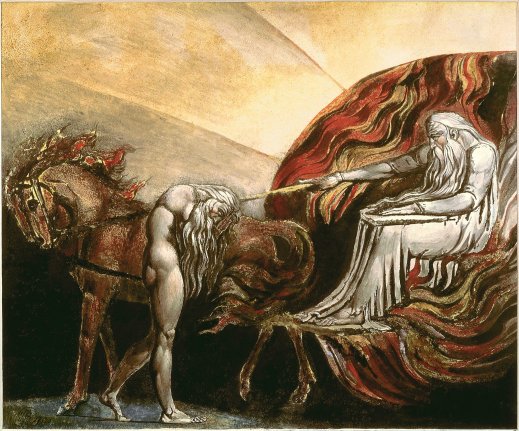
Sin is the Unmaking of Man and a Manifold of Beauties
This world cries out like so much ripe fruit, “I’m good! Eat me! Indulge yourself…” However, much of the fruit here, as in the Garden, leads to cataclysmic clashes, with God, yourself, and humanity. It looks good and much of it is. But much of it has an infectious parasite on it. It’s hard, though not impossible, to consume it without getting “sick.”
In Genesis 3:1-24 we see the Fall of humanity. We see various forms of death given birth to. We see “’an ever-growing avalanche of sin, a continually widening chasm between man and God’. It progresses from disobedience, to murder, to indiscriminate killing, to titanic lust, to total corruption, and uncontrolled violence.”[ii] Sin truly brings a litany of death. “Disease, genetic disorders, famine, natural disasters, aging, and death itself are as much the result of sin as are oppression, war, crime, and violence. We have lost God’s shalom—physically, spiritually, socially, psychologically, culturally. Things now fall apart.”[i]
Through sin we have marred more than the mediocre; we have marred the Michelangelos of the world. We have marred superb beauty and made it unbelievably hideous. Yet, if we see something that is less hideous we look at it as a wonder. Why? Because this world is so tainted and steeped in sin and the effects of sin.
To illustrate, if I ruin a “masterpiece” that my son made with paper, glue, and crayons the ramifications will be far less than if I destroy the Mona Lisa. Well, creation was intended to be a Mona Lisa; that is, it was intended to be supremely glorious. God’s creation was intended to be good, beautiful, and esthetically pleasing to our senses, emotions, and intellect beyond what we can imagine. And so the ramifications of the destruction of such beauty is greater. We often think of this world as the way it is not as the way it was intended to be. If we could see a glimpse of what the Great Creator had in mind for His masterpiece then we’d see that we “paved paradise and put up a parking lot.” We essentially killed a thousand Beethovens and blared white noise. We backfilled the Grand Canyon with gravel. We burned a hundred museums of art. We scorched our taste buds off our tongue. We took a wrecking ball to all the wonders of the world and razed a thousand gorgeous cities. In short, through our “war crimes,” we, as humanity, deserve death. We have brought cataclysmic chaos to the world.
Sin is not a light thing. We, as humans, were created in the image of God. We were to be like Christ, God in flesh (cf. Gen. 1:26-27). The world was meant to be supremely glorious, peaceful, and loving but instead it is disgusting and understandably repugnant to God. So, as we try to grasp the wonder of what has been marred we can begin to understand how serious the situation is and how terrible sin is.
Thus, sin is not good because it is the unmaking of man and a manifold of beauties.
__________________________
[i] Timothy Keller, The Reason for God, 177. “Disunion with God is reflected in disunion with others and with oneself” (Johnson, Foundations of Soul Care, 466 cf. Bonhoeffer, Ethics).
[ii] Revd Victor James Johnson, “Illustrating Evil – The Effect of the Fall as seen in Genesis 4-11,” 57 in Melanesian Journal of Theology 11-1&2 (1995).
Shalom is Slain
O’ for the worlds that lay asunder,
for the shalom that is slain.
We ingrain habits of unrest,
we fester and pass on spoil.
O’ for the earth to break,
for all to be made anew.
For the habits in my heart to pour out,
and for living waters to ensue.
God this world is broken,
we are altogether damaged and damned.
“Destroy the destroyers of the earth,”
destroy what in me destroys.
Shalom was slain
but through the slain Messiah (is/will be) renewed.
O’ God, Maranatha!
True Knowledge Should Truly Humble

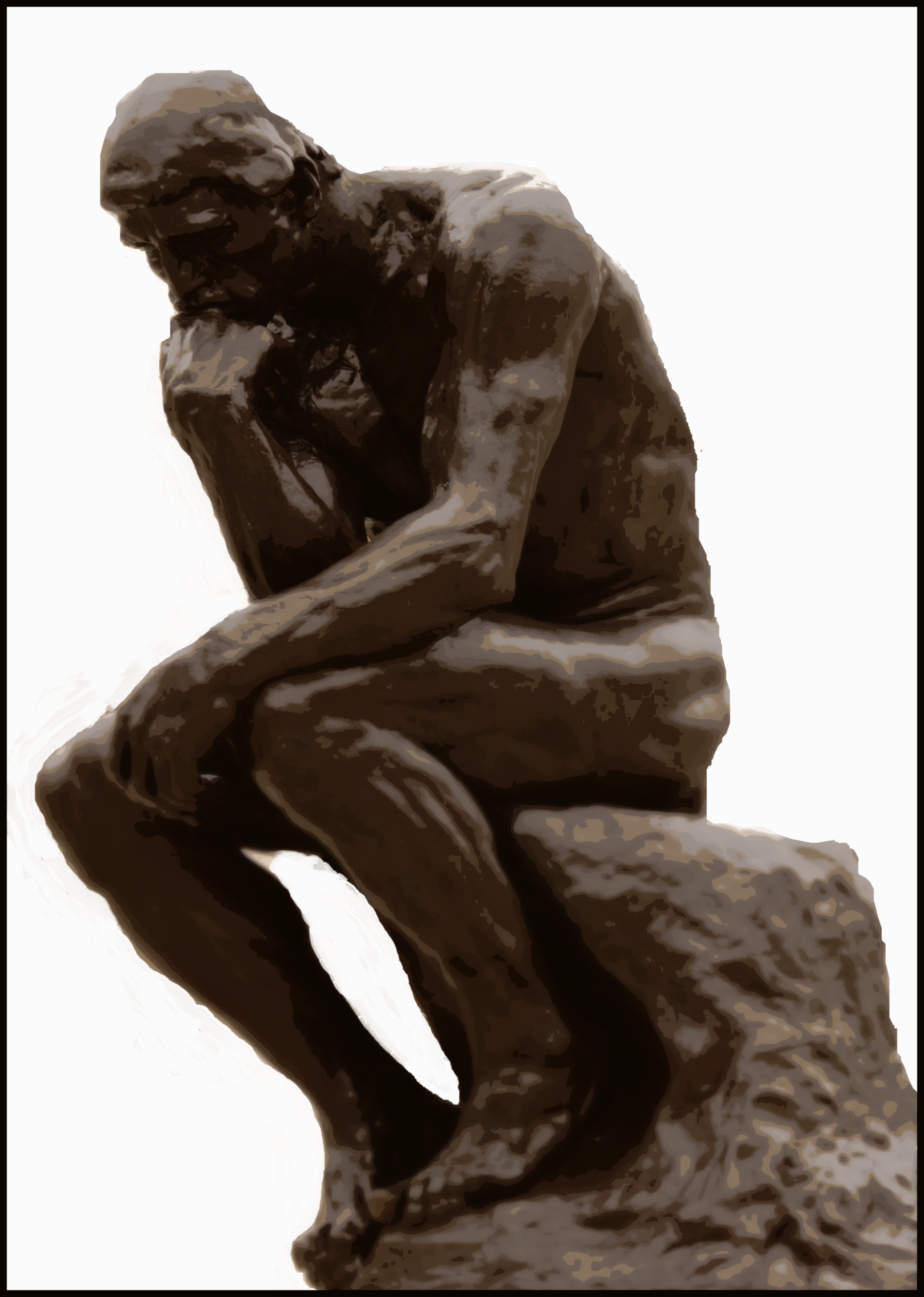
Knowledge[1] is dangerous. Not only the consequence that ideas themselves have but also the tendency that knowledge has to puff up. Truths that should lay us low in humility often conflate our egos. Paradoxically, knowledge is also the very thing that humbles.[2] We may not be proud without knowledge but neither will be humble. We will be ignorant. Knowledge is dangerous. Albeit, a necessary danger.
Knowledge is indispensable to live life rightly. We must understand though, that knowledge is not innate within us. It must be pursued. However, the very fact that knowledge is external should press us to pursue it in humility. It is not ours. We do not have the market on knowledge. Also, if we pursue it arrogantly we will miss much of it (Prov. 3:5-6; 15:14, 22). We should realize that not only is knowledge external from us but so is the desire for knowledge. We should not think we are better than the ignorant because our very desire for knowledge is itself a gift (James 1:17).
The desire for knowledge with the goal of being humbled is good. The fear of the LORD is the beginning of knowledge and humility comes before honor (Prov. 1:7; 9:10; 15:33; Job 28:28). Jesus pronounces woes upon the Pharisees, not for their knowledge, their knowledge is commendable, but on the result that their knowledge had upon them. It did not humble them (Matt 23:5-7, 11-12). The publican had little knowledge but it served to humble him. If we truly understand, if the eyes of our hearts are enlightened, we will praise God and not ourselves. We can have all knowledge but if we have not love, it profits us nothing (1 Cor. 13:1-3).
Thomas A Kempis said in The Imitation of Christ that “On the day of judgment, surely, we shall not be asked what we have read but what we have done; not how well we have spoken but how well we have lived.” That is not to say that knowledge is not important, it is. However, knowledge that does not lead to life change and humility is worthless and condemning. The person that knows the right thing to do and does not do it for that person it is sin (James 4:17). Kempis rightly says, “The more you know and the better you understand, the more severely will you be judged, unless your life is also the more holy. Do not be proud, therefore, because of your learning or skill. Rather, fear because of the talent given you.” God will judge us according to all that He has entrusted to us (see Matt. 25:14-30).
As our minds rise to exalted things, our consciousness of ourselves must fall. Truth humbles, or it is not understood to be truth to ourselves. Again Kempis says,
“What good does it do to speak learnedly about the Trinity if, lacking humility, you displease the Trinity? …I would rather feel contrition than know how to define it. For what would it profit us to know the whole Bible by heart and the principles of all the philosophers if we live without grace and the love of God?”
Knowledge is vital, we cannot serve or know the LORD without it, but knowledge must always humble.
How do we fight the damning affect that knowledge so often has? It all has to do with our motivation from the outset. As J.I. Packer has said, in his classic book Knowing God, “there can be no spiritual health without doctrinal knowledge; but it is equally true that there can be no spiritual health with it, if it is sought for the wrong purpose.”[3] Do we study the Trinity to be in awe and wonder before the God who is three-in-one? Or do we study the Trinity to look astute before our peers? The choices are not restricted to arrogance or ignorance but we have to fight for the last alternative, humility. If we go the way of ignorance we will never know humility, who or what would we be humbled before? And arrogance is the misapplication of knowledge. It is a pursuit of knowledge with the wrong goal in mind. Do we read science journals and Scripture to merely gain knowledge? Or do we do it to be humbled by the God that formed the furthest reaches of the galaxies and yet revealed Himself to us; yea, atoned for our sins (cf. Heb. 1:3)?
Pursue knowledge. Pursue it in whatever field. But do so in humble worship with your ultimate end being to glorify God. May we be amazed by and enraptured in the truths of Scripture as children. May we continually go to God humbly in awe of Him and His truth that is contained everywhere around us for God gives grace to the humble (James 4:6).
~Whatever you study or seek to know, do it all to the glory of God~
______________________
[1] I say “knowledge” and not any specific stream of knowledge because I believe that all truth is God’s truth. What I mean by knowledge is knowledge that is true, true truth, as Schaeffer put it. This could be in the realm of science, math, history, etc. All truth is God’s truth because God upholds the universe by the Word of His power thus all mathematical equations are held together by His hand. Science shows us the extent to which the glory of God is manifested in His universe (as Johannes Kepler said, “science is thinking God’s thoughts after Him”), all history is a story of God unfolding Himself and is actually a testimony of His grace to redeem such as we are.
[2] Richard Baxter rightly says, “If we have any knowledge at all, we must needs know how much reason we have to be humble; and if we know more than others, we must know more reason than others to be humble” (The Reformed Pastor, 144).
[3] J.I. Packer, Knowing God, 22. He further says, “if we pursue theological knowledge for its own sake, it is bound to go bad on us. It will make us proud and conceited” (21). Rather “our concern must be to enlarge our acquaintance, not simply with the doctrine of God’s attributes, but with the living God whose attributes they are” (23).
Are You Mindful of Your Mind?

What is the place of the mind in Christianity? Is thinking relevant to the faith? What, if any, emphasis should we place on the importance of knowledge? Does hard thinking bring any beneficial fruit to the Christian life or is the tree bare, shorn of any value?
If we boil down and distil Christianity the remaining content is not logical argument. Christianity is more than a philosophy, more than a religion. It is more than cognitive assent. It is more than a social club. Christianity is not simply about ritual. It is not just about emotions. It is not just about the mind.
Christianity is a relationship with a God who has made Himself known. It is more than formulas and repetition of rote words; though there are meaningful words and ceremonies. Christianity is something that must be believed, but belief is merely the beginning (though it must continue). Christianity gives true—chiasm bridging—fellowship, but is not merely a fellowship. Christianity is a philosophy, indeed, the philosophy. We, in a sense, worship wisdom incarnate.[1] But still, Christianity is not just a philosophy.
Christianity is not just about thinking and knowing. Yet, thinking and knowing are vital.
The Christian mind is vital because it is emphatic in Scripture.[2] It is vital because Christian living is. It is vital because we are commanded to worship the LORD with all we are, are mind included (Matt. 22:37; Mk. 12:30; Lk. 10:27).[3]
The Christian mind is very important. Yet, where do we see this in Scripture? Why is this the case? And what affect does it have?
The Christian Mind and the Bible
The Bible shows us that the Christian mind is very important.[4] Thinking for Christians is not just theoretical, it is practical. We trust God because we know Him (Ps. 9:10).[5]
God tells us to think. He tells us He will teach us, yet we must learn and not be like animals without understanding (Ps. 32:8-9 cf. 73:22). In fact, we must learn so that we can obey (Josh. 1:8-9; Ps. 37:31; 86:11; 95:10; 119:11, 34).
Biblical Mysticism?

A Mystic’s Meter
The rhythms of a mystic’s faith are not drudgery upon duty and duty upon drudgery. The mystic’s meter, rather, is delight. Delight in a God they know. Yet, as much freedom as rhythm and cadence have, there is still structure. So, I want to look at the structure of the meter. What cadence does knowing God take?
Is Mysticism Wrong?
Is mysticism wrong? I think a lot depends on how it is defined. If you define mysticism as subjective vain emotional longings, then yes it is wrong. If you define mysticism as unbiblical, then yes it is wrong. If mysticism is set on anything else then God in the face of Christ (2 Cor. 4:6), then yes, mysticism is wrong.
Mysticism, however, is not wrong in itself. It is the focus that can be wrong. It is the information, or perhaps more often, the lack of information, that can be wrong.
Don Whitney instructs us:
“Don’t be deceived by a complex spirituality that gives the appearance of wisdom but doesn’t start with ‘Christ, in whom are hidden all the treasures of wisdom and knowledge’ (Colossians 2:3). And don’t become entangled in any spiritual practices that sound good but incline your mind and heart away from the ‘things that are above’” (“Practice True Spirituality”).[1]
Not All Mysticism is Created Equal
Mysticism does not have “inalienable rights.” That is, not all mysticism is created equal.
Frist, some mysticism is based on illusionary dreams and speculation. However, there is a problem with this (1 Jn. 4:1). Satan parades himself around like an angel of light (2 Cor. 11:14) so that he may devoir like a lion (1 Pet. 5:8). Subjective experiences alone cannot be our guide.[2]
Second, some mysticism contradicts the Word of God. Any word that contradicts His Word should not be our word. God is our authority. And His Word is our authority. There are many other good and important texts but they are not ultimate. They are subordinate.
Third, any form of mysticism that does not prize and exalt Messiah and His work is defective (1 Jn. 4:2). Mysticism is about knowing God. Jesus the Messiah is God in the flesh (Jn. 1:14). It is through Him that we can know God (e.g. 2 Cor. 4:4); that we can go boldly before the throne of grace (Heb. 4:16). Jesus reveals God. If we conceal Him, belittle Him, or don’t rightfully honor Him, we are not practicing mysticism but anti-mysticism; we are concealing God.
Good Mysticism
Mysticism, I believe, at it’s heart, is about knowing God deeply and experientially.[3] So then, how do we know God? We know Him through His Spirit, amen![4] And the Spirit, most typically, uses the means of His own inspired Word, the Bible. We meditate on His Word, as well as other good texts, and God, by the Spirit, reveals Himself to us. Good Christian mysticism thus relies on: 1) The Spirit for illumination, not vain visions or the like (Rom. 8:26; 1 Cor. 2:12-16; Eph. 3:14-19; 1 Jn. 4:1); 2) The inspired Word of God, not primarily other sources (2 Tim. 3:16; 2 Pet. 1:3-4); 3) The Incarnate Son to show us God, and not visions (Jn. 1:1-14; 14:6; 2 Cor. 4:4; Heb. 1:3).
Good biblical mysticism (some may prefer “spirituality”) is about having a deeper sense of God’s truth. It’s seeking for God to open our eyes that we would be deeply impacted by His truth (Ps. 119:18). It is about knowing God’s love that surpasses knowledge that we may be filled with all the fullness of God (Eph. 3:19). It’s about being renewed by the transformation of our minds (Rom. 12:2; Eph. 4:23-24; Col. 3:10). It is about revival.
It short, mysticism does not seek mere knowledge. It seeks to also experience the truth of that knowledge. So, it seeks to taste the sweetness, and not just know hypothetically and intellectually that something is sweet.
Jonathan Edwards words are enlightening:
“There is such a thing as a spiritual and divine light immediately imparted to the soul by God, of a different nature from any that is obtained by natural means… This spiritual light that I am speaking of, is quite a different thing from inspiration: it reveals no new doctrine, it suggests no new proposition to the mind, it teaches no new thing of God, or Christ, or another world, not taught in the Bible, but only gives a due apprehension of those things that are taught in the word of God… There is a difference between having an opinion, that God is holy and gracious, and having a sense of the loveliness and beauty of that holiness and grace. There is a difference between having a rational judgment that honey is sweet, and having a sense of its sweetness.”[5]
Mystics, so to speak, not only want to know that something is sweet, they want to taste it’s sweetness.
A.W. Tozer: A Good Example of a Good Mystic
James L. Snyder points out that “the word ‘mystic’ did not scare Tozer. The term ‘mysticism’ simply means ‘the practice of the presence of God,’ the belief that the heart can commune with God directly, moment by moment, without the aid of outward ritual. He saw this belief at the very core of real Christianity, the sweetest and most soul-satisfying experience a child of God can know.”[6]
Tozer rightly reminds us—how sad that we need reminded!—that salvation is “not an end but an inception, for now begins the glorious pursuit, the heart’s happy exploration of the infinite riches of the Godhead.”[7] Conversion is meant to lead to communion. Orthodoxy must, if it is to be true orthodoxy, result in doxology. “’You can be straight as a gun barrel theologically,’ Tozer often remarked, ‘and as empty as one spiritually.’”[8]
The true Christian mystic should be heat and light. Heart, head, and hand. He should love the LORD with all that he is, his heart, soul, mind and strength; and his neighbor as himself.
Conclusion
So, you might say, a mystic’s meter, what gives him his aesthetic poetry and music, is knowing God by the Spirit, though the Word, and in Christ. This is where he can find true delight. He can know God and true joy in this rhythmic triad; instead of the clashing and subjective thrashings found elsewhere. A mystic’s meter in sum, should be rhythmic, not chaotic. It should have a distinguished element to it, not destructive and haphazard vague desires. God has, Paul reminds us, revealed Himself; we don’t worship Him as unknown, but as known (Acts 17:23). We can know God truly, if not fully.
Will you seek to know God? Will you dance to the melodious meter? Will you use the means He has given you? Will you be a Christian mystic?
_______________________________________
[1] Don Whitney, “Practice True Spirituality.”
[2] Let it be noted that exceptional things may likely still happen. See 2 Cor. 12:2-4, for example.
[3] Mysticism is “the belief and practice that seeks a personal, experiential… knowledge of God by means of a direct, nonabstract and loving encounter or union with God. Although a psychophysical dimension (including visions, dreams or special revelation) may be part of the mystical experience, this dimension is not necessary. Instead, Christian mystics generally teach that the true test of the experience is the resulting fruit of the Spirit in the mystic’s life” (Pocket Dictionary of Theological Terms, 81). “The mystic,” Tozer said, “differs from the ordinary orthodox Christian only because he experiences his faith down in the depths of his sentient being while the other does not. He is quietly, deeply and sometimes almost ecstatically aware of the presence of God in his own nature and in the world around him” (The Christian Book of Mystical Verse).
[4] Mysticism, at least, true accurate mysticism, can only take place after the regenerating work of the Holy Spirit (see Jn. 3:3).
[5] Jonathan Edwards, “A Divine and Supernatural Light”).
[6] The Life of A.W. Tozer: In Pursuit of God, 155.
[7] The Pursuit of God, 13 cf. Jn. 17:3. Brother Lawrence reminds us that “Many do not advance in the Christian progress because they stick in penances and particular exercises, while they neglect the love of God, which is the end” (Brother Lawrence, The Practice of the Presence of God, 24).
[8] The Life of A.W. Tozer: In Pursuit of God, 155.



 in X
in X 