Theology of Public Worship

Worship must be carried out according to God’s revealed will. We want to worship God in the way that He has prescribed as best as we possibly can.[1] So, we want our worship to be drenched in Bible. We want every aspect to pour out biblical truth.
Public worship must succeed as much as possible in carrying out what God has given us in His word to do. We should acknowledge, however, that “The New Testament does not provide us with officially sanctioned public ‘services’ so much as with examples of crucial elements.”[2] Even though it is true that the New Testament does not give us “a complete manual of liturgics,”[3] it does gives us clear things that we are to do.[4]
The Great Commission in Matthew 28 tells us a few things that are essential for disciples of Jesus. Matthew 28:19-20 says: “Go therefore and make disciples of all nations, baptizing them in the name of the Father and of the Son and of the Holy Spirit, teaching them to observe all that I have commanded you.” We will look at implications from the Great Commission first and then turn to other crucial aspects of what it means to be the called out ones of God.
First, the church is given a command. Something we must collectively work at carrying out. We must make disciples and that includes sharing the good news of Jesus with others (Matt. 28:19-20; Acts 1:8). Public worship then is to facilitate discipleship (which includes encouraging evangelism).
Church Discipline

Introduction
The subject of church discipline is a difficult but important one. Many things must be understood regarding church discipline if we are going to faithfully carry out the task that Jesus has given to His Church.
Is church discipline culturally acceptable? Many people may say that church discipline is not acceptable now; however, that is not the question. There are many things that are not acceptable to our cultural but that does not make them right or wrong. The cross is not acceptable, it is foolishness! Yet we must never deny it. The question is rather: “Is it biblical?”
So, is church discipline biblical?
Yes. Although, if you search for “church discipline” in your Bible it won’t return any results. But the teaching is there. It is found in both Matthew 18 and 1 Corinthians 5.
Church Discipline in Matthew 18
In Matthew 18, we see the fourfold process of church discipline. It has been said that this passage is “severely practical as well as ruthlessly idealistic,” and so it is. So, this process, though used in formal church discipline, has practical insight for more common issues within the church as well.
If there is unrepentant sin, we are to first go to the offending party one on one and try to work things out on that level (Matt. 18:15-16). If we have not resolved the problem at that point, second, we are to go with one or two others (v. 16). Third, we see if the person does not listen, we are to tell it to the church (v. 17a) but if he or she is still impenitent then, fourth, he or she is to be treated like those outside of the church, i.e. excluded from communion (v. 17b). The next couple of verses talk about the authority that God has entrusted to the church, His representatives on earth.
Church Discipline in 1 Corinthians 5
Paul is adamant that he does not want the “so-called brother” to have community with the church (cf. 1 Cor. 5:5, 11, 13). Perhaps the three other steps of the church discipline process happened or perhaps they did not for whatever reason, that we cannot tell, but we do know that there certainly are times when it is appropriate to exclude people from church fellowship. The case in Corinth was clearly one of those times. Thus we see that the passage is not necessarilyprescriptive, unlike the principals laid down in Matthew 18, but descriptive. That is, Paul is writing a letter to tell the Corinthians what to do in that context at that time.
Putting Matthew 18 and 1 Corinthians 5 Together
I conclude from the two passages briefly looked at that pastor/shepherds and the church as a whole are to use biblical loving wisdom in each church discipline case. There is in fact no “cookie cutter mold” for each case but simply overarching principals to be applied to each different situation.
For instance, there are many passages that seem to reference church discipline besides Matthew 18 and 1 Corinthians 5 but some of them look quite different (Acts 8:17-24; Gal. 6:1; Eph. 5:11; Titus 3:10; 2 Thess. 3:14-15; 2 Jn. 9-10). Many of Paul’s letters deal with discipline and correction yet they look very different depending on the situation. Paul was always pastoral and wise in the way that he handled each situation (cf. Rom. 15:1; 1 Cor. 13:4-7; 1 Thess. 5:14; 2 Tim. 4:2).
Look, for example, at 2 Thessalonians 3:14-15: “If anyone does not obey what we say in this letter… have nothing to do with him, that he may be ashamed. Do not regard him as an enemy, but warn him as a brother.” Paul says, “Have nothing to do with him” yet “warn him as a brother.” It is unclear what exactly this looked like in practice but it seems to me that it is a different approach to that in 1 Corinthians 5.
What I conclude then, is that church discipline is an important and clear teaching from Scripture. It, however, is not always as clear exactly how it should look in the local body in each specific case. So after we boil down all we have seen in these passages what are some overarching principals to keep in mind? (1) Keep the matter as private as you can. (2) Church discipline is done as an act of love to keep the individual from damning sin. (3) Church discipline should always be done with gentleness and love though that is not to say without boldly calling the erring person to repentance. (4) If unrepentance continues the person must be removed from the church. (5) Church discipline is ultimately done for the glory of God. We desire that Jesus’ bride be pure and holy (cf. 2 Cor. 11:2; Eph. 5:25-27).
I believe we see from the collective passages that reference church discipline, that there is no exact formal that most always be followed. There are, however, principals laid down and a clear call to practice church discipline whatever each individual case might entail. Thus, in evaluating church discipline cases we do not simply have a list of sins, some warranting discipline and others not. Rather, we look at the witness that the person has before a lost world. We ask, Are they defacing the name of Jesus?
Jonathan Leeman talks about “A Gospel Framework for Understanding Discipline.” I think he gives a very helpful approach. The Church, as God’s representatives on earth, have been given the “keys to the kingdom.” The local church and the leaders within that church have been given the serious task of administering baptism and the Lord’s Supper. These things give credibility to the genuineness of one’s faith. In the same token, church discipline is the church removing that affirmation. It is the church formally denouncing the person’s faith. Thus, as Jonathan Leeman rightly says, church discipline is “driven by a single question: does the church still believe an erring member is really a Christian, such that it’s willing to continue declaring so publicly?”
The Manner and Motivation of Church Discipline
How should we approach church discipline? We must do so with much gentleness and humility (1 Thess. 2:6-7; 2 Cor. 10:1; Col. 3:12-14; 2 Tim. 2:24-25; Phil. 4:5). We must remember that we too are sinners, we are not above the very same sin they are being disciplined for. That is why Paul says, “If anyone is caught in any transgression, you who are spiritual should restore him in a spirit of gentleness.” And then he says, “Keep watch on yourself.” Why Paul? (we ask), “Lest you too be tempted” (Gal. 6:1). We, you and I, are not above sin, any sin, and we should not act as if we are. As Paul says elsewhere, let the person that thinks they stand take heed lest they fall (1 Cor. 10:12).
We must remember that the goal in church discipline is restoration. We want those living in sin to repent and once again join the fellowship. If they do repent then we, as the church, must cheerfully welcome them back (I think of the prodigal son here). Notice, that after Jesus teaches on church discipline in Matthew’s Gospel he teaches on forgiveness (Matt. 18:21-35).
Conclusion
We may not have an exhaustive how-to-book on church discipline but we are given principals that can and indeed need to be applied in each individual case. We, as the church, are God’s representatives on earth and so we must seek to have His church be holy and filled with true followers of Christ. Therefore, as is warranted by the situation, we must practice the steps outlined in Matthew 18, though of course with appropriate Christian sensitivity.
Suggested Resources
The Regulative and Normative Principles of Worship

Brief History of the Principles
Humans have been worshiping and thinking about worship since the beginning. We see this, for instance, by looking at the narrative of Cain and Abel in Genesis 4. Further, all of life is about worship.[1] The question we are considering here, however, is how are we to formally worship God as the gathered church?
The two classic Protestant views of worship are the normative principle of worship and regulative principle of worship. There is a lot of confusion as to what these principals mean and how they are worked out in the life of the church. For example, an article online said that those who hold to the regulative view do not use instruments in their church services.[2]
8 Quotes from *Simple Church* by Thom Rainer and Eric Geiger

Why celebrate the Lord’s Supper?
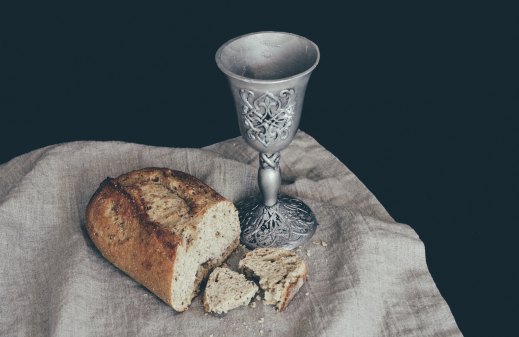
Jesus commands us to together partake of the bread and the cup in remembrance of Him, and so that is why we celebrate Lord’s Supper. We see this in a few different passages (Matt. 26:26-29; Mk. 14:22-25; Lk. 22:17-20; 1 Cor. 11:23-25).
We partake together and first remember Jesus’ propitiatory death for us and so the Lord’s supper causes us to reflect on the past. Second, the Lord’s Supper causes us to reflect on the current fellowship we together experience through union with Christ. And third, we look ahead to the future when we shall feast with Jesus after His return (we “proclaim the Lord’s death until he comes,” 1 Cor. 11:26). Scripture also points us to the importance of self-examination so that we do not take the Lord’s Supper in an unworthy manner and thus bring condemnation upon ourselves (1 Cor. 11:28ff).
The New City Catechism says, “Christ commanded all Christians to eat bread and to drink from the cup in thankful remembrance of him and his death. The Lord’s Supper is a celebration of the presence of God in our midst; bringing us into communion with God and with one another; feeding and nourishing our souls. It also anticipates the day when we will eat and drink with Christ in his Father’s kingdom” (Q46).
The Lord’s Supper is a beautiful and amazing picture of the gospel for us. Jesus’ body was broken and His life was poured out so that we could have life. When we partake of the Lord’s Supper we are reminded of the amazing truth that Jesus—God in flesh—is the Lamb of God that takes away our sin. The Holy Spirit uses the God-ordained and Christ instituted means of the Lord’s Supper to help us remember with thankfulness Christ’s finished work on the cross.
The Missional Mandate for Christians

As followers of Jesus, Christians have a missional[1] mandate (Matt. 28:18-20). Christians are pupils and apprentices. We follow Jesus and we do as He did. We give our lives away in love and we tell people about the good news of Jesus. To be a disciple is to be missional. We are not true disciples if we are not missional.
We lovingly engage with the people around us. We do not shut ourselves off in “God ghettos,” we do not create Christian castles. Jesus said that we are to be lights in a dark world (Matt. 5:15).[2] Paul said we are not to leave the world (1 Cor. 5:9-11) but be messengers of the King in the world (2 Cor. 5:20).
So, we as followers of Jesus…
Leave the “bubble”
We remove excess emphasis on Christian bubble activities and programs and instead spend time relationally engaging together with peers, neighbors, and coworkers. We are intentionally in the world. Jesus intentionally went to the world, He left heaven. He incarnated Himself (Matt. 1:22-23; Jn. 1:14; Phil. 2:7).
We follow our King and we enter the world in love (Matt. 5:13-16; Eph. 5:8; Phil. 2:15; 1 Pet. 2:12 cf. 1 Cor. 5:9-10; Jn. 17:15-16).
As the church we are…

This is not an ecclesiology. But it does tell you a lot about the church. As the church we are…
Welcomed and Welcoming
We remember that Jesus Himself was criticized by religious leaders because of the type of people that He hung out with and helped (cf. Matt. 9:9-13; 11:19; 21:31-32; Mk. 2:15-17; Lk. 3:12-14; 5:29-32; 7:36-50; 15; 19:1-10). So, we’re not like the hypocritical religious leaders. Instead, we’re like our Leader, the One who reaches out to heal our brokenness.
A Monopoly of Outcasts

The church is a gathering of the redeemed. We are made holy. We were not innately holy. The church is a place where those who know they are sick come to the Great Physician (cf. Lk. 5:31). The church is a monopoly of outcasts. It is filled with struggling ex-thieves, ex-drunkards, ex-adulterers, and ex-revilers (cf. 1 Cor. 6:9-11).
The church is (or should be!) a welcoming place for all because we have all been welcomed at Jesus’ own expense. Colossians radically says that in the church “there is not Greek and Jew, circumcised and uncircumcised, barbarian, Scythian, slave, free; but Christ is all, and in all” (Col. 3:11).
The church is filled with all sorts of people with all sorts of problems. Let’s not be prideful about our problems and prudish about the problems of others.
The Crash of the American Church?

Research shows that the “evangelical church” lost around 10 percent of her people in the last decade. There are many factors that are involved that have resulted in this decline. Further, most churches that are growing are just taking people from other churches, not converting people. The Great Evangelical Recession explores the factors involved in the decline of the church and offers suggestions for the future. I found the book helpful and thought-provoking.
Philemon: A Case Study of New Life in Christ (Part 2)

What do we learn about Onesimus?
Paul calls Onesimus his child, as he often does with converts, especially, it seems, those whom he had a special connection with through discipleship (cf. 1 Cor. 4:14-15; 2 Cor. 6:13; Gal. 4:19; Phil. 2:22; 1 Tim. 1:2).
Onesimus, had a common slave name, his name meant “useful.” Paul makes a pun here. He basically says, Useful was useless to you Philemon but now he is useful to both you and me (v. 11).
So, how was “Useful” previously useless? What did he do that explains the remark from Paul? He ran away from his master Philemon and likely stole money from him to pay for his voyage and new life. He used to be useless but not now, now Paul says, he is indeed useful.
We have already seen that Paul used a term of endearment by saying Onesimus was Paul’s child. However, Paul does not stop there. Paul says, in sending Onesimus back to Philemon, he is sending his very heart (v. 12). Paul has a deep bond with Onesimus, he has been helpful to Paul (the old man!) in prison. As Paul says, “I would have been glad to keep him with me, in order that he might serve me on your behalf during my imprisonment for the gospel” (v. 13). So, Paul is making the case that Onesimus, though once deemed useless, is indeed useful both to Paul and Philemon.
Onesimus, proves his new usefulness, as we’ve seen, by helping Paul. But not only that, he is repentant. He is willing to go back to Philemon his master, a bold step. In that day, slaves could be branded with the letter “F” for fugitive or “T” for thief (if they had a “gracious” master). Other masters may have their slave executed, perhaps even on a cross. There was a near contemporary of Philemon, a very wealthy slave owner, that was killed by a slave so in order to punish the slave and make an example all of the man’s slaves were killed; all four hundred of them (Hughes, p. 161-62). In fact, in Martin Hengel’s book Crucifixion there is a chapter titled “the ‘slaves’ punishment,” and in this chapter he tells about one occasion after a slave rebellion where there were six thousand slaves crucified (p. 55). Read More…



 in X
in X 