Who is Jesus?

Who is Jesus? That is the all-important question. That is the hinge on which history hangs.
That question has been a question for centuries. John the baptizer even said, “Are you the one who is to come, or should we expect someone else?” (Matt. 11:3). Islam says Jesus is a prophet. Jehovah’s Witnesses say Jesus is a mighty being, even a god. But not God. They do not believe in the Trinity.[1]
So, who is Jesus?
For us to answer that question, it’s important that we consider what Jesus Himself said. So, who did Jesus Himself say He was? Jesus is asked about His identity in the Gospel of John. People asked Jesus, “Aren’t we right in saying that you are a Samaritan and demon-possessed?” (John 8:48).
Statistics and Comfort in Calamity

Photo by Ben White
Does the 2% death rate statistic comfort you? What does the Bible say about comfort during calamity?
Some sources are saying that the mortality rate of COVID-19 looks to be 2%. However, it is too early to say. The percentage will be bigger or smaller depending on various factors (such as the age of the people infected, access to the needed medical treatment, etc.). I think we should acknowledge a few things about the statistic. First, 2% looks like a small number. And it is. At least, relative to a larger number.
Second, to put it into perspective, 2% of the population of the world is around 140 million people. That, as we can see, is a lot of people. COVID-19 could rival the AIDS epidemic. Of course, it seems highly unlikely that everyone in the world will get the virus. But even a fraction of that number is a lot of people. And it’s important for us to see the numbers from this vantage point so that we don’t play the numbers down.
Untouchable Peace: A Sermon on John 14

Hi! I’m Paul O’Brien, one of the pastors at Ontario Christian Fellowship. I’m glad you’re checking out this sermon.
I wish I could see you. I think of John’s words from 1 John: “I hope to see you soon, and we will talk face to face.” This is a little awkward… But I’m super thankful to God for technology.
Alright, let’s pray together…
Intro
Within the past seven days, a lot has changed…
- Kids our home
- Many are working from home
- Restaurants, bars, libraries, and all sorts of businesses are closed
- Travel is restricted
- We are unable to visit our loves ones in nursing homes
- And you’re at home
This is an unprecedented situation.
Many hearts are heavy.
The Coronavirus and the Christian

How should Christians think about and respond to the coronavirus? Here are some initial thoughts…
Plague and the Problem of Evil
Christians see the world in a way that makes sense of the world. We have an understanding of why plagues and the problem of evil exist.
That leads us to acknowledge something else that’s super important to focus on: Jesus. Jesus did not leave us to our problems. He did not leave us to simply wallow in plagues. Instead, He Himself plunged headlong into our sorrow.
“The God of The Bible becomes completely human and hurts in every way that we do—from physical pain to social rejection, misunderstanding, hatred, violence, and death. He endures it all. And because he suffers all of this with us, he can empathize with our sorrow and pain. Even more amazingly, Jesus’ death on the cross and his resurrection are the avenues through which he overcomes all evil, pain, and misery and is able to offer us the promise that disappointment will give way to joy, brokenness to eternal healing, and evil to good. Because of Christ’s agony, death will die and life will live on forever.”[1]
Therefore, even in the midst of plague and the problem of evil we can point people to Jesus. We can point people to hope, no matter what happens. Therefore, Christian, continue to worship Christ as Lord and always be ready to tell everyone the reason you have hope even in the midst of the chaos of the curse and the coronavirus (1 Pet. 3:15).
The Gospel Ripple

“Let the thief no longer steal, but rather let him labor, doing honest work with his own hands, so that he may have something to share with anyone in need” (Ephesians 4:28).
How does the good news of Jesus impact individuals, families, neighborhoods, and cities? Does the gospel make people prideful begets? Does it make people unloving and judgmental?
Ephesians 4:28 gives us a case study of what the impact of the good news of Jesus is supposed to have. It should change individuals. If they steal, it should change them so that they no longer do so. In the same way, the employer who is a jerk and does not treat people well is to change and instead be kind and care for their employees. The employee is also addressed, they are to do honest work and work as unto the Lord Jesus Himself.
So, we see the thief, the employer, the employee, the soldier (Lk. 3:14), and all types of people in all sorts of positions, are exhorted to not take part in wrong and destructive practices. That is the negative command. That is the, “Don’t do…” But there is also a positive command. Something we are told we must do. And that is labor. Whoever we are and whatever we do, there is something we must do. We must engage in labor, we must do the work before us in honesty. So the Christian is to work their best whether someone is watching or no one is watching.
Ash Wednesday

It is when we weep and howl in the agonies of distress that our rescue is all the more rejoiced in. When we see the contrast of our mourning turned into dancing and our ashes replaced with a crown, it gives us a picture of where we came from and what we deserve and what we get through the free salvation of Christ Jesus.
Ash Wednesday is a day of penitence but it leads to a party—new life in Jesus! We see our dire state and we see our sweet salvation!
Ash Wednesday is a type of looking down. Looking at ourselves, the state that we’re in. But we look down so we can have the right perspective as we look up and out to Jesus.
Ash Wednesday is a tangible and powerful symbol of our need. And when we know our need we rejoice in the One that comes for the poor and needy.
Why did Jesus flip over tables?
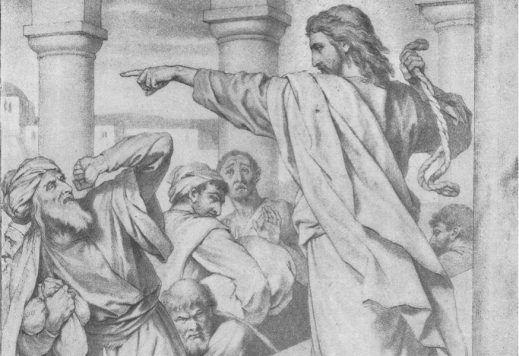
“And He entered the temple and began to drive out those who sold and those who bought in the temple, and he overturned the tables of the money-changers and the seats of those who sold pigeons. And He would not allow anyone to carry anything through the temple” (Mark 11:15-16).
Why did Jesus drive out those who sold and bought in the temple? Why did He flip over tables? That seems pretty extreme. Why was He so worked up? What was such a big deal? I mean in some ways the moneychangers actually helped people it would seem.
When I was in Germany, for instance, I had to go to the “moneychangers” to get euros. Without the moneychangers, after all, I would have had no schnitzel. Further, pigeons were sold. That is actually pretty convenient. Because who wants to have to haul a pigeon halfway across the known world? Not me. So, what was the deal with Jesus getting upset?
It seems that money was not the only issue. In fact, maybe not the biggest issue. Though, Jesus does mention that the moneychangers were essentially robbers (again, reminds me of the bank in Germany where I got my euros). But I think the bigger issue is what the Temple was intended to be and what it had become. It clearly was never meant to be “a den of robbers” but “a house of prayer.” A house of prayer “for all peoples,” it says.
The moneychangers were in the “Court of the Gentiles,” that’s basically equivalent to where Gentiles (non-Jews/”the nations”) would worship. As you can imagine that would obstruct worship. It would be a hindrance from Gentiles, “the nations,” from worshiping the Lord. This is the converse, as Jesus pointed out, of what Isaiah said: “my house shall be called a house of prayer for all peoples” (Is. 56:7).
Jesus brings blessing and salvation to all peoples but at the temple people were hindered from worshiping. That is why Jesus was furious. And rightly so. May we never be worthy of Jesus’ wrath for that same sin.
May we never prevent or hinder people from coming to the LORD, even if they are convenient or important things that we don’t want to give up. May we work to destroy unnecessary stumbling blocks. And may the church be a house and family that welcomes all people in!
The Ascension

As we saw in the previous post on the resurrection, Peter looked at Psalm 16 and showed how Jesus’ resurrection was foretold. In Acts 2 Peter goes on to show that Jesus is now at God’s right hand, as Psalm 110 foretold. Jesus Himself had quoted from Psalm 110 and stomped His critics (see e.g. Matt. 22:41-46). And when you look at 110:1 it’s not surprising that they were stomped.
So, we see that Jesus is at God’s right hand until… Until He makes His enemies His footstool. That means that Jesus is coming back—and the New Testament repeatedly says soon—to bring judgment, and pervasive peace through that judgment.[1]
Jesus’ death and resurrection shows that He is indeed the Lord and Messiah.[2] As the Lord and Messiah, He is coming back soon to vanquish every foe and establish His forever reign of peace. In His second coming, He will bring the Kingdom that was expected at His first coming. Read More…
On what day did Jesus die?

First, I encourage you to read Matthew’s account in the Gospel of Matthew. It will be helpful to read since it’s the longest (Matt. 27:24-62).
In Matthew’s account we see that Jesus dies (v. 45-56) and then Joseph of Arimathea asks Pilate for permission to bury Jesus’ body (Matt. 27:57-61). Joseph did this on the Preparation Day, that is, on Friday, the day before Saturday which is the Sabbath.[1] It was very important that Jesus’ body not stay on the cross on the Sabbath because then the land would be defiled (Jn. 19:31).[2] So, Jesus died on Friday because He was taken off the cross before the Sabbath.
The next day, that is on Saturday,[3] “the chief priests and the Pharisees gathered before Pilate and said, ‘Sir, we remember how that impostor said, while He was still alive, ‘After three days I will rise’” (v. 62). And then they asked for guards and so Pilate granted their request and gave them guards.
The Committal
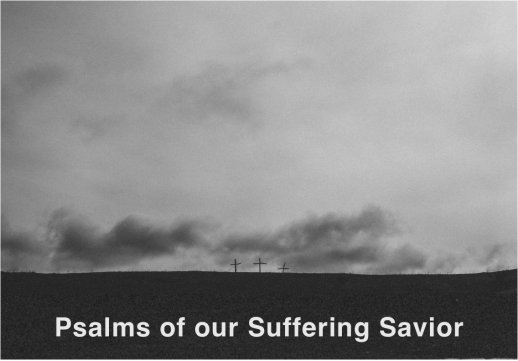
Jesus’ life was bathed in the language of the Psalms. Yet, when Jesus quotes Psalm 31 He doesn’t quote it exactly. Instead, He says, “Father, into your hands I commit my spirit” (Lk. 23:46).[1] And so, Jesus’ dying moment was one of trust in His Father. Jesus trusted as He taught us to pray (“Our Father in heaven…”—Matt. 6:9-15). Jesus trusted as He brought a way for us too to go to the Father (Jn. 14:6).
And so we see that Jesus who cries out in despair—trusts God.[2] And we see He laid His life down. Jesus committed Himself into the care of His Father[3] and said, “It is finished” (Jn. 19:30) and breathed His last. Jesus was in control of His life, and He laid it down. The fact that no one took His life from Him but that He laid it down[4] also implies that He is able to “take it up again” (Jn. 10:17).
It is because Jesus trusted God His Father in His life and in His death, and because He freely laid His life down, that we have access to the Father. Jesus makes a way for us by being the perfect sacrifice. Jesus always perfectly trusted God.
So, through Jesus we can have God as our Father. We can go to Him in prayer as Jesus taught us (Matt. 6:9-15). We don’t have to be anxious like unbelievers because we know that we have a heavenly Father who knows all that we need (v. 32). And we can be assured of our Father’s love and care for us because He loved us so much that He sent Jesus (Jn. 3:16).



 in X
in X 