Sneaky Subtle Stuff

It’s the steady and unnoticed drip that corrodes the foundation.
It’s the subtle stuff that shapes us. What’s imperceptible impacts us. It’s the little things that don’t seem like a big deal that last. Precisely because they seem little.
When we excuse something, because after-all, it’s only small, we often give refuge to an infectious virus that will destroy. Yes, it’s small. But it will kill. And it will be hard to seek out.
Don’t be ok with the unnoticed drip. Don’t give refuge to a virus.
Destroy what in you destroys. Kill sin.
Art through the Eyes of Faith

Introduction: How should we think about art? Why has art had such a varied history? What explains why we can relate to both “sad reflective art” as well as “joyous exuberant art”? How does art in its various forms sometimes make us yearn for something that seems out of reach?
These are big questions and questions that have been answered by many better minds than my own. However, I believe as we look to God’s Word as our guide we will be able to make some significant observations that will better position us to answer them.[1]
Let’s consider seven things from the storyline of Scripture.
Consider the Creator
“In the beginning, God created the heavens and the earth…” (Gen. 1:1). He made atoms and oceans, sunsets and frogs, butterflies and hogs. He made matter and motion, the stars in space and every trace of sand. He made my hands and yours too. God makes flowers and bees. God thought up nectar and the neurons that make emotion.
God created the wild crash of hydrogen and oxygen known as water; crystal clear and falls from the sky, and gives life. It’s like miraculous manna from heaven that we completely take for granted.
The only artist who is perfect in all forms of creativity—in technique, in originality, in knowledge, of the past and future, in versatility, in having perfect content to express as well as perfect expression of content, in communicating perfectly the wonders of all that exists as well as something about Himself, is of course God—the God who is Personal.[2]
God is the most majestic musician, supreme sculptor, wowing writer, and awesome artist. We can look at the flowers of the field and see that God is the most creative creator of clothing. He is the creator that gives creativity.“God is the Great Maker, the unique Creator. And all other creative activity derives from him.”[3]
God the Creator is the great Artist. He set the dome of the heavens and fashioned the universe. He created the music of the stars and set the heavenly bodies whirling in a great cosmic dance. He paints the sky of man’s earth with clouds and sunsets, and the ground with flowers and streams. He fashioned man out of dust of the earth. He tells the greatest love story of time and eternity, and unfolds it in a drama unlike any that man has ever created. He uses every art and every medium.[4]
Observation: Our creativity is contingent upon the Creator.[5] God is the great Creator and we merely reflect Him with our creations, as we will see.
Consider Creation
We see in the beginning that when God saw all He had made He pronounced, “very good” (Gen. 1:4; 10; 12; 18; 21; 25; 1:31). There was no sin, no death, and no problems. Man had perfect fellowship with God (cf. Gen. 3:8) and enjoyed God’s beautiful creation.
God’s creation shows us what God wants for us. He wants us to enjoy and take part in the creation that He has made very good. It shows us our intended design: fellowship with God and each other and the correct enjoyment and creative oversight of creation.
The heavens declare and shout forth the glory and beauty of God (Ps. 19:1-6). “Our God is beautiful in all his way; it is part of his perfection. This divine beauty has been woven into the fabric of creation, in the massive stars, inside the submicroscopic balance of the atom.”[6]
Observation: As we take in and enjoy beauty, whether Mozart, Norman Rockwell, or a brook basking in the sun, it points us back to our Creator for which we truly yearn. Even “photography is a longing for eternity, a desire for a lasting impact. When we blast our memories far and wide, we are hoping they will linger when we’re not present and maybe even when we’re gone. How odd that something seemingly instant can be rooted in a hunger for eternity.”[7]
Consider that we are Creative Creatures
What is man? A complex animal, more advanced through Darwinian Evolution? Are humans merely matter in motion?
We see the doctrine of the image of God,[8] the imago Dei, in various places in Scripture (Gen. 1:26-27; 5:1-3; 9:6; 1 Cor. 11:7 Col. 3:10; James 3:9). The most prominent is Genesis 1:27 that says, “God created man in His own image, in the image of God He created him; male and female He created them.”[9] “The ‘image (likeness) of God’ refers to a permanent aspect of our created nature, which was not affected by the fall. It is the special characteristic of the human race, which distinguishes us from other creatures.”[10]
So, “We are created in the likeness of the Creator… So we are, on a finite level, people who can create.”[11]
We were made, in part, to create. We were made to work unhindered at the creative care of the creation. However, the plot thickens. A cosmic problem is introduced. Through man’s fall we see the crash and curse of creation, which explains why everything is no longer good and why our creative care is constrained.
Observation: We are creative creatures; that is part of what we do and how we reflect the image of our Creator. We see that because that is what we were created to do we thrive as individuals and as societies as we create.
Man was created that he might create. It is not a waste of man’s time to be creative, because this is what was made to be able to do. He was made in the image of a Creator, and given the capacity to create—on a finite level of course, needing to use the materials already created—but he is still the creature of a Creator.[12]
We were created in the image of God not to procrastinate but to be productive, to create and “subdue the earth.” When we are functioning according to our design, doing what God has given us to do, it is then that we prosper (and realize I do not mean financially, I mean teleologically).
Realize there are all sorts of types of creativity, one person creates cars, another creates music, and still another manages his restaurant in thoughtful ways.[13] The important observation here is not so much what we do but how we approach our tasks.
We should approach all we do with intentionality and skill. As Timothy Keller says, “our work can be a calling only if it is reimagined as a mission of service to something beyond merely our own interests. Thinking of work mainly as a means of self-fulfillment and self-realization slowly crushes a person and… undermines society itself.”[14]
Consider the Crash
Man disobeyed and rebelled (Gen. 2:16-17; 3:6) and this brought spiritual and physical death (Gen. 2:17; 3:19), pain (3:16-17), difficulties (3:18-19), and separation from God (3:23-24). This is the bad news that we all live in.
In Genesis 3:1-24 we see the Fall of humanity. We see various forms of death given birth to. We see “’an ever-growing avalanche of sin, a continually widening chasm between man and God’. It progresses from disobedience, to murder, to indiscriminate killing, to titanic lust, to total corruption, and uncontrolled violence.”[15] Sin truly brings a litany of death. “Disease, genetic disorders, famine, natural disasters, aging, and death itself are as much the result of sin as are oppression, war, crime, and violence. We have lost God’s shalom—physically, spiritually, socially, psychologically, culturally. Things now fall apart.”[16] Sin opens Pandora’s box and unleashes a horde of evil.
We have marred more than the mediocre; we have marred the Michelangelos of the world. We have marred superb beauty and made it unbelievably hideous.
To illustrate, if I ruin a “masterpiece” that my son made with paper, glue, and crayons, the ramifications will be far less than if I destroy the Mona Lisa.
Well, creation was intended to be a Mona Lisa; that is, it was intended to be supremely glorious. God’s creation was intended to be good, beautiful, and aesthetically pleasing to our senses, emotions, and intellect beyond what we can imagine.
We often think of this world as the way it is not as the way it was intended to be. If we could see a glimpse of what the Great Creator had in mind for His masterpiece, then we’d see that we “paved paradise and put up a parking lot.” We essentially killed a thousand Beethovens and blared white noise. We backfilled the Grand Canyon with gravel. We burned a hundred museums of art. We scorched our taste buds off our tongue. We took a wrecking ball to all the wonders of the world and razed a thousand gorgeous cities. We have brought cataclysmic chaos to the world.
Sin is not a light thing. We, as humans, were created in the image of God. We were to be like Christ, God in flesh (cf. Gen. 1:26-27). The world was meant to be supremely glorious, peaceful, and loving but instead it is disgusting and understandably repugnant to God. So, as we try to grasp the wonder of what has been marred we can begin to understand how serious the situation is and how terrible sin is.
The crash happened in Genesis 3, man disobeyed God and chaos and curse ensued. In the crash, we see what went wrong with us and the world.
Observation: The image we bare is tainted and marred. It’s like one of Winslow Homer’s famous watercolor paintings had a pail of acid poured on it. We can still trace the image but it’s faded. We need a master painter to repaint us.
It is important to observe that “The arts, which speak so subjectively and so very personally regarding who and what we are in relation to our Maker are very vulnerable to the distortion that sin has brought in the world.”[17] Even in the Bible art can be used to idolatrous ends. We, after the crash, often use creativity to de-create and desecrate the good world God has made.
We see that we often desire heaven and make hell. We want back in Eden and sometimes we express that, but sometimes we express the crash. We, in the words of Makoto Fujimura, “carry the dust of Eden in our DNA.”[18] Michael Card has said, “A thousand examples speak of a deep, inner hunger for beauty that, at its heart, is a hunger for God. We hunger for beauty because it is a beautiful God whom we serve.”[19] Yet, we are stuck on the outside of Eden.[20] We are stuck yearning.
Much art reflects on this theme, from superhero movies to angsty art, we know there was a fall. We know we live after the crash. We desire the new creation but many don’t know the answer. They don’t know Christ the Promised One.
Consider Christ
After the crash of creation, after the curse was introduced, there was a promise of a deliverer that would set all right again. At first, the promised offspring (Gen. 3:15) was vague; in fact, Eve rejoiced because she thought she had the offspring (4:1) but it was all for naught because Cain was the offspring of the serpent and killed his brother.
However, later on, we see Him who even the prophets longed to see (Matt. 13:17), we know that all Scripture finds its fulfillment in Jesus who is the long awaited Messiah (2 Cor. 1:20). The one that will crush the curse and bring in the new creation.
The Bible is a true story about God making the world, man messing it up, and God becoming a man to fix the world by not messing up. It is a story of Eden—exile—repeat. It is not until the true Adam, the true and righteous Son of God—Jesus—comes that this process is broken. All of Christ’s predeceases fell short; Adam, Noah, Abraham, Saul, David, Solomon, and the lambs, priests, and prophets could not fill Christ’s role.
Through Christ we see what God has done to put things right. Christ hung, outstretched on the tree, and bore the curse and will come again to bring His eternal reign when peace will be pervasive and joy will be tangible.
Jesus is the hero of the story. He takes upon Himself the curse and brings the new creation and friendship with God that we all yearn for.
The Cosmic Creator that flung the stars in place and knows them all by name cares to the point of crucifixion. He is the author that writes Himself into the story. He makes, He comes, He dies, and He rises again. And He’s coming back to recreate the world.
Observation: In Christ, first we see our Savior, but we see also see a profound example. Christ’s character as seen in the Gospels is one of creativity and compassion. He is expressive and real. He is harsh and gentle.
Christ was honest to the reality of our current condition. He didn’t lighten the realities of the crash and the catastrophes that it created. However, He wasn’t hopeless either. He brought the world the solution they needed: Himself.
We too must understand our current condition and honestly and creatively communicate truth to the world.
Consider our Current Condition
It is important for us to correctly situate ourselves within our current condition. We, for instance, do not want to place ourselves within the new creation when we are still wheeling from the crash. In the same way, we don’t want to forget that Christ has came. We need to understand our current condition. We do not want to have an “over-realized eschatology” or an “under-realized eschatology.” We want to correctly grasp our situation and communicate the struggles and hopes that we have to the world.
Steve Turner has said, “It is not Christian to make art that assumes that the world is unblemished.”[21] It’s certainly true that the Kingdom has come in God’s Son. The light is shining and the darkness is passing away (1 Jn. 2:8) but it hasn’t passed away yet. We still live in a fallen world. Soon the darkness will be forever gone (Rev. 22:5) but for now it’s an element in our reality so to paint or portray reality means including “darkness.”
We must position ourselves after the Creator, the creation of all things, and the crash and curse of the cosmos, and we must remember that we were created as creative creatures to reflect our Creator. We must remember Christ, the hope of all the world. We must hope in Him and the new creation that He will bring at the consummation of His Kingdom.
We must not get stuck hopelessly on the crash and curse of the world, though to be in the world is to reflect realistically on its realities. Yet, we must not forget Christ and His coming Kingdom and the fact that we are not the center of the universe. So, “The Christian artist will often be an irritant, disturbing the anthropocentric view of the world that fallen nature naturally gravitates toward.”[22]
Observation: It is when we remember our current condition, all that has laid behind us and all that lays before us, that we can most profoundly and prophetically speak into our cultures. It is then that we can bring compassion and truth to bear and see God’s truth take root and change people and society.
So, David Skeel says, “The most beautiful and memorable art will reflect the tensions and complexity that only Christianity can fully explain.”[23]
Consider the coming Consummation
When Jesus came the first time, He had no beauty or majesty. When He comes again His face will shine like the sun in full strength (Rev. 1:16). We were cast out of the garden in the beginning but as Jesus said to the thief on the cross, all those who go to Him will be let back in. For those in Christ, the story of history will have a happy ending (Rom. 8:29-39).
Through Jesus the Christ, we have the unwavering hope of a new creation (2 Peter 3:13). “The creation was subjected to futility” in Adam (Gen. 317-19) but in Christ “the creation itself will be set free from its bondage to corruption and obtain the freedom of the glory of the children of God” (Rom. 8:20-21). As Isaac Watts put it in “Joy to the World,”
No more let sins and sorrows grow, Nor thorns infest the ground; He comes to make His blessings flow Far as the curse is found, far as the curse is found.
The problem (all of them!) will be fixed and there will be no more sin (Rev. 21:27; 22:3; Matt. 13:41). Everything will be more right than it was ever wrong. We will see that God did, in fact, work all things together for good (Rom. 8:28). Christ will make a new creation and we will be like Him (1 Jn. 3:2; Rom. 8:29; 2 Peter 1:4). “Just as we have borne the image of the man of dust, we shall also bear the image of the man of heaven” (1 Cor. 15:49). God will fulfill our deepest desires and we will finally live with Him in paradise in the end.
Jesus is the good news but the good news is not static it goes on and on and on; those in Christ live happily-ever-after. In contrast, God “will gather out of his kingdom all causes of sin and all law-breakers” (Matt. 13:41) and cast them into the pit of eternal fire (Rev. 20:14-15). The Lord will bring heaven down and establish His Kingdom that will not be shaken but will last forever and ever in perfect beauty and joy.
Observation: Time is working itself down to a consummation; to a renewal of the creation, in fact, a new creation. Ever since Eden, this is what we have longed for and it is made available through Christ. However, many miss it. They look to the creature rather than to the Creator to find satisfaction, life, and joy.
As we carry out various creative tasks we can thoughtfully point people to what they need and why they need it. We can address the issue of the crash, our current condition, and Christ and the coming consummation.
We can also know that art occupies a type of middle ground. In one way pointing backward (to creation) while planted firmly (in the current condition) and also pointing ahead (to the consummation).
Conclusion: So, how should we think about art?
As we carry out our creative tasks (whether or not it is typically labeled art or not) we reflect our Maker. We point to the reason and rhyme of the universe, especially when we reflect on and cause others to reflect on why, at times, there seems to be no reason and rhyme to the universe.
Lastly, as we seek to be faithful and reflect God’s image we must look to Jesus. He is the Master. He is “painting” us in His image. The brushstrokes that stand out the most are “love the LORD your God with all you are” and “your neighbor as yourself.” It is through the application of those two brushstrokes that we look more and more as we were always supposed to look.
_______________________
[1] My word is very fallible but God’s Word is truth. This is important because, as William Dyrness, has said: ““Artistic issues are, according to the biblical perspective, profoundly theological from the beginning to end” (William A. Dyrness, Visual Faith: Art, Theology, and Worship in Dialogue, 70).
[2] Edith Schaeffer, The Hidden Art of Homemaking, 14-15.
[3] Frank E. Gaebelein, The Christian, The Arts, and Truth, 72.
[4] W. S. LaSor, “Art” in The International Standard Bible Encyclopedia, 302.
[5] “Only God can imagine and make something out of nothing. In this sense, he is the only One who deserves the title of Creator. We are merely creative” (Harold M. Best in Michael Care, Scribbling in the Sand, 122).
[6] Michael Card, Scribbling in the Sand, 32.
[7] Craig Detweiler, iGods: How Technology Shapes Our Spiritual and Social Lives, 189.
[8] “That man by creation uniquely bears the divine image is a fundamental biblical doctrine—as also that this image is sullied by sin and that it is restored by divine salvation” (Carl F. H. Henry, “Man” in Baker’s Dictionary of Theology, 338).
[9] “The declaration that humanity bears God’s likeness is startling, awesome, and almost incredible, but what exactly does it mean?… Two primary, and not necessarily contradictory views are: (1) the substantive view, according to which humans share some aspects of the nature of God (intelligence, emotions, etc.); and (2) the functional view, according to which humans act like God in their divinely given role to rule the earth. The immediate context, with the language of dominion and subjugation, suggests that the functional interpretation is primary” (Köstenberger, God’s Design for Man and Woman, 29). I personally believe in a hybrid view. I believed in a functional view that implies the substantive view. That is, if we as humans are to function as vice-regents we must be endowed with the abilities to carry it out (e.g. intelligence, creativity, etc.).
[10] G. L. Bray, “Image of God” in NDBT, 576.
[11] Edith Schaeffer, The Hidden Art of Homemaking, 24.
[12] Edith Schaeffer, The Hidden Art of Homemaking, 24.
[13] I think for example of Chic-fil-a.
[14] Keller, Every Good Endeavor, 19. He also says “Everyone will be forgotten, nothing we do will make any difference, and all good endeavours, even the best, will come to naught. Unless there is God. If the God of the Bible exists, and there is a True Reality beneath and behind this one, and this life is not the only life, then every good endeavour, even the simplest ones, pursued in response to God’s calling, can matter forever” (29).
[15] Revd Victor James Johnson, “Illustrating Evil – The Effect of the Fall as seen in Genesis 4-11,” 57 in Melanesian Journal of Theology 11-1&2 (1995).
[16] Timothy Keller, The Reason for God: Belief in an Age of Skepticism (New York: Penguin Group, 2008), 177. “Disunion with God is reflected in disunion with others and with oneself” (Johnson, Foundations of Soul Care, 466).
[17] Frank E. Gaebelein, The Christian, The Arts, and Truth, 75.
[18] Makoto Fujimura, Refractions.
[19] Michael Card, Scribbling in the Sand, 32.
[20] “Christianity explains our inability to sustain transcendence as evidence that creation, and the creation, have been corrupted” (David Skeel, True Paradox: How Christianity Makes Sense of Our Complex World, 88).
[21] Steve Turner, Imagine: a vision for Christians in the arts, 86. “To portray the world as a rose garden can be as misleading as portraying it as a cesspool” (Ibid., 58).
[22] Steve Turner, Imagine: a vision for Christians in the arts, 22.
[23] David Skeel, True Paradox: How Christianity Makes Sense of Our Complex World, 82.
The Contradiction that is Humanity

East of Eden, this trance in which were caught. Serpents all around, lies within, lies without. Death, death, unspoken though it be, prevails. Prevailing misery, wrapped in supposed ecstasy. Whisper, whisper; slither near, they speak the lies into my ear. Sell it all, the order built tall, fails. Embrace it all, accept all, end null. Trudge on and live and die, for what do we expire? Only all we desire. Endless cycle of misery, never free. Eat the apple, embrace the noose. Slither near, oh yes, my dear. Come here, constrict me. Worthless cycle, the viper of this world, strikes fast yet the venom kills slow. How strange, but the hand that feeds me, bites me. Diluted profit, fruitless field, this the futility that we yield. Strive for the Garden, yet we embrace the curse; oh, the contradiction that is humanity.
East of Eden, for a season, the King will soon return. Every foe vanquished, for every thorn a rose. The King, He soon shall reign! Then, the refrain, forever remain, “life, life!” The serpent is gone, we sing a new song forever of our Savior. We ate of the tree, He died on a tree to be the curse we created, and with His death, death’s defeated.

Desecration and De-creation via the Red-Light District

I was in Germany for my job a few years ago. I got to wander the streets of Nuremberg with a few friends. It was a great time until…
Until my friends just happened to stumble upon the red-light district. I saw a woman, made in the image of God, standing naked in the arch of a door offering herself up for purchase. It was very sad.
…Imagine a dozen roses being trampled underfoot and ground into the pavement. Or your families heirloom vase being thrown crashing to the ground. The intended beautiful design gravely marred and belittled…
We didn’t walk down the street.
I wouldn’t.
…Nuremberg is a beautiful city. The city from all I could tell is thriving. Yet it has places, I suppose like any city, where the thin veneer has washed away and the anti-creation is showing. Where the inner man is as visible as the graffiti on the walls…
Here’s a poem I wrote later that day:
Strained by tears that she wears inside
Never to hide
Ever inspected for beauty
Yet coldly rejected
Infected by the strain
The strain of prideful lust
Her bosom embraced but not with kind face
Ever the look of lust
She is a mere possession
A brief obsession
To use and then discard
Disregard that she’s a person and use her for your end
Ageless beauty,
clothed in agony,
the only veil she knows
She roams the streets
Anything for the right price
O’ but this woman that we deface
Is more than a nice face
Men may have her
and hate her
but for her,
Christ He died!
Jesus cries, Daughter!
You are my daughter, no whore!
I will embrace and wipe your tears
I will love and calm your fears
O’ my child, for you I weep
I long to tenderly clothe you
To clothe you with love
To you, show the meaning of true love
When Jesus our King returns
Clean will be the streets
Technology: Connected and Out of Touch

How surreal, I am sitting in a Starbucks and there is an older couple sitting across from me. By all appearances they do not know each other. Their “date,” from what I can tell from spying, consists of looking at their cell phone (maybe the new iPhone 6s), touching it, and occasionally showing each other something on their phone; no doubt a new high score on “angry birds” or some other profound thing like a YouTube video of a monkey.
This is surreal for two reasons: 1) When this couple got together and started dating they could never have imagined the technology that would be available in the palm of their hand. Maybe this partly explains why they are so captivated by their phone and not by the actual person setting beside them. 2) When this couple got together, maybe thirty years ago, they could not have imagined wanting to hold some device in their hand rather than their loved ones’ hand.
Yet how things change. Affections fade and technology grows. And perhaps there is a correlation between the two distancing polls. If we hold a device in our hand instead of our loved ones’ hand, if we have “facetime” instead of real face time, if we have “facebook” and not time with real faces, if we have tweets and not conversations there will necessarily be a distancing effect from technology. And it will likely be that as technology advances so will be the chasm between relationships. However, if we start to put the work in on our relationships that any computer programmer puts in on technology then we may be able to keep pace with the discordant dissidents of technology. But this will require the intentionality and work ethic of those that are bringing us these great advances in technology.
In all of this realize that I am by no means saying that technology and advances in technology are bad, they are not in and of themselves (For instance, things like Skype can help relationships). Yet we must be very conscious in our use of technology. We must consider, am I playing “Tomb Raider” (or whatever it is called) when I should be looking deeply into my loved ones’ eyes? Am I “iTexting” when I should be talking to the person beside me? When I turn on my phone do I turn off my head? Does the “feed” on Facebook or Twitter feed my soul and intellect or does it leave me malnourished and hungry for something of substance like a book? Does being connected to the internet connect me to the world or allow me to be safely removed from it?
I have found these questions surprisingly relevant and present but often unheeded in my own life. I have noticed on more than a few occasions when my family is visiting that we will set around in the living room with more than one person on a technological device. We’ll be “hanging out” yet the majority of the people in the room are on a computer or some such thing. This form of “hanging out” is much different then I remember growing up, and I’m only twenty-eight! My kids will have to be especially careful in their use of technology.
Caution and Culturing Unborn Baby Body Parts

We live in a country that says, “have it your way.” And if we want warm coffee that’s what we get. But if it’s too hot, we sue. And we win. We live in a country that is extremely cautious about labeling everything; least something so terrible happens as someone burning his tongue.
We live in a country where the height and depth of steps are regulated, where your building and property isn’t up to code if it doesn’t have a certain height of handrail. We are a cautious people.
We enforce speed limits and fine jaywalkers. We take and enforce caution. We have an administration that monitors our food. We do this to protect our tongues, our bellies, and our lives.
Yet, we also throw caution to the wind as a country. We say we don’t know when a human baby becomes a human baby and so abortion has free reign. Somewhere along the way we lost our caution. It seems wiser and more inline with what would seem is the American conviction to say if we don’t know when life begins we should be cautious. After all we enforce the height of handrails and fine jaywalkers so it doesn’t seem so unreasonable to be cautious in regard to the most vulnerable. However, it seems in our country that “have it your way” is more important then caution when it comes to unborn humans.
People so often bring up the fact that “we don’t know when life begins” but in light of the precautions we take all across America that is really a non-issue. Our government regulates where we can cross the road for safeties sake but is not safe or cautious with regard to the “intersection” of abortion. Actually, it would seem we’ve removed all traffic lights. We’re free to “fly on by,” “let come what may.”
We must take “due diligence” in other matters or be held morally responsible, because if we don’t we are morally responsible. To not be “safe” and “cautious” in regard to human life we know (and see though our legal system) isn’t a light thing. In America we have reduced speed limits outside of schools because we desire to do due diligence and protect our children and youth. We enforce those lower speed limits not because we know someone will get killed if we drive above them but because life is precious and thus we take precautions to protect it.
There is such a thing as child endangerment, as there should be. Parents can (rightly) get in trouble for merely endangering their child. Why? Because human lives are innately precious and we must take precautions to protect human life. We do not even have to talk about the destruction of innocent human life; the endangering, or failure to take “due diligence,” be cautious, with human lives alone is a moral atrocity. And yet our country sanctions it and our tax money supports it.
We pay taxes to enforce no jaywalking to protect people from potentially getting hit, we are cautious to enforce lower speed limits outside of schools, and we pay Planned Parenthood $540 million to disregard caution and disassemble human bodies within their mother’s protective womb. We are anything but cautious, in contradiction to so much of the American way, when we literally go into (i.e. proactively act upon) the protective life-sustaining womb and destroy the unborn baby.
The sentence for vehicular manslaughter in a school zone is obviously a worse offense then if the manslaughter happened outside of the school zone. In fact, if the manslaughter happened in a school zone it can take the charge from second degree to first degree. Yet, in the example of the first degree and second degree manslaughter the guilty person did not necessarily proactively act upon or intentionally kill yet they failed to do due diligence and be cautious and thus they are rightly held accountable. In other words, what should stop “pro-choice” people from being “pro-speeding-in-school-zone” people? There are some choices we don’t have. And shouldn’t have. We shouldn’t be able to eradicate millions of people in concentration camps. We shouldn’t have the right, and don’t have the right, to speed in school zones. We shouldn’t, but do, have the right to destroy unborn babies. We sadly have the right to abandon caution and crush small human skulls within the enshrouded womb of their mother.
Some things, we know, we don’t have the right to do, and shouldn’t have the right to do. We are a cautious contradictory people. Will we be “cautious” or will we continue to culture unborn baby body parts?
The Breadth and Width of Musical Expression

It’s important for a painter to paint with a full pallet; yellows, reds, and blues and various types of hues; orange, green, and pink, in short, a full panorama of colors. This allows one to do better justice to reality. If a painter paints for very long and very well, he will eventually use the full range of colors.
Shouldn’t it be the same for musicians? Should not they, at times, have clashing symbols, bludgeoning bass, and frantic whispers? Is not there a time for aggression as well as joy? Soprano singers have their place, that’s true; but left to their own devices they won’t be able to communicate the breadth of the human condition and reality. We need waltzes and swing, we need metal and Mozart, we need jazz and, surprised to say, we need pop. However, that is not to say that all forms or types of music are good. That is not true in the artistic or moral sense. What I mean, rather, is that human experience is so broad that we need lots of “colors” and “easels” to express it. Look at the Psalms. Or look even just at David’s Psalms. David would have understood (and perhaps wrote) pop praise songs akin to what we hear on the radio as well as laments. David did not paint with broad bland strokes but used the appropriate “brush” for the appropriate picture.
I think we see a parallel also in the breadth of literature or genres in Scripture. One genre or form of literature simply won’t do in the communication of truth.[1] In the same way, contemporary Christian music in the vein of CCM, won’t be able to communicate the full breadth of truth in Scripture.[2] There are things worth screaming over and musically weeping over. I, for instance, am personally convinced that Christians need double-bass “fight” songs from time to time. I would argue that some heavy music is better than a lot of the stuff we hear on Christian radio (see here and here).
Popular contemporary Christian music tends to paint with brood bright strokes, using mainly happy and poppy major chords. Dark colors and minor keys seem to be all but forgotten. It’s like they’ve remembered redemption but forgotten the Fall. There are reasons to rejoice. But there are also reasons to weep, and scream. Christianity offers a full-orbed worldview. It deals with the pain and paradoxes of life. Much of contemporary Christian music doesn’t. A lot of secular music deals with angst; and that, that I can relate to. The world has much good in it, yet much bad, we are vying for meaning and redemption, and we have a thirst that can’t be quenched here. Much of contemporary Christian music, through lyrics and arrangement, doesn’t deal with or admit angst. It often seems ingeniune.[3]
Witness the realness and struggles of the Psalms. They are not always just poppy and happy. Sometimes they are, but not always. They incorporate a richer view of what it is to be: Blacks, browns, grays as well as pinks, yellows, and light blues; they use minor as well as major cords. They sing and scream. They cry and rejoice.
“When all Scripture references to music making are combined, we learn that we are to make music in every conceivable condition: joy, triumph, imprisonment, solitude, grief, peace, war, sickness, merriment, abundance, and deprivation. This principle implies that the music of the church should be a complete music, not one-sided or single faceted.”[4]
The Psalms and the Bible broadly communicate and speak to the human condition and I hope more and more Christian art will as well.
Christian music as a role should take into account the major plot turns of Scripture. Neither stuck in the Fall or New Creation. To do justice to Scripture and reality, much of Christian music must expand its scope to include the Fall and the tragic pain and loss that humanity now suffers as a result.
“Modern and postmodern art often claim to tell the truth about the pain and absurdity of human existence, but that is only part of the story. The Christian approach to the human condition is more complete, and for that reason more hopeful (and ultimately more truthful). Christian artists celebrate the essential goodness of the world that God has made… Such celebration is not a form of naive idealism, but of healthy realism. At the same time, Christian artists also lament the ugly intrusion of evil into a world that is warped by sin, mourning the lost beauties of a fallen paradise… There is a sense not only of what we are, but also of what we were: creatures made to be like God… Even better, there is a sense of what we can become. Christian art is redemptive… Rather than giving in to meaninglessness and despair, Christian artists know that there is a way out.”[5]
Hopefully there will be more and more Christian artists that deal with the damning affects of the Fall. That will deal with the angst and anger we often feel. But also the amazing promise of hope, redemption, and shalom through Messiah Jesus. This world is fallen but we must not forget the future, the coming reign of Christ, or what He has already accomplished on the cross.
True Christian expression should take into account the dark night of the soul, the melancholy madness we sometimes feel, as well as exuberant joy. It should recall our suffering Savior on the cross as well as His coming reign in which He’ll slay unrepentant sinners. It should at times acknowledge doubt and affirm belief. It should encompass the whole range of human emotions, various genres of Scripture, and the full sweep of the Christian story and the end (telos) of it all should be the glory of God through the exaltation of Christ.
This then would be real, rich, and weighty musical art. Music that strives, obtains, aches, yearns, realizes, weeps, and rejoices. Music that is accurate and true; music that is richly diverse and leaks over into other genres. Music that reflects the great story that we all find ourselves in—the creation of all things good, the Fall and thus futility we all reckon with, the redemption offered in Christ, and the Judgment and New Creation that awaits. Music that is rich, hopeful, and honest. Music that is hard and peaceful. Music that does justice to the world we live in, in all of its beauty and pain. Music that offers hope and redemption but that’s not naive about pain and pointlessness and suffering.
Music has a distinct ability to distill, channel, and focus truth and beauty into a unified whole so that the result is a type of laser that cuts into our core to wreak havoc and heal. As Augustine said, sounds flow into our ears, and truth streams into our hearts. Music is important and it shapes us.[6] It is thus important that it is done well and shapes us well, to the right end (telos).
________________________________
[1] “When the psalmist says, ‘Sing to him a new song; play skillfully, and shout for passages throughout the Psalms refer to all four main forms of music: strings, woodwinds, brass, and percussion. The ascriptions to the Psalms also contain evocative references to musical tunes, such as “The Death of the Son’ (Ps. 9) and ‘The Lily of the Covenant’ (Ps. 60). The Bible is full of many kinds of music. And as for literature, what further endorsement is needed beyond the Bible itself, which is the world’s richest anthology of stories, poems, historical torical narratives, romances, soliloquies, psalms, laments, prophecies, proverbs, parables, epistles, and apocalyptic visions?” (Philip Graham Ryken. Art for God’s Sake: A Call to Recover the Arts [Kindle Locations 180-185]. Kindle Edition.)
[2] “By continuously ‘praising the Lord’ the CCM artist rarely shows evidence of a comprehensive worldview. In fact, the world is not viewed at all. What is viewed is personal spiritual experience and usually only its more beautiful peaks. The valley of the shadow of death is rarely traversed, nor is the valley of indecision” (Steve Turner, Imagine: a vision for Christians in the arts, 52).
[3] “The problem with some modern and postmodern art is that it seeks to offer truth at the expense of beauty. It tells the truth only about ugliness and alienation, leaving out the beauty of creation and redemption. A good deal of so-called Christian art tends to have the opposite problem. It tries to show beauty without admitting the truth about sin, and to that extent it is false-dishonest about the tragic implications of our depravity. Think of all the bright, sentimental landscapes that portray an ideal world unaffected by the Fall, or the light, cheery melodies that characterize the Christian life as one of undiminished happiness. Such a world may be nice to imagine, but it is not the world God sent his Son to save” (Ryken, Art for God’s Sake, 242-246).
[4] Harold M. Best, Music Through the Eyes of Faith, 186.
[5] Ryken. Art for God’s Sake, 217-227
[6] “Music gets ‘in’ us in ways that other forms of discourse rarely do. A song gets absorbed into our imagination in a way that mere texts rarely do… Song seems to have a privileged channel to our imagination, to our kardia, because it involves our body in a unique way… Perhaps it is by hymns, songs, and choruses that the word of Christ ‘dwells in us richly’” (Smith, Desiring the Kingdom, 171).
Sin is Not Good #3

Sin is Humanities Death Wish
I was always told growing up that it’s not good to do bad things. And for a time I was content with that. It didn’t need to be explained to me. However, as time has gone on and temptations have increased, or at least my perception of them, I find it helpful to understand and remind myself of why “it’s not good to do bad things.”
Obviously, “it’s not good to do bad things” because it doesn’t please God but why doesn’t it please God? Why are bad things bad? We see from reflection on Scripture that bad things are bad because they are not in accord with God’s character and thus apart from being bad they do not finally work with the way things are. In short, they are against the universe. Against existence. Against the way things are. Against the way things work. This is because God is good, supremely good. And creation is thus to operate in a certain way. Sin, evil, and bad are not innate within God’s good creation. They don’t “work” and will one day soon be expelled from the whole system. Then, and only then, will all things be put right and made new.
Thus, “The consequence of human sin is not to be seen as an arbitrarily imposed penalty, like a judge imposing a fine for drunk driving, but rather as an inevitable outworking of the implications of sin.”[i] “Death is not an arbitrary punishment for sin; it is its necessary consequence,” because “the turning away from the living God which constitutes idolatry is the spiritual equivalent of a diver cutting off his own breathing tube.”[ii]
To turn from God, to sin, is not only wrong but also foolish. Why? Because “God is our final good, or maker and savior, the one in whom alone our restless hearts come to rest. To rebel against God is to saw of the branch that supports us.”[iii]
Sin is humanities death wish in everyway.[iv] To be separated from God is to die, physically and spiritually. Human flourishing, true shalom, is bond up with God.[v] Apart from union with God we can seek but we won’t find.
The world is a dichotomy. It’s two paths. The wise and the fool. New creation and de-creation. Damnation and liberation. Life and death. Hell and heaven. Where, in a very real sense, are you going?
Sin is thus not good because it is innately against true human flourishing.[vi] Sin is not good because it is humanities death wish in every sense.
_____________________________
[i] Anthony N. S. Lane, “Lust: the human person as affected by disordered desires” 35 in EQ 78.1 [2006], 21-35.
[ii] N. T. Wright, Evil and the Justice of God, 109.
[iii] Plantinga, Not the Way It’s Supposed to Be, 123. “Sin dissipates us in futile—and self-destructive—projects. Sin hurts other people and grieves God, but it also corrodes us. Sin is a form of self-abuse” (Ibid., 124). “Sin against God is therefore outrageous folly: it’s like pulling the plug on your own resuscitator” (Ibid., 125-26). Thus “because it is futile, because it is vain, because it is unrealistic, because it spoils good things, sin is a prime form of folly” (Ibid., 126). Proverbs 8:35-36 says, “For whoever finds me [i.e. “wisdom” which is the fear of the LORD] finds life and obtains favor from the Lord, but he who fails to find me injures himself; all who hate me love death.”
[iv] “The association of sin with physical and spiritual death runs like a spine through Scripture and Christian tradition” (Cornelius Plantinga, Not the Way It’s Supposed to Be, 47).
[v] “The biblical vision of human flourishing implicit in worship means that we are only properly free when our desires are rightly ordered, when they are bounded and directed to the end that constitutes our good” (Desiring the Kingdom, 176). Likewise John Frame, God’s “law is not arbitrary, but is based on his own nature… His moral standard is simply himself, his person, his nature” (Frame, The Doctrine of God, 448 see also Frame, The Doctrine of the Christian Life, 133-35). G. K. Chesterton said, “God is not a symbol of goodness. Goodness is a symbol of God” (Chesterton, William Blake [London: House of Stratus, 2000], 40).
[vi] “Human flourishing” rather is “the same thing as glorifying God and enjoying him forever” (Plantinga, Not the Way It’s Supposed to Be, 37-38).
Sin is Not Good #2
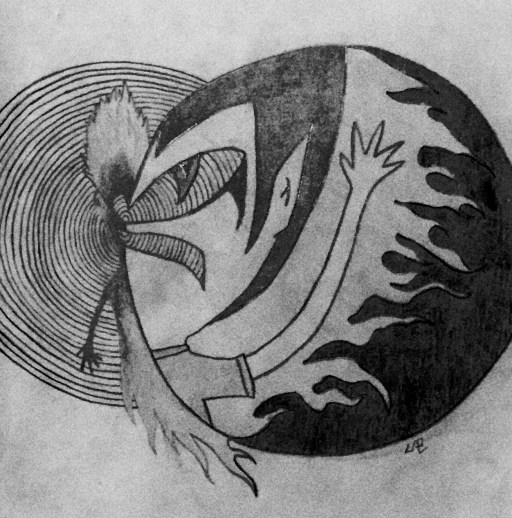
Sin is a Rebellion and a Rampage
Sin is moral. It is an act against God. It is a transgression against God’s law. But not only His law but also His good plan.[i] Sin is not merely moral or highhanded treason it is also a rampage because it is mad; that is foolish, a form of insanity. It goes against good sense. It is a rampage because sin destroys the good.
We have all seen the pain and sorrow that moral derogation has wrought in our lives. We see it for instance in sins of others against us and those close to us, we see it in sins which we have sinned against others, we see it in the world at large (e.g. my parents were divorced, a very close friend of mine was molested as a child, and a friend of mine that struggled with drug addiction committed suicide). There is, for sure, a law written on all our hearts, we go against it to the shame and suffering of humanity; and yet, we all do indeed go against it.
Humanity has and needs a moral standard. This points us to the Creator who gave it to us when He created us in His image. However, it also points us to the Fall. We all fail to measure up to the standard. We can all think of a hypothetical world where everyone followed these standards and where the result was great happiness. Yet, this is not the case. We do not follow these good (innate) standards. How odd. We know the good we ought to do, or at least that there is “a good,” and yet fail to do it.
Sin leads to terrible depraviltiy, hopelessness, and disregard for humanity or anything good. This is vividly portrayed, for example, in Cormac McCarthy’s post-apocalyptic book The Road. We don’t want to suffer what is portrayed there. We don’t even want to think of the horrors of Dachau and Auschwitz. We all know the wickedness of Adolf Hitler, Pol Pot, and Joseph Kony. Yet perhaps their nearly unbelievable atrocities allow us to belittle (in our conscience) our own wickedness. However, even if our sin is so-called “low-grade wickedness” it is the equivalent of their sin, just on a micro level. It has the same seed, though perhaps it hasn’t came to full bloom yet.
What must be realized is that all sin is a movement towards un-creation.[ii] In C.S. Lewis’ words, through sin man becomes the “unman.” Through sin everything that was very good (see Gen. 1:3, 10, 12, 18, 21, 25, 31) becomes cursed instead. Sin covers beauty, boasts in badness, and hides from the supreme joy we all seek. Sin is a rampage.
Sin is a leech and parasite. It lives off of and feeds on life and vitality.[iii] And it kills it. Bleeding it away little by little until the carrier is completely eaten away and destroyed. Note that this death, though complete, can be imperceptible.
Sin leads to de-creation as well as desecration. Humans were made in God’s own image yet through sin that image has literally been put into dirt; man becomes dirt and ashes from whence he came (hence de-creation). From perfection to misdirection, from shalom[iv] to shattering. Everything has come undone. The creation groans with longing. Sin is not merely moral. It is the decay of all things. Sin wrought a wreak and we are still wheeling and writhing in pain.[v]
Thus, sin is not good not only because it is moral rebellion against a good and all-powerful God but also because it is a rampage against His good creation.
_______________________________
[i] “Sin represents an attack upon the harmony of the created order, and not merely a moral lapse” ((Revd Victor James Johnson, “Illustrating Evil – The Effect of the Fall as seen in Genesis 4-11,” 60 in Melanesian Journal of Theology 11-1&2 [1995]). If Jesus is the exact image of God and we were created in God’s image then as we image Jesus—as we are recreated—then we get closer to our beginning, closer to where we were created to be; actually quite a bit beyond that. So in Christ and His truth we are being renewed but through Satan and his lies we are becoming undone. The cosmos is breaking up and will finally be dissolved because of sin and yet remade in and because of Christ.
[ii] “Evil is the force of anti-creation, anti-life, the force which opposes and seeks to deface and destroy God’s good world of space, time and matter, and above all God’s image-bearing human creatures” (N. T. Wright, Evil and the Justice of God, 89)
[iii] “Sin is always the corruption of something good. Its existence is parasitic; it borrows, or rather usurps, its reality from whatever it corrupts” (H. A. G. Blocher, “Sin,” 784 in New Dictionary of Biblical Theology).
[iv] “In the Bible, shalom means universal flourishing, wholeness, and delight… a state of affairs that inspires joyful wonder as its Creator and Savior opens doors and welcomes the creatures in whom he delights. Shalom, in other words, is the way things ought to be” (Cornelius Plantinga Jr., Not the Way It’s Supposed to Be: A Breviary of Sin (Grand Rapids, MI: Eerdmans, 1995), 10; italics original).
[v] Abnormal, sick, unhealthy, dysfunctional, maladjusted, or pathological—“wherever anything wrong exists in the world, anything we experience as antinormative, evil, distorted, or sick there we meet the perversion of God’s good creation” (Walter M. Wolters, Creation Regained, 55).



 in X
in X 