Insights & Quotes from Peter Scazzero’s book, Emotionally Healthy Discipleship
Peter Scazzero’s book, Emotionally Healthy Discipleship, gives some important correctives to the modern church’s approach to discipleship. Sadly, many churches tolerate immaturity and emphasize “doing” over “being,” and mistakeactivity for spiritual maturity. This leads to an undercurrent of sin and unaddressed hurts under the surface. Everything may look good, but at the smallest pin prick and behind closed doors, the ugly reality shows.
The book contrasts the “shallow” traditional model, which focuses on attendance and service within the church building, in contrast to the “transformative” model, which focuses on deep, long-term heart change. For us to have in-depth discipleship, Scazzero says we must do at least four things:
- We must emphasize being with God over doing for God.
- We must not tolerate emotional immaturity.
- We must not ignore the treasures of church history.
- We must not define success wrongly.
The book also helpfully gives seven marks of healthy discipleship:
- Be Before You Do
- Follow the Crucified—not the “Americanized”—Jesus
- Embrace God’s Gift of Limits
- Discover the Treasures Hidden in Grief and Loss
- Make Love the Measure of Spiritual Maturity
- Break the Power of the Past
- Lead Out of Weakness and Vulnerability
The illustration that stuck with me the most is Scazzero’s reference to Oliver Sacks’ book, The Man Who Mistook His Wife for a Hat. It tells of a 60-year-old woman who was born with cerebral palsy. She never used her hands for any functional purpose because she was literally spoon-fed and waited on hand and foot. She learned helplessness. She lived as if she had no hands.
However, when Dr. Sacks saw her, he eventually left food just out of reach, which forced her to use her hands. This led to her not only gaining the use of her hands but also discovering a talent for sculpting. She eventually became locally famous for her sculptures.
This is a disturbingly similar dynamic at work in our churches. Too many people are spoon fed and babied. Tragically, many churches are disabling people spiritually. Each and every Christian is gifted and empowered by the Spirit, but is too often crippled by pastors who do the ministry instead of equipping the saints for the work of the ministry (Eph. 4:12).
Also, too often, ministry is seen as happening inside the four walls of the church building. So, if people are equipped for ministry, it’s ministry connected to the institution of the church—ministry like childcare, security, greeting, and leading a Bible study. One of the concerns here is that even the equipping the church does essentially takes people away from being the light of the world they are called to be, and shuts them up in a church building. Instead of the church making disciples, it makes props within the business of the Sunday service.
Here are some quotes I found helpful:
An emotionally healthy disciple refers to a person who rejects busyness and hurry in order to reorient their entire life around their personal relationship with Jesus, developing rhythms, setting limits, and following him wherever he leads. At the same time, they intentionally open the depths of their interior life—their history, their disorientations, their areas of brokeness, and their relationships—to be changed by Jesus. And they are deeply aware how everything they have and all they are is a gift. So they carry a profound awareness of stewarding their talents as a gift to bless the world for Jesus.
God came to earth, not in a flashy show of signs and wonders, but as an infant born into poverty and obscurity. After living as a refugee in Egypt, he returned to grow up in Nazereth, a backwoods town a long way from the big city. He waited thirty hears to begin any public ministry, and even then, refused to do miracles on demand on overwhelm people with his brilliant intellect. His ministry was small and almost invisible by the world’s standards.
Do not be in a rush. We didn’t get into the problem of shallow discipleship overnight. And neither will we solve the problem overnight.
When we define success wrongly, it means our best energies will be invested in things such as cutting-edge weekend services, cultivating our brand, and preparing captivating messages. Little is left over for discipleship our own or that of others especially when it produces what appears to be such a small and slow return.
With the little time left to invest in the messy work of discipleship, we do the next best thing. We standardize discipleship and make it scalable. Our approach resembles more of a conveyor belt in a manufacturing plant than the kind of relational discipleship Jesus modeled for us. We like standardization. Jesus preferred customization.
Work for God that is not nourished by a deep interior life with God will eventually deteriorate-and us with it. Over timeour sense of worth and validation gradually shifts from a grounding in God’s love to the success or failure of our ministry work and performance. And that’s when the peace, the clarity, and the spaciousness of our life with Christ slowly, almost imperceptibly, disappears.
Much of discipleship in the church today is the spiritual equivalent of cladding… On the surface, everything looks like the real thing. Our people are upbeat and optimistic, filled with faith that Jesus will get them through crises and valleys. They are uplifted spiritually through moving worship experiences and dazzling messages… And yet, their transformation in Christ remains at the level of cladding, a thin veneer on a life that has yet to be touched beneath the surface.
Normally, our goal is to build a church in which people attend worship services, participate in small groups, invest financially, and serve. We assume that active participation in these activities means people are maturing in a vital, personal relationship of loving union with Jesus.
We assume wrongly. It does not.
In fact, I marvel at how many excellent communicators lead as if discipleship takes place primarily through sermons. That is like going to the nursery, spraying the babies with milk, and walking away claiming we fed them.
Diane Langberg, When the Church Harms God’s People
I really appreciated Diane Langberg’s book, When the Church Harms God’s People. Sadly, her book is very needed. Here are a few of my favorite quotes:
The body of Christ is called to be like Christ as individuals and as a gathered body of those who are one with him. Anything that does not look like Christ is not the church, even if it purports to be… We, the body of Christ, are called to follow our Head, be like our Head, carrying his light and truth into the world. Outward success, fame, wealth, and large numbers are not the fruit our Lord demonstrated during his earthly ministry. God’s purpose is to create a living body in which God is over and within each of its members as well as its corporate life.
Ministry growth, fame, and money are often taken as proof of God’s presence and work. But if that is true, then Jesus was an abject failure. He who had ultimate power and riches laid them aside. He did not grab onto them. He did not pursue them. They did not govern him. Proof of the presence of God is not found in the accoutrements of power and fame. It is found in likeness to his character.
If you want to be a shepherd/leader who honors God, the first thing you must know is that limitation is required for expansion. Incarnational leadership follows the opposite course of human leadership. Incarnational leadership descends from heaven to earth; it goes from up to down, from expansive to limited, from broad to narrow.
The infinite gathered himself up into a womb. All-Glory laid himself down in a barn. All-Power became a toddler. All-Love was slain. Such limitation is inconceivable to us. We think of limitation as an obstacle to overcome. We fight tiredness, sickness, and slowness. We believe that if we had more time, more energy, more ability, and more money, we could increase the good we want to accomplish. He, who never grows weary, knew tiredness. He, who is infinite and eternal, submitted to the clock. He, who is perfect, bore our sin and our sicknesses. Our God limited himself on all these fronts and more, and the resulting expansion is mind-boggling.
You want to live and work in the name of Jesus? If you want to lead the people of God in a way that expands his work and protects his honor, then you must do so by way of limitation. Restriction is foundational. There must be restriction of the tongue, the desires, the abilities, and the opinions of the self. There must be limitation of your way, your time frame, your speed, and your preference. There must be a limiting of the good, including your mental capacity, energy level, and powers of speech. If you want to lead, you must make yourself like those who are following. You must know their pace, their thoughts, their fears, and their needs.
We have erected beautiful buildings devoted to worship all over the world. We have created stunning music. We have raised up theology schools and trained theologians. Such things are not inherently wrong. But these things are not the church. A1ll these things can be externally beautiful yet become a den of thieves.To all of you who are shepherds: Your goal is not to preserve a church or human organization. Your goal is to serve your Lord and Shepherd, Jesus Christ.
Institutions, organizations, ministries, places, systems, and leaders may be part of Christendom, but that does not necessarily mean they reflect the ways of Jesus Christ. Nor is Christendom even the same as the living body of Christ; institutions and leaders can look Christian on the outside but be far away from Christ on the inside.
Church leaders and their followers often point to popularity, number of congregants, growing bank accounts, and particular political views as signs of God’s presence and blessing. None of these are listed in Scripture as signs of Christlikeness.
We often tend to select leaders in the Christian world according to their gifts rather than their character. We are often drawn to leaders whose intelligence, oratory, and social facility overshadow a weakness of character. When a leader is particularly gifted verbally, has a charismatic personality, and is adept with using spiritual language, it is easy to assume maturity and obedience to God. We see gifts and assume the leader’s character matches the image they project. Sadly, there have been charismatic leaders in the Christian world who achieved power and status because of their capacity for public speaking, vision casting, and entrepreneurial capabilities but had hidden character flaws such as lack of integrity or egotistical narcissism. We have watched thriving institutions crumble upon the discovery of ungodly leadership. Spiritual maturity is measured by character, by the fruit of the Spirit of God in a life.
Jonathan Tepper, Shooting Up (a book review)

Jonathan Tepper, Shooting Up: A Memoir of Love, Loss and Addiction,
Author Background
Jonathan Tepper seems like a rather amazing and interesting individual. He grew up as a missionary kid among drug addicts. And yet received the Rhodes Scholarship, which is extremely difficult to get. It is one of the most prestigious and competitive awards, and requires exceptional academic achievement, but also outstanding leadership, character, and commitment to serve others. He earned an M.Litt. in Modern History from the University of Oxford. He is now the Chief Investment Officer of Prevatt Capital.
In addition to the book we’re reviewing, he wrote The Myth of Capitalism, which was ranked as one of the Best Books of 2018 in Economics by the Financial Times. Tepper does not mean that capitalism does not exist, but that monopolies ruin the benefits of capitalism. This is true in regard to large-scale markets as well as the local scale of your internet provider. We need a recovery and appropriate enforcement of antitrust laws to protect consumers and competition itself. So, part of the financial problem many families face is not a problem of capitalism but competition. Much of the apparent competition is an illusion. All the while, companies with a monopoly pay what they want and price how they want. The monopoly wins, and competition and the average American lose.
Introduction
Shooting Up tells the story of the author growing up in a drug slum in Spain, where his missionary parents sacrificially loved and cared for heroin addicts. This eventually led to the founding of a groundbreaking drug rehabilitation center. It tells the true tale of care and dedication in the midst of destructive addiction. It recounts one family’s real and gritty love for the forgotten and left behind. It’s honest about the harsh realities of the world and the questions and struggles life brings.
If God could part the Red Sea and multiply loaves and fish, why didn’t God heal His faithful followers dying of AIDS? “Jesus healed the lepers and raised the dead. He spat into the mud and rubbed it into the blind man’s eyes to heal him. But the Bible stories all seemed like a sick joke when the men and women in the center were dying with no healing in sight.” (p. 203)
Here’s my own set of questions: “If Jesus loves the little children so much, then why did Ollie, Paige, MarieAnne, Torry, Terrance, and others need to die? If Jesus brings transformation, why did Mike steal Christmas presents from his kids to buy drugs‽”
I’ve always thought addiction is a microcosm of the sinful world we inhabit. It highlights the effects of sin in high definition and accelerated form. Shooting Up is an honest account of addiction, recovery, and loss seen through the eyes of a young boy coming to grips with the rugged realities we call life. “Shooting Up is a quietly devastating coming-of-age memoir that is as unsettling as it is unforgettable—a haunting exploration of belief, belonging, and the costs of sacrifice.”
The author graciously shared a free copy for me to review. I was immediately interested based on my experience with my heroin addict friends.
Insights and Impact
Overall, I appreciated the real-life story with real-life struggles and wrestling. It reflects the harsh realities we face in life. I also felt compelled to a real, gritty, in-the-trenches with people love. Love like Jesus’ love—Light going into darkness, the Pure entering putrid. Of course, that’s not the full reality. For when we truly enter into others’ lives, we see how alike we are to them, no matter what we thought before. We see our humanity is their humanity.
Four specific lessons stuck out to me…
1) Incarnation is real and painful.
In the house, there was a plaque with a quote from C. T Studd: “Some want to live within the sound of church or chapel bell; I want to run a rescue shop, within a yard of hell.” (p. 6) That’s what the Tepper family did. And in doing so, they imitated our Lord Jesus. Jesus had said, “As the Father has sent me, even so, in the same way, I am sending you.” The Tepper family listened and incarnated themselves into a diffrent people and culture.
In the incarnation, God entered flesh. “Carnal” often has bad connotations. Yet, Jesus became in-carnate—in flesh. Jesus is God with boots on, well, sandals. If Jesus were walking our streets today, He would be talking and making disciples of junkies.
Or as Bono from U2 said, “If Jesus were on earth you’d find him in a gay bar in San Francisco. He’d be working with people suffering from AIDS. These people are the new lepers. If you want to find out where Jesus would be hanging outit’ll be with the lepers.” (Alan Hirsch and Michael Frost, The Shaping of Things to Come, p. 44).
Sadly, very often we as Christians are ex-carnational. We have a come and see mentality that makes those who don’t know Jesus cross borders—whatever those borders are—and be missionaries themselves. That, however, was not the case with the Tepper family. They infleshed the gospel.
The Bible is honest about the brutality of the incarnation. Jesus took on flesh, and His flesh was bruised and battered, and He Himself was tempted (Heb. 4:15). Jesus, the Light, plummeted into our darkness, and the devil threw his worst at Him. When we serve and incarnate ourselves, we should expect no less.
One of the difficult things about ministry, however, is that the whole family is often swallowed up by it. Missionary kids and pastor kids don’t necessarily choose ministry, but they’re still stuck in the thick of it.
“If your parents are engineers, plumbers, or lawyers, it doesn’t matter one bit to your life, but if your parents are missionaries, it changes everything. You can’t pick your parents, but they get to pick your life. They decide where you’ll live, when you’ll pack your bags and go, and you’ll get roped into their work saving the lost.” (p. 9)
2) After repairs, there are still scars.
There’s a theme of repairing what is broken throughout the book. Repairing furniture, cleaning up buildings, and helping addicts. One of the things the drug rehabilitation center did to stay afloat financially was a furniture repair shop. “When the used or abandoned furniture entered through the doorway, the pieces came in with scrapes and dents, disfigured by years of neglect and abuse. The former owners had been unkind to the dressers, wardrobes, and desks. The handles were missing, the mirrors cracked and shattered, and often layers of faded paint covered what had once been solid oak.” (p. 70)
The men “took the furniture apart piece by piece, revealing stains and scratches in the wood, and peeling off all the old coats of paint.” (p. 70) “They loved taking something others thought was rubbish, cleaning it, caring for it and transforming into something new with sandpaper, varnish and care.” (p. 37) Maybe the men saw something in the funiture that resembled themselves.
“As a child,” the author shared, “I believed that no matter how broken and scarred by scrapes the pieces were when they entered the shop, they could always be restored. Now, though, I saw that although the scratches and scars grew fainter, they were never gone. The woodworm remained hidden, but the ravages of time could never fully be reversed. How easily we are damaged, and how hard to put back together.” (p. 180)
The Apostle Paul said in 2 Corinthians 5:17 that if anyone is in Christ, they are a new creation; the old has gone, behold, all things are new. But he also said “before transformed by the renewal of your mind” and that we “are being transformed into the same image from one degree of glory to another” (2 Cor. 3:18). Transformation takes time, and scars remain. It’s true of furniture, and it’s true of each of us in this life.
3) There are blessings and perils to education.
The Tepper family clearly valued education, but there are particular perils to education. The author shares that he couldn’t decide on many things about his life, but with his books and encyclopedias, his mind was free to roam where it wanted. “Books could fit in any backpack, yet they contained entire worlds. They were my magic carpet to change reality and take me wherever I wanted.”
“Books filled every corner of our small apartment. My parents had made a study with bookcases that lined the walls from the floor to the ceiling, as my father had when he was growing up. Books were stacked randomly in piles on the carpet like stalagmites. My parents said books had the power to transport and transform you.” (p. 9)
Education can be a blessing but also baffling. The author quotes Solomon: “For in much wisdom is much grief; and he that increases knowledge increases sorrow” (Eccl. 1:18). “Education can be a bittersweet experience. For all the joy of discovery, sometimes I wished I were a house painter and had skipped school when I was twelve. I would know how to read, but I might not be troubled by questions of belief. (p. 202)
4) Beauty will break forth from the brokenness.
Very tragically, the author’s mother got a brain tumor. After her surgery, she was not the same. She took her own life in 2012. She jumped from the rooftop of the drug rehab headquarters.
“With the added perspective of time, death has made me aware of the preciousness of life, the importance of family and friends, and the overwhelming power of love and memory.” The author goes on to share, “Shattering tragedies have marked my life, but I was always surrounded by a loving family and community. True misfortune and trauma are for those who suffer and are not surrounded by love.” (p. 266)
Yet, in reading the book, a question replayed in my mind. Why, if God is good, is there suffering? More than that, why doesn’t God protect His own faithful servants from suicide? There are many questions beyond my understanding, but I know God is love. And soon sin, and its chorus of chaos will end, and new creation will resound.
As the author said, “My mother suffered a great deal, and now she is suffering no more. I hope people will remember what a wonderful woman she was all her life. I never met a kinder, gentler, more selfless person.” (p. 264)
As Julian of Norwich said, and as is quoted in the book,
All shall be well and
All manner of things shall be well.
That is the Christian hope. We can minister in the dark because the light has come, and soon it will totally overwhelm the darkness.
Favorite Quotes
Suffering itself is meaningless. It is our response to it that gives it meaning, and it is not an easy task to thread the needle of suffering. The answer to suffering is always more love. We can love those who are hurting, and when we are grieving, we can treasure and remember those who have passed.(p. 266)
I could come home in the years ahead, but it would never truly be the same. You cannot turn back the days to the hours of youth and health. Home is not even a place; it is a fleeting state of mind—of innocence—you can never go back to. You can never truly go home. (p. 224)
Why was it that some Christians took parts of the Bible so literally—the seven-day creation, the flood, and the endless genealogies— yet viewed the Sermon on the Mount with its call to meekness, kindness, and love, and the Ten Commandments, as mere suggestions? (p. 117-18)
Suffering itself is meaningless. It is our response to it that gives it meaning, and it is not an easy task to thread the needle of suffering. The answer to suffering is always more love. We can love those who are hurting, and when we are grieving, we can treasure and remember those who have passed. (p. 266)
Every great love story will eventually become one of loss. If we do not love, we will not suffer. We cannot have it any other way. (p. 266)
Hate destroys you, but love transforms us and the world around us. (p. 69)
My mother and father had reason to be proud of all they accomplished over the decades, but not because of the size of the building or the numbers of addicts in the centers. My parents did not set out to create a large organization, seek political influence, or fight any culture wars. They set out to show compassion to one addict at a time. (p. 262)
What a vast gap between knowledge and wisdom! I was no more responsible for my odd, schizophrenic childhood than they were for their normal ones, yet I placed the burden upon them to understand me. It is easier to blame others than to accept our shortcomings and grow. And so I retreated further into my shell. (p. 224)
If only my parents had not taught me how to think, I would not have had the tools to take my own beliefs apart piece by piece and to saw off the branch I was sitting on. (p. 202)
“Thank you, Lord, that while we were stealing from the slot machines last night you didn’t let the police catch us. Thank you, God, for looking after your sheep. Amen.” (p. 39)
Some Christians were the worst possible advertisements for Christianity. (p. 117)
David shared a room with Timmy, and I bunked with Peter, who was only one year, two months, and one day younger than me. But my parents’ books had a room all to themselves. (p. 10)
Quotes and Takeaways from Christian Smith’s Book, Why Religion Went Obsolete

Christian Smith’s book, Why Religion Went Obsolete, is a sobering wake-up call. We would be wise to consider his well-researched work. And wake up to reality and make adjustments to meet the challenges ahead as best we can.
Smith[1] contends that a profound and multifaceted cultural shift has made traditional American religion increasingly irrelevant and unattractive. He argues that “Religion has not merely declined; it has become culturally obsolete.”[2] The irrelevance of religion is different than just decline or secularization. Instead, Smith basically summarizes the problem this way: “The vibes are off.”[3]
The cultural air we breathe essentially contains pollutants that subtly shape people. It makes them not care about or have time or attention for religion. We may not like it, but we can’t change reality by ignoring it. But it’s not just the surrounding culture that is at fault for the decline. The church itself is liable. One of Christian Smith’s chapter titles is fittingly, “Religious Self-Destructions.”
Many Christian leaders don’t realize the extent of what’s going on. Or they would rather stay the course, doing more of the same. Yet, if we continue on this course, we will get more of the same but with increasingly less successful results. If Christian leaders don’t make the necessary changes, they will burn up and burn out. They will think the answer is more—more of everything and better everything. But that’s not the answer. If we understand the problem incorrectly, we will not be able to come up with the correct solution, and we will be weary and discouraged.
Imagine someone buys a brand-new electric car. But when it starts acting up, they open the hood and start looking for the carburetor. They look around for spark plugs and try to change the oil. They’re frustrated because they don’t know what to do, and nothing looks familiar. But they just keep trying to do the same old thing.
What’s the problem? They’re treating an electric car like it’s a gas-powered one. Same idea on the outside—four wheels, steering wheel, gets you from point A to B—but a completely different system under the hood. We assume what worked before will work again, without realizing the “engine” has changed. We can’t keep using gas tools on electric systems.
We aren’t in Christendom anymore. Christians are speaking a dying language. Church buildings and institutions are increasingly seen as out of touch. Increasingly, America resembles Europe and the culture of Rome at the time of the early church.
What’s the solution?[4] Christian Smith suggests getting down to the core. What are Jesus’ followers trying to do and why? What are the essential core traditions, identities, and missions—without which we would not exist—versus cultural positions that may seem non-negotiable but are actually liabilities? We can’t scramble to just try to keep the status quo intact. A whole new paradigm is needed.[5]
10 Quotes from Why Religion Went Obsolete
“Traditional religion has been losing ground among Americans, especially younger ones, no matter how you measure it: affiliation, practices, beliefs, identities, number of congregations, and confidence in religious organizations have all been declining” (p. 34).
“American religion’s demise has not been due to its farfetched belief contents—as most atheists and some secularization theorists would have it—but because of its own fossilized cultural forms that it was unable to shake. Religion in the Millennial zeitgeist felt alien and disconnected from what mattered in life—in short, badly culturally mismatched. The vibes were off” (p. 338).
“Church closings overtook new church plantings in the latter 2010s.18 In 2014, an estimated 4,000 new Protestant churches were planted, while 3,700 closed that year, resulting in a net gain of 300. In 2019, before COVID-19 spread in the United States, about 3,000 Protestant churches were started but 4,500 closed, resulting in a net loss of 1,500 in one year” (p. 32).
“In 2000, the median number of attendees at a worship service was 137 people. By 2020, that number was reduced to 65—a 52% loss in size in 20 years” (p. 32-33).
“In the mid-1980s, more than two-thirds of Americans believed that clergy had high or very high moral standards. By 2021, however, those ratings were cut by more than half, from 67% in 1985 to 32% in 2023. The ratings by younger Americans, ages 18-34, fell even more sharply, from a high of 70% in 1985 to a mere 22% in 2021” (p. 35).
“Most Americans see religion as a non-essential—an option, a supplement, a life accessory from which someone may or may not benefit” (p. 47).[6]
“The decline of traditional American religion is a massive social change, the kind that doesn’t happen often, and it can be difficult to wrap one’s head around how such a massive change can occur” (p. 60).
“In brief, one key takeaway about the Millennial zeitgeist is this: through immense, tectonic shifts in global and national sociocultural orders, the terrain on which religion and secularism have long contended as binary rivals has undergone upheaval and reconfiguration. New players have gained in numbers and influence. The cultural landscape has become more complex and, for religion, more challenging than before. Understanding the big picture adequately requires recognizing the larger significance of this rise of spirituality and occulture” (p. 335).[7]
“Not all Americans pay attention to these denominational culture wars. But those who do quickly learn that these religious groups are not simply collections of believers who share similar creeds and convictions. They are bureaucratic institutions-an immediate red flag for those who distrust organizations-with complex administrative structures” (p. 269).
Many “believe religious institutions are at best superfluous and at worst dangerous” (p. 347).[8]
Notes
[1] Christian Smith is the William R. Kenan Jr. Professor of Sociology and founding director of the Center for the Study of Religion and Society at the University of Notre Dame.
[2] Christian Smith, Why Religion Went Obsolete: The Demise of Traditional Faith in America, 2. “The decline of traditional American religion is a massive social change, the kind that doesn’t happen often, and it can be difficult to wrap one’s head around how such a massive change can occur” (Ibid., 60).
[3] Smith, Why Religion Went Obsolete, 338. “The issues, rather, thrash around the semiconscious subjectivities of young people who rove about their lives with fine-tuned antennae sensing whether or not things give off the right ‘vibe.’ Does it ‘resonate?’ Does it give off ‘good energy?’ Life in this dimension is sorted out in realms of tacit, intuitive, instinctive knowledge and response–always informed by the background zeitgeist. Cultural mismatch meant that, for most younger Americans, traditional religion did not resonate, so they discarded it.” (Christian Smith, Why Religion Went Obsolete, 64)
[4] It has been wisely said, “Every system is perfectly designed to get the results it gets.” Perhaps part of the problem is the current “design” of the church.
[5] Christian Smith, Why Religion Went Obsolete, 372. Many do not understand the need for a new paradigm. “The denial is also present within many churches, as older believers pastors and laity alike-respond to the falling away of young people from faith with either flat denial of the seriousness of the problem or by resorting to failed strategies that at least feel familiar. A Southern Baptist pastor friend focused on evangelizing youth complained bitterly to me that the church’s state-level leadership was spending a fortune on programs that made sense in the 1980s, when those leaders were young, but that had no chance of working today. This allowed the leaders to believe that they were doing something to address the crisis of unbelief among the so-called Zoomers, when in fact these leaders were only propping up illusions of a glorious Christian past” (Rod Dreher, Living in Wonder: Finding Mystery and Meaning in a Secular Age, 101).
[6] If church is simply a “service” where we go and sit, then to a great extent, most people’s perception is true.
[7] See also, for example, Carl Trueman’s book, The Rise and Triumph of the Modern Self: Cultural Amnesia, Expressive Individualism, and the Road to Sexual Revolution.
[8] “Institutional religion compelled them to distance themselves from religion” (Ibid.). “One can subtract the institution and retain the essence of religion” (Ibid.).
Free e-Book
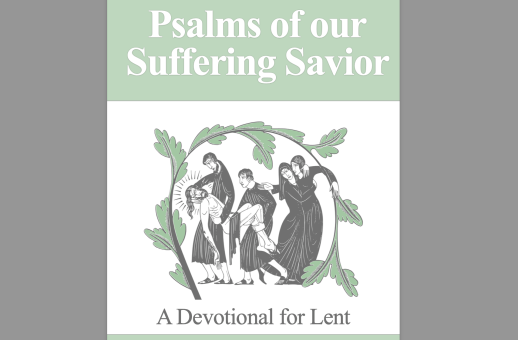
In preparation for Easter, I put together a devotional book. If you don’t have something to go through, I encourage you to check it out.
Here’s the link to the free e-book, I hope you find it helpful: Psalms of Our Suffering Savior
Quotes from J.D. Payne’s Pressure Points

I really appreciate J.D. Payne. His church planting class had an impact on me in seminary, and I have appreciated his books. I recently read his book Pressure Points.
In his intro, Payne says, “Ever since the first century, the church has experienced challenges to her mission of making disciples of all nations… Over the past two thousand years, the church has constantly found herself swimming in a sea of difficulties and delights, challenges and comforts, opposition and opportunities… For better or for worse, the global issues of our day are shaping and will continue to shape the church… Knowing how to live as wise stewards involves knowing our world in light of our commission. Knowing our world means understanding the global pressure points shaping the face of the church and mission.”
To be wise stewards it’s helpful to be aware of those pressure points so we can respond well. I found his book helpful. Here are some quotes that especially stuck out to me:
Our brothers and sisters in the Majority World remind us of the simplicity of the faith. At the end of its first three centuries, Christianity became one of the officially recognized religions, and it accomplished this feat with few materials resources. While there are exceptions, the Majority World believers are accomplishing more for gospel advancement with little more than God’s Word and His Spirit than the church in the West is accomplishing with all of our money, organizations, and structures. They are an example to us that faith can be vibrant and the church both simple and dynamic.
Biblical simplicity helps foster the rapid dissemination of the gospel and the multiplication of disciples, leaders, and churches.
Complexity gives birth to complexity, and complexity is difficult to reproduce… The more technical our methods and strategies,… the less likely the people we reach are going to be able to use those same approaches to reach those within their social networks.
If we model a form of leadership before the people that only the few can imitate, then the possibility of multiplication will be diminished.
If my regular leadership style and ways of doing ministry are so lofty that they impress upon the people, ‘You can never serve the Lord like this—the way ministry should be done. I’ll do everything for you. And only those of such a caliber as myself can be trusted with any significant ministry,’ then I am not a leader with the multiplication of disciples, leaders, and churches in mind.
With over four billion people in the world without Jesus, it is not wise to develop strategies that support methods which are counterproductive to the healthy rapid multiplication of disciples, leaders, and churches. Just because there is much biblical freedom in our culturally shaped methods does not mean that all such expressions are conducive to the multiplication of healthy churches across a people group or population segment.
Often our strategies are designed to bring instant gratification, thus allowing us to win the sprint of seeing numbers produced but failing the marathon of making disciples.
The multiplication of disciples, leaders, and churches will only happen in relation to the sovereignty of God. The church cannot create movement. It is an act of the Spirit. We cannot program it. It is not achieved in four or five easy steps. However, we can hoist the sails on our boats so that if the Spirit does decide to move.
Is the Bible Reliable?

Christians believe that the original manuscripts of the Bible give us God’s authoritative words, and we have very accurate copies of those original manuscripts. As the Bible says, God’s word will not pass away (Psalm 119:89; Isaiah 40:8; Luke 21:33; 1 Peter 1:23, 25).
We do not have an original copy of any piece of the New Testament (an “autograph manuscript”). The process known as textual criticism, however, helps us get back to what was originally written. What would have happened with the original writings of the New Testament, the autograph manuscripts, is they would have been carefully and painstakingly copied and then passed on to the next group of early Christians to carefully copy. These copies would have then been copied as well. Eventually, the original writing would get worn and torn.
We do not have original copies, but we have manuscripts that are very close to the date of the autographs. One of the amazing things about the New Testament is the sheer number of copies we have as well as how close they are to the original manuscripts, both in accuracy and date.
There are three main types of manuscript variants. Daniel Wallace, a specialist in Koine Greek and New Testament textual criticism, says that over 99 percent of textual variants don’t affect the meaning of the text, are not viable, or “don’t have any likelihood of going back to the original, or both.”[1] The largest category is spelling difference. “This accounts for over 75% of all textual variants.”[2] The second “largest category involves synonyms, word order, or articles with proper nouns.”[3] Neither of these categories impacts the message of the text in any meaningful way. There is a third and much smaller category, however, in which the meaning of the text can be affected. Two examples are the long ending of Mark (Mark 16:9-20) and the woman caught in adultery (John 7:53-8:11). In this third category, manuscript evidence must be weighed and considered. But even in this last category, no Christian doctrine is changed. Even Bart Ehrman, a popular New Testament scholar who is not a Christian, has written, “Essential Christian beliefs are not affected by textual variants in the manuscript tradition of the New Testament.”[4]
We can be sure that we accurately have the words of God, but in a few places, we have needed to get back to the words of God, so we have had to trim back what is not supported by the manuscript evidence. So again, that’s what there are notes in most Bibles about the long ending of Mark and the woman caught in adultery.[5]
It should also be understood that “many textual variants exist simply because many ancient manuscripts exist. The amount of the manuscript evidence is one thing that makes the New Testament stand out among other works of antiquity.”[6] Other ancient works are supported by a dearth of manuscripts. Of course, with fewer manuscripts, you have fewer variants, but you also have less evidence to weigh to get you back to the original work.
The Bible’s number of manuscripts is especially impressive considering the Roman emperor Diocletian’s “Edict against the Christians” during the Great Persecution. In Eusebius’ Church History, he talks about the edict “commanding that the churches be leveled to the ground” and the Scriptures be destroyed by fire.[7]
So, is the Bible historically reliable? The Bible reports actual historical events and the manuscripts for the Bible are very reliable. Nothing in ancient literature matches the historical documentation of the Bible. Nothing comes close.
Compared with other ancient writings, the Bible has more manuscript evidence to support it than any ten pieces of classical literature combined.[8]
The reliability of the New Testament history is overwhelming when compared to that of any other book from the ancient world.[9]
The New Testament is easily the best-attested ancient writing in terms of the sheer number of documents, the time span between the events and the documents, and the variety of documents available to sustain or contradict it. There is nothing in ancient manuscript evidence to match such textual availability and integrity.[10]
Christians can be confident that most English translations of the Bible are fair representations of what the biblical authors wrote. A vast number of variants exist only because a vast number of ancient, hand-copied manuscripts exist. No textural variant anywhere calls any essential Christian doctrine into question or indicates completely different, competing theologies among the New Testament authors. We have not lost the message of the text. God has preserved his Word, and the text’s wording is trustworthy.[11]
In comparison with the average ancient Greek author, the New Testament copies are well over a thousand times more plentiful. If the average-sized manuscript were two and one-half inches thick, all the copies of the works of an average Greek author would stack up four feet high, while the copies of the New Testament would stack up to over a mile high![12]
Here’s a table[13] so you can see a visual representation of the manuscript data:

Therefore, “to be skeptical of the resultant text of the New Testament books is to allow all of classical antiquity to slip into obscurity, for no documents of the ancient period are as well attested bibliographically as the New Testament.”[14]
The Bible is historically accurate and other historical works collaborate information we see from the Bible. Tacitus, a first-century historian, wrote this about the early Jesus movement:
Therefore, to scotch the rumour, Nero substituted as culprits, and punished with the utmost refinements of cruelty, a class of men, loathed for their vices, whom the crowd styled Christians. Christ, the founder of the name, had undergone the death penalty in the reign of Tiberius, by sentence of the procurator Pontius Pilatus, and a pernicious superstition was checked for the moment, only to break out once more, not merely in Judea, the home of the disease, but in the capital itself, where all things horrible or shameful in the world collect and find a vogue.[15]
Thus, early non-Christian sources support the main details about Jesus. The authors of the New Testament were either eyewitnesses to Jesus themselves or interviewed eyewitnesses, so we have accurate historical accounts about Jesus (e.g., Lk. 1:1-4; 2 Pet. 1:16; 1 Cor. 15:1-8; 1 Jn. 1:1-3).
There are reasons to trust the Bible from an archeological (and even an astronomical[16]) perspective as well. For years, many people thought the Hittites the Old Testament talks about did not exist. However, archaeological research has since revealed that the Hittite civilization did exist. There are many similar examples.
Various inscriptions support things we see in the Bible. The Pool of Siloam, once doubted, has been found. The James Ossuary seems to support facts about Jesus’ family. The Shroud of Turin, though debated, is potential “hard evidence.” In fact, “No book from ancient times has more archaeological confirmation than the Bible.”[17]
The death, burial, and resurrection of Jesus are attested by various historical accounts. I believe a persuasive argument can be made for the validity of the actual physical resurrection of Jesus of Nazareth. I believe the resurrection of Jesus best explains why the disciples were willing to die for their claim that Jesus was the resurrected Messiah and why the Jews would switch from gathering for worship on the Sabbath (on Saturday) to gathering on the Lord’s Day (Sunday, the day Jesus rose from the dead). I think it best explains why people, including Jews, would worship Jesus. It best explains all of it; the church,[18] the New Testament, and various parts of the Old Testament. So, we can trust the Bible to give us accurate historical accounts.
Notes
[1] Darrell L. Bock and Mikel Del Rosario, “The Table Briefing: Engaging Challenges to the Reliability of the New Testament” in Bibliotheca Sacra (vol. 175, January-March, 2018), 98.
[2] Darrell L. Bock and Mikel Del Rosario, “The Table Briefing: Engaging Challenges to the Reliability of the New Testament” in Bibliotheca Sacra, 98.
[3] Bock and Rosario, “The Table Briefing: Engaging Challenges to the Reliability of the New Testament” in Bibliotheca Sacra, 98.
[4] Bart Ehrman, Misquoting Jesus, 252.
[5] “The New Testament grew in size from the earliest copies to the latest copies—fourteen hundred years later –by about 2 percent. That is a remarkably stable transmissional process” (J. Ed Komoszewski, M. James Sawyer, Daniel B. Wallace, Reinventing Jesus: How Contemporary Skeptics Miss the Real Jesus and Mislead Popular Culture [Grand Rapids: Kregel Publications, 2006], 55).
[6] Bock and Rosario, “The Table Briefing: Engaging Challenges to the Reliability of the New Testament,” 99.
[7] Eusebius, Church History, 8.2.4.
[8] Josh McDowell, The New Evidence that Demands A Verdict, 9.
[9] The Popular Handbook of Archaeology and the Bible, 131.
[10] Ravi Zacharias, Can Man Live Without God?, 162.
[11] Bock and Rosario, “The Table Briefing: Engaging Challenges to the Reliability of the New Testament,” 104-05.
[12] J. Ed Komoszewski, M. James Sawyer, Daniel B. Wallace, Reinventing Jesus: How Contemporary Skeptics Miss the Real Jesus and Mislead Popular Culture (Grand Rapids: Kregel Publications, 2006), 82.
[13] See Josh McDowell, Evidence the Demands a Verdict, (San Bernadino, CA: Here’s Life, 1972). Homer’s Illiad is the best-attested ancient work after the New Testament.
[14] John Warwick Montgomery, History and Christianity, 29. “Since scholars accept as generally trustworthy the writings of the ancient classics even though the earliest MSS were written so long after the original writings and the number of extant MSS is in many instances so small, it is clear that the reliability of the text of the N. T. is likewise assured” (J. Harold Greenlee, Introduction to New Testament Textual Criticism, 16).
[15] Tacitus, Annals 15.44. There are other examples we could look at. A Rabiniac writing says, ““Jesus was hanged on Passover Eve. Forty days previously the herald had cried, ‘He is being led out for stoning, because he has practiced sorcery and led Israel astray and enticed them into apostasy. Whoever has anything to say in his defence, let him come and declare it.’ As nothing was brought forward in his defence, he was hanged on Passover Eve” (Sanhedrin 43).
[16] “Astronomical records show that there were several significant celestial events around the time of Jesus’ birth” (Paul W. Barnett, “Is the New Testament Historically Reliable?” 246 in In Defense of the Bible. See esp. The Great Christ Comet). This is significant because of the “star” (or comet?) that was connected to Jesus the Messiah’s coming.
[17] The Popular Handbook of Archaeology and the Bible, 139.
[18] For example, “The creation of so many texts and their survival is remarkable and counter-intuitive. Jesus was a Jew, and anti-Semitism was rife in the Greco-Roman world. He came from Nazareth, a tiny village in Galilee, a remote landlocked principality. He was crucified, a brutal and humiliating form of execution reserved for the lowest orders to deter subversives, troublemakers, and slaves like those who followed Spartacus” (In Defense of the Bible, 228-29).
Photo by Priscilla Du Preez 🇨🇦
4 Benefits of a Book Club

I recently became part of a book club. It has already been beneficial. I also asked my sister, a long-time “book cluber,” for her perspective. She, in turn, phoned her book club friends and they shared their thoughts too. Below are the 4 benefits of a book club that especially stuck out.
Accountability & Encouragement
Reading is important. There is much to gain from reading but we have to read to get those gains. And what we get from reading is not tangible. We can see a book but it’s difficult to see the impact a book has. Reading also takes concentrated effort. Reading is difficult in our age of distraction, especially if we’re out of practice.
With anything difficult, positive peer pressure is helpful. Atomic Habits, one of our book club books, says this:
One of the most effective things you can do to build better habits is to join a culture where your desired behavior is the normal behavior. New habits seem achievable when you see others doing them every day… Your culture sets your expectation for what is “normal.” Surround yourself with people who have the habits you want to have yourself. You’ll rise together.1
Discovery & Expansion
There are some books I would never choose to read. I used to only read nonfiction books but now I read about every genre. In fact, and I feel embarrassed to admit this now, there was a time when I didn’t want to read the Harry Potter book series. I told people that when I’m sitting in a nursing home then I’ll start them.2 Thankfully my son convinced me. I have the last book to finish but it’s been really good.
C.S. Lewis talks about the importance of reading old books “because they are unlikely to go wrong in the same direction.” Reading widely gives us a perspective we would not otherwise have. Reading can also help us “walk in someone else’s shoes.” Thus, reading widely can help us obtain wisdom and empathy. Getting out of our reading “comfort zone” might just help us see something we would otherwise be blind to. Of course, we must always be discerning readers.
Diverse Perspective
To misappropriate “A Whole New World” from Aladdin:
Books show you the world
shining, shimmering, splendid
books can open your eyes
take you wonder by wonder
over, sideways, and under
on a magic book ride
a whole new world
a new fantastic point of view
Or as Peter Kreeft has said, “There’s a real place you can go where you can really find magic. You can get into other worlds there… Like getting into Narnia through the wardrobe. There are thousands of other worlds there, and holes to get into each one… It’s called a library.”3
A book club is like a magic boost. One of the great things about book club is you not only read books that you otherwise might not read but you have conversations with people and perspectives that you otherwise wouldn’t have. When echo chambers are in vogue, it’s important to seek out real conversation and even, perish the thought, disagreement. If we are to learn to be patient with people with different perspectives, it’s helpful to sit across from those people, to hear them and not just soundbites.
Seeking out diversity in book clubs, both in books read and people reading, is important because “even as we live with increasing diversity, it’s easier than ever to restrict our contact, both online and off, to people who resemble us in appearance, views, and interests. That makes it easy to dismiss people for their beliefs or affiliations when we don’t know them as human beings. The result is a spiral of disconnection that’s contributing to the unraveling of civil society today.”4
Social Connection
Social connection is vital. In fact, in Vivek H. Murthy’s book, Together, he says, “People with strong social relationships are 50 percent less likely to die prematurely than people with weak social relationships… weak social connections can be a significant danger to our health.”5 So not trying to oversell this, but being part of a book club can help you live longer!
One mother said one of the benefits of book club is “guaranteed grown-up conversation once a month.” In my observation, “grown-up conversation” is sadly lacking in many people’s lives. We might talk with people a little or a lot, but is our talk deep and meaningful? A book club can help people have not only relationships but also meaningful relationships through the important themes discussed in the books that are read. Many books, as one respondent said, “show us the depths and height of the human heart.” A book club also allows deep and meaningful conversations for introverts and extroverts without it being too awkward.
If you’re not part of a book club, you should join one. You will reap a bunch of benefits. You might even live longer.
- James Clear, Atomic Habits, p. 117. ↩︎
- I now say this about the Wheel of Time series. Although, I have enjoyed a Wheel of Time graphic novel as well as the Wheel of Time TV show. Most of my nine siblings get angry at me for talking about their cherished book series in this way. ↩︎
- Peter Kreeft, Making Sense of Suffering. ↩︎
- Vivek H. Murthy, Together: The Healing Power of Human Connection in a Sometimes Lonely World, p. 134. ↩︎
- Vivek H. Murthy, Together: The Healing Power of Human Connection in a Sometimes Lonely World, p.13. ↩︎
My Ten Favorite Books I read in 2021

Here are my ten favorite books that I read in 2021:
C.S. Lewis, The Four Loves
It was my second time reading it but enjoyed it more this time.
Carl R. Trueman, The Rise and Triumph of the Modern Self
I found Trueman’s account very helpful and accessible. I appreciated the sweeping nature of the book, taking into account court cases, philosophers, pornography, and entertainment. Not exhaustive but a fair and I believe accurate overview. Overall, The Rise and Triumph of the Modern Self was definitely one of the best books I read all year.
J.P. Moreland, Scientism and Secularism
Moreland gave a helpful and accessible explanation of the problems with scientism.
John Steinbeck, The Grapes of Wrath
The Grapes of Wrath transports you back to the sad and seemingly hopeless story of a family of “Okies” during the Dust Bowl. It paints a picture of what life was like for a lot of people and thereby cultivates empathy and understanding of other people and their varied journeys.
Paul David Tripp, Lead
Tripp is one of my all time favorite authors and now he has written one of my favorite books on leadership. I have a bunch of highlights in this book, perhaps more than any other book I read this year. Tripp offers a lot of timely wisdom for leaders in Christian ministry.
Randy Newman, Questioning Evangelism
Perhaps the only thing I think is a little unhelpful about this book is its title. When you read the title you might think the book is calling evangelism into question. That, however, is not the purpose of the book. The book is about the important place that questions play in evangelism. I found the book quite helpful.
Richard Bauckham, The Theology of the Book of Revelation
I read a few books on the book of Revelation this past year and this one sticks out to me as the most helpful. I’m thankful for Richard Bauckham and his scholarship.
Sam Alberry, Why does Gos care who I sleep with?
Alberry wrote a very relevant and helpful book. I hope this book is read widely. I think a lot of people will be helped by it.
Timothy Z. Witmer, The Shepherd Leader
I recently transitioned to Care Pastor at my church and found this book very helpful in looking at what the Bible says on pastoral care.
Vivek H. Murthy, Together
I read the lion’s share of this book in 2020 but only recently finished it. It is a timely and well written book on the importance of relationships.
I try to track my reading on Goodreads. If you want to “be friends” on Goodreads you can do so here.
Quotes from Nancy Pearcey’s book Love Thy Body
Here are 10 quotes from Nancy Pearcey’s book Love Thy Body: Answering Hard Questions about Life and Sexuality (Grand Rapids: Backer Books, 2018). It’s a really good and timely book.
Quote #1
“A worldview that says human life has no inherent value or dignity will never lead to utopia, no matter how advanced the tools and technology” (Nancy R. Pearcey, Love Thy Body, 101).
Quote #2
The Apostle Paul “would have seen prostitutes on the street and in the doorways of brothels. He probably saw slave auctions, where youths his own age were being sold to local pimps” (Pearcey, Love Thy Body, 187).
Quote #3
“From the beginning, Christians have not defended ‘traditional values.’ They have stood for truth against prevailing cultural norms” (Pearcey, Love Thy Body, 188).
Quote #4
“The biblical ethic says our sexual identity has the high honor of being part of the moral structure of the universe” (Pearcey, Love Thy Body, 189).
Quote #5
“Christians must once again become known as those who honor the whole person. The reason they speak out on moral issues should not be because their beliefs are being threatened or because they feel‘offended.’…. Christians must make it clear that they are speaking out because they genuinely care about people” (Pearcey, Love Thy Body, 190).
Quote #6
“People must be drawn in by a vision that attracts them by offering a more appealing, more life-affirming worldview. Christians must present biblical morality in a way that reveals the beauty of the biblical view of the human person so that people actually want it to be true. And they must back up their words with actions that treat people with genuine dignity and worth” (Pearcey, Love Thy Body, 190).
Quote #7
Pearcey quotes Jean Paul Sartre: “There is no human nature because there is no God to have a conception of it…. Man is nothing else but that which he makes himself.” So, in this view, as Pearcey says, “There is no blueprint for what it means to be human…. And if nature reveals no purpose, then it cannot inform our morality” (Pearcey, Love Thy Body, 206).
Quote #8
“Christianity assigns the human body… much richer dignity and value. Humans do not need freedom from the body to discover their true authentic self. Rather we can celebrate our embodied existence as a good gift from God. Instead of escaping from the body, the goal is to live in harmony with it” (Pearcey, Love Thy Body, 210-11).
Quote #9
“Those who respect science the most should also be the most pro-marriage” (Nancy R. Pearcey, Love Thy Body, 242). Why? Because “children of unmarried or divorced parents are far more likely to suffer emotional, behavioral, and health problems. They are at higher risk for crime, poverty, depression, suicide, school difficulties, unmarried pregnancy, and drug and alcohol abuse” (Pearcey, Love Thy Body, 242).
Quote #10
“Instead of moving out of the state of nature populated by lone, autonomous individuals, we are moving into a state where adults are isolated individuals, connecting with others temporarily and only when it meets their needs. We are regressing to a pre-civilized condition” (Pearcey, Love Thy Body, 248).
.



 in X
in X 