Better News Than Politics

How does the good news of Jesus speak to politics?
First, I think it’s important that we see and agree that the good news that Jesus brings is better news than politics has ever or could ever bring. Let’s look at a simple outline of some forms of government that God’s people have been under in the Bible:
- Government by God (in Eden)
- Oppression and Slavery (in Egypt)
- Tribal Leadership
- Monarchy
- Exile
- Roman Rule
Out of the six forms of government only one was perfect: Government by God. And even that got messed up because of human sin. Representative democracy as good as it is, is not perfect and never will be. It has worked well. But it is important that we realize that it will never be perfect.
Jesus brings better news than politics can ever bring. Jesus gets us back to perfect government by God. And He does so by giving His very own life. Jesus will make things forever right (Rev. 21).
Let’s not put our hope in any political promise. Let’s hope in Jesus and in His Kingdom. Jesus is the true King and Savior.
Second, the gospel tells us our ultimate citizenship is somewhere else. As Christians, we live knowing that we don’t have a permanent home here. We’re looking for the forever and perfect home that is to come (Heb.13:14 cf. 10:34; 11:10, 16; 2 Cor. 5:4), a home prepared for us by Jesus Himself (Jn. 14:2).
Alexa… Amen

We bowed our heads to pray and instead of saying, “God…” What came out was, “Alexa.”
We looked up from our prayer and kinda smirked, kinda laughed. But for me, there was a tear, a start of a separation. I wondered if something more profound and problematic was behind that slip.
We pray to our all-knowing, ever-present, appendage. We, at least, certainly rely daily on our Internet technology. Even our presence and personality is mediated through this ever-present medium. We rely on it for strokes to our ego and many rely on it for titillation.
Is the Internet a false god?
Statistics and Comfort in Calamity

Photo by Ben White
Does the 2% death rate statistic comfort you? What does the Bible say about comfort during calamity?
Some sources are saying that the mortality rate of COVID-19 looks to be 2%. However, it is too early to say. The percentage will be bigger or smaller depending on various factors (such as the age of the people infected, access to the needed medical treatment, etc.). I think we should acknowledge a few things about the statistic. First, 2% looks like a small number. And it is. At least, relative to a larger number.
Second, to put it into perspective, 2% of the population of the world is around 140 million people. That, as we can see, is a lot of people. COVID-19 could rival the AIDS epidemic. Of course, it seems highly unlikely that everyone in the world will get the virus. But even a fraction of that number is a lot of people. And it’s important for us to see the numbers from this vantage point so that we don’t play the numbers down.
The Coronavirus and the Christian

How should Christians think about and respond to the coronavirus? Here are some initial thoughts…
Plague and the Problem of Evil
Christians see the world in a way that makes sense of the world. We have an understanding of why plagues and the problem of evil exist.
That leads us to acknowledge something else that’s super important to focus on: Jesus. Jesus did not leave us to our problems. He did not leave us to simply wallow in plagues. Instead, He Himself plunged headlong into our sorrow.
“The God of The Bible becomes completely human and hurts in every way that we do—from physical pain to social rejection, misunderstanding, hatred, violence, and death. He endures it all. And because he suffers all of this with us, he can empathize with our sorrow and pain. Even more amazingly, Jesus’ death on the cross and his resurrection are the avenues through which he overcomes all evil, pain, and misery and is able to offer us the promise that disappointment will give way to joy, brokenness to eternal healing, and evil to good. Because of Christ’s agony, death will die and life will live on forever.”[1]
Therefore, even in the midst of plague and the problem of evil we can point people to Jesus. We can point people to hope, no matter what happens. Therefore, Christian, continue to worship Christ as Lord and always be ready to tell everyone the reason you have hope even in the midst of the chaos of the curse and the coronavirus (1 Pet. 3:15).
the primal lie

Falling like the Rain

I woke to the sound of rain drenching everything in its path and my daughters quiet voice asking if the dog can still go out to use the restroom. “Yes, please take the dog out!” was my urgent reply.
I have always loved the rain. The sound it creates as it slaps the ground, rushing along the path it created just moments ago. It is a gift from God. He uses the rain to feed and nourish all His creation. All of our senses are brushed by His creation. We shiver in the dampness, we smell & taste the sweet yet dank rain, we hear and see the chorus of individual drops dissolve.
The ten most popular posts of 2019…

An Easter Devotional
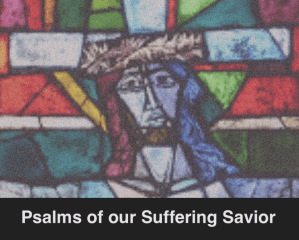
I wrote the blog series, “Psalms of our Suffering Savior,” to help us “remember Jesus Christ, risen from the dead” (2 Tim. 2:8)…
A Brief Theology of Emotions

We all have emotions. How often do we consider emotions from a biblical perspective though?… Yet, what better place to turn than God’s word! So, what does the Bible say about emotions?…
Holding on to Hope: 10 Actions Steps to Fight Depression
 1. Call out to God
There are all sorts of Psalms in Scripture in which the psalmist calls out to God in distress. The Bible encourages us to call out to God and be real with Him about where we’re at…
20 of the best books I read in 2019

Here are twenty of my favorite books that I read in 2019. I think I only read three fiction books this year. I need to fix that. I plan to read quite a bit more fiction next year. Anyhow, here’s some of my favorites… (in no particular order)
- Why Suffering?: Finding Meaning and Comfort When Life Doesn’t Make Sense
by Ravi Zacharias - Safely Home by Randy Alcorn
- Apologetics at the Cross: An Introduction to Christian Witness by Josh Chatraw and Mark D. Allen
- Them: Why We Hate Each Other–and How To Heal by Ben Sasse
- How Long O Lord?: Reflections on Suffering and Evil by D.A. Carson
- Titan: The Life of John D. Rockefeller, Sr. by Ron Chernow
- Alienated American: Why Some Places Thrive While Others Collapse
by Timothy P. Carney - Holy Sexuality and the Gospel: Sex, Desire, and Relationships Shaped by God’s Grand Story by Christopher Yuan
- Remember Death: The Surprising Path to Living Hope by Matthew McCullough
- The Autobiography of Martin Luther King Jr by Clayborne Carson
- Today Matters: 12 Daily Practices to Guarantee Tomorrow’s Success by John C. Maxwell
- Elon Musk: Tesla, SpaceX, and the Quest for a Fantastic Future by Ashlee Vance
- Walking with God through Pain and Suffering by Timothy Keller
- Preaching as Reminding: Stirring Memory in an Age of Forgetfulness by Jeffrey D. Arthurs
- An Unhurried Leader: The Lasting Fruit of Daily Influence by Alan Fadling
- Everyday Church: Gospel Communities on Mission by Tim Chester and Steve Timmis
- Susie: The Life and Legacy of Susannah Spurgeon, wife of Charles H. Spurgeon by Ray Rhodes Jr.
- To the Golden Shore: The Life of Adoniram Judson by Courtney Anderson
- Endurance: Shackleton’s Incredible Voyage by Alfred Lansing
- Deep Work: Rules for Focused Success in a Distracted World by Cal Newport
Out of all the books I read last year, Remember Death by Matthew McCullough, is the one I would suggest you read over all the rest.
Read it.
Moral Order

The world has a moral order. Many are unwilling to concede that truth, however. But the world functions as if that is the case. Let’s take my kid’s classroom as an example.
In my kid’s classroom there is a telos, or goal for which the students gather. There are also specific means that are employed to reach that end.
The whole education system is predicated upon the goals of teaching things that are deemed important for the betterment and healthy functioning of the individual student and society. Various means are employed to best meet those goals. There are subtle disagreements of course. For example, people have disagreements over the best forms of discipline. But there is overarching agreement across America.
Think of the quintessential school. Perhaps for you it’s John Adams High from Boy Meets World or maybe Bayside High School from Saved by the Bell. Regardless, there is a quintessential school. There is something that is aimed for, something that is ideal. Read More…



 in X
in X 