The Work of the Spirit | pt. 2
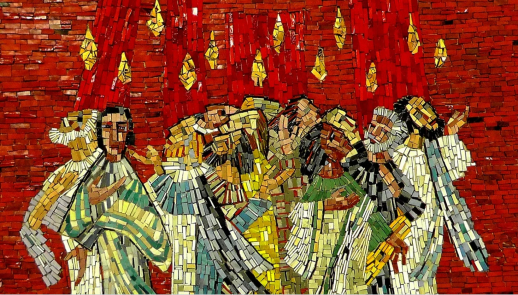
God the Spirit and the Filling of the Spirit
God the Spirit. Since we are considering the work of the Spirit within the church, it is important that we consider God the Spirit, who He is and what He does. First, without going into any detail, the Holy Spirit is the third person of Trinity. The Spirit is fully God.[1] The Holy Spirit also has personhood; He is not an impersonal force.[2] That is who the Spirit is.
Second,[3] it is important that we briefly consider what it is that the Spirit does. The Old Testament teaches us various things about the Holy Spirit. The Spirit molds creation into shape and gives life to created beings (Gen 1:2; 2:7; Ps 33:6; Job 26:13; 33:4). The Spirit controls the course of nature and history (Ps 104:29-30; Isa 34:16). The Spirit teaches and reveals God’s truth and will to His messengers.[4] The Spirit elicits personal response to God.[5] The Spirit equips individuals for leadership.[6] We also see that the Spirit equips individuals with skill and strength (Exod 31:1-11; 1 Kgs 7:14; Hag 2:5; Zech 4:6).
The Spirit is given as our Helper (John 14:24). He takes what belongs to the Son and shares it with those who believe (John 16:14), beginning with the new birth (John 3:6), teaching and guiding (John 16:14), and transforming (2 Cor 3:5-18) in ways that surpass human capacity (1 Cor 2:10-14). He empowers believers to be Jesus’ witnesses to the end of the earth (Acts 1:8) and to the end of the age (Matt 28:20). By indwelling believers (Rom 8:9; 1 John 2:27), the Spirit washes and renews (Titus 3:5), pours out divine love in our hearts (Rom 5:5), reproduces the divine virtues (Gal 5:22-23; Rom 14:17), enables us to resist sin (Rom 8:13) and pursue holiness (2 Thess 2:13), and build unity among the church (Eph 2:22; 4:3, 13; Phil 2:1-2).[7] The Spirit hears, speaks, witnesses, convinces, shows, leads, guides, teaches, commands, forbids, desires, gives speeches, helps, and intercedes with groans.[8] It is vital that we not leave out the most miraculous work that the Spirit works within people; He makes them new creations in Christ (2 Cor 5:17; 3:3, 6, 18; Titus 3:5-6; Ezek 36:25-28; Rom 2:28-29).
The Work of the Spirit | pt. 1
Introduction and Thesis
The Apostle Paul said, “Now concerning spiritual gifts: brothers and sisters, I do not want you to be unaware” (1 Cor 12:1).[1] This is a very important subject yet sadly very divisive. The reality is “there is one body and one Spirit” and “one Lord, one faith, one baptism” (Eph 4:4-5) but there are many divergent views on the work of the Spirit within the Church. So we have all the more reason to carefully evaluate this subject.[2]
This subject is important to consider because we want Christ’s church to be as healthy as it can possibly be, we want it to be adorned as Christ would have it. If there are good gifts that are available to the church for it’s upbuilding then we should want to and should make use of them.[3] Especially because 1 Corinthians 12:31 tells us we are to eagerly desire the greater grace gifts.
I believe that all the good gifts that were available at the outset of the church continue to be available and will be until the consummation when the Lord Jesus comes back to get His bride. So my thesis is that God the Spirit continues to empower and provide various grace gifts[4] to the Church for its upbuilding and these gifts should be earnestly desired and practiced in accordance with Scripture. This is very important to consider because “despite the affirmations in our creeds… and the lip service paid to the Spirit in our occasional conversations, the Spirit is largely marginalized in our actual life together as a community of faith.”[5]
Setting the Context
I have a number of questions that are important for us to honestly consider.[6] Could it be the case that some people have a bias against the continuation of the gifts of the Spirit?[7] Could it be that people do not have solid biblical reasons for believing that the “more miraculous” gifts of the Spirit have ceased? Could it be that most people’s beliefs in this regard are simply based upon what they have heard someone else say? Could it be that in this case, people have failed to check what was taught to ensure it was in accordance with Scripture (See Acts 17:11)?
Could it be that the Western enlightenment worldview has crept into our own view of the world and impacted the way we think about spiritual things?[8] Many have adopted a view of reality that sees “the universe as a uniform system based strictly on the cause-and-effect relationships between its constituent parts, each in a determinate relationship one to the others, utterly closed to any dimensions of reality that transcend the natural.”[9] Of course, many Christians rightly confess with Abraham Kuyper, that “there is not a square inch in the whole domain of human existence over which Christ, who is sovereign over all, does not cry: ‘Mine!’” But, could it still be the case that “naturalism nonetheless deeply influences our view of the daily events of our lives”[10]?
Can we concede that the continuation of the gifts would be a good thing? Should not we want all the grace that our good Father has availed to us? How can we say something is bad that our Father has called good?[11] If the grace gifts are part of the “every good and perfect gifts” (Jas 1:17) that God has graciously given us then should we not receive them gratefully?[12] If spiritual gifts are as bad and unhelpful as many make them seem, then why would the gifts have ever existed at all?
Better News Than Politics

How does the good news of Jesus speak to politics?
First, I think it’s important that we see and agree that the good news that Jesus brings is better news than politics has ever or could ever bring. Let’s look at a simple outline of some forms of government that God’s people have been under in the Bible:
- Government by God (in Eden)
- Oppression and Slavery (in Egypt)
- Tribal Leadership
- Monarchy
- Exile
- Roman Rule
Out of the six forms of government only one was perfect: Government by God. And even that got messed up because of human sin. Representative democracy as good as it is, is not perfect and never will be. It has worked well. But it is important that we realize that it will never be perfect.
Jesus brings better news than politics can ever bring. Jesus gets us back to perfect government by God. And He does so by giving His very own life. Jesus will make things forever right (Rev. 21).
Let’s not put our hope in any political promise. Let’s hope in Jesus and in His Kingdom. Jesus is the true King and Savior.
Second, the gospel tells us our ultimate citizenship is somewhere else. As Christians, we live knowing that we don’t have a permanent home here. We’re looking for the forever and perfect home that is to come (Heb.13:14 cf. 10:34; 11:10, 16; 2 Cor. 5:4), a home prepared for us by Jesus Himself (Jn. 14:2).
Alexa… Amen

We bowed our heads to pray and instead of saying, “God…” What came out was, “Alexa.”
We looked up from our prayer and kinda smirked, kinda laughed. But for me, there was a tear, a start of a separation. I wondered if something more profound and problematic was behind that slip.
We pray to our all-knowing, ever-present, appendage. We, at least, certainly rely daily on our Internet technology. Even our presence and personality is mediated through this ever-present medium. We rely on it for strokes to our ego and many rely on it for titillation.
Is the Internet a false god?
The Joy that Awaits

And the ransomed of the LORD shall return, And come to Zion with singing, With everlasting joy on their heads. They shall obtain joy and gladness, And sorrow and sighing shall flee away.
-Isaiah 35:10
Some times people paint with colors and at other times they paint with words. Isaiah here is painting with words and what a wonderful picture he paints.
He starts by saying that “the wilderness and the dry land shall be glad” (Is. 35:1). The groaning world, the world bent with the Fall, shall be made right. Even the earth shall be glad. The barren desert, filled with dust and sand, shall beautifully blossom.[1] It shall “rejoice with joy and singing” (v. 2). The whole of the world will unfurl and be in a state of spring. Yes, the desert shall blossom like the crocus (v. 1).

The redeemed shall see the majesty and “the glory of the LORD” (v. 2). Our eyes as of now have a shutter over them, we see through a fog, or as through dirty glass dimly, but then we shall see. We shall see the full wonder of the LORD’s glory and beauty. We know the whisper but we shall hear the wondrous roar!
Who is Jesus?

Who is Jesus? That is the all-important question. That is the hinge on which history hangs.
That question has been a question for centuries. John the baptizer even said, “Are you the one who is to come, or should we expect someone else?” (Matt. 11:3). Islam says Jesus is a prophet. Jehovah’s Witnesses say Jesus is a mighty being, even a god. But not God. They do not believe in the Trinity.[1]
So, who is Jesus?
For us to answer that question, it’s important that we consider what Jesus Himself said. So, who did Jesus Himself say He was? Jesus is asked about His identity in the Gospel of John. People asked Jesus, “Aren’t we right in saying that you are a Samaritan and demon-possessed?” (John 8:48).
Our Hope in the Midst of the Virus

This is a difficult time for many of us. Yet in the LORD we find comfort that transcends our earthly struggles. What hope do we have in the midst of this time of difficulty?
Zephaniah recounts for us a lot of really difficult things. Zephaniah is not a lighthearted read. It is heavy. If Zephaniah was a painter, he wouldn’t have used pastel colors. Instead, the canvas would be filled mainly with black and red.
Yet, there would be a glimmer of light, a glimmer of hope in the darkness. What hope is that and who is it for?
Layout your Lament to the LORD (Psalm 10)

The Bible teaches us that we can layout our lament[1] to the LORD. We can cry out to Him for help or to honestly share our disillusionment. Lament psalms make up around a third of the book of Psalms and is the most numerous type of psalm within Psalms.[2] And so we see, “The vast majority of psalms were written out of a real-life struggle of faith.”[3]
The Bible teaches us that we can layout our lament to the LORD. We can cry out to Him for help or to honestly share our disillusionment.
Tweet
Here we’re looking at Psalm 10.
Cry for Help (v. 1)
The first thing we see the psalmists does in this psalm is cry out for justice. “Why, O LORD, do you stand far away? Why do you hide yourself in times of trouble?”
We too can take our honest wrestling to the LORD. In fact, that is what we must do. We must bring our laments to the LORD.
Insights from D.A. Carson’s book, Showing the Spirit

I really appreciate D.A. Carson and all the books I’ve been able to read by him. Showing the Spirit, not surprisingly did not disappoint. Here are some quotes that stuck out to me from the book:
“There is a long tradition of reading one’s particular ecclesiastical tradition into the text” (D.A. Carson, Showing the Spirit, 44).
“The healings and other miracles of Jesus are explicitly connected not only with the person of Jesus, but also with the new age he is inaugurating” (Carson, Showing the Spirit, 156).
“The greatest evidence that heaven has invaded our sphere, that the Spirit has been poured out upon us, that we are citizens of a kingdom not yet consummated, is Christian love” (p. 76).



 in X
in X 