What sets Christianity apart? (part 1)

It makes sense to consider religious claims. “Even if religion makes no sense to you, you need to make sense of religion to make sense of the world”[1] because the world is religious. It always has been. One author says, “Evidence is abundant that human beings are incurably religious.”[2]
It especially makes sense to consider the claims of Christianity. Douglas Groothuis makes a good argument for the stakes being higher for Islam and Christianity.[3] This is because some of the other religions offer types of do-overs through reincarnation. If you didn’t get it right the first time, you can try again in your next life. Christianity and Islam believe it is one and done. So, it makes sense to investigate the religions that offer no redos first.
That being said, there are many world religions. There are also many irreligious people.[4] And both religious and irreligious people can be very kind and good. So, what sets Christianity apart?
What World Religions Have in Common
World religions and even atheism are asking similar questions; they are just giving different answers. Each religion articulates:
- a problem
- a solution
- a technique for moving from the problem to the solution
- an exemplar who charts the path from problem to solution[5]
There are 9 things that most major world religions have in common. Most religions have some type of…
- Higher Power
- Life After Death
- Prayer or Meditation
- Transcendence
- Community
- Moral Guidance
- Service to the poor
- Purpose
- Founder/Central Figure
Are All Religions Basically the Same?
Are all religions basically the same? In short, no. All religions are not basically the same. Even if they do have similarities in places.
As Stephen Prothero, who is not a Christian, has demonstrated, each religion “offers its own diagnosis of the human problem and its own prescription for a cure. Each offers its own techniques for reaching its religious goal, and its own exemplars for emulation.”[6] We should not lump all religions together in one trash can or treasure chest. Instead, we should start with a clear-eyed understanding of the fundamental differences in both belief and practice of those religions.[7]
Christians, however, believe in something referred to as “common grace.” That is, God gives certain gifts to all humans (Matt. 5:45) and all humans are made in God’s image. Humans can arrive at certain correct conclusions apart from God’s divine revelation. So, while all religions are not all basically the same and not all correct, they can have more or less correct insights into various subjects.
So, Douglas Groothuis has said, “Although Christianity cannot be reduced to a common core that it shares with other religions, it can still find some common ground with respect to the individual beliefs held by other religions. Other religions are not completely false, even though their teachings cannot offer salvation and even though they must be rejected as inadequate religious systems or worldviews.”[8]
What Sets Christianity Apart?
We will look at ten significant aspects of Christianity that set it apart from all other religions.
1) Trinitarian Monotheism
“Trinitarian Monotheism”‽ What does that mean? Christians believe there is only one God and that this one God exists as three persons. God is triune (thee [tri] and one [une]). So, trinitarian refers to God’s three-in-one nature. Monotheism refers to there being one God. Mono comes from the Greek meaning “alone.” Theism refers to belief in god or gods (Theomeans “God” in Greek). So, monotheism refers to the belief in one God.
The Christian teaching on the three-in-one nature of God sets Christianity apart from all other religions. Islam, in contrast, teaches that God is a relational singularity. “Allah is distant; God is Immanuel. The differences between Allah and the God of Christianity are vast because the nature of Allah as one cannot compare with the richness of the loving Trinity.”[9] Allah is incapable of possessing a love like the love that Yahweh has within Himself as Trinity. “Allah is complete oneness, love cannot be a part of his essence and therefore, no matter how loving he chooses to be, his nature is not founded on this love, and thus it cannot compare to the love of Yahweh, the God who is love.”[10] God, being love and Himself teaching us to love, is unprecedented.
The triune nature of God shows that He is relational, loving, self-giving, and personal. God is not just some distant, cosmic force. He has personhood. He has existed in all eternity past in a loving relationship, strange to say, with Himself. God amazingly calls us to join in that relationship with Him (Jn. 17:20ff). He recreates us in His image and welcomes us as His sons and daughters. God welcomes us to have communion with Himself.
If the Trinity is true as the Bible articulates, then God is relational, relational to the core. If God is triune, then Jesus is God. That means that God walked among us as a human. That means God can relate to what we face (Heb. 4:15). He is not a distant deity. If God is a Trinity, then that means that in Jesus, the divine experienced death. If God is a Trinity, and Jesus shows us what God is like in full living color, then we can see God is good even if we can’t always understand His ways.
Christianity is set apart from all other religions by its understanding of the Trinity. But Christians believe the Trinity is actually articulated in the Jewish Scriptures.[11] Jesus, Christians believe, is like a light that brings visibility to what was already there.
2) Eternal Love
The Bible doesn’t just say that God is loving, though it does say that. The Bible says much more. It says, “God is love” (1 Jn. 4:8, 16). Love is deeply connected to God’s very being. This sets the Christian God apart from all other views of God. For love to truly exist, there must be relationship. The Bible, as we have seen, teaches that God is triune. Although we cannot fully grasp what that means, we do know it means God has for all eternity been in loving relationship. Because God is love, He cares about love and teaches us to love (1 Jn. 4:7).
The Apostle Paul says the Thessalonians have been “taught by God to love one another” (1 Thess. 4:9). “Taught by God” is one word in the Greek in which Paul wrote. There are no known occurrences of it anywhere in Greek literature.[12] Paul likely coined the term himself. God is love, and He teaches us how to love. Think of that phrase in the context of history. Think about what we learn about love from Greek mythology. Not a lot. Instead, we see gods at war and spreading chaos.
In reality, God is the only one fully qualified to teach on the subject of love, because love would not exist without Him. He is its author. He is its commentator, because you would not know how to love without His instruction. So then, God not only teaches you about love, but He also teaches you how to love. Therefore, to begin any discussion on the subject of love, the logical starting point must be with God Himself.[13]
Christianity is set apart from all other religions because Christians believe God is a God of love, eternal love.
Notes
[1] Stephen Prothero, God Is Not One: The Eight Rival Religions that Run the World—and Why their Differences Matter, 8. “Religion is not merely a private affair. It matters socially, economically, politically, and militarily” (Ibid., 7).
[2] Michael Peterson, William Hasker, Bruce Reichenbach, and David Basinger, Reason & Religous Belief: An Introduction to the Philosophy of Religion, 3.
[3] “Other religions lacking the doctrines of heaven and hell may also offer prudential incentives, but they are less charged prudentially than Christianity and Islam. Both Hinduism and Buddhism teach the doctrine of reincarnation, wherein the postmortem state is not seen as necessarily eternal. Any number of lifetimes may be needed to neutralize bad karma and attain ultimate enlightenment, after which one escapes samsara (the wheel of rebirth) and need not reincarnate. According to Hinduism and Buddhism, if one wagers incorrectly-say on Islam or Christianity-in this life, a religious adjustment is available in another incarnation. But Christianity (Heb 9:27) and Islam offer no such second (or millionth) chance. The stakes are higher and the time allotted to wager is far shorter-one life. Therefore, even if someone finds the apologetic case for Hinduism or Buddhism attractive, given the prudential considerations of Christianity and Islam, that person should attempt to rule out these high-risk monotheistic faiths before pursuing Hinduism or Buddhism —unless, of course, the person deems Hinduism or Buddhism so intellectually superior that he or she can find no rational interest in Christianity or Islam at all” (Douglas Groothuis, Christian Apologetics: A Comprehensive Case for Biblical Faith, 155).
[4] Although, even atheism has the markings of a religion. Atheists have a creed. Theirs is just that there is no god. Atheism addreses the ultimate concerns of life and existence and answers the questions of people are and what they should value. A commited atheist is even unlikely to marry someone outside of their beliefs. Many atheists even belong to a group and may even attend occasional meetings (see e.g. atheists.org) and have their own literature they read that supports their beliefs.
[5] Stephen Prothero, God Is Not One, 14.
[6] Stephen Prothero, God Is Not One: The Eight Rival Religions that Run the World—and Why their Differences Matter, 333. Prothero also says, however, that “These differences can be overemphasized, of course, and the world’s religions do converge at points. Because these religions are a family of sorts, some of the questions they ask overlap, as do some of the answers. All their adherents are human beings with human bodies and human failings, so each of these religions attends to our embodiment and to the human predicament, not least by defining what it is to be fully alive” (Prothero, God Is Not One, 333).
[7] Ibid., 335.
[8] Douglas Groothuis, Christian Apologetics: A Comprehensive Case for Biblical Faith, 644.
[9] Nathan Johnson, “The Love above Allah: The Gap between Trinitarian Love and the Love of Allah,” 18.
[10] Johnson, “The Love above Allah: The Gap between Trinitarian Love and the Love of Allah,” 3.
[11] Refered to as the Old Testament by Christians.
[12] Jeffrey A. D. Weima, 1-2 Thessalonians, 286.
[13] Mark Howell, Exalting Jesus in 1 & 2 Thessalonians.
* Photo by Willian Justen de Vasconcellos
Quotes and Takeaways from Christian Smith’s Book, Why Religion Went Obsolete

Christian Smith’s book, Why Religion Went Obsolete, is a sobering wake-up call. We would be wise to consider his well-researched work. And wake up to reality and make adjustments to meet the challenges ahead as best we can.
Smith[1] contends that a profound and multifaceted cultural shift has made traditional American religion increasingly irrelevant and unattractive. He argues that “Religion has not merely declined; it has become culturally obsolete.”[2] The irrelevance of religion is different than just decline or secularization. Instead, Smith basically summarizes the problem this way: “The vibes are off.”[3]
The cultural air we breathe essentially contains pollutants that subtly shape people. It makes them not care about or have time or attention for religion. We may not like it, but we can’t change reality by ignoring it. But it’s not just the surrounding culture that is at fault for the decline. The church itself is liable. One of Christian Smith’s chapter titles is fittingly, “Religious Self-Destructions.”
Many Christian leaders don’t realize the extent of what’s going on. Or they would rather stay the course, doing more of the same. Yet, if we continue on this course, we will get more of the same but with increasingly less successful results. If Christian leaders don’t make the necessary changes, they will burn up and burn out. They will think the answer is more—more of everything and better everything. But that’s not the answer. If we understand the problem incorrectly, we will not be able to come up with the correct solution, and we will be weary and discouraged.
Imagine someone buys a brand-new electric car. But when it starts acting up, they open the hood and start looking for the carburetor. They look around for spark plugs and try to change the oil. They’re frustrated because they don’t know what to do, and nothing looks familiar. But they just keep trying to do the same old thing.
What’s the problem? They’re treating an electric car like it’s a gas-powered one. Same idea on the outside—four wheels, steering wheel, gets you from point A to B—but a completely different system under the hood. We assume what worked before will work again, without realizing the “engine” has changed. We can’t keep using gas tools on electric systems.
We aren’t in Christendom anymore. Christians are speaking a dying language. Church buildings and institutions are increasingly seen as out of touch. Increasingly, America resembles Europe and the culture of Rome at the time of the early church.
What’s the solution?[4] Christian Smith suggests getting down to the core. What are Jesus’ followers trying to do and why? What are the essential core traditions, identities, and missions—without which we would not exist—versus cultural positions that may seem non-negotiable but are actually liabilities? We can’t scramble to just try to keep the status quo intact. A whole new paradigm is needed.[5]
10 Quotes from Why Religion Went Obsolete
“Traditional religion has been losing ground among Americans, especially younger ones, no matter how you measure it: affiliation, practices, beliefs, identities, number of congregations, and confidence in religious organizations have all been declining” (p. 34).
“American religion’s demise has not been due to its farfetched belief contents—as most atheists and some secularization theorists would have it—but because of its own fossilized cultural forms that it was unable to shake. Religion in the Millennial zeitgeist felt alien and disconnected from what mattered in life—in short, badly culturally mismatched. The vibes were off” (p. 338).
“Church closings overtook new church plantings in the latter 2010s.18 In 2014, an estimated 4,000 new Protestant churches were planted, while 3,700 closed that year, resulting in a net gain of 300. In 2019, before COVID-19 spread in the United States, about 3,000 Protestant churches were started but 4,500 closed, resulting in a net loss of 1,500 in one year” (p. 32).
“In 2000, the median number of attendees at a worship service was 137 people. By 2020, that number was reduced to 65—a 52% loss in size in 20 years” (p. 32-33).
“In the mid-1980s, more than two-thirds of Americans believed that clergy had high or very high moral standards. By 2021, however, those ratings were cut by more than half, from 67% in 1985 to 32% in 2023. The ratings by younger Americans, ages 18-34, fell even more sharply, from a high of 70% in 1985 to a mere 22% in 2021” (p. 35).
“Most Americans see religion as a non-essential—an option, a supplement, a life accessory from which someone may or may not benefit” (p. 47).[6]
“The decline of traditional American religion is a massive social change, the kind that doesn’t happen often, and it can be difficult to wrap one’s head around how such a massive change can occur” (p. 60).
“In brief, one key takeaway about the Millennial zeitgeist is this: through immense, tectonic shifts in global and national sociocultural orders, the terrain on which religion and secularism have long contended as binary rivals has undergone upheaval and reconfiguration. New players have gained in numbers and influence. The cultural landscape has become more complex and, for religion, more challenging than before. Understanding the big picture adequately requires recognizing the larger significance of this rise of spirituality and occulture” (p. 335).[7]
“Not all Americans pay attention to these denominational culture wars. But those who do quickly learn that these religious groups are not simply collections of believers who share similar creeds and convictions. They are bureaucratic institutions-an immediate red flag for those who distrust organizations-with complex administrative structures” (p. 269).
Many “believe religious institutions are at best superfluous and at worst dangerous” (p. 347).[8]
Notes
[1] Christian Smith is the William R. Kenan Jr. Professor of Sociology and founding director of the Center for the Study of Religion and Society at the University of Notre Dame.
[2] Christian Smith, Why Religion Went Obsolete: The Demise of Traditional Faith in America, 2. “The decline of traditional American religion is a massive social change, the kind that doesn’t happen often, and it can be difficult to wrap one’s head around how such a massive change can occur” (Ibid., 60).
[3] Smith, Why Religion Went Obsolete, 338. “The issues, rather, thrash around the semiconscious subjectivities of young people who rove about their lives with fine-tuned antennae sensing whether or not things give off the right ‘vibe.’ Does it ‘resonate?’ Does it give off ‘good energy?’ Life in this dimension is sorted out in realms of tacit, intuitive, instinctive knowledge and response–always informed by the background zeitgeist. Cultural mismatch meant that, for most younger Americans, traditional religion did not resonate, so they discarded it.” (Christian Smith, Why Religion Went Obsolete, 64)
[4] It has been wisely said, “Every system is perfectly designed to get the results it gets.” Perhaps part of the problem is the current “design” of the church.
[5] Christian Smith, Why Religion Went Obsolete, 372. Many do not understand the need for a new paradigm. “The denial is also present within many churches, as older believers pastors and laity alike-respond to the falling away of young people from faith with either flat denial of the seriousness of the problem or by resorting to failed strategies that at least feel familiar. A Southern Baptist pastor friend focused on evangelizing youth complained bitterly to me that the church’s state-level leadership was spending a fortune on programs that made sense in the 1980s, when those leaders were young, but that had no chance of working today. This allowed the leaders to believe that they were doing something to address the crisis of unbelief among the so-called Zoomers, when in fact these leaders were only propping up illusions of a glorious Christian past” (Rod Dreher, Living in Wonder: Finding Mystery and Meaning in a Secular Age, 101).
[6] If church is simply a “service” where we go and sit, then to a great extent, most people’s perception is true.
[7] See also, for example, Carl Trueman’s book, The Rise and Triumph of the Modern Self: Cultural Amnesia, Expressive Individualism, and the Road to Sexual Revolution.
[8] “Institutional religion compelled them to distance themselves from religion” (Ibid.). “One can subtract the institution and retain the essence of religion” (Ibid.).
Come & See vs. Go & Tell

Come & See
In the Old Testament, God’s people were to be set apart in their worship of Yahweh, the one true God. In this way, they would make the world want to “come and see” them and thus glorify God. For the most part, the average person was not commissioned to go to the nations. Jonah was an exception.
The temple was the pinnacle of the “come and see” approach to being a light to the nations. The grandeur of the building pointed forward to the heavenly sanctuary. The special priesthood and sacrificial system pointed to the need people have for a mediator.
The church has often adopted this “come and see” model. This is an Old Testament model. But it does lead to specific implications when adopted. It has ramifications for our understanding of how the church functions. With the “come and see” model, money, buildings, and brand often take precedence over people. Invitation replaces evangelism, and brand ambassador and fanboy replace disciple. Church service replaces living sacrifice (Rom. 12:1).
“Come and see” was never intended to be the New Testament church’s main approach to mission. The “come and see” mentality justifies spending exorbitant amounts of money on an LED wall because it will help the “worship experience.” Or churches justify having their staffing and expenses mainly allocated and focused on the Sunday service. What happens outside the four walls of the church, Monday through Saturday, receives a mere fraction of the focus. Because, as is said, “Sunday is coming.”
Go & Tell
There is, of course, warrant for unbelievers to be present when the church gathers. The apostle Paul talks aboutunbelievers being at the gathering of the church and being “cut to the heart” and realizing that “God is really among them” (1 Cor. 14:25). The heart of the gathering of the church, however, is not to be directed towards unbelievers.
Rather, Christians are to share the good news of Jesus with nonChristians on their turf. The gathering of the church is directed toward the upbuilding of believers (1 Cor. 14:3, 4, 5, 6, 12, 17, 19, 26, 31). That’s where the New Testament emphasis is. When we get this wrong, as the church has for the most part for over a millennium, we go wrong in both directions. When we get this wrong, the evangelistic work of the church is stifled because the church’s witness is severely limited[1], and the church body atrophies because it is not being built up and is not doing the work it was designed to do.
Paul’s assumption and desire is that when the church comes together, “each one” will be able to contribute and be involved in building up the church.[2] Scripture says, “My brothers and sisters, let’s summarize. When you meet together, one will sing, another will teach, another will tell some special revelation God has given, one will speak in tongues, and another will interpret what is said. But everything that is done must strengthen all of you.” Each part is to play their part! The New Testament calls us to participation, not performance; all the people of God doing their part, not mainly professionals.
In my understanding, the typical church model, and especially the mega church model, overemphasizes the Old Testament “come and see.” It employs the Old Testament Jethro model of leadership (Ex. 18)[3] to help accomplish increasingly large institutions and thus deemphasizes the New Testament 2 Timothy 2:2 discipleship model. Paul instructs: “What you have heard from me in the presence of many witnesses entrust to faithful men, who will be able to teach others also.”
The New Testament gives a “go and tell” multiplication model, we often do a “build it big” come and see model. We often have the mentality that “If you build it, they will come,” but that is increasingly not true. But more importantly, it’s not biblical.
This sub-biblical approach often leads to a disintegration of life and church, which was never meant to be the case. The people of God are the church of God. Church and life should be seamlessly integrated. One of the other downsides is that the good of the global church is often neglected or forgotten because we’re busy building our brand.[4]
Scripture says we are to be sent, not stagnant. Jesus, who is the good news, made His people the people of good news. Jesus’ very biographies are referred to as “gospel” or “good news.” Good news is meant to be shared. We are to go to the “highways and hedges” and compel people to come in, and that’s into the Kingdom, not the church building.
We may not outright say it with our mouths, but our messaging and methods communicate that church is about the Sunday service. False. But when that is our mode of operation, certain things follow. Money, building, brand, the experience of the sermon, the sound, the structure, and a whole host of other things are all subservient to this overarching philosophy of ministry.
Here it is: “We need to get people inside the doors of the church so that the professionals and the ‘experience’ of the church service they provide will do all the great and fantastic things! So, get hyped to invite people to church! The professionals will take care of it from there!”
The churches that are the best at doing this tend to be the biggest and “sexiest.” But is the end result meeting the intention of King Jesus? From what I’ve seen, to a great degree, no. I think the model is unbiblical and broken, and not surprisingly, not working.
Which is the church supposed to be?
When Jesus, the promised Messiah, came, He changed the “come and see” approach to a “go and tell” commission. Jesus tabernacled or made the presence of God among us (He is the Temple) (Jn. 1:14). And He made His people into temples because God, by the Spirit, dwells in His people (1 Cor. 3:16-17; 6:19). Jesus is the Sacrifice who takes away the sin of the world (Jn. 1:29) and calls all His people to be living sacrifices (Rom. 12:1). Jesus is the Great High Priest who brings His people to God and makes His people priests (1 Pet. 2:9).
The church is called to be missionaries—sent ones—who cross borders and cultural barriers to share the good news of Jesus. We are not to be sitters waiting for people to come into our presence after having to cross cultural and language barriers. The church is to go and tell! That’s the emphasis of the New Testament over and over and over again (Matt. 10:32-33; 28:19-20; Mk. 16:15; Rom. 10:14-15; 2 Cor. 5:20; 1 Pet. 3:15).
This has massive consequences for church life. It has huge implications for how we think about Kingdom stewardship. As a church, we can (and should!) keep less and give away more! Church buildings are not temples and the distributors of religious goods and services. Instead, God’s people—all of God’s people—are temples and beacons of light and love, distributing blessings and the good news of Jesus all over the place! As Paul says in a different context, “The word of God is not bound” (2 Tim. 2:9) in a building! It’s out there mixing it up, being the salt in a world of decay, and light in a world of darkness, as it was always intended to be.
If we understand this biblical and missiological shift, success looks different. It is no longer church growth (or at least keeping the lights on). Nope. It is the growth of the Church (notice the capital “C”), both in depth of discipleship and in souls saved. The growth in the size of the local institutional church is not the goal. Instead, the growth of the Church in the city (the local level) and the world become the benchmarks.
We equip people for home hospitality instead of mainly hospitality teams and greeting teams. We’re about opening the door to our homes, not people who open the doors “at church.” We don’t mainly shake hands as part of a church service; we, as the church, regularly use our hands to serve people in our community.
We encourage and invest in Christian artists being salt and light and blessing their community, instead of being cloistered behind the four walls of a church building. Our leaders sacrificially and lovingly lead. It’s not about them being qualified in business; they are biblically qualified. So, janitors lovingly lead right alongside rocket scientists.[5]
Yes, this is a different model. But I’m convinced it is the New Testament model.[6] We are to go and serve, not just sit in a service. We are to praise and pray where we work, live, and play, not just in a church building.
The church is still, and always, in need of reformation (Semper Reformanda). “We must learn to be suspicious of our cultural assumptions and be willing to take a scalpel to the cultural forms that have built up around our Christian beliefs.”[7] As Francis Asbury said, “At the Reformation, the reformers only beat off part of the rubbish.” Let’s reform! Let’s “go and tell,” not just say, “Come and see.”[8]
Notes
[1] There are then less people involved in evangelism. Less time allocated to evangelism. Fewer locations for people to hear the gospel. It also puts the onus on lost people to cross the language and cultural barrier to go to church.
[2] In Romans 15, Paul writes, “My brothers and sisters, I myself am convinced about you that you also are full of goodness, filled with all knowledge, and able to instruct one another” (v.15). There is importance placed on the ability to “instruct one another.” This is not just the role of the pastor/teacher. It is the job of each member of Christ’s body.
[3] It is a wise principle and can be appropriately applied. But it was explicitly for the Old Testament people of God, primarily for governmental purposes. It is not the model for the New Testament church. The New Testament gives different leadership principles, priorities, and positions for people in leadership. Again, this is not to say we cannot glean from the Jethro model.
[4] Hebrews, however, says, “Remember those who are in prison, as though in prison with them, and those who are mistreated, since you also are in the body” (13:3). And Paul says, “As we have opportunity, let us do good to everyone, and especially to those who are of the household of faith” (Gal. 6:10).
[5] “We have created church cultures that are essentially middle class and we filter the criteria for eldership through our middle-class cultural spectacles” (Stephen Kneale, “Assumptions Without Reflection: Assessing Cultural Values in Light of Biblical Values“). But we don’t want to keep doing this unbiblical practice.
[6] This was not the model of the early church. Some will say Pentecost was massive. Yes, it was. But that’s not how the church typically gathered. They weren’t able to. They didn’t keep meeting in that way for various reasons.
Some will say, “the church in the future will be huge! Just read Revelation. It says, ‘Myriads and myriads.” To that I say, I have read Revelation, a lot, The future will be a lot different than now. But the reality is, the Church is massive now. I don’t take issue with that! But that’s not to say that the local structure of the church should ideally be massive. But yes, the Church is, and is ideally, massive!
The New Testament also talks about the church in the city. The city size of the church may also be massive, even ideally so. But, that does not mean that the most local level will be massive. It doesn’t seem like the church had many large local gatherings until after the Edict of Milan. This, however, brought a lot of syncretism and stagnation of various sorts.
Massive often hinders momentum whereas micro movements can be very difficult to stop (see e.g., The Spider and the Starfish and The Starfish and the Spirit). The early church was a movement and that’s the DNA that the New Testament gives us. It wants Christians to reproduce themselves and replicate as fast and as healthy as possible. So, we need to major on the majors and not the minors of buildings and brand.
[7] My friend who wisely and faithfully pastors in England and who shares a lot of that wise faithfulness here wrote this article from where I take his quote (Stephen Kneale, “Assumptions Without Reflection: Assessing Cultural Values in Light of Biblical Values“).
[8] Where the New Testament says “come and see” it’s the Samaritan woman evangelizing. She said, “Come, see a man who told me all that I ever did” (Jn. 4:29). She is literally going to people and telling them about Jesus.
*Photo by Akira Hojo
The “One Another” Passages Are Commands, Not Options

Online church and spectator church don’t prioritize the practice of the “one another” commands. They make the “one another” passages optional add-ons, but Scripture doesn’t. A handshake and even a weekly hug is not the same as taking these commands seriously. But what if the practice of these commands is vital for the maturity of Christians? What if these commands are in Scripture to be practiced and prioritized?
The phrase “one another” is derived from the Greek word allelon, which means “one another, each other; mutually, reciprocally.” It occurs 100 times in the New Testament. Approximately 59 of those occurrences are specific commands teaching us how (and how not) to relate to one another. Obedience to those commands is imperative. It forms the basis for all true Christian community, and has a direct impact on our witness to the world (John 13:35). The following list is not exhaustive:
Positive Commands (how to treat one another)
- Love one another (John 13:34 – This command occurs at least 16 times)
- Be devoted to one another (Romans 12:10)
- Welcome one another as Christ has welcomed you (Romans 15:7)
- Honor one another above yourselves (Romans 12:10)
- Live in harmony with one another (Romans 12:16)
- Build up one another (Romans 14:19; 1 Thessalonians 5:11)
- Be like-minded towards one another (Romans 15:5)
- Accept one another (Romans 15:7)
- Admonish one another (Romans 15:14; Colossians 3:16)
- Greet one another (Romans 16:16)
- Care for one another (1 Corinthians 12:25)
- Serve one another (Galatians 5:13)
- Bear one another’s burdens (Galatians 6:2)
- Forgive one another (Ephesians 4:2, 32; Colossians 3:13)
- Be patient with one another (Ephesians 4:2; Colossians 3:13)
- Speak the truth in love (Ephesians 4:15, 25)
- Be kind and compassionate to one another (Ephesians 4:32)
- Speak to one another with psalms, hymns and spiritual songs (Ephesians 5:19)
- Submit to one another (Ephesians 5:21, 1 Peter 5:5)
- Consider others better than yourselves (Philippians 2:3)
- Look to the interests of one another (Philippians 2:4)
- Bear with one another (Colossians 3:13)
- Teach one another (Colossians 3:16)
- Comfort one another (1 Thessalonians 4:18)
- Encourage one another (1 Thessalonians 5:11)
- Exhort one another (Hebrews 3:13)
- Stir up [provoke, stimulate] one another to love and good works (Hebrews 10:24)
- Show hospitality to one another (1 Peter 4:9)
- Employ the gifts that God has given us for the benefit of one another (1 Peter 4:10)
- Clothe yourselves with humility towards one another (1 Peter 5:5)
- Pray for one another (James 5:16)
- Confess your faults to one another (James 5:16)
Negative Commands (how not to treat one another)
- Do not lie to one another (Colossians 3:9)
- Stop passing judgment on one another (Romans 14:13)
- If you keep on biting and devouring each other… you’ll be destroyed by each other (Galatians 5:15)
- Let us not become conceited, provoking and envying each other (Galatians 5:26)
- Do not slander one another (James 4:11)
- Don’t grumble against each other (James 5:9)
All of these passages assume a deep relational connection. As Christians, we are in a real sense “members of one another” (Romans 12:5; Ephesians 4:25) and very much need one another.
These “one another” commands cannot be practiced one Sunday a week, sitting in a church service. To truly practice the exhortations in these passages requires a type of “living together.” I think the whole Western American church structure needs a redo. I think the paradigm is sick. Perhaps church was never supposed to be structured with a stage and an audience to entertain? Perhaps the church was never meant to be something we merely attend? Perhaps “we are family” was never meant to be a church tagline, but a reality?
Perhaps it’s utterly vital that we prioritize practicing the one another passages? What if we need to restructure the church to ensure the practice of these passages? What if we need to make time, maybe even have a meal together at least once a week, to help ensure we’re complying with the commands of God’s word? Big adjustments would make sense if the “one another” passages are commands, not options.
I propose we make the changes and make it incredibly difficult for people to be passive observers of church. Jesus has said we are the church, His body. We need to be allegiant to Him as the Lord and do the things He has called us to do. I don’t want to make it easy for people to disobey the Lord.[1]
Notes
[1] I appreciate that a lot of churches have Sunday School or Community Groups but sadly a lot of people opt out of these. And sometimes churches make it to easy to opt out.
*Photo by Tegan Mierle
Jesus Hates Hypocrisy

Why should I care about Christianity when Christians are such hypocrites? Christians are behind things like the crusades.[1] Pastors and priests abuse people.[2] Pastors and churches only want my money. Jesus was loving. Christians are judgmental and hateful.
If you have been hurt in the church and I’m sorry for that. I hate it. It shouldn’t have been that way. The church is sometimes a messed-up place. Sometimes people say that’s because a church is like a hospital. I get that. Jesus did come to heal and help the sick after all. And not those who think they have it all together. But a hospital is meant to end in health and wholeness. Not death and destruction.
For the hurts that were inflicted on you, I’m sorry. It was not supposed to be that way. Jesus came that people may have life—right now—and have it abundantly. He didn’t come so people would be squelched. That is, however, Satan’s goal. Satan desires to kill, steal, and destroy. And sadly, he has often been quite effective, even within the church.
The thing that makes me the saddest, I think, is that is the furthest thing from Jesus’ desire. Jesus died for the church. He loves the church. The last thing He wants is for the church to be unloving. It is an affront to everything He stands for and is. Anyone who hates an unloving church has something important in common with Jesus Himself.
Jesus Hates Hypocrisy
Jesus was the most real and most loving and honest person there ever was. He doesn’t like lies. He doesn’t like people acting one way but really being another. This is what Jesus says in Matthew 23:27-28:
Woe to you, teachers of the law and Pharisees, you hypocrites! You are like whitewashed tombs, which look beautiful on the outside but on the inside are full of the bones of the dead and everything unclean. In the same way, on the outside you appear to people as righteous but on the inside you are full of hypocrisy and wickedness.
Jesus was harshest on the hypocrites. So, if you hate hypocrisy, you’re in good company. Christians, it is true, should not be hypocrites. When they are, they should work to remove the log in their own eye before they try and remove the speck in someone else’s eye (Matt. 7:3-5).
Christians are Hypocrites (at least sometimes)
The reality is, Christians are sometimes hypocrites. Jesus in Mark 2:17 says, “Those who are well have no need of a physician, but those who are sick. I came not to call the righteous, but sinners.” Christians are sick and in need of the Savior. They aren’t perfect, but they should be growing in Christlikeness.
Again, a church is like a hospital. It’s for sick people. It’s true that we can’t and shouldn’t fix ourselves up before we go to Jesus. But if people are going to a hospital and they’re not getting better, then I don’t want to go to that hospital. So, it’s true that sometimes Christians are hypocritical, but Christians have no excuse for being that way. Christians are supposed to be like Jesus.
Christians Fail and are sometimes Fake
Christians fail and are sometimes fake but that doesn’t disprove or invalidate Jesus. A world-renowned surgeon could perform heart or brain surgery on someone but if the patient keeps only eating donuts and doesn’t stop repeatedly hitting their head against the wall, the patient is still going to be unhealthy. To blame the surgeon for the patient’s problems would not be fair or make sense. In the same way, the presence of problems with Christians does not at all prove that Jesus is problematic.
So, if you’ve been hurt by a church or a Christian, please don’t let that keep you from Jesus. Christians and churches fail and don’t love people as they should. Sometimes they are two-faced. But that doesn’t mean that Jesus has messed up. Jesus loves you. And He hates it when people are hurt by the church.
Christians believe there is a Standard for Right and Wrong Conduct
The fact that we know hypocrisy is wrong points to the fact that there’s a standard for what is right and wrong. And we all fail. We don’t even meet our own criteria of what we should and should not do.
Suppose you were part of a science experiment where a device was inserted into your arm. The device would record any moral judgment you made over six months. Moral judgments like, “It’s wrong to lie” or “Helping your needy friend is a good thing to do” or “It’s wrong to throw trash out your car window and pollute the environment.”
After six months the scientists would print out a list of your moral judgments—your standard of right and wrong. The device would remain implanted but this time the device would note when you did and did not follow your own rules. At the end of the six months, the scientists print out a list of the times your moral judgments and moral actions weren’t in line with one another.
What would the scientists find on your list? Any discrepancies between your moral judgments and actions? I think so. I know my list would reveal some places where I failed to meet my own standard of right and wrong.[3]
Christians shouldn’t be hypocritical and when they are, they are going against the one they say they follow. Christians should be the last thing standing in people’s way from loving Jesus. But when they do, Jesus hates it. Christians should seek to love and live like Jesus did if He is their Lord and Savior.
“The problem with a hateful Christian is not their Christianity but their departure from it.” Christians are to love because Jesus first loved (1 Jn. 4:19). “This is real love—not that we loved God, but that He loved us and sent His Son as a sacrifice to take away our sins” (1 Jn. 4:10, NLT). Since God loved us so much, we ought to love others (1 Jn. 4:11).
So friend, as much as my heart is sadden for you and your hurts, I believe the heartache Jesus has felt is much more. He is Himself love and He gave Himself for the church that it would be a people and place of love and compassion.
My desire for you, is that you would have life. And have it abundantly. My desire is that you would flourish. And my cards are on the table, because I’m telling you openly, I believe Messiah Jesus matters. Matters desperately and eternally. I can’t make you think He matters too, and I can’t make you live for Him. But I hope I can help you consider Him and some important questions. Know, no matter what you think, or where you land regarding all these questions, that I will continue to love you and root for you.
Notes
[1] The crusades were not condoned by Christ. Just because something happens “in the name of Christ” does not mean that it is endorsed by Christ. “One killing in the name of Christ is a blasphemy” (John Dickson, Bullies and Saints [Grand Rapids: Zondervan, 2021], 253).
[2] Jesus speaks directly to the evil of mistreating kids. He says, “If anyone causes one of these little ones—those who believe in me—to stumble, it would be better for them to have a large millstone hung around their neck and to be drowned in the depths of the sea” (Matt. 18:6).
[3] Eric T. Yang and Stephen T. Davis have a similar illustration on page 110 of their book, An Introduction to Christian Philosophical Theology (Grand Rapids: Zondervan, 2020).
[4] John Dickson, Bullies and Saints (Grand Rapids: Zondervan, 2021), 284.
*Photo by James Bak
We Must Love Others as Jesus Has Shown Us

In this article we’re looking at love. But to quote the singer Haddaway, “What Is Love”? The band Foreigner must not have known what love is because they said, “I Want to Know What Love Is.” Tina Turner was confused about love too, sheasked, “What’s Love Got to Do with It”? I’m not sure what Elvis Presley thought about love but he “Can’t Help Falling In Love.” And Taylor Swift has a whole “Love Story.”
Others aren’t so favorable on the topic of love. Khalid’s opinion is that “Love Lies” and Lady Gaga just says, “Stupid Love.” But the Backstreet Boys don’t care, “As Long As You Love Me.” Justin Bieber’s advice, however, is “Love Yourself.”
But the Beatles have a very favorable view of love. They say, “All You Need Is Love.” Lastly, I would be remiss if I didn’t encourage you by sharing Whitney Houston’s pledge: “I Will Always Love You.”
Okay, I said a lot of things but I didn’t answer my question. What is love? We can talk a lot about love and even sing about it but that doesn’t mean we know what ‘love’ is. This points us to the importance of defining love. It seems especially important to understand what it means if it’s ‘all we need,’ as the Beatles said.
So, what even is love? In the movie 10 Things I Hate About You, we see an explanation of the difference between ‘like’ and ‘love.’
Bianca says: ‘See, there’s a difference between like and love, because I like my Skechers, but I love my Prada backpack.’
Chastity says: ‘But I love my Skechers.’
Bianca says: ‘That’s because you don’t have a Prada backpack.’
I think Bianca is correct. There is a difference between ‘like’ and ‘love.’ We intuitively know there are differences, but we’re still very often confused. In English, there’s just one word for love: love. In Greek, there are four.[1] The very short Bible passage we’re looking at has two Greek words for “love” (philadelphia and agapaó).
Sometimes a spelled-out definition is helpful but sometimes seeing an example is more powerful. The Bible shows us what love is. Actually, from the beginning to the end, it recites a better love story than Taylor Swift’s (the song or all the hype about her and Travis Kelce).
Paul, one of the first Christian leaders, wrote to a group of Jesus followers who lived in the city of Thessaloniki: “Now concerning brotherly love you have no need for anyone to write to you, for you yourselves have been taught by God to love one another, 10for that indeed is what you are doing to all the brothers throughout Macedonia. But we urge you, brothers, to do this more and more” (1 Thess. 4:9–10).
Paul says, “You have no need for anyone to write to you, for you yourselves have been taught by God to love one another.” Paul is saying that the Jesus followers know what love is. And they are loving one another. Why? How can our culture be so confused about love and yet they were so proficient at loving others?
They were “taught by God.” Not to geek out too much but this is one word in Greek—they were God-taught. This is the first time in Greek literature that this word appears. Paul made it up. Theodidaktos.[2] It’s kinda like “Bussin” or “Snatched,” it’s made up to communicate something. Except God-taught is amazingly profound and unexpected.
Think about what we learn about love from Greek mythology. Not a lot. Instead, we see gods at war and spreading mass chaos. Here’s a small sample:
- Kronos swallowed up his children as soon as they were born so they wouldn’t have the chance to overpower him as they grew older and stronger.
- Zeus turned his first wife into a fly and ate her, chained Prometheus to a rock so an eagle could eat his liver, was consistently unfaithful to his wife, and turned one of his lovers into a cow to hide her from his wife.
- Athena, known as the wisest of the gods, turned Medusa into a snake-headed monster whose gaze turns people to stone because she was raped by Poseidon.
- Marduk, the god of storms and justice, in the Babylonian creation myth, created the world by defeating Tiamat, the primordial sea goddess, and then used her body to form the heavens, earth, and other elements of the cosmos.
In contrast to Greek mythology, it is amazing that we are “taught by God to love one another.” Greek mythology taught snubbing and brutal subjugation, Jesus taught sacrificial service. Greek mythology taught rape, Jesus taught appropriate restraint. Greek mythology taught lust, Jesus taught true love.
In contrast to the mythology of the time:
Jesus teaches us to Love
Once again, the Bible says we are “taught by God to love one another” (v. 9). The Bible doesn’t just say that God is loving, though it does say that. The Bible says much more. It says, “God is love” (1 Jn. 4:8, 16). Love is deeply connected to God’s very being. This sets the Christian God apart from all other views of God. For love to truly exist there must be relationship. The Bible teaches that God is a relational being to His core. God is triune.
Very briefly, “Trinity” means God is one in relation to His ontological being yet exists in three persons (Father, Son, and Holy Spirit). The Trinity is unparalleled in the entire universe but is not a logical contradiction. This, in a way, should not be surprising to us because God is beyond our full comprehension. Although we cannot fully grasp what this means, we do know that God has for all eternity been in loving relationship. This means that because God is love, He cares about love and teaches us to love (1 Jn. 4:7).
What Mark Howell says here is spot on:
“In reality, God is the only One fully qualified to teach on the subject of love, because love would not exist without Him. He is its author. He is its commentator, because you would not know how to love without His instruction. So then, God not only teaches you about love, but He also teaches you how to love. Therefore, to begin any discussion on the subject oflove, the logical starting point must be with God Himself.”[3]
God is love and teaches us what love is. God is love and He teaches us how to love. God being love and Himself teaching us to love is unprecedented. The three-in-one nature of God shows us that He is relational, loving, self-giving, and personal to His core. God is not just some distant, cosmic force. He has personhood. He has existed in all eternity past in loving relationship, odd to say, with Himself. God amazingly calls us to join Him in relationship (John 17:21-23). He recreates us in His image and welcomes us as His sons and daughters. God welcomes us to have communion with Himself.
I love how 1 John 4 says it:
“Beloved, let us love one another, for love is from God, and whoever loves has been born of God and knows God. 8 Anyone who does not love does not know God, because God is love. 9 In this the love of God was made manifest among us, that God sent His only Son into the world, so that we might live through Him. 10 In this is love, not that we have loved God but that He loved us and sent His Son to be the propitiation for our sins. 11 Beloved, if God so loved us, we also ought to love one another. 12 No one has ever seen God; if we love one another, God abides in us and his love is perfected in us… 19 We love because He first loved us. 20 If anyone says, “I love God,” and hates his brother, he is a liar; for he who does not love his brother whom he has seen cannot love God whom he has not seen. 21 And this commandment we have from Him: whoever loves God must also love his brother” (1 Jn. 4:7-12, 19-21).
Many of us were moved by seeing the sacrificial love of Tony Stark (Iron Man) in the Marvel movie, Avengers: Endgame, where he sacrifices himself to save the universe and his friends. Remember? After Thanos’s snap in Infinity War, the Avengers are devastated and the universe is in peril.
Despite Tony Stark’s initial reluctance, he chooses to use the Infinity Gauntlet to snap Thanos and the remaining half of the universe back, even though it means his own death. He utters the famous line, “I am Iron Man,” before snapping his fingers, saving the universe but giving up his own life.
There is a true story of overwhelming and powerful love, not in the Marvel universe, but in the real universe; and salvation comes not through Iron Man, but through Jesus, the God/man.
Tony Stark’s sacrifice is powerful but it’s not real. The thing is, Jesus and His sacrifice are real. The all-powerful, all-good, God who ruled the entire world, and upheld the very universe in which we live, move, and have our being, came into the world and was born in a pohick town, was mocked and ridiculed by His creation—like termites mocking the owner of the house—and Jesus died for those very same mocking termites. Of course, as Jesus’ biographies go on to say, Jesus didn’t stay dead, unlike Tony Stark. Jesus expressed His surpassing love through His sacrificial death and Heshowed His utter power by rising from the dead. So, Jesus beats both hate and death.
We started out by quoting the song, “What is love?” God not only knows the answer to that often confusing question and tells us the answer, but He Himself is the answer. This is love not that we loved God, but that He loved us and set His son to be the sacrifice to rescue us from the consequences of sin (1 John 4:10).
As the late great poets, DC Talk, said, “Love is a verb.” If you don’t remember what a verb is, I get it, but a verb is an action word. It doesn’t just sit on the couch. It doesn’t just talk. It gets up and does something. And God doesn’t just talk about His love for us. He demonstrates His love for us. God loves the world so much that He gave His Son. Because God is so loving He amazingly has made a way for us to be His friend. “For God so loved the world, that He gave His only Son, that whoever believes in him should not perish but have eternal life” (John 3:16).
But, the love of God does not stop with us. We are not to be a damn holding in God’s love. No. We are to be conduits through which God’s love flows freely. Jesus taught us how to love and He loves us, so we love.
Christian love turns the world upside down, it did in the first century and it will today. I don’t mean some undefined vague kind of love; I mean the Jesus kind of love. In this way, Christianity has always been subversive and disruptive.[4]
We must love
The Jesus followers Paul wrote to were already loving each other. Paul is sure that they had been God-taught. They practiced “brotherly love.” Again, not to ‘Greek out’ too much but the word for “brotherly love” here is philadelphia. It’s where the city, Philadelphia, gets it’s name. That’s why it’s known as “the city of brotherly love.” However, perhaps a better way to translate this word is “family affection.” The Jesus followers were God-taught and so clearly had healthy family affection for one another.
In the secular world of that time, the word for “family affection” (philadelphia) was only used for actual family relationships. It wasn’t used within religious groups. It was used to refer to love for one’s siblings. “In the New Testament, however, it is always used as it is here, of love between members of the Christian family (Rom 12:10; Heb 13:1; 1 Pet 1:22; 2 Pet 1:7).”[5]
As Jesus taught us in the model prayer, we are together to pray “our Father in heaven…” We don’t pray alone. We pray to our Father who we share. “The early Christians saw themselves as members of a family”[6] and we should too.
Paul told them, you are loving all the brothers and sisters throughout Macedonia. “But we urge you, brothers, to do this more and more.”
When our kids were young and not yet talking we taught them how to communicate with sign language. Our son, Uriah, was sitting in the highchair and wanted more food (it was probably tomatoes based on how much he enjoys them now). So, he excitedly and quickly did all the signs he knew. He didn’t just do the sign for “more.” He almost did every sign he knew simultaneously because he wanted more so much. It reminds me of what Paul is doing here. He’s really passionate about us loving each other more and more. Why? Because God is loving and God Himself showed us how to love. It’s important. It’s worth getting excited about.
Brothers and sisters, if you are reading this and you have turned to Jesus for rescue and you’re following Him as your Boss and Lord, you have been God-taught to love. You must love. What God is saying to us is brothers and sisters, love more and more. And don’t just love in name only.
A deacon in a church who taught the kid’s Sunday school class had poured some concrete for the church… the next day he saw footprints in the concrete. He was very angry and talking very loudly. A man who was standing by said, “I thought you loved kids.” The deacon said, “I love them in the abstract but not in the concrete!”[7] We, however, must love not just in the abstract, but in and through the concrete things of life. It won’t always or ever be easy.
One of the reasons I believe in simple church is because love shines best in relationship. Church is not a building, it’s a body of people, made up of rich and poor, black and white, Jew and Gentile, coffee drinker and tea drinker, democrat and republican. If we are in Jesus, He is our elder brother, God is our Father, and the Holy Spirit is our ever-present Helper.
Church isn’t about entertainment or coffee. Jesus calls us out, out of the boat, off the couch, chair, or pew. Church is about loving Jesus, loving like Jesus, and sharing the life-transforming news of Jesus.
Church isn’t about some super-pastor it’s about the called-out people of God being the church in coffee shops, factories, schools, and offices. Light shines best when it’s not hidden in a building, salt is no good if it’s stuck in the shaker.
Conclusion
Our world is lonely but we have the love of God to share. Our world is isolated and alone but Jesus came to be with us. And brothers and sisters, Jesus said, “As the Father sent Me, in the same way, I am sending you” (John 20:21). As Jesus loved the sometimes unlovely, He calls us to do likewise. As Jesus went to the destitute and distraught, He calls us to do the same. We have been God-taught; as Jesus loves, we are to love.
“God’s own expression of his love resulted in his total self-giving in the person and death of his son. Christian expression of the same love must have the same self-giving quality.”
If we as Christians are God’s adopted children through Jesus, we must resemble our Father, we must be loving. And if we are His children, we must love one another. Beloved, guess what‽ The reality is, in Jesus we are family. So, as Paul said, let’s have family affection for one another, let’s love more and more. Now, as 1 Thessalonians 3:12 says, “May the Lord make you increase and abound in love for one another and for all.”
Notes
[1] As C.S. Lewis explains. He says, “There are 4 kinds of love, all good in their proper place.” First, there is “affection love.” This is the type of love that one has for family or familiar relationships. Second, there is “friendship love.” Third, there is “charity love.” This type of love is sacrificial and puts the interests of others first. A fourth would be “like” or “desire.” As we think about love, it is important that we keep these different kinds of ‘love’ in mind. I would like for English to have more options. It doesn’t seem correct that I’ve said, “I love Cinnamon Toast Crunch” and “I love my wife.” Hopefully I don’t love cereal and my wife in the same sense. Yet, I think the fact that in English the four words have been conflated into one word, communicates something.
[2] “‘Taught by God’ translates a single compound word (theodidaktoi). This is the only occurrence of the word in the New Testament and the earliest known occurrence in any body of Greek literature. It may well have been coined by Paul himself. The closest biblical phrase is in the LXX text of Isa 54:13 (quoted in John 6:45). It predicts a day when ‘all your sons will be taught by the Lord.’ A hallmark of the new covenant in the New Testament is the presence of the Spirit with each believer (Acts 2:16–18; Gal 4:6) and the resultant internal witness to the will of God (cf. Jer 31:34; Heb 8:10–11).” (D. Michael Martin, 1, 2 Thessalonians: An Exegetical and Theological Exposition of Holy Scripture).
[3] Mark Howell, Exalting Jesus in 1 & 2 Thessalonians.
[4] In his book Dominion, Tom Holland (not the Tom Holland from Spiderman) argues that the Christian concept of love, which he describes as a social practice rather than a feeling, has been a powerful force in shaping Western morality and the idea of universal human rights.
[5] D. Michael Martin, 1, 2 Thessalonians: An Exegetical and Theological Exposition of Holy Scripture. See alsoMichael W. Holmes, 1 and 2 Thessalonians.
[6] N. T. Wright, Paul for Everyone: Galatians and Thessalonians.
[7] J. Vernon McGee, Thru the Bible Vol. 49: The Epistles (1 and 2 Thessalonians).
*Photo by Ben Lambert
Can we know?

Can we know?
What if I don’t know if God exists?[1] What if I don’t know how to answer the big questions of life? What if I don’t think I’ll ever know?[2] Can we know? If so, how?
If we feel like we can’t be sure, we also can’t be sure about that. That is to say, if we feel like we can’t know, how do we know that?
In talking with people about the big questions of life, they often say they don’t think you can know. They think the big questions of how we got here and what we’re supposed to do while we’re here remain unanswered. We simply can’t know.
I played putt-putt golf with my family today. I enjoy the challenge and I definitely enjoy winning. I don’t like playing putt-putt at courses where skill is not a factor. I don’t like the sidewalls to be made out of rock because then you have no control of how the ball bounces. I don’t like when the course has variables that are out of my control. Today, however, on the last hole I couldn’t even see where the hole was. But I took the time and I walked to the end of the course, past the out house that obstructed my view, and saw the hole. My knowledge of where the hole was didn’t get me a hole-in-one but it did get me to the hole eventually. It helped me get a meager win. I beat my son by one stroke.
Knowledge is important in all areas of life, even putt-putt. It’s not always easy though. But putting in the work and at least trying to walk past the “out houses” that obstruct our view is worth it. If it makes sense in putt-putt—and it does especially if you want to win!—then it makes sense in life.
Can We Know Anything at All?
Wow. That is a super big question. And it’s a question that some people are not asking. That’s problematic and in some ways ignorant. Others, however, are asking that question but they’re asking it in a proud way. That’s also problematic and arrogant.
Let me ask you a question, how do you know your dad is your dad? Some of you will say, “He’s just my dad. He’s always been my dad. I’ve always known him as my dad.”
“But, how do you know you know for sure he’s your dad?”
Others will answer, “I know he’s my dad because my mom told me.” But how do you know your mom’s not lying? Or, how do you know she knows the truth?
Perhaps the only way to know your dad is actually your biological dad is through a DNA test. But could it be the case that the DNA clinic is deceiving you? Is it possible that there’s a big conspiracy to deceive you? What if you are actually part of The Truman Show? Everything is just a big hoax for people’s entertainment? How could you know without a shadow of a doubt that’s not happening? You really can’t. Not 100%.
Thankfully, things do not need to be verified 100% for us to believe it to be true. We can and do have knowledge of all sorts of things that are not proved beyond the shadow of a doubt.
We Can’t Know Everything
We, I hope you can see, can’t know everything. There is healthy humility when it comes to knowledge, just as there’s a healthy level of skepticism. If we think our knowledge must be exhaustive for us to have knowledge, we will never have knowledge. And we will be super unproductive. I, for one, would not be able to go to the mechanic. And that would be bad.
Our knowledge is necessarily limited. We may not like it but that’s the cold hard truth, we must rely on other people. We must learn from other people. There’s a place for us to trust other people and sources. Of course, we are not to trust all people or trust people all the time. But we must necessarily rely on people at points.
Philosophy and the History of Careening Back and Forth Epistemologically
John Frame, the theologian and philosopher, shows in his book, A History of Western Philosophy and Theology, that the history of secular philosophy is a history of humans careening back in forth from rationalism to skepticism and back again. One philosopher makes a case that we can and must know it all, every jot and title. And when they’re proven wrong, the next philosopher retreats to pure epistemological anarchy, claiming we can’t know anything at all. Again, when it’s found out that that view is wrong and we can in fact know things, we swing back the other way. And so, the philosophical pendulum goes and we have people like Hume and people like Nietzsche.
The history of philosophy shows that we should be both skeptical about rationalism and rational about skepticism. Both have accuracies and inaccuracies. Which helps explain the long life of both. We can know things but we can’t know everything or anything fully.
Christians give credible reasons for epistemological suspicion even while giving legitimate reasons for belief. Christians are realists, not rationalists or skeptics. Christians believe we should be skeptical about our rationalism and rational about our skepticism. We can know truly even if not fully in this life. We can know a lot even while we know we can’t know all. Christians hold tenaciously to the bedrock truths of reality, but hold other things loosely.
The Bible and Knowledge
The biblical understanding of knowledge takes both rationalism and skepticism into account and explains how both are partly right and partly wrong. And it explains that though we may not be able to know fully, we can know truly. It also explains that there are more types of knowing than just cognitive and rational. The Bible understands who we are anthropologically and so is best able to reveal the whole truth epistemologically.
The Bible also understands that there is experiential knowing, tasting—experiencing something—and knowing something to be true on a whole different level than mere cognitive knowing.[3] When the Bible talks about “knowing” it’s intimate, tangible, and experiential knowing. For example, it says Adam “knew” his wife and a child was the result of that knowledge. That, my friends, is not mere mental knowledge. It’s lived—intimately experienced—knowledge. It’s knowledge that’s not available without relationship.
Job says it this way, I’ve heard of you but now something different has happened, I’ve seen you (Job 42:5). Jonathan Edwards, the philosopher and theologian, talked about the difference between cognitively knowing honey is sweet and tasting its sweetness. It is a world of difference. The Bible is not about mere mental assent. It is about tasting. Knowing. Experiencing. Living the truth.
The Bible says and shows that Jesus is Himself the way, the truth, and the life. Jesus is what it means to know the truth. He is the truth and shows us the truth. He is truth lived, truth incarnate.
The Bible communicates that some people don’t understand, don’t know the truth. There’s a sense in which if you don’t see it, you don’t see it. If it doesn’t make sense, it doesn’t make sense. The Bible talks about people “hearing” and yet “not hearing” and “seeing” and “not seeing.” Some people believe the gospel and the Bible is foolishness (1 Cor. 2:14). “The god of this world has blinded the minds of the unbelievers” (2 Cor. 4:4).
How Should Christians Pursue Knowledge?
First, our disposition or the way we approach questions is really important. How should we approach questions? What should characterize us?
Humility! Why? Because we are fallible, we make mistakes. However, God does not. Isaiah 55:8-9 says, “For My thoughts are not your thoughts, neither are your ways My ways, declares the LORD. For as the heavens are higher than the earth, so are My ways higher than your ways and My thoughts than your thoughts.”
Also, kindness, patience, and understanding are an important part of humility and asking questions and arriving at answers. So, “Faith seeking understanding,” is a helpful phrase. Christians have faith and reason; faith in reason, and reason for faith.
Second, where do we get answers from? Scripture. Why is this important? Again, I am fallible and you are fallible, that is, we make mistakes. And how should we approach getting those answers? Are we above Scripture or is Scripture above us? Who holds more sway? Scripture supplies the truth to us; we do not decide what we think and then find a way to spin things so that we can believe whatever we want.
Third, community is important. God, for instance, has given the church pastor/elders who are supposed to rightly handle the word of truth and shepherd the community of believers. We don’t decide decisions and come to conclusions on our own. God helps us through Christ’s body the Church.
Fourth, it is important to remember mystery. We should not expect to know all things. We are, once again, fallible. So, we should keep Deuteronomy 29:29 in mind: “The secret things belong to the LORD our God, but the things that are revealed belong to us and to our children forever, that we may do all the words of this law.” There are certain things that are revealed and certain things that are not revealed.
Fifth, our questions and answers are not simply about head knowledge. God doesn’t just want us to be able to talk about theology and philosophy. Deuteronomy 29:29 says, “that we may do…” So, God also cares a whole lot about what we do. Knowledge is to lead to action. We are to be hearers and doers. Christians believe that knowing should absolutely lead to doing, or the thing “known” is not actually known.
Sixth, it’s important to acknowledge there are very big and important questions that are difficult to answer. We should have a sense of our smallness. Again, we should have a certain amount of humility. But that doesn’t mean we can’t find answers. Difficulty answering questions and humility in the face of questions should not be an excuse for digging deep and trying to answer the big questions of life. They’re too important.
Notes
[1] There are multiple things that point us to the existence of God. We now know that the universe had a beginning. Whatever begins to exist has a cause of its beginning. Therefore, the universe has a cause of its beginning. It makes sense that God is that cause. God is the Uncaused Cause. God, being God, is immaterial and outside space and time. Further, if there are laws of physics it would make sense that there is also a law-giver. If not, where did those laws come from? In a similar way, it would seem the fine-tuning of the universe requires a fine-tuner. I’m not trying to be too repetitive but codes like the genetic code can only come from a Coder. Intelligence comes from Intelligence. What explains human consciousness except a Higher Consciousness? If there is a moral law, shouldn’t we expect a Lawgiver? Now, just because God exists doesn’t mean we know God. But if God does exist God would certainly be able to make Himself known. He would be able to communicate in various ways. But God being God, those ways may not fit into the categories we’d expect.
[2] People often refer to themselves as agnostic. Agnostic comes from Greek and means “unknown.” Gnosis means knowledge and the “a” prefix is a negation.
[3] As Blaise Pascal said, “the heart has its reasons which reason knows nothing of.”
*Photo by Paden Johnsen
Free e-Book
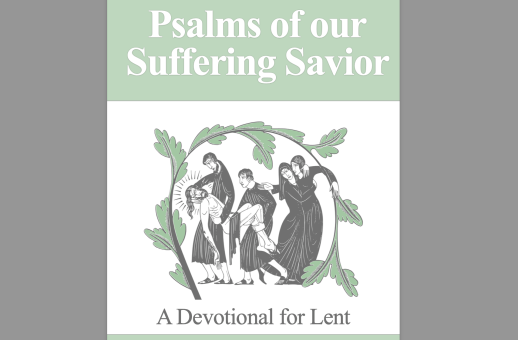
In preparation for Easter, I put together a devotional book. If you don’t have something to go through, I encourage you to check it out.
Here’s the link to the free e-book, I hope you find it helpful: Psalms of Our Suffering Savior
Biography As A Form of Discipleship: Edwards, Spurgeon, & Lloyd-Jones (pt. 2)

Different Levels of Gifting, Same Stewardship
Lloyd-Jones had a profound memory, “it was as if he was unraveling an endless ball of wool.”[1] Edwards had a keen intellect being the foremost of American thinkers. Spurgeon was “the Prince of Preachers.” As we can see by these small examples, these men were especially gifted by God but they were not merely gifted, they were also faithful with the gifts God entrusted to them. We will all be held accountable for what God has entrusted to us but praise God I am not held accountable for the intellect of Edwards. That, however, in no way clears me from being faithful. These men were not merely amazingly gifted but amazingly faithful. We may not be able to preach like Spurgeon but we can seek by God’s empowering to be faithful like him.
We are all stewards entrusted with different amounts, some 30, 60, and a 100 fold, but we must all be faithful (Matt. 13:8; 25:14-30; Luke 12:35-48; 1 Peter 4:10). I have not been entrusted with the same stewardship as the men of whom we are seeking to emulate, and it is highly unlikely that you have either. However, these men were not merely gifted, they were all entirely dedicated to the Lord (we will turn to this in more detail shortly). Michael Jordan, arguably the best basketball player of all time, still worked hard. What made him so great was that he was not just talented but also tough in his discipline. The men we are looking at were gifted, there is no doubt, but they were also incredibly faithful. So the first thing we see to emulate from them is their faithfulness.
They were Consumed with God’s Glory
All three of these men here were greatly concerned for the glory of God, even if this desire came to fruition differently in the lives of each man. They did not all, like Edwards, write The End for Which God Created the World, but they all would have agreed with what he wrote and desired, like him, to glorify God with their utmost ability.
It is said that though “Edwards was intellectually brilliant and theologically commanding, his true greatness lay in his indefatigable zeal for the glory of God.”[2] Likewise, “The chief element of Spurgeon’s entire career” was not his preaching, or anything else; it “was his walk with God.”[3] This was also central to Lloyd-Jones: “A God-centered theology was not an addition to his personal life, it was central to it… His jealousy for God’s glory… flowed from his knowing something of being in the presence of God.”[4] In fact, Lloyd-Jones’ concerned for God’s glory, told Iian H. Murray, his biographer, that the biography should be done “for God’s glory only.”[5]
We should, like these men, seek in whatever we do to glorify God. We must, however, remember that we are all gifted differently and thus the route we take may be different than that of these three men. We are all called to different things, but we are all called to seek to glorify God in whatever we do.
They had an All-Encompassing Commitment to Christ[6]
This section is one of the most significant sections. We must remember, however, that these men’s complete commitment to God was not something they mustered up on their own. God gave even that to them. He showed Himself glorious to them, more glorious than anything else, and their complete devotion followed.[7] These men invested all, their time and talent, indeed, their heart, soul mind, and strength because they had been granted eyes to see that God and His glory were worth it.
Their all-encompassing commitment to Christ flowed out of their understanding of the glory of Christ. Not only did these men see that God was glorious and thus worthy for themselves to entirely comment to but also that He was Lord of all. They understood the language in the New Testament that says that Jesus is our Master/Lord and we are slaves, which clearly implies that we do whatever He says, whenever He says it.[8]
Benjamin B. Warfield said that Edwards committed himself without reserve to God. His whole spirit panted to be in all its movement subjected to God’s government.[9] Edwards explained his reasoning for his total commitment. He said,
If God be truly loved, he is loved as God; and to love him as God, is to love him as the supreme good. But he that loves God as the supreme good, is ready to make all other good give place to that; or, which is the same thing, he is willing to suffer all for the sake of this good.[10]
Edwards was entirely committed to God because He is “the supreme good.”
Spurgeon commenting on first Kings 18:21 said, “If God be God, serve him, and do it thoroughly; but if the world be God, serve it, and make no profession of religion.” Later he goes on to tell us, “Either keep up your profession, or give it up… Let your conduct be consistent with your opinions.”[11] What Spurgeon was saying is, if the Bible and the gospel are true we must live as though they are. We must live in line with what we believe. As the scriptures say, “The LORD is God; there is no other… therefore be wholly true to the LORD our God, walking in His statutes and keeping His Commandments” (1 Kings 8:60-61).
Spurgeon lived out what he said. People told Spurgeon that he would break down his constitution by preaching ten times a week among all his other labors. But Spurgeon’s desire, like Paul’s, was to spend and be spent. Spurgeon could say, “If I had fifty constitutions I would rejoice to break them down in the service of the Lord Jesus Christ.”[12]
Spurgeon gave his money, time, and self completely to the Lord. God used Spurgeon greatly. He wrote over 140 books, penned around 500 letters a week, spoke to thousands of people each week, started an orphanage, started a pastor’s college, and led countless people to Christ among other things. That was all possible because he gave himself entirely to the Lord. One of Spurgeon’s biographers, Arnold Dallimore said, “Early in life he had lost all consideration of his own self, and his prayer that he might be hidden behind the cross, that Christ alone might be seen, had expressed his heart’s chief purpose.”[13] Dallimore also said, “Spurgeon was characterized by an earnestness that almost defies description.”[14]
Lloyd-Jones, too, saw that “our supreme duty is to submit ourselves unreservedly to Him.”[15] In fact, “Essential Puritanism,” Lloyd-Jones argued, “put its emphasis upon a life of spiritual, personal religion, an intense realization of the presence of God, a devotion of the entire being to Him.”[16] You can see that Lloyd-Jones did exactly that all over the place in his life, he gave himself to God and the work that He had for him. “When God calls us,” Lloyd-Jones said, “He is to be obeyed in spite of all natural feelings.”[17] Lloyd-Jones not only said this but practiced it himself because he was entirely commented to Christ.
God is looking for individuals in this generation who will rise above the status quo of contemporary Christianity and say with Lloyd-Jones, Spurgeon, and Edwards, “‘I am completely Yours.’”[18] We must resolve, as Edwards did, to be the jar of clay through which God will display his surpassing power. We must seek for pleasure in God above all things. We must seek to be so heavenly-minded that we can be of some earthly good. We must do all this with all the power that God so mightily works in us by His grace. “If one is to impact this world for Jesus Christ, he must live as Edwards did, with extraordinary purpose and firm determination.”[19]
Notes
[1] Murray, The Fight of Faith, 376 see also 406n1, 453, 759.
[2] Steven J. Lawson, The Unwavering Resolve of Jonathan Edwards (Lake Mary, Florida: Reformation Trust Publishing, 2008), 4.
[3] Arnold Dallimore, Spurgeon: A New Biography, (Carlisle, PA: The Banner of Truth Trust, 1999), 177.
[4] Murray, The Fight of Faith, 764-65.
[5] Ibid., 729 see also xxiv.
[6] See Deut. 6:5; 1 Kings 8:61; Matt. 8:22; 22:37-38; Mark 12:30 (heart, soul, mind and strength, i.e. total devotion); Luke 10:27; 14:25-33; 16:13; Rom. 14:7-8; 1 Cor. 7:35 (Paul wants to secure an “undivided devotion to the Lord”); 10:31; 2 Cor. 5:9; 14-15; Phil. 3:7-8; Col. 3:17, 23, and 1 John 2:3-6 for some examples of the all-inclusive nature of the call of Christ. Also in Romans 12:1, we are told to present our bodies as a living sacrifice because that is our reasonable (logical) worship. Thomas R. Schreiner says, “Paul used the term with the meaning ‘rational’ or ‘reasonable,’ as was common in the Greek language. His purpose in doing so was to emphasize that yielding one’s whole self to God is eminently reasonable. Since God has been so merciful, failure to dedicate one’s life to him is the height of folly and irrationality” (Thomas R. Schreiner, Romans [Grand Rapids: Baker Academic, 1998], 645 [italics mine].). In addition, Schreiner points out that “the word ‘bodies’ here refers to the whole person and stresses that consecration to God involves the whole person… Genuine commitment to God embraces every area of life” (Ibid., 644. Italics mine). Christianity is all-encompassing.
[7] God often shows His glory to us before He calls us to comment to Him in unreserved obedience. Note, for example, in the Decalogue. God gives the commands but first He adds a relational and redemptive element, namely, “I am the LORD your God [relational], who brought you out of the land of Egypt, out of the house of slavery [redemptive]” (Deut. 5:6). This same thing is seen throughout Scripture, both OT and NT.
[8] “Edwards would say that actions do reveal something about a man’s will and heart. Professing Christ implies being subject to him in practice, it entails the promise of universal obedience to him” (Iain H. Murray, Jonathon Edwards: A New Biography, (Carlisle, PA: The Banner of Truth Trust, 2008), 336). Edwards understood that “none profess to be on Christ’s side, but they who profess to renounce his rivals” (Idem, Jonathon Edwards: A New Biography, 337). Lloyd-Jones clearly saw that one cannot “receive Christ as Saviour without receiving Him as Lord” (Idem, The Fight of Faith, 470).
[9] Murray, Edwards, 98.
[10] Jonathon Edwards, Charity and its Fruits, (Carlisle, Pennsylvania: The Banner of Truth Trust, 2005), 257.
[11] C. H. Spurgeon, sermon “Elijah’s Appeal to the Undecided” from 1 Kings 18:21 (italics mine).
[12] Dallimore, Spurgeon: A New Biography, 132.
[13] Ibid., 239.
[14] Ibid., 76.
[15] Murray, The Fight of Faith, 181 (italics mine).
[16] Ibid., 460n1 (italics mine).
[17] Ibid., 588.
[18] Lawson, The Unwavering Resolve of Jonathan Edwards, 60.
[19] Ibid.
Why care about justice?

Is there motivation for practicing justice? Christianity says, ‘Yes.’ Jesus Christ Himself practiced justice and called His followers to as well. In fact, Jesus taught that what we do for the most down-and-out is viewed as if it’s done for Jesus Himself. And when those in need are spurned it is as if we are spurning the very Lord of the universe.
Christianity gives clear reasons for convictions regarding practicing sacrificial justice for all people—regardless of age, race, creed, or color. That of course doesn’t mean that Christians always carry out the ideal. They don’t. But Christians do have a clear goal for which they are to sacrificially work. Christians are commanded to practice sacrificial justice.
Christians have very strong reasons to practice radical generosity, promote universal equality, provide life-changing advocacy, and take personal responsibility.[1] Messiah Jesus made Himself poor to make people rich (2 Corinthians 8:9). Jesus treated all people—woman or man, slave or free, rich or poor, able or unable—with dignity and love. Jesus is Himself the great advocate and intercessor. And Jesus, instead of leaving us in our suffering and sin, took personal responsibility and suffered in our place. Christians have strong reasons indeed for justice and mercy.
Christianity gives solid and serious reasons for believing in actual human rights. Not only that, but Christianity has “the strongest possible resource for practicing sacrificial service, generosity, and peace-making.” Because at the very heart of Christianity’s view of reality is, as Timothy Keller has said, “a man who died for his enemies, praying for their forgiveness. Reflection on this could only lead to a radically different way of dealing with those who [are] different from them.”[2] Of course, once again, that doesn’t mean that the ideal is always followed.
All Christians should totally agree with Rebecca McLaughlin:
Christians must work for justice for historically crushed and marginalized people, because Jesus came to bring good news to the poor and to set at liberty those who are oppressed. Christians should be the first to fight for racial justice and to pursue love across racial difference, not because of any cultural pressure from outside, but because of scriptural pressure from inside.[3]
Christianity calls Christians to care and to even sacrifice for justice. Christians are to care about justice because Jesus cares about justice.
Jesus, who is God, became flesh, to enter into the broken world to rescue people that needed rescue. He didn’t just sit back and practice ‘clicktivism’ but was crucified. The Bible teaches us that Jesus, the just-one, the one who was right, came so that we could be declared to be right. That is, justified.
Martin Luther King Jr. said, “If we are wrong—Jesus of Nazareth was merely a utopian dreamer and never came down to earth! If we are wrong—justice is a lie.” He also said, “Love is one of the pinnacle parts of the Christian faith. There is another side called justice. And justice is really love in calculation. Justice is love correcting that which would work against love.”[4]
Christians have deep reasons to sacrifice and pursue justice for others because that is what their Savior Himself did. It’s true that “it is one thing to have a general desire for justice, and it’s a very different thing to actually labor self-sacrificially against injustice in ways that effect substantive change.”[5] Christians are called to ‘actually labor self-sacrificially against injustice’ and there are many powerful examples of Christians doing exactly that. One such example is Denis Mukwege, a human rights activist and Nobel Peace laureate, is an advocate and specialist for women who have suffered sexual violence as a weapon of war.
Christians have deep reasons to care about justice. Those who follow Jesus closely are “willing to disadvantage themselves to advantage the community” whereas “the wicked are willing to disadvantage the community to advantage themselves.”[6]
Why care about justice? The Christian should answer because Jesus does! And because Scripture says to.
Speak up for those who cannot speak for themselves, for the rights of all who are destitute. Speak up and judge fairly; defend the rights of the poor and needy (Proverbs 31:8-9).
Do what is just and right. Rescue from the hand of the oppressor the one who has been robbed. Do no wrong or violence to the foreigner, the fatherless or the widow (Jeremiah 22:3).
What does the Lord require of you? To act justly and to love mercy and to walk humbly with your God (Micah 6:8).
Surprisingly the Bible teaches that monetary gifts can be meaningless even when given to the church. It says that gathering together can be worthless and even church celebrations can be hated with all of God’s being (Isaiah 1:14). Why? That is some very strong language. Why does the Bible say that? Because God hates hypocrisy. We can’t say we love God (whom we can’t see) and yet not care for people made in His image (1 John 4:7-21).
It doesn’t make sense for Christians to raise their hands in worship when they are essentially covered in blood. Yet, that’s what it’s like if we don’t seek for justice and care for the oppressed. In fact, rulers are rebels when they don’t defend the cause of the needy (Isaiah 1:23) because that’s one of the roles of rulers (Proverbs 31:8-9).
Notes
[1] See Timothy Keller, “Justice in the Bible.”
[2] Timothy Keller, The Reason for God: Belief in an Age of Skepticism (New York: Penguin Group, 2008), 21. Keller asserts that “the typical criticisms by secular people about the oppressiveness and injustices of the Christian church actually come from Christianity’s own resources for critique of itself” (Timothy Keller, The Reason for God, 61 see 62).
[3] Rebecca McLaughlin, The Secular Creed: Engaging Five Contemporary Claims (Austin, TX: The Gospel Coalition, 2021), 27-28.
[4] Taylor Branch, Parting the Waters: America in the King Years 1954-63 (New York: Simon & Schuster,1988), 141.
[5] Joshua Chatraw and Mark D. Allen, Apologetics at the Cross: An Introduction for Christian Witness (Grand Rapids: Zondervan, 2018), 234.
[6] Bruce K. Waltke, The Book of Proverbs: Chapters 1-15, (Grand Rapids: Wm. B. Eerdmans, 2004), 97.
Photo by Tim Mossholder



 in X
in X 