Free e-Book
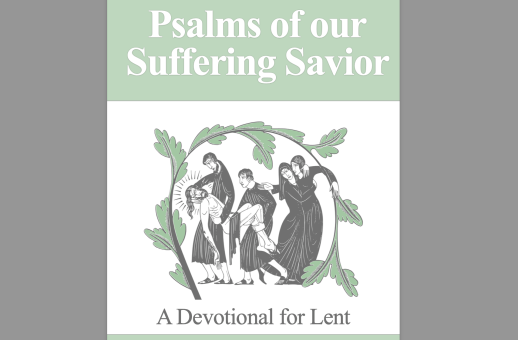
In preparation for Easter, I put together a devotional book. If you don’t have something to go through, I encourage you to check it out.
Here’s the link to the free e-book, I hope you find it helpful: Psalms of Our Suffering Savior
On what day did Jesus die?

First, I encourage you to read Matthew’s account in the Gospel of Matthew. It will be helpful to read since it’s the longest (Matt. 27:24-62).
In Matthew’s account we see that Jesus dies (v. 45-56) and then Joseph of Arimathea asks Pilate for permission to bury Jesus’ body (Matt. 27:57-61). Joseph did this on the Preparation Day, that is, on Friday, the day before Saturday which is the Sabbath.[1] It was very important that Jesus’ body not stay on the cross on the Sabbath because then the land would be defiled (Jn. 19:31).[2] So, Jesus died on Friday because He was taken off the cross before the Sabbath.
The next day, that is on Saturday,[3] “the chief priests and the Pharisees gathered before Pilate and said, ‘Sir, we remember how that impostor said, while He was still alive, ‘After three days I will rise’” (v. 62). And then they asked for guards and so Pilate granted their request and gave them guards.
The Crucifixion
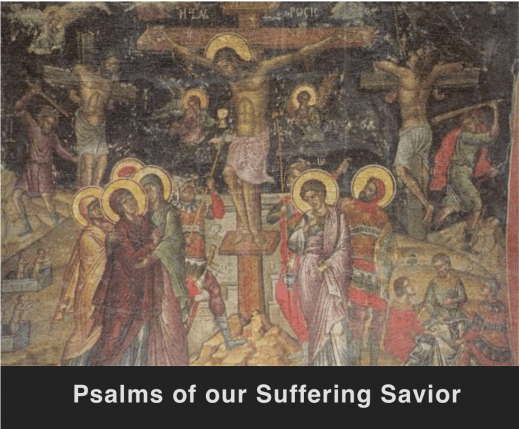
Psalm 22 has an amazing amount of parallels with Jesus’ experience on the cross on Good Friday. It says he is surrounded by rough enemies that want to harm him (v. 12), he is attacked by their words (v. 13), he is exhausted and close to death (v. 14), he experiences fatal dehydration (v. 15), his hands and feet are pierced (v. 16), his bony frame is exposed (v. 17), and his garments are divided and cast lots for (v. 18 cf. Matt. 27:35).[1]
Reading this Psalm you almost expect David to say something close to “Father, forgive them”[2] because the account of Jesus’ crucifixion is foreshadowed so many times (see also Ps. 69:4, 9, 21). Instead, in somewhat of a parallel passage to this Psalm and in great contrast to Jesus, David calls for God’s burning anger to overtake his enemies (69:24), he pleads that God would “add to them punishment upon punishment” (v. 27), and that they would be “blotted out of the book of the living” and “not be enrolled among the righteous” (v. 28).
Messiah Jesus instead Himself receives punishment upon punishment, His life is blotted out, and He joins the unrighteous on a cursed cross (see Is. 53:9 and Matt. 27:38) to save His enemies, those who are far from Him. Jesus is the perfect lamb of God, the lamb without blemish, that takes away the sin of the world (Jn. 1:29; 1 Pet. 1:19).[3]



 in X
in X 