We Must Love Others as Jesus Has Shown Us

In this article we’re looking at love. But to quote the singer Haddaway, “What Is Love”? The band Foreigner must not have known what love is because they said, “I Want to Know What Love Is.” Tina Turner was confused about love too, sheasked, “What’s Love Got to Do with It”? I’m not sure what Elvis Presley thought about love but he “Can’t Help Falling In Love.” And Taylor Swift has a whole “Love Story.”
Others aren’t so favorable on the topic of love. Khalid’s opinion is that “Love Lies” and Lady Gaga just says, “Stupid Love.” But the Backstreet Boys don’t care, “As Long As You Love Me.” Justin Bieber’s advice, however, is “Love Yourself.”
But the Beatles have a very favorable view of love. They say, “All You Need Is Love.” Lastly, I would be remiss if I didn’t encourage you by sharing Whitney Houston’s pledge: “I Will Always Love You.”
Okay, I said a lot of things but I didn’t answer my question. What is love? We can talk a lot about love and even sing about it but that doesn’t mean we know what ‘love’ is. This points us to the importance of defining love. It seems especially important to understand what it means if it’s ‘all we need,’ as the Beatles said.
So, what even is love? In the movie 10 Things I Hate About You, we see an explanation of the difference between ‘like’ and ‘love.’
Bianca says: ‘See, there’s a difference between like and love, because I like my Skechers, but I love my Prada backpack.’
Chastity says: ‘But I love my Skechers.’
Bianca says: ‘That’s because you don’t have a Prada backpack.’
I think Bianca is correct. There is a difference between ‘like’ and ‘love.’ We intuitively know there are differences, but we’re still very often confused. In English, there’s just one word for love: love. In Greek, there are four.[1] The very short Bible passage we’re looking at has two Greek words for “love” (philadelphia and agapaó).
Sometimes a spelled-out definition is helpful but sometimes seeing an example is more powerful. The Bible shows us what love is. Actually, from the beginning to the end, it recites a better love story than Taylor Swift’s (the song or all the hype about her and Travis Kelce).
Paul, one of the first Christian leaders, wrote to a group of Jesus followers who lived in the city of Thessaloniki: “Now concerning brotherly love you have no need for anyone to write to you, for you yourselves have been taught by God to love one another, 10for that indeed is what you are doing to all the brothers throughout Macedonia. But we urge you, brothers, to do this more and more” (1 Thess. 4:9–10).
Paul says, “You have no need for anyone to write to you, for you yourselves have been taught by God to love one another.” Paul is saying that the Jesus followers know what love is. And they are loving one another. Why? How can our culture be so confused about love and yet they were so proficient at loving others?
They were “taught by God.” Not to geek out too much but this is one word in Greek—they were God-taught. This is the first time in Greek literature that this word appears. Paul made it up. Theodidaktos.[2] It’s kinda like “Bussin” or “Snatched,” it’s made up to communicate something. Except God-taught is amazingly profound and unexpected.
Think about what we learn about love from Greek mythology. Not a lot. Instead, we see gods at war and spreading mass chaos. Here’s a small sample:
- Kronos swallowed up his children as soon as they were born so they wouldn’t have the chance to overpower him as they grew older and stronger.
- Zeus turned his first wife into a fly and ate her, chained Prometheus to a rock so an eagle could eat his liver, was consistently unfaithful to his wife, and turned one of his lovers into a cow to hide her from his wife.
- Athena, known as the wisest of the gods, turned Medusa into a snake-headed monster whose gaze turns people to stone because she was raped by Poseidon.
- Marduk, the god of storms and justice, in the Babylonian creation myth, created the world by defeating Tiamat, the primordial sea goddess, and then used her body to form the heavens, earth, and other elements of the cosmos.
In contrast to Greek mythology, it is amazing that we are “taught by God to love one another.” Greek mythology taught snubbing and brutal subjugation, Jesus taught sacrificial service. Greek mythology taught rape, Jesus taught appropriate restraint. Greek mythology taught lust, Jesus taught true love.
In contrast to the mythology of the time:
Jesus teaches us to Love
Once again, the Bible says we are “taught by God to love one another” (v. 9). The Bible doesn’t just say that God is loving, though it does say that. The Bible says much more. It says, “God is love” (1 Jn. 4:8, 16). Love is deeply connected to God’s very being. This sets the Christian God apart from all other views of God. For love to truly exist there must be relationship. The Bible teaches that God is a relational being to His core. God is triune.
Very briefly, “Trinity” means God is one in relation to His ontological being yet exists in three persons (Father, Son, and Holy Spirit). The Trinity is unparalleled in the entire universe but is not a logical contradiction. This, in a way, should not be surprising to us because God is beyond our full comprehension. Although we cannot fully grasp what this means, we do know that God has for all eternity been in loving relationship. This means that because God is love, He cares about love and teaches us to love (1 Jn. 4:7).
What Mark Howell says here is spot on:
“In reality, God is the only One fully qualified to teach on the subject of love, because love would not exist without Him. He is its author. He is its commentator, because you would not know how to love without His instruction. So then, God not only teaches you about love, but He also teaches you how to love. Therefore, to begin any discussion on the subject oflove, the logical starting point must be with God Himself.”[3]
God is love and teaches us what love is. God is love and He teaches us how to love. God being love and Himself teaching us to love is unprecedented. The three-in-one nature of God shows us that He is relational, loving, self-giving, and personal to His core. God is not just some distant, cosmic force. He has personhood. He has existed in all eternity past in loving relationship, odd to say, with Himself. God amazingly calls us to join Him in relationship (John 17:21-23). He recreates us in His image and welcomes us as His sons and daughters. God welcomes us to have communion with Himself.
I love how 1 John 4 says it:
“Beloved, let us love one another, for love is from God, and whoever loves has been born of God and knows God. 8 Anyone who does not love does not know God, because God is love. 9 In this the love of God was made manifest among us, that God sent His only Son into the world, so that we might live through Him. 10 In this is love, not that we have loved God but that He loved us and sent His Son to be the propitiation for our sins. 11 Beloved, if God so loved us, we also ought to love one another. 12 No one has ever seen God; if we love one another, God abides in us and his love is perfected in us… 19 We love because He first loved us. 20 If anyone says, “I love God,” and hates his brother, he is a liar; for he who does not love his brother whom he has seen cannot love God whom he has not seen. 21 And this commandment we have from Him: whoever loves God must also love his brother” (1 Jn. 4:7-12, 19-21).
Many of us were moved by seeing the sacrificial love of Tony Stark (Iron Man) in the Marvel movie, Avengers: Endgame, where he sacrifices himself to save the universe and his friends. Remember? After Thanos’s snap in Infinity War, the Avengers are devastated and the universe is in peril.
Despite Tony Stark’s initial reluctance, he chooses to use the Infinity Gauntlet to snap Thanos and the remaining half of the universe back, even though it means his own death. He utters the famous line, “I am Iron Man,” before snapping his fingers, saving the universe but giving up his own life.
There is a true story of overwhelming and powerful love, not in the Marvel universe, but in the real universe; and salvation comes not through Iron Man, but through Jesus, the God/man.
Tony Stark’s sacrifice is powerful but it’s not real. The thing is, Jesus and His sacrifice are real. The all-powerful, all-good, God who ruled the entire world, and upheld the very universe in which we live, move, and have our being, came into the world and was born in a pohick town, was mocked and ridiculed by His creation—like termites mocking the owner of the house—and Jesus died for those very same mocking termites. Of course, as Jesus’ biographies go on to say, Jesus didn’t stay dead, unlike Tony Stark. Jesus expressed His surpassing love through His sacrificial death and Heshowed His utter power by rising from the dead. So, Jesus beats both hate and death.
We started out by quoting the song, “What is love?” God not only knows the answer to that often confusing question and tells us the answer, but He Himself is the answer. This is love not that we loved God, but that He loved us and set His son to be the sacrifice to rescue us from the consequences of sin (1 John 4:10).
As the late great poets, DC Talk, said, “Love is a verb.” If you don’t remember what a verb is, I get it, but a verb is an action word. It doesn’t just sit on the couch. It doesn’t just talk. It gets up and does something. And God doesn’t just talk about His love for us. He demonstrates His love for us. God loves the world so much that He gave His Son. Because God is so loving He amazingly has made a way for us to be His friend. “For God so loved the world, that He gave His only Son, that whoever believes in him should not perish but have eternal life” (John 3:16).
But, the love of God does not stop with us. We are not to be a damn holding in God’s love. No. We are to be conduits through which God’s love flows freely. Jesus taught us how to love and He loves us, so we love.
Christian love turns the world upside down, it did in the first century and it will today. I don’t mean some undefined vague kind of love; I mean the Jesus kind of love. In this way, Christianity has always been subversive and disruptive.[4]
We must love
The Jesus followers Paul wrote to were already loving each other. Paul is sure that they had been God-taught. They practiced “brotherly love.” Again, not to ‘Greek out’ too much but the word for “brotherly love” here is philadelphia. It’s where the city, Philadelphia, gets it’s name. That’s why it’s known as “the city of brotherly love.” However, perhaps a better way to translate this word is “family affection.” The Jesus followers were God-taught and so clearly had healthy family affection for one another.
In the secular world of that time, the word for “family affection” (philadelphia) was only used for actual family relationships. It wasn’t used within religious groups. It was used to refer to love for one’s siblings. “In the New Testament, however, it is always used as it is here, of love between members of the Christian family (Rom 12:10; Heb 13:1; 1 Pet 1:22; 2 Pet 1:7).”[5]
As Jesus taught us in the model prayer, we are together to pray “our Father in heaven…” We don’t pray alone. We pray to our Father who we share. “The early Christians saw themselves as members of a family”[6] and we should too.
Paul told them, you are loving all the brothers and sisters throughout Macedonia. “But we urge you, brothers, to do this more and more.”
When our kids were young and not yet talking we taught them how to communicate with sign language. Our son, Uriah, was sitting in the highchair and wanted more food (it was probably tomatoes based on how much he enjoys them now). So, he excitedly and quickly did all the signs he knew. He didn’t just do the sign for “more.” He almost did every sign he knew simultaneously because he wanted more so much. It reminds me of what Paul is doing here. He’s really passionate about us loving each other more and more. Why? Because God is loving and God Himself showed us how to love. It’s important. It’s worth getting excited about.
Brothers and sisters, if you are reading this and you have turned to Jesus for rescue and you’re following Him as your Boss and Lord, you have been God-taught to love. You must love. What God is saying to us is brothers and sisters, love more and more. And don’t just love in name only.
A deacon in a church who taught the kid’s Sunday school class had poured some concrete for the church… the next day he saw footprints in the concrete. He was very angry and talking very loudly. A man who was standing by said, “I thought you loved kids.” The deacon said, “I love them in the abstract but not in the concrete!”[7] We, however, must love not just in the abstract, but in and through the concrete things of life. It won’t always or ever be easy.
One of the reasons I believe in simple church is because love shines best in relationship. Church is not a building, it’s a body of people, made up of rich and poor, black and white, Jew and Gentile, coffee drinker and tea drinker, democrat and republican. If we are in Jesus, He is our elder brother, God is our Father, and the Holy Spirit is our ever-present Helper.
Church isn’t about entertainment or coffee. Jesus calls us out, out of the boat, off the couch, chair, or pew. Church is about loving Jesus, loving like Jesus, and sharing the life-transforming news of Jesus.
Church isn’t about some super-pastor it’s about the called-out people of God being the church in coffee shops, factories, schools, and offices. Light shines best when it’s not hidden in a building, salt is no good if it’s stuck in the shaker.
Conclusion
Our world is lonely but we have the love of God to share. Our world is isolated and alone but Jesus came to be with us. And brothers and sisters, Jesus said, “As the Father sent Me, in the same way, I am sending you” (John 20:21). As Jesus loved the sometimes unlovely, He calls us to do likewise. As Jesus went to the destitute and distraught, He calls us to do the same. We have been God-taught; as Jesus loves, we are to love.
“God’s own expression of his love resulted in his total self-giving in the person and death of his son. Christian expression of the same love must have the same self-giving quality.”
If we as Christians are God’s adopted children through Jesus, we must resemble our Father, we must be loving. And if we are His children, we must love one another. Beloved, guess what‽ The reality is, in Jesus we are family. So, as Paul said, let’s have family affection for one another, let’s love more and more. Now, as 1 Thessalonians 3:12 says, “May the Lord make you increase and abound in love for one another and for all.”
Notes
[1] As C.S. Lewis explains. He says, “There are 4 kinds of love, all good in their proper place.” First, there is “affection love.” This is the type of love that one has for family or familiar relationships. Second, there is “friendship love.” Third, there is “charity love.” This type of love is sacrificial and puts the interests of others first. A fourth would be “like” or “desire.” As we think about love, it is important that we keep these different kinds of ‘love’ in mind. I would like for English to have more options. It doesn’t seem correct that I’ve said, “I love Cinnamon Toast Crunch” and “I love my wife.” Hopefully I don’t love cereal and my wife in the same sense. Yet, I think the fact that in English the four words have been conflated into one word, communicates something.
[2] “‘Taught by God’ translates a single compound word (theodidaktoi). This is the only occurrence of the word in the New Testament and the earliest known occurrence in any body of Greek literature. It may well have been coined by Paul himself. The closest biblical phrase is in the LXX text of Isa 54:13 (quoted in John 6:45). It predicts a day when ‘all your sons will be taught by the Lord.’ A hallmark of the new covenant in the New Testament is the presence of the Spirit with each believer (Acts 2:16–18; Gal 4:6) and the resultant internal witness to the will of God (cf. Jer 31:34; Heb 8:10–11).” (D. Michael Martin, 1, 2 Thessalonians: An Exegetical and Theological Exposition of Holy Scripture).
[3] Mark Howell, Exalting Jesus in 1 & 2 Thessalonians.
[4] In his book Dominion, Tom Holland (not the Tom Holland from Spiderman) argues that the Christian concept of love, which he describes as a social practice rather than a feeling, has been a powerful force in shaping Western morality and the idea of universal human rights.
[5] D. Michael Martin, 1, 2 Thessalonians: An Exegetical and Theological Exposition of Holy Scripture. See alsoMichael W. Holmes, 1 and 2 Thessalonians.
[6] N. T. Wright, Paul for Everyone: Galatians and Thessalonians.
[7] J. Vernon McGee, Thru the Bible Vol. 49: The Epistles (1 and 2 Thessalonians).
*Photo by Ben Lambert
Don’t Be Judgy, Be Discerning

We’re looking at perhaps one of the most loved Bible passages of our secular culture. At least one of the best-known and most quoted: “Judge not lest ye be judged.” Yet, as one commentator said, “Our supremely tolerant society is more judgmental than ever.”
Jesus, however, is not condemning all forms of judgment. He tells us to avoid hypocrisy and judgmentalism. We should be aware of our own flaws and struggles before graciously helping others with theirs. Lastly, we should not waste the time and energy the Lord has entrusted to us on those who are unreceptive.
I was a little upset at one of my bosses awhile back because we were supposed to have a meeting at the office at 8:30. We have a work call every weekday morning at 8am so I was sure to leave at the beginning of the work call to make the meeting at the office in time. However, towards the end of the call, when I was like 5 minutes from the office, my boss said the meeting was canceled…
I wasn’t super excited about that. Honestly, I was a little annoyed and frustrated. But look what Jesus says…
1) Judging can be Dangerous
“Judge not, that you be not judged.”
This verse warns against the dangers of judging others because we will be judged in the same way. It is not my place to say someone else is guilty before God. That is way above my pay grade. Christians can pronounce “that is good” and “that is wrong” but not “you are condemned by God.” That is not our place.
To bring back the story with one of my bosses… I too have had to cancel a meeting at the eleventh hour… Who am I to cast the first stone?…
“For with the judgment you pronounce you will be judged, and with the measure you use it will be measured to you.”
One person I read said, “Being judgmental means you attempt to play God when you are not. You apply to others a standard you do not want applied to yourself, and your spiritual vision is blurred. You lose perspective and fail to see reality as it truly is.”
Would I want judged with the same severity with which I am judging others?
2) Judging can be Dysfunctional
“Why do you see the speck that is in your brother’s eye, but do not notice the log that is in your own eye? Or how can you say to your brother, ‘Let me take the speck out of your eye,’ when there is the log in your own eye?”
Our judging can be flat wrong or at least not make any sense. Again, I made a big deal about my boss canceling the meeting but it’s not a big deal. And when I make that perceived wrong a big deal I blind myself to my own issues. I am not seeing clearly. I’m blinded and in a dangerous place.
We see dysfunctional, hypocritical, and blind judging in 2 Samuel 12:1-7. Nathan, sent by God, tells David a story about a rich man who, instead of using his own livestock, takes the only lamb belonging to a poor man. David, upon hearing the story, is immediately angered by the rich man’s actions and demands justice, declaring the man deserves death and should restore fourfold to the poor man.
Nathan then turns the tables: ”You are the man!” (2 Samuel 12:7), directly accusing David of the same sin he had condemned in the parable. Thankfully, this helped David see reality. He saw the massive plank in his eye and repented.
We often need to get our eyes off others and get them on ourselves. Romans 12:18 says, “If possible, so far as it depends on you, live peaceably with all.” That is, you do the right thing. You can’t control others. As far as it depends on you, you do the right thing.
3) Judging can be (self) Deceptive
“You hypocrite, first take the log out of your own eye, and then you will see clearly to take the speck out of your brother’s eye.”
Jesus instructs us to address our own flaws before attempting to correct others. This visual really sticks with you, doesn’t it?… Get it‽… “Sticks” with you?…
Anyhow, Jesus’ visual makes a very graphic and good point. How can I see to help someone when I have a massive telephone pole sticking out of my own eye? I’m not in a good place to help someone else. “Physician heal thyself.” So, this verse highlights the absurdity of trying to correct others while ignoring our own shortcomings.
When our focus is on others, we can’t see reality. We will be self-deceived.
We should pursue humility and self-awareness. We should consider where we are guilty of hypocrisy… Now, in some ways, I am sure we will all always be guilty of some form of low-grade hypocrisy. But at least if we’re aware of it we will be in a better position to graciously help others who struggle too. We will be aware that we to at least have a speck in our own eye. We’ll be keenly aware of the Lord’s grace and kindness to us and we’ll be better able to extend grace and kindness to others.
Here’s a good question for us to consider: are you more sensitive to the sin of others than to your own sin?
4) Judge with Discernment
“Do not give dogs what is holy, and do not throw your pearls before pigs, lest they trample them underfoot and turn to attack you.”
This verse warns against wasting our time and energy sharing with those who are unwilling to receive what we share. This applies to all sorts of situations.
This verse clearly teaches that not all forms of judgment are wrong. We are to discern and judge. We, however, are not to be judgmental and judgy. After all, Jesus Himself made judgments and practiced discernment so it doesn’t seem like it would make sense for Him to outlaw all forms of judgment. Jesus Himself dismisses a group of religious leaders (Matt. 15:14), writes off Herod (Luke 13:31-33), and promises judgment to whole a city (Matt. 11:20-24). Jesus called Herod Antipas “that fox” and He called the hypocritical scribes and Pharisees “whitewashed tombs” and a “brood of vipers.” Now Jesus had perfect discernment so we should be careful going around calling people a “brood of vipers.” That would be good discernment for us to show.
Spurgeon says it this way, ”You are not to judge, but you are not to act without judgment… Saints are not to be simpletons; they are not to be judges, but, also, they are not to be fools.” We must discern who is receptive to the message and who is not. We must be wise in sharing and avoid wasting efforts on those who are unreceptive. Matthew 10:11-15 is one of the applications of Matthew 7:6.[1]
Conclusion
There are many things we must be aware of when it comes to judgment. We must judge with discernment and must be sure that we ourselves are not being hypocritical and self-deceived. But, as throughout Jesus’ whole sermon, Jesus cares about and is getting to our hearts.
Jesus is reminding us that we are a different type of people. We are His people. We are forgiven people. And, forgiven people, forgive people. We are justified people. And justified people judge justly and humbly.
As Jesus’ apprentices, we should be known for how sincerely we love people, not how severely we judge people.[2] We are people of loving light, not shadowy darkness. Light exposes sin, that is true. But our exposure of sin should only be to apply the loving salve of the gospel. A doctor may uncover a festering wound but it is only to bring healing. We are salt to preserve, not to burn.
Jesus Himself, the light of the world, came into the world not to condemn but in order that the world might be saved through Him. The reality is, the world was already condemned. But Jesus came to save.
As Jesus’ people, we should show mercy because our Father shows mercy. He has been merciful to us and so we are merciful to others. Judging harshly reveals that we have failed to fully understand and appreciate the abundance and undeserving nature of God’s grace to us. As Christians, we should be different. Jesus showed just discernment and Jesus from the cross said, “Father, forgive them, for they know not what they do.”
As Sinclair Ferguson has said, “The heart that has tasted the Lord’s grace and forgiveness will always be restrained in its judgment of others. It has seen itself deserving judgment and condemnation before the Lord and yet, instead of experiencing his burning anger, has tasted his infinite mercy.”
Notes
*I read through several helpful resources on this topic. I reference them here since I may have missed citations: Amy-Jill Levine, Sermon on the Mount, Jonathan T. Pennington, The Sermon on the Mount and Human Flourishing, Daniel L. Akin, Exalting Jesus in the Sermon on the Mount, D.A. Carson, Jesus’s Sermon on the Mount and His Confrontation with the World, Ed Gallagher, The Sermon on the Mount.
[1] Jesus sent out His disciples and said: “And whatever town or village you enter, find out who is worthy in it and stay there until you depart. As you enter the house, greet it. And if the house is worthy, let your peace come upon it, but if it is not worthy, let your peace return to you. And if anyone will not receive you or listen to your words, shake off the dust from your feet when you leave that house or town. Truly, I say to you, it will be more bearable on the day of judgment for the land of Sodom and Gomorrah than for that town.”
[2] As Jesus said in John 13:35, “By this everyone will know that you are my disciples, if you love one another.”
Photo by Viktor Talashuk
Can we know?

Can we know?
What if I don’t know if God exists?[1] What if I don’t know how to answer the big questions of life? What if I don’t think I’ll ever know?[2] Can we know? If so, how?
If we feel like we can’t be sure, we also can’t be sure about that. That is to say, if we feel like we can’t know, how do we know that?
In talking with people about the big questions of life, they often say they don’t think you can know. They think the big questions of how we got here and what we’re supposed to do while we’re here remain unanswered. We simply can’t know.
I played putt-putt golf with my family today. I enjoy the challenge and I definitely enjoy winning. I don’t like playing putt-putt at courses where skill is not a factor. I don’t like the sidewalls to be made out of rock because then you have no control of how the ball bounces. I don’t like when the course has variables that are out of my control. Today, however, on the last hole I couldn’t even see where the hole was. But I took the time and I walked to the end of the course, past the out house that obstructed my view, and saw the hole. My knowledge of where the hole was didn’t get me a hole-in-one but it did get me to the hole eventually. It helped me get a meager win. I beat my son by one stroke.
Knowledge is important in all areas of life, even putt-putt. It’s not always easy though. But putting in the work and at least trying to walk past the “out houses” that obstruct our view is worth it. If it makes sense in putt-putt—and it does especially if you want to win!—then it makes sense in life.
Can We Know Anything at All?
Wow. That is a super big question. And it’s a question that some people are not asking. That’s problematic and in some ways ignorant. Others, however, are asking that question but they’re asking it in a proud way. That’s also problematic and arrogant.
Let me ask you a question, how do you know your dad is your dad? Some of you will say, “He’s just my dad. He’s always been my dad. I’ve always known him as my dad.”
“But, how do you know you know for sure he’s your dad?”
Others will answer, “I know he’s my dad because my mom told me.” But how do you know your mom’s not lying? Or, how do you know she knows the truth?
Perhaps the only way to know your dad is actually your biological dad is through a DNA test. But could it be the case that the DNA clinic is deceiving you? Is it possible that there’s a big conspiracy to deceive you? What if you are actually part of The Truman Show? Everything is just a big hoax for people’s entertainment? How could you know without a shadow of a doubt that’s not happening? You really can’t. Not 100%.
Thankfully, things do not need to be verified 100% for us to believe it to be true. We can and do have knowledge of all sorts of things that are not proved beyond the shadow of a doubt.
We Can’t Know Everything
We, I hope you can see, can’t know everything. There is healthy humility when it comes to knowledge, just as there’s a healthy level of skepticism. If we think our knowledge must be exhaustive for us to have knowledge, we will never have knowledge. And we will be super unproductive. I, for one, would not be able to go to the mechanic. And that would be bad.
Our knowledge is necessarily limited. We may not like it but that’s the cold hard truth, we must rely on other people. We must learn from other people. There’s a place for us to trust other people and sources. Of course, we are not to trust all people or trust people all the time. But we must necessarily rely on people at points.
Philosophy and the History of Careening Back and Forth Epistemologically
John Frame, the theologian and philosopher, shows in his book, A History of Western Philosophy and Theology, that the history of secular philosophy is a history of humans careening back in forth from rationalism to skepticism and back again. One philosopher makes a case that we can and must know it all, every jot and title. And when they’re proven wrong, the next philosopher retreats to pure epistemological anarchy, claiming we can’t know anything at all. Again, when it’s found out that that view is wrong and we can in fact know things, we swing back the other way. And so, the philosophical pendulum goes and we have people like Hume and people like Nietzsche.
The history of philosophy shows that we should be both skeptical about rationalism and rational about skepticism. Both have accuracies and inaccuracies. Which helps explain the long life of both. We can know things but we can’t know everything or anything fully.
Christians give credible reasons for epistemological suspicion even while giving legitimate reasons for belief. Christians are realists, not rationalists or skeptics. Christians believe we should be skeptical about our rationalism and rational about our skepticism. We can know truly even if not fully in this life. We can know a lot even while we know we can’t know all. Christians hold tenaciously to the bedrock truths of reality, but hold other things loosely.
The Bible and Knowledge
The biblical understanding of knowledge takes both rationalism and skepticism into account and explains how both are partly right and partly wrong. And it explains that though we may not be able to know fully, we can know truly. It also explains that there are more types of knowing than just cognitive and rational. The Bible understands who we are anthropologically and so is best able to reveal the whole truth epistemologically.
The Bible also understands that there is experiential knowing, tasting—experiencing something—and knowing something to be true on a whole different level than mere cognitive knowing.[3] When the Bible talks about “knowing” it’s intimate, tangible, and experiential knowing. For example, it says Adam “knew” his wife and a child was the result of that knowledge. That, my friends, is not mere mental knowledge. It’s lived—intimately experienced—knowledge. It’s knowledge that’s not available without relationship.
Job says it this way, I’ve heard of you but now something different has happened, I’ve seen you (Job 42:5). Jonathan Edwards, the philosopher and theologian, talked about the difference between cognitively knowing honey is sweet and tasting its sweetness. It is a world of difference. The Bible is not about mere mental assent. It is about tasting. Knowing. Experiencing. Living the truth.
The Bible says and shows that Jesus is Himself the way, the truth, and the life. Jesus is what it means to know the truth. He is the truth and shows us the truth. He is truth lived, truth incarnate.
The Bible communicates that some people don’t understand, don’t know the truth. There’s a sense in which if you don’t see it, you don’t see it. If it doesn’t make sense, it doesn’t make sense. The Bible talks about people “hearing” and yet “not hearing” and “seeing” and “not seeing.” Some people believe the gospel and the Bible is foolishness (1 Cor. 2:14). “The god of this world has blinded the minds of the unbelievers” (2 Cor. 4:4).
How Should Christians Pursue Knowledge?
First, our disposition or the way we approach questions is really important. How should we approach questions? What should characterize us?
Humility! Why? Because we are fallible, we make mistakes. However, God does not. Isaiah 55:8-9 says, “For My thoughts are not your thoughts, neither are your ways My ways, declares the LORD. For as the heavens are higher than the earth, so are My ways higher than your ways and My thoughts than your thoughts.”
Also, kindness, patience, and understanding are an important part of humility and asking questions and arriving at answers. So, “Faith seeking understanding,” is a helpful phrase. Christians have faith and reason; faith in reason, and reason for faith.
Second, where do we get answers from? Scripture. Why is this important? Again, I am fallible and you are fallible, that is, we make mistakes. And how should we approach getting those answers? Are we above Scripture or is Scripture above us? Who holds more sway? Scripture supplies the truth to us; we do not decide what we think and then find a way to spin things so that we can believe whatever we want.
Third, community is important. God, for instance, has given the church pastor/elders who are supposed to rightly handle the word of truth and shepherd the community of believers. We don’t decide decisions and come to conclusions on our own. God helps us through Christ’s body the Church.
Fourth, it is important to remember mystery. We should not expect to know all things. We are, once again, fallible. So, we should keep Deuteronomy 29:29 in mind: “The secret things belong to the LORD our God, but the things that are revealed belong to us and to our children forever, that we may do all the words of this law.” There are certain things that are revealed and certain things that are not revealed.
Fifth, our questions and answers are not simply about head knowledge. God doesn’t just want us to be able to talk about theology and philosophy. Deuteronomy 29:29 says, “that we may do…” So, God also cares a whole lot about what we do. Knowledge is to lead to action. We are to be hearers and doers. Christians believe that knowing should absolutely lead to doing, or the thing “known” is not actually known.
Sixth, it’s important to acknowledge there are very big and important questions that are difficult to answer. We should have a sense of our smallness. Again, we should have a certain amount of humility. But that doesn’t mean we can’t find answers. Difficulty answering questions and humility in the face of questions should not be an excuse for digging deep and trying to answer the big questions of life. They’re too important.
Notes
[1] There are multiple things that point us to the existence of God. We now know that the universe had a beginning. Whatever begins to exist has a cause of its beginning. Therefore, the universe has a cause of its beginning. It makes sense that God is that cause. God is the Uncaused Cause. God, being God, is immaterial and outside space and time. Further, if there are laws of physics it would make sense that there is also a law-giver. If not, where did those laws come from? In a similar way, it would seem the fine-tuning of the universe requires a fine-tuner. I’m not trying to be too repetitive but codes like the genetic code can only come from a Coder. Intelligence comes from Intelligence. What explains human consciousness except a Higher Consciousness? If there is a moral law, shouldn’t we expect a Lawgiver? Now, just because God exists doesn’t mean we know God. But if God does exist God would certainly be able to make Himself known. He would be able to communicate in various ways. But God being God, those ways may not fit into the categories we’d expect.
[2] People often refer to themselves as agnostic. Agnostic comes from Greek and means “unknown.” Gnosis means knowledge and the “a” prefix is a negation.
[3] As Blaise Pascal said, “the heart has its reasons which reason knows nothing of.”
*Photo by Paden Johnsen
Free e-Book
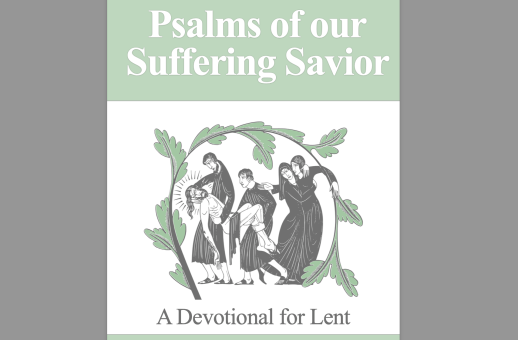
In preparation for Easter, I put together a devotional book. If you don’t have something to go through, I encourage you to check it out.
Here’s the link to the free e-book, I hope you find it helpful: Psalms of Our Suffering Savior
Biography As A Form of Discipleship: Edwards, Spurgeon, & Lloyd-Jones (pt. 2)

Different Levels of Gifting, Same Stewardship
Lloyd-Jones had a profound memory, “it was as if he was unraveling an endless ball of wool.”[1] Edwards had a keen intellect being the foremost of American thinkers. Spurgeon was “the Prince of Preachers.” As we can see by these small examples, these men were especially gifted by God but they were not merely gifted, they were also faithful with the gifts God entrusted to them. We will all be held accountable for what God has entrusted to us but praise God I am not held accountable for the intellect of Edwards. That, however, in no way clears me from being faithful. These men were not merely amazingly gifted but amazingly faithful. We may not be able to preach like Spurgeon but we can seek by God’s empowering to be faithful like him.
We are all stewards entrusted with different amounts, some 30, 60, and a 100 fold, but we must all be faithful (Matt. 13:8; 25:14-30; Luke 12:35-48; 1 Peter 4:10). I have not been entrusted with the same stewardship as the men of whom we are seeking to emulate, and it is highly unlikely that you have either. However, these men were not merely gifted, they were all entirely dedicated to the Lord (we will turn to this in more detail shortly). Michael Jordan, arguably the best basketball player of all time, still worked hard. What made him so great was that he was not just talented but also tough in his discipline. The men we are looking at were gifted, there is no doubt, but they were also incredibly faithful. So the first thing we see to emulate from them is their faithfulness.
They were Consumed with God’s Glory
All three of these men here were greatly concerned for the glory of God, even if this desire came to fruition differently in the lives of each man. They did not all, like Edwards, write The End for Which God Created the World, but they all would have agreed with what he wrote and desired, like him, to glorify God with their utmost ability.
It is said that though “Edwards was intellectually brilliant and theologically commanding, his true greatness lay in his indefatigable zeal for the glory of God.”[2] Likewise, “The chief element of Spurgeon’s entire career” was not his preaching, or anything else; it “was his walk with God.”[3] This was also central to Lloyd-Jones: “A God-centered theology was not an addition to his personal life, it was central to it… His jealousy for God’s glory… flowed from his knowing something of being in the presence of God.”[4] In fact, Lloyd-Jones’ concerned for God’s glory, told Iian H. Murray, his biographer, that the biography should be done “for God’s glory only.”[5]
We should, like these men, seek in whatever we do to glorify God. We must, however, remember that we are all gifted differently and thus the route we take may be different than that of these three men. We are all called to different things, but we are all called to seek to glorify God in whatever we do.
They had an All-Encompassing Commitment to Christ[6]
This section is one of the most significant sections. We must remember, however, that these men’s complete commitment to God was not something they mustered up on their own. God gave even that to them. He showed Himself glorious to them, more glorious than anything else, and their complete devotion followed.[7] These men invested all, their time and talent, indeed, their heart, soul mind, and strength because they had been granted eyes to see that God and His glory were worth it.
Their all-encompassing commitment to Christ flowed out of their understanding of the glory of Christ. Not only did these men see that God was glorious and thus worthy for themselves to entirely comment to but also that He was Lord of all. They understood the language in the New Testament that says that Jesus is our Master/Lord and we are slaves, which clearly implies that we do whatever He says, whenever He says it.[8]
Benjamin B. Warfield said that Edwards committed himself without reserve to God. His whole spirit panted to be in all its movement subjected to God’s government.[9] Edwards explained his reasoning for his total commitment. He said,
If God be truly loved, he is loved as God; and to love him as God, is to love him as the supreme good. But he that loves God as the supreme good, is ready to make all other good give place to that; or, which is the same thing, he is willing to suffer all for the sake of this good.[10]
Edwards was entirely committed to God because He is “the supreme good.”
Spurgeon commenting on first Kings 18:21 said, “If God be God, serve him, and do it thoroughly; but if the world be God, serve it, and make no profession of religion.” Later he goes on to tell us, “Either keep up your profession, or give it up… Let your conduct be consistent with your opinions.”[11] What Spurgeon was saying is, if the Bible and the gospel are true we must live as though they are. We must live in line with what we believe. As the scriptures say, “The LORD is God; there is no other… therefore be wholly true to the LORD our God, walking in His statutes and keeping His Commandments” (1 Kings 8:60-61).
Spurgeon lived out what he said. People told Spurgeon that he would break down his constitution by preaching ten times a week among all his other labors. But Spurgeon’s desire, like Paul’s, was to spend and be spent. Spurgeon could say, “If I had fifty constitutions I would rejoice to break them down in the service of the Lord Jesus Christ.”[12]
Spurgeon gave his money, time, and self completely to the Lord. God used Spurgeon greatly. He wrote over 140 books, penned around 500 letters a week, spoke to thousands of people each week, started an orphanage, started a pastor’s college, and led countless people to Christ among other things. That was all possible because he gave himself entirely to the Lord. One of Spurgeon’s biographers, Arnold Dallimore said, “Early in life he had lost all consideration of his own self, and his prayer that he might be hidden behind the cross, that Christ alone might be seen, had expressed his heart’s chief purpose.”[13] Dallimore also said, “Spurgeon was characterized by an earnestness that almost defies description.”[14]
Lloyd-Jones, too, saw that “our supreme duty is to submit ourselves unreservedly to Him.”[15] In fact, “Essential Puritanism,” Lloyd-Jones argued, “put its emphasis upon a life of spiritual, personal religion, an intense realization of the presence of God, a devotion of the entire being to Him.”[16] You can see that Lloyd-Jones did exactly that all over the place in his life, he gave himself to God and the work that He had for him. “When God calls us,” Lloyd-Jones said, “He is to be obeyed in spite of all natural feelings.”[17] Lloyd-Jones not only said this but practiced it himself because he was entirely commented to Christ.
God is looking for individuals in this generation who will rise above the status quo of contemporary Christianity and say with Lloyd-Jones, Spurgeon, and Edwards, “‘I am completely Yours.’”[18] We must resolve, as Edwards did, to be the jar of clay through which God will display his surpassing power. We must seek for pleasure in God above all things. We must seek to be so heavenly-minded that we can be of some earthly good. We must do all this with all the power that God so mightily works in us by His grace. “If one is to impact this world for Jesus Christ, he must live as Edwards did, with extraordinary purpose and firm determination.”[19]
Notes
[1] Murray, The Fight of Faith, 376 see also 406n1, 453, 759.
[2] Steven J. Lawson, The Unwavering Resolve of Jonathan Edwards (Lake Mary, Florida: Reformation Trust Publishing, 2008), 4.
[3] Arnold Dallimore, Spurgeon: A New Biography, (Carlisle, PA: The Banner of Truth Trust, 1999), 177.
[4] Murray, The Fight of Faith, 764-65.
[5] Ibid., 729 see also xxiv.
[6] See Deut. 6:5; 1 Kings 8:61; Matt. 8:22; 22:37-38; Mark 12:30 (heart, soul, mind and strength, i.e. total devotion); Luke 10:27; 14:25-33; 16:13; Rom. 14:7-8; 1 Cor. 7:35 (Paul wants to secure an “undivided devotion to the Lord”); 10:31; 2 Cor. 5:9; 14-15; Phil. 3:7-8; Col. 3:17, 23, and 1 John 2:3-6 for some examples of the all-inclusive nature of the call of Christ. Also in Romans 12:1, we are told to present our bodies as a living sacrifice because that is our reasonable (logical) worship. Thomas R. Schreiner says, “Paul used the term with the meaning ‘rational’ or ‘reasonable,’ as was common in the Greek language. His purpose in doing so was to emphasize that yielding one’s whole self to God is eminently reasonable. Since God has been so merciful, failure to dedicate one’s life to him is the height of folly and irrationality” (Thomas R. Schreiner, Romans [Grand Rapids: Baker Academic, 1998], 645 [italics mine].). In addition, Schreiner points out that “the word ‘bodies’ here refers to the whole person and stresses that consecration to God involves the whole person… Genuine commitment to God embraces every area of life” (Ibid., 644. Italics mine). Christianity is all-encompassing.
[7] God often shows His glory to us before He calls us to comment to Him in unreserved obedience. Note, for example, in the Decalogue. God gives the commands but first He adds a relational and redemptive element, namely, “I am the LORD your God [relational], who brought you out of the land of Egypt, out of the house of slavery [redemptive]” (Deut. 5:6). This same thing is seen throughout Scripture, both OT and NT.
[8] “Edwards would say that actions do reveal something about a man’s will and heart. Professing Christ implies being subject to him in practice, it entails the promise of universal obedience to him” (Iain H. Murray, Jonathon Edwards: A New Biography, (Carlisle, PA: The Banner of Truth Trust, 2008), 336). Edwards understood that “none profess to be on Christ’s side, but they who profess to renounce his rivals” (Idem, Jonathon Edwards: A New Biography, 337). Lloyd-Jones clearly saw that one cannot “receive Christ as Saviour without receiving Him as Lord” (Idem, The Fight of Faith, 470).
[9] Murray, Edwards, 98.
[10] Jonathon Edwards, Charity and its Fruits, (Carlisle, Pennsylvania: The Banner of Truth Trust, 2005), 257.
[11] C. H. Spurgeon, sermon “Elijah’s Appeal to the Undecided” from 1 Kings 18:21 (italics mine).
[12] Dallimore, Spurgeon: A New Biography, 132.
[13] Ibid., 239.
[14] Ibid., 76.
[15] Murray, The Fight of Faith, 181 (italics mine).
[16] Ibid., 460n1 (italics mine).
[17] Ibid., 588.
[18] Lawson, The Unwavering Resolve of Jonathan Edwards, 60.
[19] Ibid.
Biography As A Form of Discipleship: Edwards, Spurgeon, & Lloyd-Jones (pt. 1)
Introduction
We have clear scriptural warrant for emulation. We see this through Jesus’ earthly ministry; He made disciples and in the Great Commission, He instructed us to make disciples (Matt. 28:19). We see this precedence all throughout the New Testament. We will examine a few examples to establish the usefulness and biblical grounds for Christian biography.
The writer of Hebrews instructs us to be “imitators of those who through faith and patience inherit the promises” (Heb. 6:12). He also encourages us with the thought of all the saints that have gone before us. He says, “Let us also lay aside every weight, and sin which clings so closely, and let us run with endurance the race set before us” (12:1). Of course, he wisely reminds us that our supreme example is Jesus (12:2). Again, he says, “Remember your leaders, those who spoke to you the word of God. Consider the outcome of their way of life, and imitate their faith” (13:7). I think here, we can deduce that many times it is a good principle to wait to imitate leaders until we have considered “the outcome of their way of life.” This also shows us that we should not imitate them wholesale but evaluate them. We can emulate good Christian leaders, and that is fine, but we must always remember that only “Jesus Christ is the same yesterday and today and forever” (13:8).
Paul tells us to “honor such men” (Phil. 2:29)[1] who are faithful in service to the Lord. Paul even urged people to imitate himself (1 Cor. 4:16), but only as much as he imitated Christ (1 Cor. 11:1).[2] I wonder if one reason for this is proximity. It is one thing to ask, “What would Jesus do,” it is another thing to see someone who by our evaluation tends to do things that Jesus would have done had He faced similar circumstances. It is easier to understand what love is when it has flesh on. Paul continues to say imitate me, but not just me, but also those who follow my example (Phil. 3:17). Thus, in as much as Jonathan Edwards, Charles Spurgeon, and Lloyd-Jones follow Paul as he followed Christ we should seek to learn from biography’s and emulate them.[3]
It is helpful for most human beings to see something demonstrated before they attempt to do it themselves; it is just how we tend to learn. This is also what we see when it comes to spiritual matters. We need someone to imitate because we are naturally imitators, but not just anyone. Imitators (mimetes) simply means ones who follow. We see this in some of its related words: a “mime” is someone who acts out an imitation of another person or animal. And a “mimeograph” is a machine that makes copies from a template. Thus, we see the template/person we chose to copy/imitate is vital because if we do our job well we will be a lot like them.
The New Testament shows us the importance of discipleship and there is even a sense in which those who have died can still teach us.[4] Look for example at the impact that Jonathon Edwards has had on John Piper or the impact of both Edwards and Spurgeon on Lloyd-Jones.[5]
Then look at the impact that Piper has had on many others. It reminds me of Paul’s exhortation to Timothy (2 Tim 2:1-2). Obviously, Paul is an apostle and Edwards is not, but the principle still applies. We in the 21st century have an unprecedented opportunity to entrust good teaching to faithful men who will teach others also. Biographies are a good source to use when discipling men. It is helpful for us to see men who though they are dead, still speak by the life of faith they lived. However, we must remember to evaluate them in light of Christ and see where they succeeded in following Him and where they failed.[6] We must learn from both the good and the bad. To this, we will turn momentarily but first, we will look at the unique way that God gifts certain people differently yet expects everyone, though not equally gifted, to be equally faithful.
Notes
[1] In this verse, in the Greek, we see the present imperative so Paul is commanding them to continually honor faithful men, in this case, Epaphroditus.
[2] In both these verses from First Corinthians, we see the present imperative tells us to habitually follow the command. It is to be our long-term commitment, our lifestyle, to imitate Paul as he imitates Christ.
[3] We could look at many other texts here to establish the legitimacy, indeed, the blessing of biographies however; we do not have the space for that here. Here are some further texts to look at Phil. 4:8-9; 1 Thess, 1:6, 7; 2 Thess. 3:9.
[4] The Hebrew writer reminds us that we can learn even from Abel though he has long since been dead. Even Abel “through his faith, though he died, he still speaks” (Heb. 12:4) Even though we do not know very much about him we can still learn from what he “speaks” with his demonstration of faith.
[5] Iian H. Murray, D. M. Lloyd-Jones: The Fight of Faith, (Carlisle, PA: The Banner of Truth Trust, 2009), 421 see also idem, D. M. Lloyd-Jones: The First Forty Years, (Carlisle, PA: The Banner of Truth Trust, 2008), 196n1.
[6] As J. C. Ryle has said, “The best of men are only men at their very best. Patriarchs, prophets, and apostles,—martyrs, fathers, reformers, puritans,—all, all are sinners, who need a Saviour: holy, useful, honourable in their place,—but sinners after all” (Murray, D. M. Lloyd-Jones: The Fight of Faith, 752).
Photo by Aaron Burden
Why care about justice?

Is there motivation for practicing justice? Christianity says, ‘Yes.’ Jesus Christ Himself practiced justice and called His followers to as well. In fact, Jesus taught that what we do for the most down-and-out is viewed as if it’s done for Jesus Himself. And when those in need are spurned it is as if we are spurning the very Lord of the universe.
Christianity gives clear reasons for convictions regarding practicing sacrificial justice for all people—regardless of age, race, creed, or color. That of course doesn’t mean that Christians always carry out the ideal. They don’t. But Christians do have a clear goal for which they are to sacrificially work. Christians are commanded to practice sacrificial justice.
Christians have very strong reasons to practice radical generosity, promote universal equality, provide life-changing advocacy, and take personal responsibility.[1] Messiah Jesus made Himself poor to make people rich (2 Corinthians 8:9). Jesus treated all people—woman or man, slave or free, rich or poor, able or unable—with dignity and love. Jesus is Himself the great advocate and intercessor. And Jesus, instead of leaving us in our suffering and sin, took personal responsibility and suffered in our place. Christians have strong reasons indeed for justice and mercy.
Christianity gives solid and serious reasons for believing in actual human rights. Not only that, but Christianity has “the strongest possible resource for practicing sacrificial service, generosity, and peace-making.” Because at the very heart of Christianity’s view of reality is, as Timothy Keller has said, “a man who died for his enemies, praying for their forgiveness. Reflection on this could only lead to a radically different way of dealing with those who [are] different from them.”[2] Of course, once again, that doesn’t mean that the ideal is always followed.
All Christians should totally agree with Rebecca McLaughlin:
Christians must work for justice for historically crushed and marginalized people, because Jesus came to bring good news to the poor and to set at liberty those who are oppressed. Christians should be the first to fight for racial justice and to pursue love across racial difference, not because of any cultural pressure from outside, but because of scriptural pressure from inside.[3]
Christianity calls Christians to care and to even sacrifice for justice. Christians are to care about justice because Jesus cares about justice.
Jesus, who is God, became flesh, to enter into the broken world to rescue people that needed rescue. He didn’t just sit back and practice ‘clicktivism’ but was crucified. The Bible teaches us that Jesus, the just-one, the one who was right, came so that we could be declared to be right. That is, justified.
Martin Luther King Jr. said, “If we are wrong—Jesus of Nazareth was merely a utopian dreamer and never came down to earth! If we are wrong—justice is a lie.” He also said, “Love is one of the pinnacle parts of the Christian faith. There is another side called justice. And justice is really love in calculation. Justice is love correcting that which would work against love.”[4]
Christians have deep reasons to sacrifice and pursue justice for others because that is what their Savior Himself did. It’s true that “it is one thing to have a general desire for justice, and it’s a very different thing to actually labor self-sacrificially against injustice in ways that effect substantive change.”[5] Christians are called to ‘actually labor self-sacrificially against injustice’ and there are many powerful examples of Christians doing exactly that. One such example is Denis Mukwege, a human rights activist and Nobel Peace laureate, is an advocate and specialist for women who have suffered sexual violence as a weapon of war.
Christians have deep reasons to care about justice. Those who follow Jesus closely are “willing to disadvantage themselves to advantage the community” whereas “the wicked are willing to disadvantage the community to advantage themselves.”[6]
Why care about justice? The Christian should answer because Jesus does! And because Scripture says to.
Speak up for those who cannot speak for themselves, for the rights of all who are destitute. Speak up and judge fairly; defend the rights of the poor and needy (Proverbs 31:8-9).
Do what is just and right. Rescue from the hand of the oppressor the one who has been robbed. Do no wrong or violence to the foreigner, the fatherless or the widow (Jeremiah 22:3).
What does the Lord require of you? To act justly and to love mercy and to walk humbly with your God (Micah 6:8).
Surprisingly the Bible teaches that monetary gifts can be meaningless even when given to the church. It says that gathering together can be worthless and even church celebrations can be hated with all of God’s being (Isaiah 1:14). Why? That is some very strong language. Why does the Bible say that? Because God hates hypocrisy. We can’t say we love God (whom we can’t see) and yet not care for people made in His image (1 John 4:7-21).
It doesn’t make sense for Christians to raise their hands in worship when they are essentially covered in blood. Yet, that’s what it’s like if we don’t seek for justice and care for the oppressed. In fact, rulers are rebels when they don’t defend the cause of the needy (Isaiah 1:23) because that’s one of the roles of rulers (Proverbs 31:8-9).
Notes
[1] See Timothy Keller, “Justice in the Bible.”
[2] Timothy Keller, The Reason for God: Belief in an Age of Skepticism (New York: Penguin Group, 2008), 21. Keller asserts that “the typical criticisms by secular people about the oppressiveness and injustices of the Christian church actually come from Christianity’s own resources for critique of itself” (Timothy Keller, The Reason for God, 61 see 62).
[3] Rebecca McLaughlin, The Secular Creed: Engaging Five Contemporary Claims (Austin, TX: The Gospel Coalition, 2021), 27-28.
[4] Taylor Branch, Parting the Waters: America in the King Years 1954-63 (New York: Simon & Schuster,1988), 141.
[5] Joshua Chatraw and Mark D. Allen, Apologetics at the Cross: An Introduction for Christian Witness (Grand Rapids: Zondervan, 2018), 234.
[6] Bruce K. Waltke, The Book of Proverbs: Chapters 1-15, (Grand Rapids: Wm. B. Eerdmans, 2004), 97.
Photo by Tim Mossholder
Confession Before A Christian Meal

When our church gathers, we always share a meal together. Sharing a meal follows the pattern of the early church and helps us cultivate hospitality and relationships; both of which are sorely lacking in our American culture. Before we eat, we share a confession to remind ourselves of the special significance of eating together.[1] Here are some of our past confessions:
“Let us say what we believe…
#1: Being the apprentices of someone who is sinless and who died for the sins of a sinful world, never promised to be easy or to fit nicely into the life we carved out for ourselves. Jesus says, “If you lose your life you will find it.” He doesn’t say, “Find a place to fit Me in.” But the reason Jesus so wants to explode our lives and the way of living is not because He is some monster that wants to ruin the good thing we have going. No! Jesus wants us to walk in the way of abundant, full flourishing, and eternal life. Jesus, as the way, the truth, and the life, knows how we ought to live, and wants us to walk that straight and narrow, beautifully righteous, road.
One of the things Jesus shows He values is eating with others, eating with friends and soon-to-be friends. We take time to eat and talk because Jesus did. We take time to love because Jesus did. So, as we eat and talk and love today, let’s seek to take time this week to do the same. As followers of Jesus, let’s follow Jesus.
#2: Messiah Jesus has called us together to be a people of purity in a land littered with porn, He has called us to be light in a world of darkness, salt in a world of decay, a harbor of hope in a world of hopelessness. He has called us to be His people of radical love in a world of hate. So, as we gather, may God gift us and grow us to that end. May God build us up as we are gathered and use us to bless this broken world as we scatter.
#3: Jesus’ Kingdom is made up of people from Sierra and Senegal, Armenia and America, China and Chad, Portugal and Pakistan, Mexico and Malaysia, and many many more. The reality is, in Christ, we are all one. Division is dead. We are united. So, we are to live together in purposeful unity. It will not be easy, but Jesus’ blood was spilled to welcome us into union with Him and each other. We should not disregard Jesus’ great sacrifice for us, instead, we must “make every effort to keep the unity” (Eph. 1:3).
#4: As we eat even a meager meal together it is significant. We testify to the truth of our unity in Jesus. We remember the relationship with God and each other that Jesus has welcomed us into at great cost to Himself. We remember the various people that Jesus ate with while He walked the earth—prostitutes, Pharisees, and frauds. He welcomed them, He welcomes us, and we are to welcome others. We also remember that soon we will eat with Jesus and with people from every tribe, language, nation, and tongue.
#5: We eat remembering the fellowship and love of the Trinity and we share together in that fellowship. We eat as an act of rebellion against the ways of the world. We eat as a tangible reminder of all we share. So, while we eat, let us pursue what makes for peace and for mutual upbuilding (Rom. 14:19).
#6: God gives the gift of rain and crop, He gives the gift of life, and breathe, and everything. Often we as humans fight over everything. But in a meal we share and partake together. We give grace and we receive grace. A meal is a teacher and a uniter. God cares about meals. As we eat, we remember and we are thankful that we are not in the final analysis independent, we are dependent, dependent on God and upon one another.
#7: Jesus’ posture on the cross is His posture towards us; His arms are open wide. Jesus says to everyone who is thirsty, “Come. Quench your thirst.” To everyone who is sick, Jesus says, “Come. Be healed.” To everyone who is lonely, Jesus says, “Come. Be loved.” Jesus welcomes us, so we welcome one another, and we welcome others. And as we eat now, we remember and celebrate the fellowship Jesus welcomes us into.
#8: When the church comes together, it’s a political rally. We testify and celebrate the reality that Jesus is King. Jesus reigns in goodness, justice, and power. And though we may not see it with physical eyes, we are a powerful group of people, because we are the LORD’s people, we are the church of God (Gal. 1:13; 1 Cor. 10:32, 15:9). We all together are in Christ. Our identity is new in Him; we are not the old people we used to be (2 Cor. 5:17), we are people who radically love, who radically give. We are in Jesus’ Kingdom and under His powerful and eternal reign. We can’t be hurt by the second death because we are more than conquerors and will celebrate at the marriage supper of the Lamb. So, even as we eat now, we testify to these realities. We remember and we rejoice.
#9: It is no light or flippant thing to gather with God’s saints. We celebrate and rejoice that we get to share this meal and time together. As Hebrew 10:24 says, we want to consider how to stir up one another to love and good works, we do not want to neglect meeting together, but instead intentionally encourage one another. So now, Father, may you build us up, and bless us so we can bless the broken world that needs to know the love of your Son, Jesus.
#10: We together give thanks to the LORD for He is good, for His steadfast love endures forever (Ps. 136:1). We give thanks because the LORD is the giver of every good gift (James 1:17), the giver of life, breath, and everything (Acts 17:25). Our Lord gives food and friends to eat with. Therefore, as we come to eat together, we come with thankful hearts. Together we acknowledge God’s abundant goodness. As we eat, may we remember and teach ourselves and one another, that God is a God of extravagance and abundance; God has more grace, more love, and more pleasure in store, so may we likewise be lavish in our love for others.
[1] During the singing portion of our gathering, we sometimes confess one of the historic confessions (the Nicene Creed or Apostle’s Creed). I’ve thought about us systematically working through a confession but we haven’t done that yet.
Photo by Jaco Pretorius
Who is the real Jesus of history?

People sometimes think of Jesus as a white man with long beautiful hair and chiseled abs. We don’t know a lot about Jesus’ hair or abs, but we do know He’s not a white guy. We often picture pop culture Jesus or Jedi Jesus.
Is there a real Jesus of history? If not, what explains the story about Him and His countless followers?
The movie Talladega Nights gives a funny and strangely accurate description of how we often think about Jesus. Ricky Bobby says, “I like to think of Jesus as wearin’ a Tuxedo T-shirt, ’cause it says, like, ‘I want to be formal, but I’m here to party too.’ I like to party, so I like my Jesus to party.” We often have self-conceived versions of Jesus. We may not say we think Jesus is “wearin’ a Tuxedo T-shirt” but may have misconceptions about who Jesus is.
People have said Jesus was a magician, a sage, a homeless charismatic, a mystical peasant, a revolutionary rebel, or a guru. Many things have been said. But it really comes down to four options. Jesus was either a legend, a liar, a lunatic, or the Lord.
Is Jesus just a myth?
Couldn’t Jesus be like Robin Hood; a fun story but not based on reality? Maybe Jesus was just a good guy and because of various random historical factors, a legend was built up around Him that is not based on facts. Couldn’t Jesus be an elaborate forgery by His friends?
Is the story around Jesus nothing more than a myth or mythology like the Romans have about Hercules or the Norse have about Thor? Is Jesus a folk hero, like Paul Bunyan is for Americans and Canadians?
Does the story of Jesus seem like a legend? C.S. Lewis, someone who knew a lot about legends, didn’t think the Gospels read like legends. He said, “As a literary historian, I am perfectly convinced that whatever else the Gospels are they are not legends. I have read a great deal of legend and I am quite clear that they are not the same sort of thing.”[1]
Also, legends do not arise that contradict the fundamental convictions held by a culture.[2] Cultures do not make myths to erode belief; instead, they make myths that gird them up. So, how would a legend about an alleged God/man arise among first-century Palestinian Jews, and especially, how did the alleged legend arise as quickly as it did?
The earliest Christians did not embrace the doctrine of Jesus’ deity easily. They were Jews. They were repulsed by the notion that a human could be, in a literal sense, God. Jews are one of the least likely groups in history to confuse the Creator with a creature. As Richard Bauckham has said, “Before the advent of Christianity, Judaism was unique among the religions of the Roman world in demanding the exclusive worship of its God.”[3] And yet, Jesus’ disciples worshiped Jesus.
If first-century Palestinian Jews were going to produce a legend, it would not have been one about a man who was God. That would have seemed blasphemous. The earliest Christians did come to understand the deity of Jesus. They even saw how it was forecasted by the Old Testament, but it was very difficult for them to grasp at first.
A few things about legends. First, most of the time, people know when a legend is a legend. And they’re not willing to die for something that is a legend. I don’t think anyone has died over claims about Paul Bunyan or Robin Hood. Yet, Jesus’ disciples did die for their claims about Jesus.
Second, it takes time for a legend to become a legend. The dates of the Gospels—Matthew, Mark, Luke, and John—are too early to be legends. There were legends later, legends such as the Infancy Gospel of Thomas, where the child Jesus caused one of his playmates to whither up like a dying tree. But how would the Jesus legend have arisen so quickly when those who could have easily contradicted it were still alive?
Jesus was crucified in the early 30s, yet Paul wrote about the deity of Jesus already in the early 50s and 60s. There is good evidence for dating at least two of Jesus’ four biographies before AD 62. When the New Testament authors wrote, those who claimed to see the risen Jesus were still around. So, if Jesus is just a mere legend, how did the legend arise so fast? Further, why would those who were in a place to know that Jesus was only a legend, die rather than admit the hoax?
Third, Jews did expect a messiah, and many so-called messiahs led revolutions. Yet, it is very unexpected that a legend would arise about a crucified criminal being God-in-flesh. But that’s just what the early followers of Jesus claimed, and they did so at great cost to their own lives.
Is Jesus just a liar?
Maybe Jesus wasn’t a legend. Maybe He was a liar. Other people didn’t make up tales about Him, He made them up. Perhaps Jesus orchestrated an elaborate deception. People thought He was special, but in reality, He was just an especially good liar.
People were conflicted and confused about Jesus. John 7:12 says, “There was a lot of grumbling about Him among the crowds. Some argued, ‘He’s a good man,’ but others said, ‘He’s nothing but a fraud who deceives the people.’” Some people did, in fact, say Jesus was a liar. After Jesus’ death, some of the religious leaders went to the Roman governor, Pilate, and said,
“Sir, we remember how that impostor said, while He was still alive, ‘After three days I will rise.’ Therefore order the tomb to be made secure until the third day, lest His disciples go and steal Him away and tell the people, ‘He has risen from the dead,’ and the last fraud will be worse than the first.” Pilate said to them, “You have a guard of soldiers. Go, make it as secure as you can.” So they went and made the tomb secure by sealing the stone and setting a guard” (Matt. 27:63-66).
Does Jesus, who seemed to always speak the truth wisely, seem like a liar? Many works of charity—like hospitals and orphanages—can be traced back to Jesus’ influence, yet was Jesus Himself a deceiver and a bad person?
Jews took the Ten Commandments very seriously. They did not look lightly on “You shall have no other gods” (Ex. 20:3) or “You shall not make for yourself a carved image” (v. 4). Jews even regarded the images on coins as “graven images” so special coins were printed in areas heavily populated by Jewish people. Neither did they take the command not to lie lightly (Ex. 20:16). Jesus’ earliest followers and worshipers were Jewish. They, however, didn’t worship Jesus early on in His ministry. They were still confused or unsure about His identity. But they did worship Him after His resurrection from the dead (Matt. 28:9, 17). They knew He was not a liar after they saw Him alive from the dead as He said He would be.
If the Gospels are merely a big hoax or prank, why would the authors include embarrassing or counterproductive aspects? Why would the Gospel of Mark tell us:
- Jesus’ family questioned Jesus’ sanity
- Some thought Jesus was possessed by a demon
- Jesus seemed to disregard Jewish laws
- Jesus’ disciples are often seen in a bad light
- Women discover Jesus’ empty tomb, while the men are hiding in fear
Beyond all this—and many other examples could have been given—there’s the fact that the Gospels center around an alleged Messiah who was crucified by the Roman oppressors. It is hard to imagine a more difficult story for first-century Jews to believe.
I imagine a first-century Jew saying this to an early Jewish Christian: “So, you’re telling me that Yahweh took on flesh and was crucified by our military overlords, and you claim He’s the Savior of the whole world?!… What?! What are you smoking?” Why spread such a lie?
What motivation would Jesus have to deceive? And does He seem to be a liar? If Jesus was a liar that does not explain how the hoax continued after His death. Why would the early church make up such an elaborate lie? If it was the most masterful lie in all of history, what was it for? The earliest followers of Jesus had nothing earthly to gain by claiming Jesus was something special. Jesus was crucified. People weren’t exactly lining up to die in that excruciating way.
Is Jesus just a lunatic?
The other option is that maybe Jesus thought He was the Messiah. He thought He was God. He was self-deceived and He deceived others. Perhaps He had a “God complex”—a narcissistic personality disorder as listed in the DSM (*Diagnostic and Statistical Manual of Mental Disorders*)? The Mayo Clinic says those with this condition have an inflated sense of their own importance and a need for excessive attention and admiration. Other signs of this disorder are troubled relationships, a sense of entitlement, a willingness to take advantage of others to achieve goals, and a lack of empathy for others.
Does it seem like Jesus had a narcissistic personality disorder? I’d encourage you to read the Gospels and consider that question yourself. But in my reading of the Gospels, that does not fit Jesus. Jesus loved others and literally laid down His life for others.
Jesus does not seem like a lunatic. Although, He is unlike any other human. In all of literature, Jesus stands out as exceptional and real. But Jesus was accused of being demon-oppressed.[4] And Jesus did say some strange and confusing things. He said He was “the bread of life” (Jn. 6:35) and “the resurrection and the life” (Jn. 11:25). He said, “My flesh is true food, and my blood is true drink” (Jn. 6:55). He said, “If anyone would come after me, let him deny himself and take up his cross and follow me” (Matt. 16:24).
Jesus said some things that would understandably make people think He was crazy. If I said the sort of things He said, I wouldn’t be taken seriously. It’s interesting to me though, that He was taken seriously. People don’t take crazy people seriously because they’re crazy. They might laugh, they might care for them, and they might even lock them up,[5] but they don’t take them seriously. Jesus was taken seriously. So seriously, in fact, that people sought to kill Him for His claims (Jn. 8:59; 10:31).
Not surprisingly with the claims that Jesus made, some people said He was insane (Jn. 10:20). In fact, there was a time that Jesus’ family thought He was out of His mind (Mk. 3:21). Yet, lunatics may claim to rise from the dead, but they don’t really rise from the dead. Jesus on the other hand, showed Himself to be alive by many proofs after He clearly died (Acts 1:3). Therefore, Jesus’ unbelieving brothers and even doubting Thomas believed. They went from categorizing Jesus as some kind of misled crazy zealot, to calling Him King.
Why did people go from thinking Jesus was looney to bowing to Him as Lord? What explains this? If Jesus was crazy, why does He seem so sane and remarkably appealing and persuasive? And what should be thought of Jesus’ seismic impact?
What if, instead of being crazy, Jesus is the sanest human that ever walked the earth? What if Jesus shows us what we’re supposed to be like? What if, when He loves so much that it looks ludicrous, He’s actually showing us how we were always meant to be? What if Jesus is the Lord, and when He walked among us, He was seen as so different—so crazy—because He was so different? What if calls at His insanity actually testify to His deity? What if Jesus was at least for a time mocked as a lunatic because He is the Lord?
In complete darkness, light seems very strange. In a place where everyone is lost and groping to find their way, someone who knows the way is an anomaly, and knowing human nature, likely an ostracized one. The different duck is the ugly duckling, even if it’s a swan. In the same way, early claims of Jesus’ lunacy might identify Him as Lord.
Could Jesus be too good to be false? Could Jesus’ impeccable character reveal who He really is?[6] Could Jesus have seemed crazy for the very reason that He is the Lord?
Is Jesus the Lord?
To consider where you should land with this important question, I encourage you to read Jesus’ biographies—Matthew, Mark, Luke, or John—yourself and see if they describe a legend, a liar, a lunatic, or the Lord.
Who do you say that I am? (Matthew 16:15)
Notes
[1] C.S. Lewis, “What are we to make of Jesus Christ?,” 169 in God in the Dock.
[2] Gregory A. Boyd and Paul Rhodes Eddy, Lord or Legend? Wrestling with the Jesus Dilemma (Grand Rapids, MI: BakerBooks, 2007), 37.
[3] Richard Bauckham, Jesus and the God of Israel (Grand Rapids: Wm. B. Eerdmans Publishing Co., 2008), 140.
[4] Matt. 12:22-32; Mk. 3:22; Lk. 11:14-23; Jn. 7:20.
[5] Mark chapter 5 talks about a demon-possessed man who would have appeared crazy. People attempted to chain him. They didn’t take him seriously.
[6] See Tom Gilson’s helpful book, Too Good to be False: How Jesus’ Incomparable Character Reveals His Reality.
Photo by Conscious Design
Let’s be the church, not watch church

Many churches have focused a lot of attention on their online presence—online services and social media. There are upsides to these things but what are the potential downsides? In this blog series, we’re asking, “What if church were different?”
Throughout church history, physical presence has mattered a great deal for multiple reasons. And it still matters. Why does physical presence matter?
Jesus’ Physical Presence
This point is the most succinct and it packs the most punch. The incarnation of Jesus is the ultimate sign that points to the importance of physical presence. In Jesus, God took on flesh. He was physically present among people (see e.g., John 1:1-3,14). God values physical presence.
Jesus’ “life is the full truth of living, Jesus is the standard by which life is to be measured.”[1] And Jesus shows us that physical presence matters deeply. Because Jesus was very much present physically.
Shut-ins Need Physical Presence
It is often said that online services are for shut-ins. I appreciate churches thinking of shut-ins but it would also be good to visit those shut-ins. I wonder what percentage of shut-ins utilize online services versus able-bodied people? I think churches investing in and visiting shut-ins would be a wiser and better use of resources (especially when there is already all sorts of church service content available). Our epidemic of loneliness and social isolation is not being helped by the internet and online services. People need actual people.
Online Presence cannot replicate Physical Presence
Actual physical presence has been important for centuries in order to celebrate the Lord’s Supper with the saints. Part of the reason the Lord’s Supper is sometimes referred to as “communion” is because through Jesus we have communion with God and with one another.
Physical presence is important so we can practice the “one another passages.” For example, we are to accept one another (Rom. 15:7), bear with one another (Eph. 4:2; Col. 3:13), forgive one another (Eph. 4:32; Col. 3:13), pray for and confess sins to one another (James 5:16), cheer and challenge one another (Heb. 3:13; 10:24-25), admonish and confront one another (Rom. 15:14; Col. 3:16; Gal. 6:1-6), warn one another (1 Thess. 5:14), teach one another (Col. 3:16), bear one another’s burdens (Gal. 6:2), submit to one another (Eph. 5:21).
In Bowling Alone, Robert Putnam argues that social capital in the U.S. has declined, as people are less engaged in civic life, social organizations, and community activities. He attributes this to factors like television, suburbanization, and generational changes, warning that this trend weakens democracy and social trust. He calls for efforts to rebuild connections and foster civic engagement. He says, “The single most common finding from a half-century’s research on the correlates of life satisfaction, not only in the United States but around the world, is that happiness is best predicted by the breadth and depth of one’s social connections.” Online presence cannot replicate physical presence.
Discipleship Needs Physical Presence
Following Jesus isn’t just informational, it’s transformational. We are Jesus’ apprentices. We seek to imitate others as they imitate Jesus (1 Cor. 11:1). This requires physical presence.[2]
You can curate your playlist but you can’t curate your pastor or the people of the church. You can skip a podcast with content you don’t like (but maybe need to hear!) but you can’t, or at least you shouldn’t shush the people sitting with you in church. We can be our own DJ of “digital church,” we can form it in our own image to fit our whims, but real church—the gathering of Jesus’ blood-bought body—works to reform us in Jesus’ image. Jesus DJ’s us.
We can filter and unfollow our online community and we can turn it off and on. We can accept, block, and unfollow “friends.” But in real-life discipleship in apprenticeship with Jesus, we must love everyone.
One of the strategies of the enemy at war is to divide the army so that they are more easily defeated. If the arm is divided, they can’t support one another and encourage one another. That is to a great extent what has happened to many Christians today. They are very much on their own and vulnerable to the attack of the enemy.
The Apostle Paul used the “technology” of the time and wrote the amazing letter to the Romans—quite a gift!—but he says, “I long to see you, that I may impart some spiritual gift to strengthen you” (Rom. 1:11). John repeatedly talks about the importance of seeing people “face to face” (2 Jn. 12; 3 Jn. 14). Actual physical presence is important.
Actual “Church is a resistance to certain ways of being formed.”[3] Church is about Jesus, loving Him, and others. It’s not about convenience. Online often malforms us, Jesus wants to form us in His image. If we’re online we’re not putting our life on the line for Jesus and others.
Jesus’ Ideal is Physical Presence
Imagine the scenario in heaven where Jesus is sharing His plan for the redemption of the church… Jesus says, “I want to purchase people from every tribe, language, nation, and tongue so that they will be a chosen race, a royal priesthood, a holy nation, a people for My own possession, so that they will sit in front of their TV and watch a church service. That’s my dream. That’s my big plan to transform the world and spread love.”
That’s crazy and not Jesus’ ideal. 1 Peter 2:9 says Jesus has made us His chosen race, royal priesthood, holy nation, and people for his own possession, so that we may proclaim the excellencies of Him who called us out of darkness into his marvelous light. What Jesus is doing is creating a bunch of little christs and spreading His love. In other words, God‘s plan for the transformation of all the world is not a bunch of couch potatoes, but an army of little Jesuses.
Plus, we lose out on glorifying Jesus in our diversity if we’re online and not in person. As Kendall Vanderslice has said, “Church is one of the few remaining institutions that brings people together across generations, across physical and cognitive abilities, across relationship status and life stage.”[4]
Conclusion
The world is often a lonely place, especially in America. The Mayo Clinic recently shared an article on the importance of friendship and how to be a friend. The word is realizing what the church has known for centuries and seems to be forgetting. Let’s be the church, not watch church. Let’s be friends, not just accept friend requests. In a world of loneliness, let’s love and open the doors of our homes and hearts.
Notes
[1] Norman Wirzba, Food and Faith: A Theology of Eating, 195.
[2] 1 John 2:6 says, whoever says Jesus abides in them ought to walk in the same way in which He walked. James tells us, “Be doers of the word, and not hearers only” (1:22). Jesus said, “Why do you call Me ‘Lord, Lord’ and do not do what I tell you?” (Lk. 6:46). See also 1 Cor. 4:14-17; 1 Thess. 1:4-10; Heb. 13:7-8.
[3] Kendall Vanderslice, “The Church of the Chronically Online” 56 in Common Good issue 17.
[4] Vanderslice, “The Church of the Chronically Online,” 56.
Photo by Priscilla Du Preez 🇨🇦



 in X
in X 