Some of the most significant theological books I have read…

Here is a list (in no particular order) of some of the most significant theological books I have read.*
- God’s Glory in Salvation Through Judgment By James Hamilton
- From Eden to the New Jerusalem and The Servant King by T. D. Alexander
- The Imitation of Christ by Thomas A Kempis
- The Cost of Discipleship by Dietrich Bonhoeffer
- The Doctrine of God and The Doctrine of the Word of God by John Frame
- Knowing God by J. I. Packer
- Money, Possessions, and Eternity by Randy Alcorn
- Systematic Theology by Wayne Grudem
- Desiring God, Don’t Waste Your Life, God is the Gospel, Future Grace and Let the Nations be Glad by John Piper
- The Knowledge of the Holy by A.W. Tozer
- New Testament Theology and The King in His Beauty by Thomas R. Schreiner
- Foundations of Soul Care by Eric Johnson
- The Cross of Christ by John Stott
- Mere Christianity by C.S. Lewis
- Death by Love by Mark Drisscol
- The Universe Next Door by James Sire
- Dangerous Calling by Paul Tripp
- The Resurrection of Jesus by Michael Licona
- Desiring the Kingdom by James K. A. Smith
- Radical by David Platt
- Center Church by Timothy Keller
___________________________
*This is a personal list of books that helped me in a particular way at a particular time. This is not a list on the best and most significant theological books; that list would look different.
The Pastoral Long-Suffering of Spurgeon and Boyce

Introduction
We see through James P. Boyce’s and Charles Spurgeon’s life that they were entrusted with great gifts but we also see through a survey of their biographies that they also suffered great grief. We have much to glean from them.[1] We will see that we are all called to be faithful stewards of what God has entrusted to us. Though it will be difficult to various degrees we can endure what God has called us to by the grace that He grants us.
Hear Spurgeon’s words:
I know you will tell me that the gold must be thrust into the fire, that believers must pass through much tribulation. I answer, Truly it must be so, but when the gold knows why and wherefore it is in the fire, when it understands who placed it there, who watches it while amid the coals, who is sworn to bring it out unhurt, and in what matchless purity it will soon appear, the gold, if it be gold indeed, will thank the Refiner for putting it into the crucible, and will find a sweet satisfaction even in the flames.[2]
Thus, even as we face difficulties we must entrust ourselves to God, as Spurgeon did. Even in the midst of Spurgeon’s great suffering he “never doubted that his exquisite pain, frequent sicknesses, and even despondency were given him by God for his sanctification in a wise and holy purpose.”[3]
A Great Work At A Great Cost
Spurgeon and Boyce both had great life works but they both suffered great loss in their lives as a result. Boyce, who founded the seminary I went to, said that the seminary may die but that he would die first.[4] He would worked rain or shine for the prosperity of the school. He said that he did not own the seminary but rather it owned him. Boyce kept the seminary alive and fed it with almost his own heart’s blood.[5] Thus we see that Boyce clearly realized that he would have to imitate his Lord’s long-suffering. There was “mammoth energy and sacrifice involved” for Boyce “in setting the seminary securely during the trials of decades.”[6] “Boyce endured the press of ‘anxieties, trials, and labors” during days when the seminary’s future appeared bleak and exerted ‘herculean toils’ to surmount these seemingly invincible difficulties.”[7]
Similarly, Spurgeon was not a martyr, but he chose to die every day.[8] He suffered with gout; he gave his money, his time, and himself completely to the Lord. God used Spurgeon greatly. He wrote over 140 books, penned around 500 letters a week, spoke to thousands of people each week, started an orphanage, started a pastor’s college, and led countless people to Christ, among other things.[9] That was all possible because he gave himself entirely to the Lord. One of Spurgeon’s biographers, Arnold Dallimore, said, “Early in life he had lost all consideration of his own self, and his prayer that he might be hidden behind the cross, that Christ alone might be seen, had expressed his heart’s chief purpose.”[10]
Spurgeon said, “It is our duty and our privilege to exhaust our lives for Jesus.”[11] Boyce, similarly, had an “entire devotion.”[12] Likewise, Paul was greatly used by God because he gave himself unreservedly to Him; even to the point of much affliction. If we are going to be used by God, for His glory, we must unreservedly sacrifice all and He must get all, Christianity is all-encompassing.[13] May our chief boast be Jesus Christ, and Him crucified (Gal. 6:14).
Jesus held the weight of the world on His shoulders, even the sin of the whole world. Yet, Spurgeon and Boyce surely often felt as if the weight of the world was on their shoulders. However, they also felt that their burden was easy (cf. Matt. 11:30), and they knew that through Jesus Christ their reward would be great (2 Cor. 4:17). Both Spurgeon and Boyce knew that the cross came before the crown, trials before the triumphant Kingdom.[14] So, Spurgeon said, for instance, “Good men are promised tribulation in this world, and ministers may expect a larger share than others.”[15]
I would do well to remember the price that godly men and women have paid throughout the centuries when I become discouraged in my work. The writer to the Hebrews wrote about various faithful men and women to encourage the recipients of the letter to endure in the face of persecution (see Heb. 11). I need to remember “the great cloud of witnesses” (Heb. 12:1), including Spurgeon and Boyce, and run on with endurance (cf. v. 1).
Physical Suffering
Martin Luther talked about the theology of the cross.[16] I think both Spurgeon and Boyce had a clear understanding of this theology. In fact, I think Spurgeon could have written his own tome on it.[17] Both Spurgeon and Boyce lived a life of strenuous endeavor, to borrow Theodore Roosevelt’s words.[18] Yet, they did not box as one beating the air (1 Cor. 9:26). Rather, they knew for what they labored, they labored for the Lord, and thus knew their labor was not in vain (1 Cor. 15:58). Spurgeon, as he loved Bunyan’s great work and read it around one hundred times, certainly would have agreed with Lloyd-Jones’s observation: “The great truth in Bunyan’s Pilgrim’s Progress is not that Christian endured great hardships on his way to the eternal city, but that Christian thought it to be worth his while to endure those hardships.”[19]
Spurgeon and Boyce ironically suffered with some of the same physical bodily afflictions. They both suffered with bouts of gout, for instance.[20] Gout is typically the worst when body temperature is lower. Gout very often targets the big toe but can also cause joint pain in wrists and fingers as well as fatigue. Symptoms from gout can actually be so intense that the weight of a sheet can be unbearable. However, the physical pain was multiplied for these great men when you consider all that they were incapable of doing when they were laid up because of their pain. Though they sought to make the best of this time, surely they often felt anxiety and perhaps guilt over what they were unable to accomplish during these bouts.
Yet, their great enemy, to borrow the words of Spurgeon, was also a great teacher. We see in Spurgeon’s biography that his great suffering enabled him to better relate to people (cf. 2 Cor. 1:4).[21] Suffering taught both Spurgeon and Boyce humble reliance on the Lord. This brings to mind Paul’s thorn in the flesh (2 Cor. 12:7). Even as Boyce and Spurgeon were writhing in pain I am sure they thought (1) that God was sufficient to use frail jars of clay (2 Cor. 4:7), (2) that God is sovereign and when they weep He still reigns and cares for His Church, and (3) that though they were indeed experiencing great suffering it was nothing compared to the eternal wrath that the suffering of the Son of God had averted for them. Thus, though these great men knew great suffering, they both grew instead of grumbling. Their gout was a rod that dished out sanctification.
I would do well to look at these men’s example and hear again, “Good men are promised tribulation in this world, and ministers may expect a larger share than others.”[22] I may or may not deal with the physical pain that they dealt with but I can certainly learn from their patience in the midst of it. I must also remember “A disciple is not above his teacher, nor a servant above his master” (Matt. 10:24). If Jesus my Master suffered then I can expect nothing less.
Depression
During one of Spurgeon’s bouts with depression he said, “I could weep by the hour like a child, and yet I knew not what I wept for.”[23] Not only did Spurgeon have a natural disposition to depression[24] but the weight of his position and responsibilities also was heavy upon him.[25] He said,
Our work, when earnestly undertaken, lays us open to attacks in the direction of depression. Who can bear the weight of souls without sometimes sinking to the dust? Passionate longings after men’s conversion, if not fully satisfied (and when are they?), consume the soul with anxiety and disappointment… The kingdom comes not as we would, the reverend name is not hallowed as we desire, and for this we must weep… How often, on Lord’s-day evening, do we feel as if life were completely washed out of us![26]
Thus we see that Spurgeon, “the prince of preacher,” was sometimes even depressed about his sermon on Monday or even as he walked down from the pulpit on Sunday. He said these words to a group of ministers, “We come out of the pulpit, at times, feeling that we are less fit than ever for the holy work. Our last sermon we judge to be our worst.”[27] “We experience dreary intervals of fruitless toil, and then it is no wonder that a man’s spirit faints within him.”[28]
18 of my favorite books I read in 2018
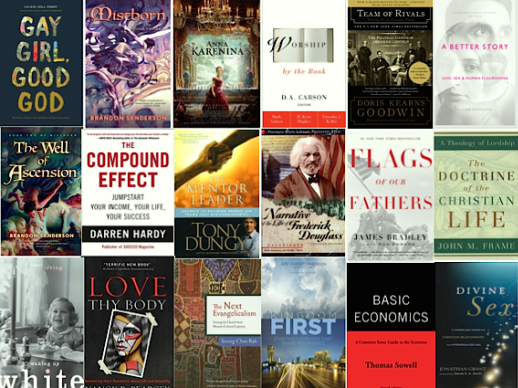
Here are my 18 favorite* books I read in 2018 (in no particular order**):
- Frederick Douglass, Narrative of the Life of Frederick Douglass
- John Frame, The Doctrine of the Christian Life
- Nancy Pearcey, Love Thy Body
- Zach Eswine, The Imperfect Pastor
- Darren Hardy, The Compound Effect
- Leo Tolstoy, Anna Karenina
- Tony Dungy, The Mentor Leader
- D.A. Carson, Worship by the Book
- Brandon Sanderson, The Final Empire
- Thomas Sowell, Basic Economics
- Jackie Hill Perry, Gay Girl, Good God
- James D. Bradley, Flags of our Fathers
- Doris Kearns Goodwin, Team of Rivals
- Brandon Sanderson, The Well of Ascension
- Jeff Christopherson, Kingdom First
- Debby Irving, Waking Up White
- Jonathan Grant, Divine Sex: A Compelling Vision for Christian Relationships in a Hypersexualized Age
- Soong-Chan Rah, The Next Evangelicalism
And here are a few runner-ups…
18 Quotes from Dave Harvey’s book Rescuing Ambition
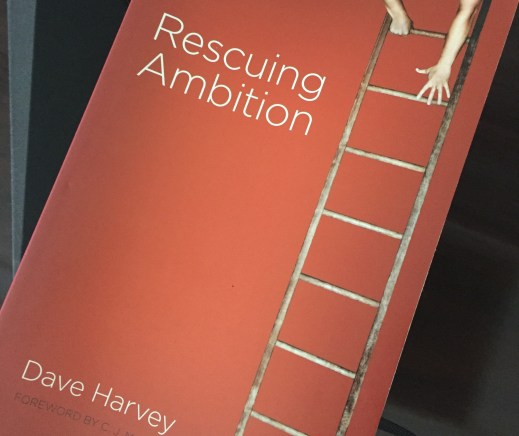
1. “Our search for approval is over. In Christ, we already have all the approval we need” (Dave Harvey, Rescuing Ambition, p. 56).
2. “My search for approval is over. In Christ I already have all the approval I need.
Because Christ’s righteousness has been transferred to me, all the time and energy I once squandered trying to be liked or praised or to achieve something to validate my existence can now be re-directed toward doing things for God’s glory. I no longer live for approval; I live from approval” (Harvey, Rescuing Ambition, p. 56).
3. “God loves good ambition. It brings him glory as he works through our desires to fulfill his purpose. God doesn’t need us, but amazingly he uses us. But to position us for fruitfulness, he’s continually working in our lives, turning our desires toward his ends and developing our ambitions and accordance with his will” (p. 74-75).
Insights from Hudson Taylor’s Spiritual Secret
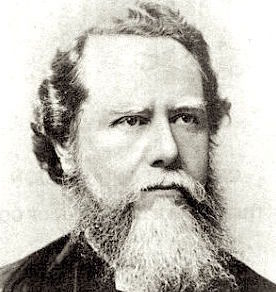
I really enjoyed reading Hudson Taylor’s Spiritual Secret. You should read it. Here are some observations from my reading…
Summary of the book: Trust. Trust and unreserved commitment to the Lord is how I would summarize Hudson Taylor and this book. Before he went to China he said: “‘I shall have no claim on anyone for anything. My only claim will be on God. How important to learn, before leaving England, to move man, through God, by prayer alone'” (33). And that’s what we see happen. He learned to trust God alone. He trusted God even with his children. He said, “‘I find it impossible to think that our heavenly Father is less tender and mindful of His children than I, a poor earthly father, am of mine. No, He will not forget us!'” (125). And in dark days, God enabled[1] Taylor to say: “The battle is the Lord’s, and He will conquer. We may fail—do fail continually—but He never fails” (p. 154).
Insights from the book:
- The impact that one person can have is tremendous when they trust the Lord and have an unreserved commitment to do His will (cite the number of believers in China now, p. 12).
- “We want, we need, we may have, Hudson Taylor’s secret and his success, for we have Hudson Taylor’s Bible and his God” (p. 16). That is such a good reminder. The same God that brought Israel out of Egypt, rose Jesus from the dead, and provided for Hudson Taylor is the same God who is Lord of all now.
- Hudson Taylor wore Chinese clothes even though this was unprecedented and looked down upon by some (cf. e.g. p. 65). This is an important reminder that God and His Word must govern us, not the expectations of others.
- Hudson Taylor had “the Lord’s own yearning of heart over the lost and perishing” (19 cf. p. 32, 112). “We may have more wealth in these days, better education, greater comfort in traveling and in our surroundings even as missionaries, but have we the spirit of urgency, the deep, inward convictions that moved those that went before us; have we the same passion of love, personal love for the Lord Christ? If these are lacking, it is a loss for which nothing can compensate” (p. 127). This reminds me that I need (God help me!) to develop at heart for the lost and love and passion for the Lord Jesus Christ who is their only hope.
- “It was not easy to keep first things first and make time for prayer. Yet without this there cannot but be failure and unrest” (p. 22). Prayer and delighting myself in God is vital.
- “The One Great Circumstance of Life, and of all lesser, external circumstances as necessarily the kindest, wisest, best, because either ordered or permitted by Him” (p. 79). I need to have a bigger view of God. This is vital in part because “The secret of faith that is ready for emergencies is the quiet, practical dependence upon God day by day which makes Him real to the believing heart” (p. 100).
- “’My father sought the Truth,’ he continued sadly, ‘and died without finding it. Oh, why did you not come sooner?’” (p. 95). This quote reminds me of the absolute importance of heralds going to share the good news of Jesus.
- “In these days of easy-going Christianity, is it not well to remind ourselves that it really does cost to be a man or woman whom God can use? One cannot obtain a Christlike work save at great price” (p. 27). This quote—and Hudson Taylor’s life—reminds me and reinvigorates me to seek hard after the Lord.
- “How then to have our faith increased? Only by thinking of all that Jesus is and all He is for us: His life, His death, His work, He Himself as revealed to us in the Word, to be the subject of our constant thoughts. Not a striving to have faith… but a looking off to the Faithful One seems all we need; a resting in the Loved One entirely, for time and for eternity” (p. 158). This quote answers a very important question. How to have more faith? Meditate on Jesus!
- “If God should place me in a serious perplexity, must He not give me much guidance; in positions of great difficulty, much grace; in circumstances of great pressure and trial, much strength? No fear that His resources are mine, for He is mine, and is with me and dwells in me” (p. 165). This is a good reminder that whatever I face, God will be there with me as my ever-present, every-ready, and all-powerful help.
Personal application:
- I need to trust the God who is simultaneously the Lord of the universe and my Father.
- I need to faithfully pray in reliance and desperation to the One who is Lord and Father.
- I need to renew my commitment to spend and be spent for the Lord. I need to renew my commitment to discipline myself for the sake of godliness.
- I need to meditate more on Jesus (His person and work).
- I need to trust that God can use one poor and needy sinner such as I to accomplish great things for His glory.
- I need to develop more of a heart for those who are without hope and without God in the world.
- I need to keep first things first and seek God above all things—even good, healthy, and productive things.
- I need to remember that whatever challenges are in front of me God’s grace is sufficient. God is all-powerful and He is with me. He is my Father!
____________________
[1] Taylor says, “I was enabled by His grace to trust in Him, He has always appeared for my help” (p. 153).
18 books for ’18

Here are 18 of the books (plus 2 extras) I plan to read in 2018:
- Thomas R. Schreiner, The King in His Beauty
- Tony Reinke, Lit!
- Tish Harrison Warren, Liturgy of the Ordinary
- Tommy Keith, Finacial Security in Ten Easy Steps
- Levi Lusko, Swipe Right
- Alex Haley, Roots
- John Piper, Reading the Bible Supernatully
- The Quran
- Gregory Koukl, The Story of Reality
- Frederick Douglass, Narrative of the Life of Frederick Douglass
- Joseph Heller, Catch 22
- Albert Camus, The Stranger
- Francis S. Collins, The Language of God
- Elisabeth Elliot, Shadow of the Almighty
- Mark Forsyth, The Elements of Eloquence
- Steven Johnson, How We Got to Now
- Bruce Olson, Bruchko
- Andreas Kostenberger, God, Marriage, and Family
- Brandon Sanderson, The Final Empire (Mistborn, book 1)
- Dee Brown, Bury My Heart at Wounded Knee
I always aim to read at least one book each week. So this list gives me some flexibility but ensures a somewhat balanced diet.
What’s your eighteen? And what should I add to my list?
_ _ _
Here are a few books you should’ve read in 2017.
Books you should’ve read in 2017

I’m being facetious in the title.[1] But here are my favorite books that I read in 2017. They are in no particular order. That would be too difficult. If I could make you read just one book, however, it would be The Tech-Wise Family by Andy Crouch.
- John M. Perkins, Let Justice Roll Down
- William Lane Craig, Reasonable Faith
- Ben Sasse, The Vanishing American Adult
- Andy Crouch, The Tech-Wise Family
- Andrew T. Walker, God and the Transgender Debate
- Ishmael Beah, A Long Way Gone
- Tim Challies, Do More Better
- Nabeel Qureshi, Seeking Allah, Finding Jesus
- Frank Turek, Stealing from God
- John S. Dickerson, The Great Evangelical Recession
Why should I believe the Bible? (pt 1)

“Why should I believe the Bible?”
That is a very important question. In the next couple of posts, we will briefly consider various aspects of the Bible so that we are in a better position to answer that question.[1]
First, the Bible is…
Literature
The Bible is a very distinct piece of literature; it is truly unlike any other literary work. It is unique.
The Bible is the best selling book of all time and the most translated book of all time.[2] The figures vary but it is estimated that there are approximately 44 million copies sold each year. The Bible, whatever your opinion about its supernatural nature, should be read by all people. Reading and understanding the Bible is important in part because of the huge cultural impact it has had.[3] “No other book in all human history has in turn inspired the writing of so many books as the Bible.”[4]
So, read the Bible as literature. As C.S. Lewis said, “There is a sense in which the Bible, since it is after all literature, cannot properly be read except as literature; and the different parts of it as the different sorts of literature they are.”
___________________
[1] There are a lot of aspects to look at because, as Ravi Zacharias has said, a worldview is not built on one line of argument, but is built on a connected series of arguments.
[2] “As of September 2016 the full Bible has been translated into 636 languages, the New Testament alone into 1442 languages and Bible portions or stories into 1145 other languages. Thus at least some portion of the Bible has been translated into 3,223 languages” (http://www.wycliffe.net/statistics).
[3] See, as just one example, Martin Luther King Jr.’s “I have a Dream” speech. It alludes to Is. 40:4-5; Amos 5:24; Ps. 30:5; Gal. 3:28.
[4] Bernard Ramm, Protestant Christian Evidences, 239.
The War of Art

I appreciate this from Steven Pressfield in The War of Art:
“The following is a list, in no particular order, of those activities that most commonly elicit Resistance:
1) The pursuit of any calling in writing, painting, music, film, dance, or any creative art, however marginal or unconventional.
2) The launching of any entrepreneurial venture or enterprise, for profit or otherwise.
3) Any diet or health regimen.
4) Any program of spiritual advancement.
5) Any activity who aim is tighter abdominals.
6) Any course or program designed to overcome an unwholesome habit or addiction.
7) Education of every kind.
8) Any act of political, moral, or ethical courage, including the decision to change for the better some unworthy pattern of thought or conduct in ourselves.
9) The Undertaking of any enterprise or endeavor whose aim is to help others.
10) Any act that entails commitment of the heart. The decision to get married, to have a child, to weather a rocky patch in a relationship.
11) The taking of any principled stand in the face of adversity.
In other words, any act that rejects immediate gratification in favor of long-term growth, health, or integrity. Or, expressed another way, any act that derives from our higher nature instead of our lower. Any of these will elicit Resistance.”
C.S. Lewis on the Importance of Reading Old Books

As part of our book diet, C.S. Lewis reminds us to not leave out old books. “It is a good rule, after reading a new book, never to allow yourself another new one till you have read an old one in between. If that is too much for you, you should at least read one old one to every three new ones” (C. S. Lewis, “On the Reading of Old Books”).
Lewis is wise to also say that,
“People were no clever then than they are now; they made as many mistakes as we. But not the same mistakes. They will not flatter us in the errors we are already committing; and their own errors, being now open and palpable, will not endanger us. Two heads are better than one, not because either is infallible, but because they are unlikely to go wrong in the same direction” (C. S. Lewis, “On the Reading of Old Books”).



 in X
in X 