Should Christians Legislate Morality?

Christians Should Not Enforce “Vertical” Morality
In our modern, pluralistic, and heavily secularized society, John Warwick Montgomery points out that Christians should be particularly cautious not to jeopardize the spread of the gospel by insensitively imposing Christian morality on unbelievers. We must avoid any recurrence of the Puritan Commonwealth, where people are compelled to act externally as Christians regardless of their true faith. Unfortunately, these efforts often lead to the institutionalization of hypocrisy and a decline in respect for genuine Christian values.[1] It can also lead people to a false assurance of a right relationship with God.
Instead, Montgomery says Christians should recognize that Scripture presents two distinct types of moral commands. We see this in the first and second parts of the Ten Commandments.[2] In the first part, we see duties related to God. These commands cover the relationship between individuals and God (“vertical” morality). In the second part, we see duties related to neighbors. These commands cover the relationship between individuals and other people (“horizontal” morality).
Montgomery believes it is crucial not to impose the first part of the Ten Commandments on unbelievers. These commands are:
- “You must not have any other god but Me.”
- “You must not make for yourself an idol.”
- “You must not misuse the name of the Lord your God.”
- “Remember to observe the Sabbath day by keeping it holy.”
Even if Christians are in the majority in a country, they should not impose laws related to the above four commandments. “This is because the proper relationship with God can only be established through voluntary, personal decision and commitment.”[3]
1 Corinthians 5:10 is an important verse for us to consider on this subject as well. Paul argues that avoiding all sinful individuals in the world would mean that Christians would need to “leave the world” entirely, which is an impractical and unrealistic standard. Instead, the church’s primary responsibility is not to judge those outside the faith; it is their duty to judge those who claim to be believers but live in sin within the church.
The Quran says there is no compulsion in religion. Jesus demonstrated that principle. He never forced anyone to follow Him. That’s what we see throughout the New Testament. Christians are to be evangelistic and strive to compel people to see the goodness and glory of Jesus. Still, they are never commanded to command people to bow to Jesus.
Christians Should Work Towards A General “Horizontal” Morality
Christians should, however, encourage people towards general “horizontal” morality. Even while the focus in the New Testament is on the morality of Jesus’ followers, we do see warrant for the promotion of social order and general morality. I think of John the Baptizer and the Apostle Paul, for example (Mark 6:14-20; Matt. 14:1-12; Acts 16:35-39; 24:25; 1 Tim. 2:1-4 also see Rom. 13 and 1 Peter 2). But the letters of the New Testament were written to Christians, telling Christians how to live.
Here’s the second part of the Ten Commandments, which are good for every society to lovingly and practically apply.
- “Honor your father and your mother”
- “You shall not murder”
- “You shall not commit adultery”
- “You shall not steal”
- “You shall not bear false witness against your neighbor”
- “You shall not covet”
These commands are applied in various ways throughout the Bible. For example, the Bible talks about the importance of railings on the top of buildings to protect people from falling off and getting hurt or killed.
But even here, we don’t want to put our hope or emphasis on “horizontal” morality. Part of the point of the law is to point us to our need for Jesus. It is not an end in itself. So, we must remember that mere morality is not the solution.
The Problem of Secularism and Morality
Britannica says secularism is “a worldview or political principle that separates religion from other realms of human existence, often putting greater emphasis on nonreligious aspects of human life or, more specifically, separating religion from the political realm.”
One of the problems with secularism, though, is that it is not set up very well to give us a societal analysis. How is secularism going to provide us with:
- The Ideal of what’s healthy
- Observation of symptoms
- Diagnosis or analysis of the disease/disorder
- Prognosis or prediction of cure/remedy
- Prescription or instruction for treatment/action for a cure
Secularists believe Christians should not legislate morality. They say that religion has no place in government. Christian beliefs are not allowed, but their core beliefs are allowed. But, as Britannica aludes to, secularism is really an ultimate commitment—a whole world-and-life-view.
Even atheism has the markings of a religion. Atheists have a creed. Theirs is just that there is no god. Atheism addresses the ultimate concerns of life and existence and answers the questions of who people are and what they should value. A committed atheist is even unlikely to marry someone outside of their beliefs. Many atheists even belong to a group and may even attend occasional meetings (see e.g., atheists.org) and have their own literature they read that supports their beliefs.
A merely secular society cannot give a moral framework that transcends individual belief systems. We are left with a “might makes right morality.” It seems to me that secularism leaves us with the column on the left, whereas Christianity gives us the column on the right.

I believe we need and should want Christianity to help our nation work towards a general “horizontal” morality. Our Founding Fathers (along with Alexis de Tocqueville), many of whom were deists and not Christians, agree. Yet, Christians should realize that legislating morality is not the answer.
Legislating Morality is Not the Ultimate Solution
Christians both understand that sinners will sin and that morality is good for the nation. Righteousness exalts the land, as Proverbs says (Prov. 14:34). Yet, Christians are compassionate and humble. We realize that we all stumble in many ways, as the letter of James says, but if we can help people from stumbling, that’s good. But Christians don’t confuse the kingdom of man with the Kingdom of God. Christians know that here we have no lasting city, but we seek the City that is to come (Heb. 13:14).
Legislating morality is not the solution; Jesus is. As C.H. Spurgeon said, “Nothing but the Gospel can sweep away social evil… The Gospel is the great broom with which to cleanse the filthiness of the city; nothing else will avail.”
Paul David Tripp has wisely said that “We should be thankful for the wisdom of God’s law, but we should also be careful not to ask it to do what only grace can accomplish.” It is the Spirit of God that transforms, although it is true that He often works through law. We need our rocky hearts to become flesh through the work of the Spirit.
Conclusion
The question of whether Christians should legislate morality reveals the complexities of faith in a diverse and secular society. While Christians are called to embody and promote a morality rooted in their faith, imposing a “vertical” morality can hinder the spread of the gospel, foster hypocrisy, and promote a misunderstanding of genuine faith. Instead, the focus should be on humbly and lovingly encouraging “horizontal” morality—principles that promote societal well-being and can be embraced by individuals regardless of their faith.
As apprentices of Jesus, Christians are primarily called to lead by example and encourage ethical behavior rooted in love and respect for one another. The emphasis should be on exemplifying Jesus’ teachings and fostering relationships that draw others to the faith, rather than seeking to enforce morality. That’s what Jesus Himself did.
By fostering relationships and demonstrating the transformative love of Jesus, Christians can influence the moral fabric of society without simply relying on legislation. True change comes through the work of the Holy Spirit rather than external mandates. In this way, the Christian community can contribute to a more just and moral society while remaining faithful to the fundamental teachings of their faith.
Notes
[1] John Warwick Montgomery,Theology: Good, Bad, and Mysterious, 122.
[2] Often referred to as the First and Second Tables of the Decalogue. The “First Table” consists of commands 1-4 and has to do with people’s relationship with God (vertical relationship). The “Second Table” consists of commands 5-10 and has to do with people’s relationship with other humans (horizontal relationships). The First Table can be summed up by “love God,” and the Second Table can be summed up by “love others.”
[3] Montgomery, Theology: Good, Bad, and Mysterious, 123.
Revelation Is Not Mainly About When the World Will End

Eschatology is not mainly about predicting the end, but about living rightly in light of the end. Revelation does not reveal when exactly the world will end, but it does reveal what the end will entail and whose side we want to be on. As many commentators note, the visions in Revelation primarily confront us with God’s demands and promises, they are not meant to satisfy our curiosity about minute end-time details.[1] Vern Poythress says it this way: “Revelation renews us, not so much from particular instructions about particular future events, but from showing us God, who will bring to pass all events in his own time and his own way.”[2]
Interestingly, “one in four Americans believe that the world will end within his or her lifetime.”[3] But America should never be the interpretive lens by which we interpret and think about eschatology. As Craig S. Keener has said,
If today’s newspapers are a necessary key to interpreting the book, then no generation until our own could have understood and obeyed the book… They could not have read the book as Scripture profitable for teaching and correction—an approach that does not fit a high view of biblical authority (cf. 2 Tim. 3:16-17).[4]
There have been many specific failed predictions. Actually, “The failure rate for apocalyptic predictions sits right at 100 percent.”[5] Sadly, sometimes what we think is in the Bible “is actually an indicator of our own biases and pre-conceptions.”[6] Hal Lindsey predicted the end in 2000. Many believe Y2K would be the end. Harold Camping said the rapture would happen on September 6th, 1994. His radio “station raised millions to get word of the end on billboards, pamphlets, and the radio.”[7] One newspaper “estimated that worldwide more than $100 million was spent by Family Radio on promotion of the date.”[8] For some who had “pinned their beliefs to this date, the failure of Camping’s apocalypse left them lost, with little trust in God.” They were “disappointed and adrift” and for some “there was financial ruin.”[9] That’s sad and unnecessary.
As we study eschatology, we should do so with the world and the scope of history in mind. Remembering intense tribulation has
been present at various times, with great severity and over large areas. We think especially of the Mohammedan invasion in the seventh and eighth centuries which swept across all of the Near East, up into Europe as far as Italy and Austria, across all of North Africa, across Spain and into France. The Black Plague ravaged Asia and Europe in the fourteenth century. The Thirty Years War devastated much of central Europe in the seventeenth century. There have been two so-called World Wars in our twentieth century. For a time each of those seemed to qualify as great tribulation.[10]
Also, “As for the Antichrist, various ones have been temporarily cast in that role: Attila the Hun in the fifth century; the pope at the time of the Protestant Reformation; Napoleon in the nineteenth century; Mussolini, Hitler and Stalin in the twentieth century.”[11]
As faithful Christians, we should do our best to present ourselves to God as approved, workers who have no need to be ashamed, rightly handling the word of truth” (2 Tim. 2:15). We should know the “signs of the times”[12] and we must be faithful and ready for the return of Jesus. But, “because the exact time when Christ will return is not known, the church must live with a sense of urgency, realizing that the end of history may be very near. At the same time, however, the church must continue to plan and work for a future on this present earth which may still last a long time.”[13]
Notes
[1] Craig S. Keener, The NIV Application Commentary: Revelation, 32. Since Revelation is both apocalyptic and prophecy we must understand that its primary purpose is to provide words of comfort and challenge to God’s people then and now, rather than precisly predicting the future, especially in great detail. Visions of the future are not an end in themselves but rather a means by which people are to be warned and to comforted (Michael J. Gorman, Reading Revelation Responsibly: Uncivil Worship and Witness: Followingthe Lamb into the New Creation, 41).
[2] Vern Poythress, The Returning King: A Guide to the Book of Revelation.
[3] Jessica Tinklenberg Devega, Guesses, Goofs, and Prophetic Failures, 10.
[4] Keener, The NIV Application Commentary: Revelation, 30.
[5] Devega, Guesses, Goofs, and Prophetic Failures, 193.
[6] Ibid., 7.
[7] Ibid., 157.
[8] Ibid., 159.
[9] Ibid., 161.
[10] Loraine Boettner, “A Postmillennial Response” in The Meaning of the Millennium, 204-05.
[11] Boettner, “A Postmillennial Response,” 205.
[12] Wars, famines, earthquakes, tribulation, apostasy, antichrist(s), the proclamation of the gospel to the nations, and the salvation of the fullness of Israel.
[13] Anthony A. Hoekema, “Amillennialism” in The Meaning of the Millennium, 178-79.
What sets Christianity apart? (part 2)

In Part One, we found that part of what sets Christianity apart is trinitarian monotheism and God’s eternal love. Here we will add four more aspects that set Christianity apart from other religions.
3. The Incarnation of God
Christians believe that God loves the world so much that Jesus took on flesh and became man to die for the sins of the world (Jn. 1:1-3, 14, 29; 3:16). Other religions, such as Greek mythology, believe in gods who appeared in human form for various reasons, including love or punishment.[1] Greek gods, however, only temporarily took on human form. Jesus permanently became human.[2]
In Hinduism, the incarnation of a deity usually refers to Vishnu, who is said to have appeared in various avatars (e.g., Rama, Krishna, Narasimha, and Varaha). Other than Hinduism and various mythologies (which most people no longer take seriously), the concept of the incarnation of God is uncommon. However, Wikipedia does give a list of other people who have been considered deities. Egyptian pharaohs were considered deities, and North Korea’s Supreme Leader is considered a deity, for example. Interestingly, even on Wikipedia, Jesus is in a class of His own. He is listed by Himself under the “Controversial Deification” heading.
The Hindu avatar comparison to Christian incarnation is not as clear as it might at first seem. There are clearly some important distinctions between the Hindu and Christian beliefs regarding incarnation.[3] First, Hindus claim many divine incarnations have appeared throughout history, while Christians believe Jesus is unique—the only begotten Son of God. The Christian Bible teaches that Jesus appeared “once to bear the sins of many” and “will appear a second time, not to deal with sin but to save those who are eagerly waiting for Him” (Heb. 9:28). So, second, we see that the purpose of avatars and the purpose of Christ are different. The avatars do not take away or bear sin. Third, in contrast to Hinduism, Christianity teaches that Jesus is Immanuel, God with us, and that He is still with us by the Holy Spirit. Lastly, the avatars in Hinduism appear for a time to balance out good and evil; in contrast, Jesus came and will come again to forever banish evil and sin.
So, Christianity’s belief in the incarnation of Jesus sets it apart from all other religions. The Creator became creation, the eternal entered time. As is sometimes said, there are many who would be god but only one God who would be man. Or, as Dietrich Bonhoeffer said, ”While we exert ourselves to grow beyond our humanity, to leave the human behind us, God becomes human.”[4]
4. Messiah Jesus
Muslims say they believe Jesus was the Messiah. In fact, the Quran explicitly refers to Jesus as the Messiah. One of the disagreements between Christians and Muslims, however, is what it means that Jesus was the Messiah. Muslims do not believe Jesus was God in flesh or that He was crucified.
It is true that the expectation presented in the Jewish Scriptures (Old Testament for Christians) for the Promised One seems almost impossibly diverse. How could any one person fulfill the many expectations? How could it make sense for the “Ancient of Days” (Dan. 7:9, 13, 22) to be a descendant of king David (2 Sam. 7:12-16; Is. 11:1; Jer. 23:5-6)?
The messianic expectations appeared to be nothing more than unrelated and random shards of glass. Yet, the New Testament authors, over and over, argue that Jesus is in fact the Promised One, the long-awaited Messiah, who fulfills the prophecies, patterns, pointers, and promises (2 Cor. 1:20). Jesus, who was from Nazareth (of all places) is believed to be the one who will crush the serpent of old and lead the way back into Eden, bless all the nations of the earth, and set up His righteous and eternal Kingdom. The New Testament helps us see that the Old Testament predictions work together to form an astounding, almost unbelievable, stained-glass picture of Jesus, the long-awaited, promised Messiah.
Regarding prophecy, there are several Old Testament passages we could consider. Here’s a sample:
- His appearance will be disfigured (see Isaiah 52:14 and Matthew 26:67).
- He will be despised and rejected (see Isaiah 53:3 and John 11:47-50).
- He will take sin upon Himself (see Isaiah 53:4-6, 8 and 1 Corinthians 15:3).
- He will be silent before oppressors (see Isaiah 53:7 and Matthew 14:60-61).
- He will be assigned a grave with the wicked and with the rich in His death (Isaiah 53:9 and Mark 15:27-28, 43-46).
- He will be a descendant of David (see 1 Chronicles 17:11-14 and Luke 3:23, 31).
- He will be born in Bethlehem (see Micah 5:2 and Matthew 2:1).
- He will be preceded by a messenger (see Isaiah 40:3-5 and Matthew 3:1-2).
- He will have a ministry of miracles (see Isaiah 35:5-6 and Matthew 9:35; 11:4-5).
- He will enter Jerusalem on a Donkey (see Zechariah 9:9 and Matthew 21:7-9).
- His hands and feet will be pierced (see Psalm 22:16 and Luke 23:33).
- He will be hated without reason (see Psalm 69:4 and John 15:25).
- His garments were divided, and lots were cast for them (see Psalm 22:18; John 19:23-24).
- His bones were not broken (see Psalm 34:20 and John 19: 33).
- His side was pierced (see Zechariah 12:10 and Jn. 19:34).
- He, the Mighty God, was born (see Isaiah 9:2-7 and Matthew 1:23).
Christianity is set apart from all other world religions because it says that Messiah Jesus, who is God incarnate, “died for our sins in accordance with the Scriptures” (1 Cor. 15:3).
5. The Resurrection
Christians believe that Messiah Jesus died as predicted, but that He didn’t stay dead; He rose, conquering sin and death. Christians believe that the resurrection of Jesus is the firstfruits of more to come. The resurrection of Jesus is like the down payment with a whole lot more to follow. He is the “test of concept” that proves that God will one day soon set the world aright.[5]
So, Christians believe time is going somewhere. The world itself groans to be fixed, and the Bible says that the resurrection of Jesus proves it will be fixed.
6. Historical Evidence
Christians do not base their beliefs on a dream wish. There are legitimate historical grounds for their beliefs. This sets Christianity apart from all other religions. Now, some other religions claim historical and archeological support, but the evidence for Christianity is much more convincing.
So, for instance, Douglas Groothuis has said, “The New Testament witness is far better established historically than the revisionism of the Quran.”[6] The New Testament documents are amazingly historically reliable. “Nearly 100 biblical figures, dozens of biblical cities, over 60 historical details in the Gospel of John, and 80 historical details in the book of Acts, among other things, have been confirmed as historical through archaeological and historical research.”[7]
Further, we can gather a substantial amount of information about Jesus through nonbiblical historical writers. From Pliny, Tacitus, Josephus, Lucian, Thallus, and Celsus, we see Jesus clearly existed and had a brother named James who was killed when Ananus was High Priest. Jesus was known to be some kind of wonderworker, wise man, and teacher. Yet, He was regarded by His followers to be divine. He was crucified under Pontius Pilate during the reign of Tiberius, and His crucifixion seems to have been accompanied by a very long darkness. Surprisingly, His crucifixion didn’t squelch the Christian movement.[8] Historical writings outside of the New Testament corroborate the accuracy of the New Testament.
The English philosopher Antony Flew, while not a believer in the resurrection of Jesus, said, “The evidence for the resurrection is better than for claimed miracles in any other religion. It’s outstandingly different in quality and quantity.”[9] Not only does the historical evidence point in the direction of Christianity, but the positive historical impact does too. We’ll look at that in “What sets Christianity apart” (part 3).”
Go to Part Two three here.
Notes
[1] E.g., Zeus, Poseidon, and Apollo.
[2] The New Testament repeatedly teaches that Jesus is God in flesh. Jesus and the New Testament writers over and overclaim Jesus’ divine nature. We see the creedal formula “Jesus is Lord” (1 Cor. 12:3; Phil. 2:11). “Lord” was used in the LXX to translate the divine name, so this designation very often equates Jesus with God. Jesus’ title is “Son of God” which implies He is of the same nature as God (Matt. 11:27; Mk. 12:6; 13:32; 14:61-62; Lk. 10:22; 22:70; Jn. 10:30; 14:9). Jesus is eternally preexistent (Jn. 1:1; Phil. 2:6; Heb. 13:8; Rev. 22:13). He has authority to forgives sins (Mk. 2:5-12; Lk. 24:45-47; Acts 10:43; 1 Jn. 1:5-9). He is even explicitly referred to as “God” (Matt. 1:21-23; Jn. 1:1-14; Titus 2:13; 1 Jn. 5:20; Rom. 9:5; 2 Pet. 1:1). And Jesus was condemned for who He claimed to be (Mk. 14:61-64; Jn. 8:58-59). Yet, the writers say it is right to worship Him (Matt. 2:11; 14:33; 28:9; Jn. 20:28; Heb. 1:5-9; Rev. 5). So, Jesus claimed to be the Lord and the New Testament confesses Him to be Lord. The Early Church taught that Jesus was God, too. Ignatius of Antioch (c. 50-117) said in his Letter to the Ephesians, “Our God, Jesus the Christ, was conceived by Mary according to God’s plan, both from the seed of David and of the Holy Spirit” (18.2 cf. 19.3; Letter to the Romans, 3.3; Letter to Polycarp, 3.2). Polycarp of Smyrna (c. 69-155) said, “The Son of God Jesus Christ, build you up in faith and truth…, and to us with you, and to all those under heaven who will yet believe in our Lord and God Jesus Christ and in his Father who raised him from the dead (Philippians 12.2). Justin Martyr (100-165) said, “Christ being Lord, and God the Son of God” (Dialogue with Trypho, 128), and he said that he would “prove that Christ is called both God and Lord of hosts” (Dialogue with Trypho, 36). We also have early archeological evidence from around 230AD. Ancient remains of an early church were discovered in the Megiddo prison in Israel. The church has ornate religious mosaics and an inscription that says, “God Jesus Christ” (Vassilios Tzaferis, “Inscribed ‘To God Jesus Christ,’” 38-49 in Biblical Archaeology Review March/April 2007 Vol 33 No 2).
[3] Kyle Brosseau, “How to Explain the Incarnation to Hindus.”
[4] Bonhoeffer, Ethics, 84 as quoted in Biblical Critical Theory 360.
[5] “The resurrection raises our consciousness to a new set of possibilities in this world and shows us that the way things are is not the way they will always be” (Christopher Watkin, Biblical Critical Theory, 442). “The resurrection is not a one-time happening but the beginning of a new and ongoing age.” (Ibid., 457).
[6] Douglas Groothuis, Christian Apologetics: A Comprehensive Case for Biblical Faith, 664.
[7] Holden and Geisler, The Popular Handbook of Archaeology and the Bible, 181.
[8] See Boyd and Eddy, Lord or Legend?, 135.
[9] See Groothuis, Christian Apologetics, 583.
* Photo by Willian Justen de Vasconcellos
Barriers to Church-Planting Movements

In J. D. Payne’s book, Discovering Church Planting, he lists various barriers to church-planting movements. Here’s five of them:
- Extrabiblical Requirements for Being a Church
- Overcoming Bad Examples of Christianity
- Nonreproducible Models
- Extrabiblical Leadership Requirements
- Planting “Frog” Rather Than “Lizard” Churches
(Frogs just sit and wait for their food to come to them but lizards go find the food. Churches should be less “come and see” and more “go and tell.” We should be evangelistic and not just invite people to come to church.)
Payne suggests “three particular shifts in order to help facilitate the rapid dissemination of the gospel the multiplication of churches” (J.D. Payne, Discovering Church Planting: An Introduction to the Whats, Whys, and Hows of Global Church Planting, 409).
1) A Theological Shift
Unless the Church is willing to return to the simplicity of the gospel, the power of the Holy Spirit, and define the local church according to the simple biblical guidelines-rather than Western cultural preferences-it is unlikely that there will be global expansion. The Church must come to understand the Great Commission more in relational terms and less in institutional terms; with a simpler organization and less in terms of structure and bureaucracy; with more emphasis on biblical accountability and less allowance for member passivity; with more priority placed on community and less on acquaintances; as more dependent on equipping and sending the people of God for mission and less of a reliance on professional clergy (p. 410).
2) A Strategic Shift
The Church must move towards “the multiplication of disciples, leaders, and churches,” and get away from thinking in terms of addition. I appreciate what J.D. Payne says in his book, Pressure Points: Twelve Global Issues Shaping the Face of the Church:
With over four billion people in the world without Jesus, it is not wise to develop strategies that support methods which are counterproductive to the healthy rapid multiplication of disciples, leaders, and churches. Just because there is much biblical freedom in our culturally shaped methods does not mean that all such expressions are conducive to the multiplication of healthy churches across a people group or population segment.
We should intentionally pursue what makes for rapid multiplication of healthy disciples.
3) A Methodological Shift
Church and church planting is often far too complicated to be readily reproducible. “We must advocate and apply simple methods that are highly reproducible by new kingdom citizens” (Payne, Discovering Church Planting, 411). “There is an inverse relationship between the degree of reproducibility and the technicality of church-planting methods.” Therefore, “Highly complex methods should be few in number and not the norm of kingdom citizens” (p. 412).
Free e-Book
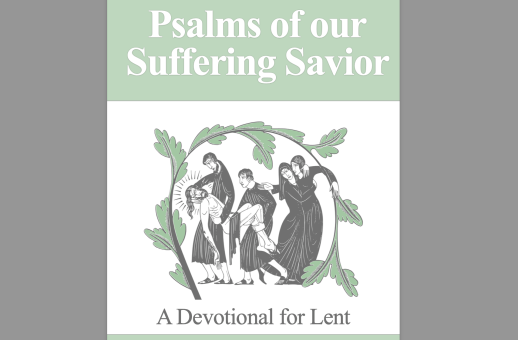
In preparation for Easter, I put together a devotional book. If you don’t have something to go through, I encourage you to check it out.
Here’s the link to the free e-book, I hope you find it helpful: Psalms of Our Suffering Savior
Is the Bible Reliable?

Christians believe that the original manuscripts of the Bible give us God’s authoritative words, and we have very accurate copies of those original manuscripts. As the Bible says, God’s word will not pass away (Psalm 119:89; Isaiah 40:8; Luke 21:33; 1 Peter 1:23, 25).
We do not have an original copy of any piece of the New Testament (an “autograph manuscript”). The process known as textual criticism, however, helps us get back to what was originally written. What would have happened with the original writings of the New Testament, the autograph manuscripts, is they would have been carefully and painstakingly copied and then passed on to the next group of early Christians to carefully copy. These copies would have then been copied as well. Eventually, the original writing would get worn and torn.
We do not have original copies, but we have manuscripts that are very close to the date of the autographs. One of the amazing things about the New Testament is the sheer number of copies we have as well as how close they are to the original manuscripts, both in accuracy and date.
There are three main types of manuscript variants. Daniel Wallace, a specialist in Koine Greek and New Testament textual criticism, says that over 99 percent of textual variants don’t affect the meaning of the text, are not viable, or “don’t have any likelihood of going back to the original, or both.”[1] The largest category is spelling difference. “This accounts for over 75% of all textual variants.”[2] The second “largest category involves synonyms, word order, or articles with proper nouns.”[3] Neither of these categories impacts the message of the text in any meaningful way. There is a third and much smaller category, however, in which the meaning of the text can be affected. Two examples are the long ending of Mark (Mark 16:9-20) and the woman caught in adultery (John 7:53-8:11). In this third category, manuscript evidence must be weighed and considered. But even in this last category, no Christian doctrine is changed. Even Bart Ehrman, a popular New Testament scholar who is not a Christian, has written, “Essential Christian beliefs are not affected by textual variants in the manuscript tradition of the New Testament.”[4]
We can be sure that we accurately have the words of God, but in a few places, we have needed to get back to the words of God, so we have had to trim back what is not supported by the manuscript evidence. So again, that’s what there are notes in most Bibles about the long ending of Mark and the woman caught in adultery.[5]
It should also be understood that “many textual variants exist simply because many ancient manuscripts exist. The amount of the manuscript evidence is one thing that makes the New Testament stand out among other works of antiquity.”[6] Other ancient works are supported by a dearth of manuscripts. Of course, with fewer manuscripts, you have fewer variants, but you also have less evidence to weigh to get you back to the original work.
The Bible’s number of manuscripts is especially impressive considering the Roman emperor Diocletian’s “Edict against the Christians” during the Great Persecution. In Eusebius’ Church History, he talks about the edict “commanding that the churches be leveled to the ground” and the Scriptures be destroyed by fire.[7]
So, is the Bible historically reliable? The Bible reports actual historical events and the manuscripts for the Bible are very reliable. Nothing in ancient literature matches the historical documentation of the Bible. Nothing comes close.
Compared with other ancient writings, the Bible has more manuscript evidence to support it than any ten pieces of classical literature combined.[8]
The reliability of the New Testament history is overwhelming when compared to that of any other book from the ancient world.[9]
The New Testament is easily the best-attested ancient writing in terms of the sheer number of documents, the time span between the events and the documents, and the variety of documents available to sustain or contradict it. There is nothing in ancient manuscript evidence to match such textual availability and integrity.[10]
Christians can be confident that most English translations of the Bible are fair representations of what the biblical authors wrote. A vast number of variants exist only because a vast number of ancient, hand-copied manuscripts exist. No textural variant anywhere calls any essential Christian doctrine into question or indicates completely different, competing theologies among the New Testament authors. We have not lost the message of the text. God has preserved his Word, and the text’s wording is trustworthy.[11]
In comparison with the average ancient Greek author, the New Testament copies are well over a thousand times more plentiful. If the average-sized manuscript were two and one-half inches thick, all the copies of the works of an average Greek author would stack up four feet high, while the copies of the New Testament would stack up to over a mile high![12]
Here’s a table[13] so you can see a visual representation of the manuscript data:

Therefore, “to be skeptical of the resultant text of the New Testament books is to allow all of classical antiquity to slip into obscurity, for no documents of the ancient period are as well attested bibliographically as the New Testament.”[14]
The Bible is historically accurate and other historical works collaborate information we see from the Bible. Tacitus, a first-century historian, wrote this about the early Jesus movement:
Therefore, to scotch the rumour, Nero substituted as culprits, and punished with the utmost refinements of cruelty, a class of men, loathed for their vices, whom the crowd styled Christians. Christ, the founder of the name, had undergone the death penalty in the reign of Tiberius, by sentence of the procurator Pontius Pilatus, and a pernicious superstition was checked for the moment, only to break out once more, not merely in Judea, the home of the disease, but in the capital itself, where all things horrible or shameful in the world collect and find a vogue.[15]
Thus, early non-Christian sources support the main details about Jesus. The authors of the New Testament were either eyewitnesses to Jesus themselves or interviewed eyewitnesses, so we have accurate historical accounts about Jesus (e.g., Lk. 1:1-4; 2 Pet. 1:16; 1 Cor. 15:1-8; 1 Jn. 1:1-3).
There are reasons to trust the Bible from an archeological (and even an astronomical[16]) perspective as well. For years, many people thought the Hittites the Old Testament talks about did not exist. However, archaeological research has since revealed that the Hittite civilization did exist. There are many similar examples.
Various inscriptions support things we see in the Bible. The Pool of Siloam, once doubted, has been found. The James Ossuary seems to support facts about Jesus’ family. The Shroud of Turin, though debated, is potential “hard evidence.” In fact, “No book from ancient times has more archaeological confirmation than the Bible.”[17]
The death, burial, and resurrection of Jesus are attested by various historical accounts. I believe a persuasive argument can be made for the validity of the actual physical resurrection of Jesus of Nazareth. I believe the resurrection of Jesus best explains why the disciples were willing to die for their claim that Jesus was the resurrected Messiah and why the Jews would switch from gathering for worship on the Sabbath (on Saturday) to gathering on the Lord’s Day (Sunday, the day Jesus rose from the dead). I think it best explains why people, including Jews, would worship Jesus. It best explains all of it; the church,[18] the New Testament, and various parts of the Old Testament. So, we can trust the Bible to give us accurate historical accounts.
Notes
[1] Darrell L. Bock and Mikel Del Rosario, “The Table Briefing: Engaging Challenges to the Reliability of the New Testament” in Bibliotheca Sacra (vol. 175, January-March, 2018), 98.
[2] Darrell L. Bock and Mikel Del Rosario, “The Table Briefing: Engaging Challenges to the Reliability of the New Testament” in Bibliotheca Sacra, 98.
[3] Bock and Rosario, “The Table Briefing: Engaging Challenges to the Reliability of the New Testament” in Bibliotheca Sacra, 98.
[4] Bart Ehrman, Misquoting Jesus, 252.
[5] “The New Testament grew in size from the earliest copies to the latest copies—fourteen hundred years later –by about 2 percent. That is a remarkably stable transmissional process” (J. Ed Komoszewski, M. James Sawyer, Daniel B. Wallace, Reinventing Jesus: How Contemporary Skeptics Miss the Real Jesus and Mislead Popular Culture [Grand Rapids: Kregel Publications, 2006], 55).
[6] Bock and Rosario, “The Table Briefing: Engaging Challenges to the Reliability of the New Testament,” 99.
[7] Eusebius, Church History, 8.2.4.
[8] Josh McDowell, The New Evidence that Demands A Verdict, 9.
[9] The Popular Handbook of Archaeology and the Bible, 131.
[10] Ravi Zacharias, Can Man Live Without God?, 162.
[11] Bock and Rosario, “The Table Briefing: Engaging Challenges to the Reliability of the New Testament,” 104-05.
[12] J. Ed Komoszewski, M. James Sawyer, Daniel B. Wallace, Reinventing Jesus: How Contemporary Skeptics Miss the Real Jesus and Mislead Popular Culture (Grand Rapids: Kregel Publications, 2006), 82.
[13] See Josh McDowell, Evidence the Demands a Verdict, (San Bernadino, CA: Here’s Life, 1972). Homer’s Illiad is the best-attested ancient work after the New Testament.
[14] John Warwick Montgomery, History and Christianity, 29. “Since scholars accept as generally trustworthy the writings of the ancient classics even though the earliest MSS were written so long after the original writings and the number of extant MSS is in many instances so small, it is clear that the reliability of the text of the N. T. is likewise assured” (J. Harold Greenlee, Introduction to New Testament Textual Criticism, 16).
[15] Tacitus, Annals 15.44. There are other examples we could look at. A Rabiniac writing says, ““Jesus was hanged on Passover Eve. Forty days previously the herald had cried, ‘He is being led out for stoning, because he has practiced sorcery and led Israel astray and enticed them into apostasy. Whoever has anything to say in his defence, let him come and declare it.’ As nothing was brought forward in his defence, he was hanged on Passover Eve” (Sanhedrin 43).
[16] “Astronomical records show that there were several significant celestial events around the time of Jesus’ birth” (Paul W. Barnett, “Is the New Testament Historically Reliable?” 246 in In Defense of the Bible. See esp. The Great Christ Comet). This is significant because of the “star” (or comet?) that was connected to Jesus the Messiah’s coming.
[17] The Popular Handbook of Archaeology and the Bible, 139.
[18] For example, “The creation of so many texts and their survival is remarkable and counter-intuitive. Jesus was a Jew, and anti-Semitism was rife in the Greco-Roman world. He came from Nazareth, a tiny village in Galilee, a remote landlocked principality. He was crucified, a brutal and humiliating form of execution reserved for the lowest orders to deter subversives, troublemakers, and slaves like those who followed Spartacus” (In Defense of the Bible, 228-29).
Photo by Priscilla Du Preez 🇨🇦
Empowering the Church Body: Beyond the SuperPastor

What if church were different? What if we emphasized the ministry of people instead of a “SuperPastor”? When we say, “I follow Paul,” or, “I follow Apollos,” we are being merely human. What then is Apollos? What is Paul? We are all God’s fellow workers (1 Cor. 3:4-9).
What if we emphasized the ministry of the church body instead of one “professional”? The early church leaders valued the ministry of the church’s people, the ministry of the “non-pastors.” We see this, for example, in all the people Paul greeted in his letters. He knew them and appreciated them. And part of this was valuing the ministry of women. Romans 16 mentions 29 people and 10 of them are women.[1]
Church as event communicates that the special people on the stage are equipped to do the work of the ministry. The people who sit in the audience are simply passive and not gifted to do ministry. That is exactly backward. God has given leaders to equip the saints for the work of the ministry (Eph. 4:12), God has already given the people of the church various gifts (Rom. 12:6-7; 1 Pet. 4:10-11).
Even though Paul was the church planter par excellence, he practiced partnership and co-leadership, which Jesus Himself established (cf. Mark 6:7). Jesus turned the world upside down in part through the hands of 12 ordinary men who had clearly been with Him (Acts 4:13).
Paul followed this same pattern. He was almost always with a colaborer[2] and always desired to be with them. When Paul was separated from his colaborers he said, “Come as soon as possible” (Acts 17:15 cf. 2 Tim. 4:10-12; Titus 3:12-13) and he waited for them (Acts 17:16). Paul mentions his fellow shepherds—Timothy, Titus, Silas, and Barnabas—all over the place.[3] From his first church-sponsored “mission trip” (11:30 cf. Gal. 2:1) to his last (notice “we” in Acts 28) he sought to be with fellow laborers. We also see Paul “appointed elders [pl.] for them in each church” (Acts 14:23; cf. 11:30; 15:2; 20:17-18; 21:18; Titus 1:5), which also establishes the importance of co-leadership.[4]
Pastors are important. Pastors ensure attention is concentrated in the right place—on Christ. No pastor should ever be the focus. Jesus should ever be everyone’s focus. Jesus is central. Everyone else plays a supporting role. But everyone must play their role. The church is a body and Jesus is the head. Every part of the body must be engaged and functioning properly for the body to flourish (1 Cor. 12:27; Eph. 4:16).
The church is the body, and each member is to do their part for the body to function as it is supposed to (1 Cor. 12:4-31). Each member is equipped with gifts from the Spirit (Rom. 12:3-8) and is to employ them for the common good (1 Cor. 12:7). Sadly, but not surprisingly, a Gallup survey found that only 10% of church members in America are active in any kind of personal ministry.[5]
The church is supposed to be the furthest thing from fans sitting in the stands. The church is more like the football team on the field. The church gathers once a week in a huddle to remember and carry out the play. The church works together to hold tight to the gospel and move it forward. Sideline Christianity is not biblical Christianity. Every single Christian—not a special breed of Christian—is to be on the field, whatever that particular field is, loving Jesus and loving others. We all have a part to play, and when we aren’t doing our part gospel movement is hindered.
May pastors stop building fans and equip the saints. And may the saints stop sitting in the stands and get on the field. The war is raging. The time is now.
Notes
[1] The New Testament, in contrast to the literature of the time, knows the inestimable worth of women. Here is the list of the females mentioned: Phoebe (Rom. 16:1-2), Priscilla (Rom. 16:3-5), Mary (Rom. 16:6) Junia (Rom. 16:7), Tryphena, Tryphosa, and Persis (Rom. 16:12), Rufus’ mother (Rom. 16:13), Julia and Nereus’ sister (Rom. 16:15). Women were valuable colaborers in the early church. Here are some other women Paul mentions in his letters: Claudia (2 Tim. 4:21), Priscilla (Acts 18:25; 1 Cor. 16:19; 2 Tim. 4:19), Chloe (1 Cor. 1:11), Nympha (Col. 4:15), and Apphia (Philemon 1:2).
[2] See Acts 11:30; 12:25; 13:2, 13, 42-43, 46; 14:1 [“they”]; 15:2, 25-27; after a disagreement Silas goes with Paul v. 40; 16:3, 25; when he went to Corinth he connected with Aquila and Priscilla 18:1-3; when he went to Antioch he took them with him v. 18; in ch. 19 he found other believers; 20:4-5.
[3] For Timothy see Acts 16:1, 3; 17:14, 15; 18:5; 19:22; 20:4; Rom. 16:21; 1 Cor. 4:17; 16:10; 2 Cor. 1:1, 19; Phil. 1:1; 2:19, 22; Col. 1:1; 1 Thess. 1:1; 3:2, 6; 2 Thess. 1:1; 1 Tim. 1:2, 18; 6:20; 2 Tim. 1:2; Philemon 1; Heb. 13:23. For Titus see 2 Cor. 2:13; 7:6, 13-14; 8:6, 16, 23; 12:18; Gal. 2:1, 3; 2 Tim. 4:10; Titus 1:4. For Silas see Acts 15:22, 27, 32, 40; 16:19, 25, 29; 17:1, 4, 5, 10, 14-15; 18:5; 2 Cor. 1:19; 1 Thess. 1:1; 2 Thess. 1:1; 1 Pet. 5:12. For Barnabas see Acts 9:27; 11:25; 12:25; 13:2; 15:2, 36-41; 1 Cor. 9:6; Gal. 2:1, 13.
[4] Even in Paul’s address to churches, he often includes his colaborers. For instance, 1 Thessalonians 1:1 says, “Paul, Silvanus, and Timothy, To the church…” (cf. 1 Cor. 1:1; 2 Cor. 1:1; Phil. 1:1; Col. 1:1; 2 Thess. 1:1; Philemon 1). Also, from the time of his conversion Paul realized the importance of discipleship since he was taught by Gamaliel (Acts 22:3), Ananias (Acts 9:17), Peter (Gal. 1:17), and heard from Peter about Jesus’ own emphasis on discipleship.
[5] Rick Warren, The Purpose Driven Church, 365-66.
Does Satan exist? And if so…

Does Satan exist? There is trouble for us if Satan exists and if he does not exist. Let me explain…
𝐈𝐟 𝐒𝐚𝐭𝐚𝐧 𝐝𝐨𝐞𝐬 𝐧𝐨𝐭 𝐞𝐱𝐢𝐬𝐭
If Satan does not exist, how then do we think about the existence of evil? If God is dead, as Nietzsche argued and many have quipped, then so is Satan, and so is our concept of good and evil. Personal likes and dislikes, yes, we still have individual tastes and preferences. Some people like lima beans, some don’t. Some think murder is in good taste, and others don’t. But there is no moral high ground, no actual good and evil.[2]
Andrew Delbanco wrote a book called The Death of Satan. In it, he explains that evil used to “have a face, a name, an explanation.”[1] But now, modern refined humanity doesn’t believe in an evil force at work in the world. Yet, this hasn’t been the case for most of history or even for most people across the globe, even now.
Germany went from being the most sophisticated culture to being a killing culture. They went from a people of art, architecture, and invention to the mass murder of some six million Jews. If evil and Satan don’t exist, then we can’t say the mass murder of millions is evil. We can say we personally don’t like mass murder, but we can’t call it “evil.” That’s problematic.
“We live in the most brutal century in human history.” “The work of the devil is everywhere, but no one knows where to find him.” We have a crisis in our culture. We experience evil, but many don’t believe in actual evil. “We feel something that our culture no longer gives us the vocabulary to express.”[3]
If Satan and evil don’t exist, then it’s bad because there is no real category for “bad.” Then there is no explanation for the things that seem evil; they would then just be, be a regular part of the world. Seemingly evil experiences would just be normal. The way the world is. Also, if evil is not real, it can’t be overcome, defeated, or done away with.
“Don’t be evil” used to be Google’s corporate motto. It’s not now. Did they change their motto because there is no longer a real category of “evil”? If evil is not a real category, people can’t be evil.
𝐈𝐟 𝐒𝐚𝐭𝐚𝐧 𝐝𝐨𝐞𝐬 𝐞𝐱𝐢𝐬𝐭
The truth is, however, it sure seems like evil and Satan exist. I’m reading The Others Within Us: Internal Family Systems, Porous Mind, and Spirit Possession. It’s essentially about what various cultures have to say about spirit possession. The author says spiritual possession is found in every major world religion. One of the researchers cited did a study in 488 societies worldwide and found that it is “probably universal and occurs in all societies.”[4] The book said, “spirit possession often gives the possessed physical abilities that are not explainable.” I have credible friends who have told stories of people who were out of their mind, were not on drugs, yet possessed physical strength not explainable from a merely material perspective. Could what they witnessed be spirit possession?
We are very likely to be outwitted by Satan and his fellow conspirators when we are unaware of their schemes, let alone their existence. As the movie The Usual Suspects says, “The greatest trick the Devil ever pulled was convincing the world he didn’t exist.”
In Harry Potter, “Voldemort, Lucius Malfoy, and their associates are bent on hating and destroying the stability and structures of the wizard world. Dumbledore, Hagrid, Harry, and their friends are committed to saving them.”[5] In the real world, there’s also a battle going on. We’re in trouble if we’re unaware.
The world is at war. There is an enemy always seeking to harm. We are in a world of magic, good and bad. As C.S. Lewis has said, “There is no neutral ground in the universe. Every square inch, every split second is claimed by God, and counterclaimed by Satan.” But the Bible says that the boss of the universe is good. And that’s a good thing. The sinister Satan will finally and decisively be defeated, never to work his woe again. If Satan and evil exist, it’s bad because Satan and evil are bad. It’s bad because there are actors in our world who want to inflict harm and intentionally destroy.
(𝐒𝐨𝐦𝐞 𝐨𝐟) 𝐖𝐡𝐚𝐭 𝐭𝐡𝐞 𝐁𝐢𝐛𝐥𝐞 𝐬𝐚𝐲𝐬 𝐚𝐛𝐨𝐮𝐭 𝐒𝐚𝐭𝐚𝐧 & 𝐄𝐯𝐢𝐥
The Bible makes sense of the weird wild world we inhabit. The Bible is a big, amazing story. It surpasses Marvel and the Lord of the Rings. It tells us about God making the universe. It tells us about spiritual beings rebelling against God and starting a cosmic battle.
The Bible says in our world there is not one actor—humanity, but three—God, spiritual beings, and humans. Christians both believe in actual evil and resistance to evil. There’s a danger to not believing in actual evil; if there’s no evil, evil can’t be resisted. If there is no evil, individuals might label this or that thing “bad” or “good” but that’s just opinion.
For Christians, the understanding of evil and Satan is not simplistic. In regards to human beings, there’s not a clear-cut divide between good and evil. I want to do good but often do bad (Rom. 7:15-20). We all stumble in many ways (James 3:2). Yet, there is something beyond human dysfunction. “For we wrestle not against flesh and blood, but against principalities, against powers, against the rulers of the darkness of this world, against spiritual wickedness in high places” (Eph. 6:12).
The Bible says we are in a world where sinister evil lurks. But it also tells us about God’s rescue mission in Christ Jesus. Jesus fought the evil enemy, He defeated and cast out the great dragon’s evil henchmen. Jesus casts out demons like light expels darkness. Jesus, in contrast, to other exorcists “is presented as an authority in control of the unclean spirits. He typically rebuked and commanded them. He relied on the spirit of God and did not use charms or talismans or magical papyri, which were common in his day. He sent out his disciples, clearly stating that he gave them the authority and power to control demons.”[6]
There will come a day when every being will bow, and every entity in the entire universe will publicly acknowledge that Jesus is Lord (Phil. 2:10-11). As humans confess with every breath that we need air, it will be abundantly and eternally clear that Jesus is the boss of every creature. We can withstand anything the world throws at us, not in our power, but through the power of Jesus (Rom. 8; Eph. 6:10).
[1] Andrew Delbanco, Death of Satan, 4.
[2] See J. Daniel McDonald, “Natural Selection and an Epistemology of Evil: An Incompatible Pair.”
[3] Andrew Delbanco, The Death of Satan, 9.
[4] Robert Falconer, The Others Within Us: Internal Family Systems, Porous Mind, and Spirit Possession.
[5] John Killinger, God, The Devil, and Harry Potter, 178.
[6] Falconer, The Others Within Us.
What is Pentecost?

What is Pentecost? And what’s its significance?
Did you know there’s a day that celebrates Pentecost?
I didn’t know what Pentecost Sunday was for a long time, and I certainly didn’t understand the full significance of it. Yet, Pentecost is full of significance. Pentecost Sunday is a celebration of the coming of the Holy Spirit. It, however, is not widely celebrated, at least, not very much in non-liturgical churches.
I grew up celebrating Christmas and praising God for the incarnation of Jesus. And I’m thankful for that. I grew up rejoicing in the truth of Easter, that Jesus is victorious over sin and death! And I’m thankful for that. But Jesus said something that makes me think we’re missing out on an important celebration.
Jesus—God in human form—came to earth and walked and talked and performed miracles. And this GodMan, Jesus, said, “It is better that I go away” (Jn. 16:7). How could that be true? I mean, I know Jesus always speaks the truth, but how could this be true? How could anything be better than Jesus walking and talking on earth with us?
How could something be better than Jesus’ physical presence?!
Jesus has said some pretty shocking things, but this is one of His greatest hits!
Who or what could be better than Jesus’ physical presence?! Thankfully Jesus answers that question for us.
He said, “It is to your advantage that I go away, for if I do not go away, the Helper will not come to you. But if I go, I will send Him to you” (Jn. 16:7).
Jesus said it was to our advantage that He go because then He would send the Helper, the Holy Spirit, to us.
We rightly celebrate the coming of Jesus the Messiah at Christmas. Yet, if it is to our advantage that the Messiah goes so we have the Spirit, shouldn’t we celebrate the Spirit too? Of course, one of the reasons the Spirit is not celebrated as Jesus is, is because one of the roles of the Spirit is to help us celebrate Jesus (Jn. 16:14).[1] Nevertheless, we should acknowledge and know and praise God for His helpful presence by the Spirit.
Pentecost Sunday is a day to celebrate the powerful presence of the Spirit.
Pentecost’s Background
Pentecost (pentékosté) comes from a Greek word that means “fifty.” Pentecost takes place fifty days or seven weeks after Passover (Ex. 23:14-16; 34:22-23; Lev. 23:15-16; Num. 28:26; Deut. 16:9).[2] Sometimes people call it the Feast of Weeks. Pentecost is one of the three major Jewish festivals or feasts. It was a day to celebrate, anticipate, and thank God for His provisions, specifically wheat.
For this festival, God’s people would offer the first fruits of their wheat harvest (Ex. 34:22), and their new grain (Lev. 23:15-16) to the LORD (Ex. 34:23). This required a pilgrimage. And it required much planning because no customary work was supposed to be done on this feast day (Num. 28:26). “Though the holiday lasted but one day, it was a national event with elaborate rituals well known throughout the land.”[3]
Pentecost, however, is not just mentioned in the Old Testament; it’s in the New Testament as well (Acts 2:1; 20:16; 1 Cor. 16:8). Passover is the more famous festival, but both Passover and Pentecost are important. “The Festival of Passover… pointed forward to the death and resurrection of Jesus, so the Feast of Pentecost pointed forward to another pivotal event in the history of the church.”[4]
The time of Pentecost was a time of anticipation. God had promised to provide and it was a time to see God’s provision. So, “Pentecost is all about living in anticipation of a harvest that is yet to come.”[5] With God’s provision, there was life, health, and rejoicing. But, if God did not provide there would be devastation.[6]
Pentecost in Acts 2
In Acts 2, we see God provide more than just grain. God provided the gift of His presence as Jesus said He would and as was foretold in Joel 2:28-29. God’s people received power from on high (Lk. 24:49).
In Acts 2, we see that “something tremendous happened in Jerusalem that transformed the Apostles into men of conviction and courage and provided them with a spiritual impetus that enabled the Christian movement to expand rapidly, so that in a few decades vital congregations were in all the major cities of the Roman Empire.”[7]
At Pentecost, there was a divine visitation; the presence of God came upon His people. In the Old Testament, we see God’s appearance was accompanied by wind and fire (1 Kings 18:38; 19:11-13; Ezek. 37:9-14). Yet, we see something new in the New Testament. God’s presence was also accompanied by the gift of tongues. So, we see at Pentecost that God is shifting His redemptive purpose from Israel, His particular people, to all people being welcomed in through Christ the risen King.[8] People were scattered because of sin at Babel but through the much-anticipated gift on Pentecost, we see God gathering and uniting His people in King Jesus.[9]
The Spirit did not come just for us personally. The Spirit is also given for the purpose of mission: that all people might know Jesus as both Savior and King. As Glasser has said, “The spirit was not given just to enable the people of God to pursue personal holiness and joy in corporate worship and fellowship… The spirit was also given to energize corporate waiting on God for missionary outreach.”[10]
Jesus told His disciples to make disciples, but He let them know they wouldn’t have to do it all on their own. He would be with them, even to the end of the age. But how? At Pentecost, we find the answer. Jesus sends the Spirit (Jn. 14:16–17, 26 15:26) and is with us by the Spirit (Scripture even speaks of “the Spirit of Christ,” see Rom. 8:9; Gal. 4:6; 1 Pet. 1:11).
The Spirit given at Pentecost is the “first fruits” of more to come (Rom. 8:23; Eph. 1:13-14). God heaps grace upon grace!
“Our redemption has begun, with the fullness yet to come. As Jesus has risen, so we will too. As we have come to Christ, more will follow. The Holy Spirit who guarantees our final redemption is the first part of her vital new relationship with God, with more to come.”[11]
Jesus, who has redeemed the Church, will recreate the whole earth.
On Pentecost Sunday, we thank God for sending the Helper. We rejoice in His gift of the much-needed and anticipated Helper.
Notes
____
[1] It’s important to realize that Peter’s concern on Pentecost aligns with the Spirit’s concern: focus on Jesus Christ!
[2] Pentecost Sunday happens fifty days after Easter. Of course, Easter or Resurrection Sunday corresponds with Passover.
[3] David Brickner and Rich Robinson, Christ in the Feast of Pentecost, 101.
[4] Brickner and Robinson, Christ in the Feast of Pentecost, 31.
[5] Ibid., 108.
[6] In the Old Testament, we see God’s promise to provide crops is often in connection to His people’s faithfulness to obey Him.
[7] A. F. Glasser, “Pentecost,” 757 in The International Standard Bible Encyclopedia.
[8] Glasser, “Pentecost,” 757. “Pentecost marks the completion of Christ’s redemptive work. Following His resurrection He ascended into heaven and presented Himself as the first fruits of the coming harvest” (Ibid., 758).
[9] “Missionary outreach provides the divine reversal of the scattering and hostility of the nations that fall the judgment at Babel (Gen. 11:1-9)” (Glasser, “Pentecost,” 758).
[10] Glasser, “Pentecost,” 758.
[11] Brickner and Robinson, Christ in the Feast of Pentecost, 140.
Quotes from Richard Bauckham’s The Theology of the Book of Revelation

Here are ten quotes from Richard Bauckham’s book, The Theology of the Book of Revelation, that especially stuck out to me. And if you’re interested in eschatology (the doctrine of last things) you can also see my post “Eschatology and Ethics.”
“Revelation provides a set of Christian prophetic counter-images which impress on its readers a different vision of the world… The visual power of the book effects a kind of purging of the Christian imagination, refurbishing it with alternative visions of how the world is and will be” (Richard Bauckham, The Theology of the Book of Revelation, p. 17).
“Creation is not confined for ever to its own immanent possibilities. It is open to the fresh creative possibilities of its Creator” (Bauckham, The Theology of the Book of Revelation, p. 48).
“A God who is not the transcendent origin of all things… cannot be the ground of ultimate hope for the future of creation. It is the God who is the Alpha who will also be the Omega” (Bauckham, The Theology of the Book of Revelation, p. 51).
“The polemical significance of worship is clear in Revelation, which sees the root of the evil of the Roman Empire to lie in the idolatrous worship of merely human power, and therefore draws the lines of conflict between worshippers of the beast and the worshippers of the one true God” (p. 59).
“Who are the real victors? The answer depends on whether one sees things from the earthly perspective of those who worship the beast or from the heavenly perspective which John’s visions open for his readers” (p. 90).
“The perspective of heaven must break into the earthbound delusion of the beast’s propaganda” (p. 91).
“There are clearly only two options: to conquer and inherit the eschatological promises, or to suffer the second death in the lake of fire (21:8)” (p. 92).
If Christians are to “resist the powerful allurements of Babylon, they [need] an alternative and greater attraction” (p. 129).
“God’s service is perfect freedom (cf. 1 Pet. 2:16). Because God’s will is the moral truth of our own being as his creatures, we shall find our fulfillment only when, through our free obedience, his will becomes also the spontaneous desire of our hearts” (p. 142-43).
“Only a purified vision of the transcendence of God… can effectively resist the human tendency to idolatry which consists in absolutizing aspects of this world. The worship of the true God is the power of resistance to the deification of military and political power (the beast) and economic prosperity (Babylon)” (p. 160).



 in X
in X 