Sin is Not Good #2

Sin is a Rebellion and a Rampage
Sin is moral. It is an act against God. It is a transgression against God’s law. But not only His law but also His good plan.[i] Sin is not merely moral or highhanded treason it is also a rampage because it is mad; that is foolish, a form of insanity. It goes against good sense. It is a rampage because sin destroys the good.
We have all seen the pain and sorrow that moral derogation has wrought in our lives. We see it for instance in sins of others against us and those close to us, we see it in sins which we have sinned against others, we see it in the world at large (e.g. my parents were divorced, a very close friend of mine was molested as a child, and a friend of mine that struggled with drug addiction committed suicide). There is, for sure, a law written on all our hearts, we go against it to the shame and suffering of humanity; and yet, we all do indeed go against it.
Humanity has and needs a moral standard. This points us to the Creator who gave it to us when He created us in His image. However, it also points us to the Fall. We all fail to measure up to the standard. We can all think of a hypothetical world where everyone followed these standards and where the result was great happiness. Yet, this is not the case. We do not follow these good (innate) standards. How odd. We know the good we ought to do, or at least that there is “a good,” and yet fail to do it.
Sin leads to terrible depraviltiy, hopelessness, and disregard for humanity or anything good. This is vividly portrayed, for example, in Cormac McCarthy’s post-apocalyptic book The Road. We don’t want to suffer what is portrayed there. We don’t even want to think of the horrors of Dachau and Auschwitz. We all know the wickedness of Adolf Hitler, Pol Pot, and Joseph Kony. Yet perhaps their nearly unbelievable atrocities allow us to belittle (in our conscience) our own wickedness. However, even if our sin is so-called “low-grade wickedness” it is the equivalent of their sin, just on a micro level. It has the same seed, though perhaps it hasn’t came to full bloom yet.
What must be realized is that all sin is a movement towards un-creation.[ii] In C.S. Lewis’ words, through sin man becomes the “unman.” Through sin everything that was very good (see Gen. 1:3, 10, 12, 18, 21, 25, 31) becomes cursed instead. Sin covers beauty, boasts in badness, and hides from the supreme joy we all seek. Sin is a rampage.
Sin is a leech and parasite. It lives off of and feeds on life and vitality.[iii] And it kills it. Bleeding it away little by little until the carrier is completely eaten away and destroyed. Note that this death, though complete, can be imperceptible.
Sin leads to de-creation as well as desecration. Humans were made in God’s own image yet through sin that image has literally been put into dirt; man becomes dirt and ashes from whence he came (hence de-creation). From perfection to misdirection, from shalom[iv] to shattering. Everything has come undone. The creation groans with longing. Sin is not merely moral. It is the decay of all things. Sin wrought a wreak and we are still wheeling and writhing in pain.[v]
Thus, sin is not good not only because it is moral rebellion against a good and all-powerful God but also because it is a rampage against His good creation.
_______________________________
[i] “Sin represents an attack upon the harmony of the created order, and not merely a moral lapse” ((Revd Victor James Johnson, “Illustrating Evil – The Effect of the Fall as seen in Genesis 4-11,” 60 in Melanesian Journal of Theology 11-1&2 [1995]). If Jesus is the exact image of God and we were created in God’s image then as we image Jesus—as we are recreated—then we get closer to our beginning, closer to where we were created to be; actually quite a bit beyond that. So in Christ and His truth we are being renewed but through Satan and his lies we are becoming undone. The cosmos is breaking up and will finally be dissolved because of sin and yet remade in and because of Christ.
[ii] “Evil is the force of anti-creation, anti-life, the force which opposes and seeks to deface and destroy God’s good world of space, time and matter, and above all God’s image-bearing human creatures” (N. T. Wright, Evil and the Justice of God, 89)
[iii] “Sin is always the corruption of something good. Its existence is parasitic; it borrows, or rather usurps, its reality from whatever it corrupts” (H. A. G. Blocher, “Sin,” 784 in New Dictionary of Biblical Theology).
[iv] “In the Bible, shalom means universal flourishing, wholeness, and delight… a state of affairs that inspires joyful wonder as its Creator and Savior opens doors and welcomes the creatures in whom he delights. Shalom, in other words, is the way things ought to be” (Cornelius Plantinga Jr., Not the Way It’s Supposed to Be: A Breviary of Sin (Grand Rapids, MI: Eerdmans, 1995), 10; italics original).
[v] Abnormal, sick, unhealthy, dysfunctional, maladjusted, or pathological—“wherever anything wrong exists in the world, anything we experience as antinormative, evil, distorted, or sick there we meet the perversion of God’s good creation” (Walter M. Wolters, Creation Regained, 55).
Shalom is Slain
O’ for the worlds that lay asunder,
for the shalom that is slain.
We ingrain habits of unrest,
we fester and pass on spoil.
O’ for the earth to break,
for all to be made anew.
For the habits in my heart to pour out,
and for living waters to ensue.
God this world is broken,
we are altogether damaged and damned.
“Destroy the destroyers of the earth,”
destroy what in me destroys.
Shalom was slain
but through the slain Messiah (is/will be) renewed.
O’ God, Maranatha!
The Tri-unity of God

Introduction
What does the word “Trinity” mean? And do we even see the doctrine of the Trinity in the Old Testament? Or did it just burst upon the scene with the arrival of Jesus? We will see the answers to these questions, and many more below, but first, why is understanding the doctrine of the Trinity important?
It is important because a biblical understanding of the Trinity keeps us from all sorts of unhealthy, unsound, and damaging teaching. It helps us be able to dialogue with Muslims, Jehovah Witnesses, and Mormons; all of which have divergent views on the doctrine of God.[1]
Further, as we study the doctrine of the Trinity we realize the fact that God is triune has huge implications. We can know God because He has revealed Himself to us. We do not merely know that He’s out there, He’s came here. Jesus exegetes God to us. God has tabernacled among us in Jesus. In Jesus, we see the exact image of God (homoousios). Through the Spirit, we know God because the Spirit gives us His word. However, that is not it. The Spirit of God draws us to Himself. And, wonder of wonder, the Spirit dwells in us! The triune nature of God is very important because it is through the (economic) work of the Trinity that we come to know God.
The triune nature of God is essential to our faith and our salvation. Without the unified work of the three Persons in the one God we would be forever damned. We need a perfect wrath absorbing sacrifice. We need “the blood of Christ, who through the eternal Spirit offered Himself without blemish to God” (Heb. 9:14).
The triune nature of God shows that He is relational, loving, self-giving, and personal. God is not just some distant cosmic force. He has personhood. He has existed in all eternity past in loving relationship, odd to say, with Himself. God actually and amazingly calls us to join in that relationship with Him. He recreates us in His image and welcomes us as His sons and daughters. God welcomes us through communion, and all it represents, to have communion with Himself. God sent His Son, poured out His blood, and His Spirit, in order to welcome us to the feast where we, the Church, shall be His bride. We shall be in a consummated covenant relationship with the King where the story will have an eternal happily-ever-after.
The Trinity also gives fabric and fiber to our human relationships. We have structure and not chaos when we model the Trinity in loving relationship (cf. 1 Cor. 11:3; Eph. 4:4-7).
The Trinity?
The word “Trinity” is not found in the Bible but teaching on the Trinity is. In fact, we see it in the very beginning of the Bible (Gen. 1:1-3; cf. Jn. 1:1-14). “The doctrine of the Trinity teaches both God’s Threeness and his oneness. The adjective triune refers to God as both thee (tri) and one (une).”[2] John Frame says,
“God is one, but somehow also three. This fact is difficult to understand, but it is quite unavoidable in Scripture and central to the gospel. The doctrine of the Trinity attempts to account for this fact and to exclude heresies that have arisen on the subject. Its basic assertion are these: (1) God is one. (2) God is three. (3) The three persons are each fully God. (4) Each of these three persons is distinct from the others. (5) The three persons are related to one another eternally as Father, Son, and Holy Spirit.”[3]
God is One
Monotheists believe that there is only one God and Christians agree. There is only one God. But the One God is three Persons in one God.
We see that God is one through various passages. The Shema, the Jewish and Christian confession from Deuteronomy 6:4-5 says, “Hear, O Israel: The LORD our God, the LORD is one. You shall love the LORD your God with all your heart and with all your soul and with all your strength.” There are also many other passages that we could look at (e.g. Deut. 4:32-35, 39; 32:39; 1 Kings 8:60; Is. 40:18ff; 44:6-8; 45:5-6, 21-22; 46:9; Mk. 12:29; Jn. 17:3; 1 Cor. 8:4-6; 1 Tim. 2:5; James 2:19).
Christians affirm that there is only one God and that God alone must be worshiped (cf. Matt. 6:24; Mk. 12:29; 1 Cor. 10:19-20). Christians affirm the deity of the Father, the Son, and the Holy Spirit. Christians affirm this because it is the teaching of the New Testament but, as we will see, it is also in the Old Testament, though perhaps veiled.
So, let’s look at God’s Three in One nature in the Old Testament.
The Trinity in the Old Testament?
Imagine you walk into your house at night, the lights are off and it’s very dark. Is their furniture in your house? Is their fixtures? Pictures on the wall? A TV?
How do you know? You know because you’ve have seen your house in the light. However, if I came into your house in the dark I would have no idea what, where, or if there was anything in your house. Why? Because I have not seen it in the light.
But just because I do not understand the contents of the room does not change the fact that there are things in the room. Correct?
That is the way it is with the Trinity. The prophets, priests, and kings did not see the doctrine of the Trinity with the same light with which New Testament and post-New Testament believers see it. They longed to see it as we do (Matt. 13:17) but they didn’t. However, that does not mean that it was not there. It was there all along.
So, where is the Trinity in the Old Testament?
Plurals
Sometimes in the OT the LORD’s name is in the plural form. So in Genesis 1:26 the LORD says, “Let us make man in our image” (cf. 3:22; 11:7; Is. 6:8). Also “’Elohim usually takes a singular verb, but it takes plural verbs in Genesis 20:13; 35:7; Exodus; Nehemiah 9:18; and Isaiah 16:6.”[4] Of course, as John Frame points out:
“We should not try to derive any precise doctrinal content from these grammatical peculiarities. In every language, plural forms sometimes denote singular realities (like pants in English). I do think it significant, however, that the writers and characters of the Old Testament, emphatic monotheists that they were, do not object to these plural forms or try to avoid them, even though the language offered them alternatives.”[5]
Divine Persons
In the OT there entities that are identified with the LORD. First, the Spirit comes to mind. We see the Spirit in various places in the OT. The Spirit was hovering over the waters at the beginning of creation (Gen. 1:2 cf. Job 26:13). God uses His Spirit to accomplish His purpose (Ps. 33:6). The Spirit enters the prophets and they speak God’s word (e.g. 2 Sam. 23:2; Ezek. 2:2).
Second, we see the angel of the Lord in the OT. There are many legions of angels and they are obviously not all divine (cf. Rev. 19:10; 22:9). Yet, it seems the angel of the Lord is. For example, in Genesis 22:11-12 the angel of the LORD says that “you have not withheld from Me [i.e. God] your son.” The angel in Genesis 31:11-13 identifies Himself as “the God of Bethel.” Further, “In 32:30, Jacob says of the man (called an ‘angel’ in Hosea 12:4) who wrestled with him that ‘saw God face to face, and my life was spared.’”[6] (cf. Gen. 16:13; Ex. 3:2-6; 23:20-22; Num. 22:35 (with v. 38); Judg. 2:1-2; 6:11 (with v. 14).
Third, we see that the promised Messiah is also said to be divine in some passages. From Isaiah we see that the Servant of the Lord is the one that will atone for people’s sin (Is. 52:13-53:12). Yet, Isaiah also teaches us that only God brings salvation (cf. Is. 43:3, 11; 45:15, 21; 49:26; 59:15-20; 60:16; 63:8). The crucifixion, the form of execution that Jesus endured, “more than any other, had associations with the idea of human sacrifice.”[7] Jesus’ followers came to see parallels between His death and the Suffering Servant of Isaiah 53. Truly Paul echoes Isaiah 53 (cf. esp. v. 11) in 1 Corinthians 5:21 (see also Matt. 8:17; Luke 22:37; Acts 8:32-33; Heb. 9:28; 1 Pet. 2:22, 24-25).
So Richard Bauckman has shown that there was room for Jesus in the Divine identity.[8] So, for instance, Isaiah 9:6-7 says: “For to us a child is born, to us a son is given; and the government shall be upon his shoulder, and his name shall be called Wonderful Counselor, Mighty God, Everlasting Father, Prince of Peace. Of the increase of his government and of peace there will be no end, on the throne of David and over his kingdom, to establish it and to uphold it with justice and with righteousness from this time forth and forevermore. The zeal of the LORD of hosts will do this.” Also see Daniel 7:13-14 (cf. Davidic promises in 2 Sam. 7; 1 Chron. 17).
Psalm 110:1 shows us that “the Old Testament looks forward to a deliverer who is distinct from Yahweh, yet also bear the title of Lord.”[9] Paul, for example, would have looked at Psalm 110:1, one of the most quoted Scriptures in the NT (Matt. 22:44; Mk. 12:36; Lk. 20:42-43; Acts 2:34-35; Eph. 1:20; Col. 3:1; Heb. 1:3, 13; 8:1; 10:12; 12:20), and seen that verse 5 says that Adonai (אֲדֹנָ֥י), which was reserved only for deity in the OT, is in fact the Messiah.
Jeremiah 23:5-6 is a very important text for us as well: “’Behold, the days are coming, declares the LORD, when I will raise up for David a righteous Branch, and he shall reign as king and deal wisely, and shall execute justice and righteousness in the land. In his days Judah will be saved, and Israel will dwell securely. And this is the name by which he will be called: ‘The LORD is our righteousness.’”
Our last passage we’ll look at is Isaiah 33:6: “Come near me and listen to this: ‘From the first announcement I have not spoken in secret; at the time it happens, I am there.’ And now the Sovereign LORD has sent me, with his Spirit.” John Frame points out that “the speaker is Yahweh, as the preceding context indicates. But the verse says that Yahweh has been sent by someone else, called ‘the Sovereign LORD,” together with another called ‘his Spirit. From a New Testament vantage point, we can see this as a Trinitarian passage. Interestingly, the following verse adds, ‘This is what the LORD says—your Redeemer, the Holy One of Israel”[10] (cf. Ps. 45:6-7; Is. 48:16).
The Trinity in the New Testament?
It is important for us to notice that the “doctrine of the Trinity does not appear in the New Testament in the making, but as already made.”[11] The doctrine of the Trinity is more explicit in the NT then in the OT and it seems to of been more accepted then justification by faith apart from works of the Law. In Paul’s writing for instance he argues against both legalism and license but interestingly no NT writing argues for the Trinity; rather, they suppose a Trinitarian understanding of God. Let’s look at a few texts.
There are a few texts that are explicitly Trinitarian and there are others that are more implicit. We will just look at a sampling of passages.
The classic Trinitarian text comes from Matthew 28:19. We are told to baptize “in the name [singular] of the Father and of the Son and of the Holy Spirit.” The baptism of Jesus is also a very important and popular text: “when Jesus was baptized, immediately he went up from the water, and behold, the heavens were opened to him, and he saw the Spirit of God descending like a dove and coming to rest on him; and behold, a voice from heaven said, ‘This is my beloved Son, with whom I am well pleased.’” Here we see God the Father (the first Person of the Trinity) speak to the Son (the second Person of the Trinity) and the Spirit descending (the third Person of the Trinity).
Jesus is God
We see the Trinity very clearly in the High Priestly Prayer of John 17. We see the Trinity in the birth narratives. “Jesus is conceived by the Holy Spirit (Matt. 1:18, 20; Luke 1:35) and thus comes to be ‘God with us’ (Matt. 1:23), ‘the Son of God’ (Luke 1:35).”[12] We see that the Spirit of the LORD was upon the Messiah to proclaim the year of the Lord’s favor (cf. Is. 61:1-2; Luke 4:18-19). We see the Trinity in Peter’s sermon at Pentecost (Acts 2:33, 38-39). We see the Trinity explicitly in Paul’s closing in the Corinthians: “The grace of the Lord Jesus Christ and the love of God and the fellowship of the Holy Spirit be with you all” (2 Cor. 13:14).
We could also look at the use of the word Lord (kyrios) for Jesus when it communicates that He is LORD (e.g. Matt. 21:16/Ps. 8:2; 1 Cor. 1:31/Jer. 9:24). We could look at the Gospel of John’s “I AM” statements (cf. Ex.3:14/Jn. 4:24 “I am [ego eimi], who speaks to you”). See especially John 8:56-58.
The fact that Jesus is God was not only realized very early by the Early Church but articulated very early. So Ignatius of Antioch (c. 50-117) said in his Letter to the Ephesians, “Our God, Jesus the Christ, was conceived by Mary according to God’s plan, both from the seed of David and of the Holy Spirit” (18.2 cf. 19.3; Letter to the Romans, 3.3; Letter to Polycarp, 3.2). Polycarp of Smyrna (c. 69-155) said may “the Son of God Jesus Christ, build you up in faith and truth…, and to us with you, and to all those under heaven who will yet believe in our Lord and God Jesus Christ and in his Father who raised him from the dead (Philippians, 12.2). Justin Martyr (100-165) said “Christ being Lord, and God the Son of God” (Dialogue with Trypho, 128) and he said that he would “prove that Christ is called both God and Lord of hosts” (Dialogue with Trypho, 36).
So to conclude our brief survey:
“The most concise, and arguably most fundamental summary of Old Testament teaching is ‘Yahweh is Lord.’ But the New Testament, over and over again, represents Jesus as Lord in the same way that the Old Testament represents Yahweh as Lord. The most fundamental summary of New Testament teaching is, ‘Jesus Christ is Lord’ (Rom. 10:9; 1 Cor. 12:3; Phil. 2:11)” (DG, 650).
The Spirit is God
It says in Acts 5:3-4 “Peter said, ‘Ananias, why has Satan filled your heart to lie to the Holy Spirit…you have not lied to men but to God.’” Thus, we see that the Holy Spirit is God the third person of the Trinity. Also we see that the Holy Spirit is not some impersonal force but is rightly understood as the third person of the Trinity. The Spirit has personhood, the Spirit can be lied to; one cannot lie to impersonal objects or forces. We also see the Spirit’s personhood in that He teaches (Jn. 14:26), can be blasphemed (Matt. 12:31-32), comforts (Acts 9:31), speaks (Acts 28:25), can be grieved (Eph. 4:30), can be resisted (Acts 7:51), and helps us in our weakness (Rom. 8:26).
Further, as we have briefly seen, Jesus was conceived by (Matt. 1:18, 20; Lk. 1:35), empowered by (e.g. Is. 11:1-2; Acts 10:38), and resurrected by (e.g. Rom. 1:4) the power of the Spirit. The Spirit is also a creating Spirit. In the beginning we see “the Spirit hovering over the waters.” So we see God the Father creates (e.g. Gen. 1:1), the Son creates (e.g. Jn. 1:1-3), and the eternal Spirit also creates (Gen. 1:2; Heb. 9:14). The Spirit also re-creates and brings new life (Jn. 6:63). Regarding the deity of the Holy Spirit we could look at many other texts (cf. Is. 61:1; 63:10; Mt. 12:28; 1 Cor. 3:16; 6:11; Matt. 28:19; Lk. 11:13; Jn. 14:26; 15:26; Rom. 8:26-27; 2 Cor. 13:14; 1 Pet. 1:1-2).
So we see that Scripture teaches us that there are three persons—Father (e.g. Gen. 1:1), Son (e.g. Col. 1:17; Heb. 2:3), and Holy Spirit (e.g. Heb. 9:14)—in the one God (e.g. Deut. 6:4). So Ephesians 4:4-6 says, “There is one body and one Spirit – just as you were called to the one hope that belongs to your call – One Lord, one faith, one baptism, one God and Father of all, who is over all and through all and in all.”
Is the Trinity a Logical Contradiction?
When understood aright, the tri-unity of God really becomes an apologetic point. Because apart from divine foreclosure, how would Jews claim God is triune, three in one? Yet, from the beginning Christians were teaching this. Of course, we’ve seen that the tri-unity of God is in the Old Testament, though in veiled form.
So the Trinity, far from defeating Christianity, is actually an argument in its favor. Something hugely significant had to happen for Jews to start expounding their Monotheism in a Trinitarian way (this is to say nothing of the Sabbath, etc.). Christ clearly showed Himself to be God and promised His followers that they would receive power from on high, the Spirit that had already empowered the prophets of old.
The Trinity isn’t a contradiction or illogical, though it is without precedent. We can talk about three leaf clovers, the three forms of water, and the three-headed dog, Cerberus, which guards hades gate but all these analogues fall short.[13] However, just because something is unprecedented or we don’t understand it doesn’t at all mean something isn’t so. Black holes, for instance, are certainly a mystery but that doesn’t invalidate them.
Light is a helpful example for us. Significantly light has paradoxically been explained by scientists and theorists alike as both a wave and a particle (wave-particle duality). It is not claimed that this is completely understood but it is nevertheless believed. Thus Albert Einstein said, “It seems as though we must use sometimes the one theory and sometimes the other, while at times we may use either. We are faced with a new kind of difficulty. We have two contradictory pictures of reality; separately neither of them fully explains the phenomena of light, but together they do.” So scientists believe and claim things that they don’t fully understand, things that are shrouded in mystery, regarding the natural universe (resonance structures); so who are we to deny mystery when it comes to the supernatural God?!
The person going to a new land for the first time expects to see new things yet they don’t know what and they don’t expect they’ll understand it all. Who are we to look at God any differently? Is it not the height of folly and arrogance to think this way? We realize that there are unprecedented and unclear things that we will see when visiting a new land and culture yet we think we can know what to expect and determine with God? Who are we to say that God cannot be three in one? Are we in the place to judge God? Surely we are not! We can’t or shouldn’t even judge cultures we don’t understand.
A. W. Tozer has said, “Some persons who reject all they cannot explain have denied that God is a Trinity. Subjecting the Most High to their cold, level-eyed scrutiny, they conclude that it is impossible… These forget that their whole life is enshrouded in mystery.”[14] So Albert Einstein has reportedly said:
“We are in the position of a little child entering a huge library filled with books in many different languages. The child knows someone must have written those books. It does not know how. It does not understand the languages in which they are written. The child dimly suspects a mysterious order in the arrangement of the books but doesn’t know what it is. That, it seems to me, is the attitude of even the most intelligent being toward God. We see the universe marvelously arranged and obeying certain laws but only dimly understand those laws.”[15]
We only see dimly. Who are we to say that it is illogical for God to be three in one? Further, it should not surprise us that God would be past finding out (cf. Deut. 29:29; Job 9:10; 36:26; Is. 55:9; Rom. 11:33; 1 Cor. 13:9). He is God. He has created the vast universe that we cannot begin to fathom.
Paul Copan, Professor of Philosophy at Palm Beach Atlantic University, has pointed out that
“while God is one, three self-distinctions exist within the Godhead… Three and one aren’t in contradiction here; to be in conflict, the same category or relationship must be involved. But threeness pertains to persons; oneness pertains to God’s nature or essence. There isn’t one divine nature and three divine natures; there aren’t three persons and one person in the Godhead.”[16]
So, “There’s simply no logical contradiction when Christians say, ‘Three persons, one divine nature.’”[17] The Holy Trinity is indeed a mystery but not an incoherent one.”[18]
In a similar way, the theologian Bruce A. Ware has said,
“God is one in essence or nature, but God is three in person. There is no logical contradiction here even if the concept is beyond our complete comprehension. If God were one in essence and three in essence, or if he were one in person and three in person, then we would have a straightforward contradiction. The so-called doctrine of the Trinity, then, would be total nonsense. But this is not the case. Rather, God’s ‘oneness’ and ‘threeness’ are in different respects or senses. He is one in essence, so the essence of God is possessed fully by each member of Trinity. But he is three in person, so the Father is not the Son or the Holy Spirit, although the Father possesses the identically same nature as does the Son and the Holy Spirit.”[19]
The Essence and Roles of the Persons of the Trinity[20]
Within the Trinity, there may be different functions or tasks of each person in the Godhead but they are in no way out of unison. The word Trinity itself means tri-unity; three in unity. The ontological, essence, or being of the Trinity is the same within all three persons, all are fully God. However, Jesus submits Himself to the Father and the Spirit to both the Father and the Son. They in a way function like a great orchestra playing a wonderful musical piece. They all play the right part at the right time and do it in complete harmony for the betterment of the song. The great song that is sung is of God’s glory in the work of redemption.
Ephesians 1:3 says, “Blessed be the God and Father [first person of the Trinity] of our Lord Jesus Christ [second person of the Trinity]” and later in verse 13 it says that we are sealed with the Holy Spirit [third person of the Trinity]. Here we see some of the functions of the Trinity. We are brought to God so that we can behold His glory through Jesus the Son (Heb 10:19) and then the Spirit is given to us as a guarantee of our inheritance. So within the Trinity there is ontological equality but economic subordination.
“From eternity, the triune God has existed. Indeed, the self-sufficient Trinity of Father, Son, and Spirit have existed in their free, mutual selfgiving and self-receiving love. Relationship or communion is intrinsic to this “household” (or economy) of divine persons who, though distinct from one another, are inseparably united in other-oriented love. This divine inter- (and inner-) connection of mutuality, openness, and reciprocity has no individualistic competition among the family members but only joy, self-giving love, and transparency. Rather than being some isolated self or solitary ego, God is supremely relational in His self-giving, other-oriented nature. Within God is intimate union as well as distinction, an unbreakable communion of persons. The persons of the Godhead can be distinguished but not separated. God is both community and unity.”[21]
Truly, “The beauty of harmony is a beauty of diversity without discord, of distinctiveness without disarray, of complexity without cacophony.”[22]
So the essence of each person of the Trinity is that they are each fully and eternally God. Yet, they have different functions or roles within the history of redemption. Each person—Father, Son, and Spirit—are all fully God yet they are not the same person. The Father is not the Son, the Son is not the Holy Spirit, and so forth. To state it differently: The Father is God, the Son is God, the Holy Spirit is God; and yet there is only one God.[23]

Why is Understanding the Trinity Important?
In the introduction I hinted at some of the reasons understanding the Trinity is important. I will give a few more here. First, as I pointed out before, I think the doctrine of the Trinity actually adds to the validity of the Christian faith because the teaching is so unprecedented. The doctrine of the Trinity though true and biblical is not unequivocal. Why would Jesus’ first follows have said He was God and said the Spirit that indwelt them was God unless something very significant happened that would allow them to say such things? It seems then, that though the Trinity is indeed a mystery it is not illogical (as discussed above) and actually helps to validate the unprecedented nature of what happened with Jesus and His first followers.
Second, when we understand that each person of the Trinity is equally, fully, and eternally divine then we will wonder at the work and roles of each person of the Trinity and the perspective roles given to husbands and wives, for example, will be understood and carried out as they should be. The various parts of the body of the church will also be able to function and operate as they are called to without feeling either prideful or belittled. Subordination is not inferiority, it is Godlike.[24] When we understand that the authority-submission structure pictures the Trinity—who is equal ontologically in essence but distinct in roles, then we see that when we chafe at the role of authority and submission within our lives, whether at church or home, at heart, we chafe at the very nature of God Himself.[25]
Third, when we understand the Trinity we will be amazed and humbled by passages like Philippians 2:5-11 and by the fact that the Holy Spirit lives within us (1 Cor. 3:16). When we understand the fellowship within the Trinity it will be a stimulus for fellowship within our church and community. In fact, as Bruce Ware has said, “God intends that his very nature—yes, his triune and eternal nature—be expressed in our human relationships.”[26]
Fourth, we see communities and societies have a deep need for true fellowship all over the globe. This is because we were created in the image of the triune relational God. So Paul Copan says, “Because a relational God exists and chooses to create humans in His image, relationality is central to our identity as humans.”[27] We are the way we are because we are made in the image of the triune relational God. We also see that our relational desires can be meant in God, He existed in mutual loving existence for all eternity past.
Bruce Ware gives Ten Reason to Focus on the Wonder of the Trinity:[28]
- The doctrine of the Trinity is one of the most important distinguishing doctrines of the Christian faith and therefore is deserving of our careful study, passionate embrace, and thoughtful application.
- The doctrine of the Trinity is both central and necessary for the Christian faith to be what it is. Remove the Trinity, and the whole Christian faith disintegrates.
- Worship of the true living God consciously acknowledges the relationship and roles of Father, Son, and Holy Spirit.
- The Christian’s life of prayer must rightly acknowledge the roles of Father, Son, and Spirit as we pray to Father through the Son, in the power of the Spirit.
- The Christian’s growth in Christlikeness or sanctification is rightly understood and enriched when seen as the work of the triune God.
- The triune relationships of the Father, Son, and Holy Spirit cause us to marvel at the unity of the triune God.
- The triune relationships of Father, Son, and Holy Spirit cause us to marvel at the diversity within the triune God.
- The triune relationships of the Father, Son, and Holy Spirit cause us to wonder at the social relationality of the triune God.
- The triune relationships of the Father, Son, and Holy Spirit cause us to marvel at the authority-submission structure that exists eternally in the three Persons in the Godhead, each of whom is equally and fully God.
- The doctrine of the Trinity—one God existing in three Persons in the ways we have described—provides one of the most important and neglected patterns for how human life and human relationships are to be conducted.
Further, Bruce Ware says:
“To illustrate the significance of the Trinity of our faith, consider just briefly the relation of the doctrine of the Trinity to the Christian understanding of salvation. In order for us sinners to be saved, one must see God at one and the same time as the one judging our sin (the Father), the one making payment of infinite value for our sin (the divine Son), and the one empowering and directing the incarnate—human—Son so that he lives and obeys the Father, going to the cross as a substitute for us (the Holy Spirit). The Christian God, to be savior, must then be Father, Son, and Holy Spirit. That is, our salvation comes as the Father judges our sin in his Son, who became incarnate and lived his life in the power of the Spirit as the perfect and sinless God-man, and accomplished his perfect obedience to the Father through the power of the Spirit. Disregard the Trinity and you necessarily undermine salvation.”[29]
Conclusion
The doctrine of the Trinity is important for various reasons. It is important because God is the Lord of all and we are told to know, love, and worship Him. It is important that we know what He is like as far as we are able. When we understand the Trinity, we will wonder at the fact that Jesus reached out to the leper. He, He that eternally was, is, and will be, spoke to the Samaritan woman at the well (this was unprecedented even for a Rabbi in that time as the text shows). We will tremble to think that we are Temples of God, the Spirit dwells in us.
We should wonder at the glorious Trinity, not stand in judgment. Who are we to say that God cannot be three persons in one God? We must throw our hand over our mouth. We must understand that we cannot understand the incomprehensible.
When thinking of the Trinity far from being puffed up in pride we should explode in benediction: “Praise Father, Son, and Holy Ghost. Amen.”
Endnotes
[1] There are a few common divergent views in regard to the Trinity: First, Trithesim is a heretical view of God. Trithesits do not believe in the triune God who is three persons in one God; instead they believe in three different Gods; Father, Son, and Holy Spirit. Second, Modalism or Sabellianism. Modalists believe that God is not triune but rather that God has come in three different modes or manifestations as Father, Son, and Holy Spirit. So for the modalists there are not three divine persons but only one divine person. Third, Arianism is a heretical view that holds that Jesus was fully human but not fully God. Rather, they believe Jesus was the highest of all created beings.
[2] John Frame, The Doctrine of God¸ 622.
[3] Frame, DG, 621-22.
[4] Frame, DG, 632.
[5] Frame, DG, 632.
[6] Frame, DG, 634.
[7]Martin Hengel, Crucifixion, 87.
[8]See esp. Richard Bauckham, Jesus and the God of Israel (Grand Rapids: Wm. B. Eerdmans Publishing Co., 2008), 19.
[9] Frame, DG, 652.
[10] Frame, DG, 637.
[11] B.B. Warfield, “The Biblical Doctrine of the Trinity,” 143 as quoted in DG, 639.
[12] Frame, DG, 639.
[13] “It may be remarked in reference to them all that they are of little value. They do not serve to make the inconceivable intelligible. The most they can do, is to show that in other spheres and in relation to other subjects, we find a somewhat analogous triplicity in unity. In most cases, however, these illustrations proceed on the assumption that there are mysteries in the Godhead which have no counterpart in the constitution of our nature, or in anything around us in the present state of our existence” (Charles Hodge, Sysetmatic Theology, vol. 1, 478).
[14] A. W. Tozer, The Knowledge of the Holy, 23.
[15] From an interview with Albert Einstein published in G.S. Viereck, Glimpses of the Great, (New York: Macauley, 1930).
[16] Paul Copan, “Is the Trinity a Logical Blunder? God as Three in One,” 211 in Contending with Christianitys Critics.
[17] Ibid., 213.
[18] Ibid., 215. “Christians have long pondered the mystery of the Trinity, and we’re not here trying to demystify the God whose nature and purposes can’t be reduced to tidy formulas or manageable boxes. We should celebrate the unfathomable God, who’s under no obligation to human demands to clarify everything about Himself (Deut 29:29). And why think our puny minds could grasp these “secret things” (NASB) anyway? Paul reminds us that we know partially and lack the clarity about God’s nature and ways (1 Cor 13:9; cf. Isa 55:9). “The great things of the gospel” (as theologian Jonathan Edwards put it) are astonishing, but mystery or partial knowledge doesn’t imply contradiction.” (Ibid., 210).
[19] Bruce Ware, Father, Son, and Holy Spirit, 41.
[20] In some discussions this would be classified as a discussion on the Economic Trinity and Ontological/Immanent Trinity. The economic Trinity has to do with the manifestations of the persons of the Trinity in their unique roles in dealing with creation and particularly in redemption. The ontological/immanent Trinity has to do with the essence of and interworking of the triune God without reference to God’s dealing with creation. So, as we have seen, discussions of the economic Trinity have to do with the different roles of the persons in the Godhead. Whereas, discussions of the ontology of the Trinity have to do with the fact that each person of the Godhead is ontologically equal and divine and relates to the others in mutual love.
[21] Paul Copan, “Is the Trinity a Logical Blunder? God as Three and One,” 209.
[22] Bruce Ware, Father, Son, and Holy Spirit: Relationships, Roles, and Relevance, 135.
[23] So Paul Copan says, “God is one immaterial soul (substance) with three distinct centers of consciousness, rationality, will, and agency (persons) who are deeply and necessarily interconnected, and they share the same unique divine nature” (“Is the Trinity a Logical Blunder? God as Three and One,” 209 in Contending with Christianitys Critics Answering New Atheists and Other Objectors).
[24] Ware quotes P.T. Foryth in Father, Son, and Holy Spirit: Relationships, Roles, and Relevance, 81.
[25] Ware, Father, Son, and Holy Spirit, 73.
[26] Ibid., 132.
[27] Copan, “Is the Trinity a Logical Blunder? God as Three and One,” 209.
[28] Ware, Father, Son, and Holy Spirit, 15-22.
[29] Ibid., 17.
Are the Gifts of the Spirit for Today? A Brief Exploration

Introduction
“Are the gifts of the Spirit for today?” This is a big question and an important one because it impacts the church, missions, and individual’s spiritual lives. It is an important question because many denominations and individuals are divided over it.
Truly and sadly very often “those who [speak] most loudly of being led by the Spirit [are] the very persons responsible for quenching the Spirit’s work.”[1] Interestingly, this was also true of the Corinthians of Paul’s day. Yet, Paul does not say, “Away with the Spirit!” Instead, he says, “Don’t quench the Spirit” (1 Thess. 5:19)! The Spirit is not the problem; we are.
I think both camps, cessationists (they believe the gifts have seized) and continuationists (they believe the gifts continue), are right on some points and wrong on others. “Error is much more likely to be propagated, when it is mixed with truth. This hides deformity and makes it go down more easily.”[2] Those who believe that the miraculous gifts of the Spirit continue and those that believe they do not both very often sound right. This likely means that both arguments have been construed wrongly.
Neither side is understanding the question rightly. Of course, I will not satisfy everyone, or, perhaps, anyone. But this is my attempt to satisfy myself on this subject. And I hope to bring you along as well.
We will first look at four negative arguments that people make that believe the charismatic gifts have seized. Then we will look at one positive argument in favor of the continuation of the charismatic gifts. I also have included a long excursus that outlines a somewhat chronological example of the ongoing powerful and uncommon work of the Spirit since Pentecost. Finally, we will look at a few practical reflections.
What is the Gospel?

It must be understood here that even if all the books ever written were expositions of the gospel they would not begin to reach the summit of all the gospel is. John Piper has demonstrated in his book that God is the Gospel and God is infinite and thus the good news is infinitely and inexhaustibly good and cannot begin to be fully comprehended.[1]
The gospel means good news.[2] It is the announcement of the good news of Christ but as I have said, there is a lot of good news to announce. In fact, a limitless amount of good news. We have, in Christ, reconciliation with God and will with men, we have appeasement from God’s wrath and peace in its place, we have a new heart that loves the Lord, we are holy and being made holy, we will be glorified, we have riches in heaven, we are sons and daughters of God, and this is just the beginning of all the good news that is found in Christ.
In Kevin Deyoung’s and Greg Gilbert’s book What Is the Mission of the Church?, they have a helpful discussion on the wide-angle lens and the zoom-lens aspect of the gospel. When asked, “’What is the whole good news of Christianity?’” they say, “the gospel of the kingdom through the cross.”[3] The good news is legion but it all flows from the good news of Jesus’ death, burial, and resurrection according to the Scriptures (cf. 1 Cor. 15:3-4 and 51-57). I wonder if the reason why we as Americans are sometimes not excited about the gospel of the Kingdom is that we are so enamored by the present earthly kingdom. Though, I do realize that the gospel of the Kingdom has suffered many abuses. The gospel of the Kingdom has an “already/not yet” aspect to it, that must be remembered. Sadly, however, the pendulum often swigs too far in one direction or another.
D. A. Carson in writing on the wide and narrow senses of the gospel shows what a helpful balance looks like:
“There is but one gospel of Jesus Christ. The narrower focus draws you to Jesus—his incarnation, his death and resurrection, his session and reign—as that from which all the elements of what God is doing are drawn. The broader focus sketches in the right dimensions of what Christ has secured. But this means that if one preaches the gospel in the broader sense without also emphasizing the gospel in the more focused sense of what God has done to bring about such sweeping transformation, one actually sacrifices the gospel. To preach the gospel as if this were equivalent to preaching, say, the demands of the kingdom or the characteristics and promises of the kingdom, both now in its inauguration and finally in its consummation, without the making clear what secures the whole, is not to preach the gospel…
The heart of the gospel is what God has done in Jesus, supremely in his death and resurrection. Period. It is not personal testimony about our repentance; it is not a few words about our faith response; it is not obedience; it is not the cultural mandate or any other mandate. Repentance, faith, and obedience are of course essential, and must be rightly related in the light of Scripture, but they are not the good news. The gospel is good news about what God has done.”[4]
________________________________
[1] “The finite cannot take in all of the infinite… The end of increasing pleasure in God will never come. God is inexhaustible, infinite” (John Piper, Taste and See [Colorado Springs: Multnomah Books, 2005], 148). “Here is the way Edwards puts it: ‘I suppose it will not be denied by any, that God, in glorifying the saints in heaven with eternal felicity, aims to satisfy his infinite grace benevolence, by the bestowment of a good [which is] infinitely valuable, because eternal: and yet there never will come the moment, when it can be said, that now this infinitely valuable good has been actually bestowed’ (The End for Which God Created the World, ¶285, in God’s Passion for His Glory [Wheaton: Crossway, 1998], 251).
Moreover, he says, our eternal rising into more and more of God will be a ‘rising higher and higher through that infinite duration, and…not with constantly diminishing (but perhaps an increasing) [velocity] …[to an] infinite height; though there never will be any particular time when it can be said already to have come to such a height’ (God’s Passion for His Glory, 279). It will take an infinite number of ages for God to be done glorifying the wealth of his grace to us—which is to say he will never be done. And our joy will increase forever and ever, Boredom is absolutely excluded in the presence of an infinitely glorious God” (Ibid.).
[2] Knowing that the good news of the gospel encapsulates more than could ever be written down Mark Dever offers this helpful definition: “The good news is that the one and only God, who is holy, made us in his image to know him. But we sinned and cut ourselves off from him. In his great love, God became a man in Jesus, lived a perfect life, and died on the cross, thus fulfilling the law himself and taking on himself the punishment for sins of all those who would ever turn and trust in him. He rose again from the dead, showing that God accepted Christ’s sacrifice and that God’s wrath against us had been exhausted. He now calls us to repent of our sins and to trust in Christ alone for forgiveness. If we repent of our sins and trust in Christ, we are born again into a new life, an eternal life with God” (Mark Dever, The Gospel and Personal Evangelism [Wheaton, IL: Crossway Books, 2007], 43).
[3] What Is the Mission of the Church?: Making Sense of Social Justice, Shalom and the Great Commission (Wheaton, IL: Crossway, 2011), 111.
[4] D. A. Carson, “What is the Gospel?—Revisited” in For the Fame of God’s Name, 161-62.
The Storyline of Scripture
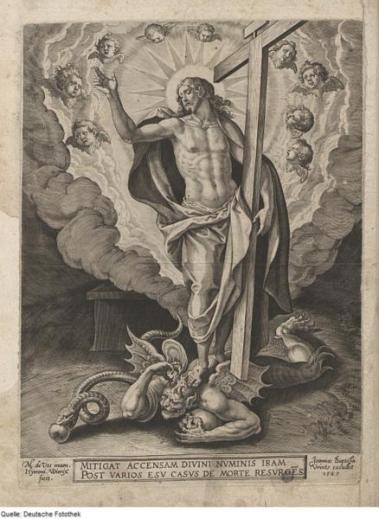
Scene 1 & 2: Creation and Fall
The Bible is a true story about God making the world, man messing it up, and God becoming a man to fix the world by not messing up. It is a story of Eden—exile—repeat. It is not until the true Adam, the true and righteous Son of God comes that this process is put to an end. All of Christ’s predeceases fell short; Adam, Noah, Abraham, Saul, David, Solomon, and the lambs, priests, and prophets could not fill Christ’s rule.
From the beginning of time and the beginning of God’s word, the Word has been a prominent character in the script of history (Gen. 1:1ff; Jn. 1:1ff). At first, the promised offspring (Gen. 3:15) is vague, in fact, Eve rejoiced because she thought she had the offspring (4:1) but it was all for naught for Cain was of the offspring of the serpent and killed his brother. However, now we have seen that which even the prophets longed to look (Matt. 13:17), we know that all Scripture finds its fulfillment in Jesus who is the long awaited Messiah (2 Cor. 1:20).
When Jesus came the first time, He had no beauty or majesty (Is. 53:2). When He comes again His face will shine like the sun in full strength (Rev. 1:16). We were cast out of the Garden in the beginning but as Jesus said to the thief on the cross, we will be with Him in paradise in the end. Jesus is the linchpin among all the cogs of Scripture. “The trajectory of the arrow shot from the Hebrew Scriptures finds its target (fulfillment) in Jesus of Nazareth.”[1]
The Storyline of the Scripture has all sorts of twists and turns, conflicts and resolutions, but the overarching story can be summed up: creation, fall, redemption, and new creation.
Through the creation part of the narrative we see that God made everything (Gen. 1:1ff; Jn. 1:1-3) and it was good (Gen. 1:4; 10; 12; 18; 21; 25; 31). There was no sin, no death, and no problems before man sinned. Man had perfect fellowship with God (cf. Gen. 3:8).[2]
However, the plot thickens. A cosmic problem is introduced. Through man’s fall, we see the collapse of the creation, which explains why everything is no longer good. Man disobeyed and rebelled (Gen. 2:16-17; 3:6) and this brought spiritual and physical death (Gen. 2:17; 3:19), pain (3:16-17), difficulties (3:18-19), and separation from God (3:23-24). This is the bad news. We deserve death and hell.
Scene 3 & 4: Redemption and New Creation
This is not the end of the story. There is good news. Even at the beginning of the story, God promised that He would send someone (i.e. the Messiah/Christ) to defeat the “bad guy” (i.e. Satan) of the story (cf. Gen 3:15). In a similar scene, seen throughout the Bible, man’s nemesis is once again at it with him. Satan is tempting not Adam but the second Adam in the wilderness (Luke 4). However, unlike Adam in paradise, the second Adam does not give into the serpent’s temptation, although He is in the desert. Jesus was tempted in every way that Adam was, and we are, yet He did not sin (Heb. 4:15) and still He bore our sin upon Himself.
Jesus became man so “that through death he might destroy the one who has the power over death, that is, the devil” (Heb. 2:14). Jesus’ heel was “bruised” at the cross but through that same cross, where He received the bruising, He struck the serpent with a definitive death blow to the head (cf. Gen. 3:15). From the cross, Jesus cried out, “It is finished!” In Jesus’ death, the devil, and death are defeated! He has delivered us from the domain of darkness (Col. 1:13). He disarmed the demonic rulers and authorities and put them to open shame, by triumphing over them through the cross (Col. 2:15).
Jesus is the Promised One (Luke 24:27, 44-46; Acts 13:23, 27; 17:3; Rom. 1:2-4; 1 Cor. 15:3-4;) who brings the redemption of all things (cf. Rom. 5:10; Col. 1:20; Titus 2:14; Gal. 3:13; Eph. 1:7, 10).[3] He secures for us an eternal redemption by means of His own blood (Heb. 9:12). Jesus Christ is the solution to the problem; He takes our sin, our problem, upon Himself on the cross. This is the good news; Jesus is the good news![4] Jesus reversed the curse of sin by becoming a curse for us (Gal. 3:13). Jesus was cast out of the garden so that we could be welcomed back in. Through the one man Adam we all have condemnation yet through the one Man Jesus Christ the grace of God has abounded for many (Rom. 5:12-21).We deserved to be crushed under God’s wrath because of our sin but instead Jesus was crushed in our place (Is. 52:13-53:12). Jesus is the solution to our problem of sin, the sole solution (Jn. 14:6; Act. 4:12). Jesus is the Lamb of God, without blemish, that takes away the sin of the world (John 1:29; Heb. 9:14)!
Jesus is the good news but the good news is not static it goes on and on and on; those in Christ live happily-ever-after (see endnote 3). In contrast, God “will gather out of his kingdom all causes of sin and all law-breakers” (Matt. 13:41) and cast them into the pit of eternal fire (Rev. 20:14-15). “They will suffer the punishment of eternal destruction, away from the presence of the Lord and from the glory of his might” (2 Thess. 1:9). However, for those in Christ the story of history will have a happy ending (Rom. 8:29-39).[5]
I concur with what C.S. Lewis says in The Last Battle,
“We can most truly say that they all lived happily ever after. But for them it was only the beginning of the real story. All their life in this world and all their adventures in Narnia had only been the cover and the title page: now at last they were beginning Chapter One of the Great Story which no one on earth has read: which goes on forever: in which every chapter is better than the one before.”[6]
I believe we, upon arrival to the new Eden, will exclaim with Lewis’ Unicorn:
“I have come home at last! This is my real country! I belong here. This is the land I have been looking for all my life, though I never knew it to now. The reason why we loved the old Narnia [“old creation”] is that it sometime looked a little like this.”[7]
Through Jesus the Christ we have the unwavering hope of a new creation (2 Peter 3:13). “The creation was subjected to futility” in Adam (Gen. 317-19) but in Christ “the creation itself will be set free from its bondage to corruption and obtain the freedom of the glory of the children of God” (Rom. 8:20-21). As Isaac Watts put it in “Joy to the World,”
“No more let sins and sorrows grow,
Nor thorns infest the ground;
He comes to make His blessings flow
Far as the curse is found,
Far as the curse is found.”
The problem (all of them!) will be fixed and there will be no more sin (Rev. 21:27; 22:3; Matt. 13:41). Everything will be more right than it was ever wrong. We will see that God did, in fact, work all things together for good (Rom. 8:28). Christ will make a new creation and we will be like Him (1 Jn. 3:2; Rom. 8:29; 2 Peter 1:4). “Just as we have borne the image of the man of dust, we shall also bear the image of the man of heaven” (1 Cor. 15:49). God will fulfill our deepest desires and we will finally love the LORD our God with all our heart, soul, mind, and strength when we receive our glorified bodies (Deut. 30:6; Jer. 31:33-34; 32:40; Phil. 3:20-21)! There will be no more pain or problems and God will wipe away all our tears (Rev. 7:17; 21:4). We will once again be in Paradise, the New Jerusalem, and we will have fellowship with God (Rev. 21:3)![8]
Epilogue
This story by its nature, by the fact that it claims to be true, does not leave us alone but calls for a response. We can receive this story or we can reject it outright. God can rewrite us, as it were, into His marvelous script or He can cast us, the unruly “cast,” into hell. We must respond to this story, will we respond rightly? Will we strive to obey the God who reveals Himself?
I can’t say it better than Michael Hortan. Those of us who have believed this story and are found in Christ,
“God has ‘rescripted’ us and recast us in his story. No longer trying to fit ‘God’ or the gods into our own life story, we become characters in his unfolding drama: seated at the table with Abraham, Isaac, and Jacob. From God’s perspective, our own script was wrong. Regardless of the role we thought we had, our inherited character was that of ‘strangers and to the covenants of promise” who were ‘having no hope … in the world’ (Eph. 2:12). But God calls us, as he did Abram and the disciples, away from our dead-end character. In God’s, our old character dies and a new character emerges who is now given a supporting role in a plot that centers on Christ. As the casting director, the Spirit gives us not only a new identity with new clothes but a new script, with new lines.”[9]
This is the gospel, the story of all the woes of existence finding there solution in Christ.
________________________________________________
[1] Emlet, CrossTalk, 47.
[2] Perfect in sense but not like it will be in the new creation; Adam and Eve related to God as creation to Creator and we will relate to God in the new creation as the redeemed to the Redeemer. Therefore, we will enjoy a consummated perfect fellowship with God.
[3] Jesus has inaugurated the Kingdom of God but there is an already/not yet aspect to it. Although the Kingdom has been ushered in through Christ it will not reach its zenith until Christ’s second coming and the culmination of the new creation. Jesus has saved us and “put away sin by the sacrifice of Himself” (Heb. 9:26) and yet there is still a future aspect to our salvation; He will save us (v. 28).
[4] Luke 2:10-11 says, “I bring you good news of great joy that will be for all people… a Savior, who is Christ the Lord” (or even, LORD!). Matthew 1:24 says, Immanuel (which means, God with us)! Notice the genealogies point to Jesus as being the Christ that was promised to defeat “the Serpent of old” (Matt. 1:1-18; Luke 3:23-38 says, “Jesus… the son of Adam” who will crush Satan under His feet as promised).
[5] Sadly, those who do not have faith in Jesus Christ will be cast into the lake of eternal fire (Dan. 12:2; Matt. 25:46; John 5:28-29; Acts 24:15; Rev. 20:12-13). It should be understood that this is part of God’s reconciliation of the world, but not in redemption, but in recompense. The story for those in Christ is happily-ever-after, even more so than can be imagined, but for those not in Christ the story does not end nicely; in fact, it never ends, but is incomprehensible torment-ever-after. We should never take this part of the story lightly but we must seek to spread the good message of Christ and the hope of a “happily-ever-after.” Look at the difference between God’s people in Isaiah 65:17-25 and the rebellious in 66:24.
[6] C.S. Lewis, The Last Battle (New York: NY: Harper Collins, 2002), 228.
[7] Ibid., 213.
[8] Jesus is surly coming soon (Rev. 22:7, 20), may we be found ready (v. 12; 3:23; Luke 12:47-48; Matt. 16:27; 1 Cor. 3:14-15) and may we respond with John: “Come, Lord Jesus!”
[9] Michael Hortan, The Christian Faith: A Systematic Theology for Pilgrims on the Way, 643.
Biblical Mysticism?

A Mystic’s Meter
The rhythms of a mystic’s faith are not drudgery upon duty and duty upon drudgery. The mystic’s meter, rather, is delight. Delight in a God they know. Yet, as much freedom as rhythm and cadence have, there is still structure. So, I want to look at the structure of the meter. What cadence does knowing God take?
Is Mysticism Wrong?
Is mysticism wrong? I think a lot depends on how it is defined. If you define mysticism as subjective vain emotional longings, then yes it is wrong. If you define mysticism as unbiblical, then yes it is wrong. If mysticism is set on anything else then God in the face of Christ (2 Cor. 4:6), then yes, mysticism is wrong.
Mysticism, however, is not wrong in itself. It is the focus that can be wrong. It is the information, or perhaps more often, the lack of information, that can be wrong.
Don Whitney instructs us:
“Don’t be deceived by a complex spirituality that gives the appearance of wisdom but doesn’t start with ‘Christ, in whom are hidden all the treasures of wisdom and knowledge’ (Colossians 2:3). And don’t become entangled in any spiritual practices that sound good but incline your mind and heart away from the ‘things that are above’” (“Practice True Spirituality”).[1]
Not All Mysticism is Created Equal
Mysticism does not have “inalienable rights.” That is, not all mysticism is created equal.
Frist, some mysticism is based on illusionary dreams and speculation. However, there is a problem with this (1 Jn. 4:1). Satan parades himself around like an angel of light (2 Cor. 11:14) so that he may devoir like a lion (1 Pet. 5:8). Subjective experiences alone cannot be our guide.[2]
Second, some mysticism contradicts the Word of God. Any word that contradicts His Word should not be our word. God is our authority. And His Word is our authority. There are many other good and important texts but they are not ultimate. They are subordinate.
Third, any form of mysticism that does not prize and exalt Messiah and His work is defective (1 Jn. 4:2). Mysticism is about knowing God. Jesus the Messiah is God in the flesh (Jn. 1:14). It is through Him that we can know God (e.g. 2 Cor. 4:4); that we can go boldly before the throne of grace (Heb. 4:16). Jesus reveals God. If we conceal Him, belittle Him, or don’t rightfully honor Him, we are not practicing mysticism but anti-mysticism; we are concealing God.
Good Mysticism
Mysticism, I believe, at it’s heart, is about knowing God deeply and experientially.[3] So then, how do we know God? We know Him through His Spirit, amen![4] And the Spirit, most typically, uses the means of His own inspired Word, the Bible. We meditate on His Word, as well as other good texts, and God, by the Spirit, reveals Himself to us. Good Christian mysticism thus relies on: 1) The Spirit for illumination, not vain visions or the like (Rom. 8:26; 1 Cor. 2:12-16; Eph. 3:14-19; 1 Jn. 4:1); 2) The inspired Word of God, not primarily other sources (2 Tim. 3:16; 2 Pet. 1:3-4); 3) The Incarnate Son to show us God, and not visions (Jn. 1:1-14; 14:6; 2 Cor. 4:4; Heb. 1:3).
Good biblical mysticism (some may prefer “spirituality”) is about having a deeper sense of God’s truth. It’s seeking for God to open our eyes that we would be deeply impacted by His truth (Ps. 119:18). It is about knowing God’s love that surpasses knowledge that we may be filled with all the fullness of God (Eph. 3:19). It’s about being renewed by the transformation of our minds (Rom. 12:2; Eph. 4:23-24; Col. 3:10). It is about revival.
It short, mysticism does not seek mere knowledge. It seeks to also experience the truth of that knowledge. So, it seeks to taste the sweetness, and not just know hypothetically and intellectually that something is sweet.
Jonathan Edwards words are enlightening:
“There is such a thing as a spiritual and divine light immediately imparted to the soul by God, of a different nature from any that is obtained by natural means… This spiritual light that I am speaking of, is quite a different thing from inspiration: it reveals no new doctrine, it suggests no new proposition to the mind, it teaches no new thing of God, or Christ, or another world, not taught in the Bible, but only gives a due apprehension of those things that are taught in the word of God… There is a difference between having an opinion, that God is holy and gracious, and having a sense of the loveliness and beauty of that holiness and grace. There is a difference between having a rational judgment that honey is sweet, and having a sense of its sweetness.”[5]
Mystics, so to speak, not only want to know that something is sweet, they want to taste it’s sweetness.
A.W. Tozer: A Good Example of a Good Mystic
James L. Snyder points out that “the word ‘mystic’ did not scare Tozer. The term ‘mysticism’ simply means ‘the practice of the presence of God,’ the belief that the heart can commune with God directly, moment by moment, without the aid of outward ritual. He saw this belief at the very core of real Christianity, the sweetest and most soul-satisfying experience a child of God can know.”[6]
Tozer rightly reminds us—how sad that we need reminded!—that salvation is “not an end but an inception, for now begins the glorious pursuit, the heart’s happy exploration of the infinite riches of the Godhead.”[7] Conversion is meant to lead to communion. Orthodoxy must, if it is to be true orthodoxy, result in doxology. “’You can be straight as a gun barrel theologically,’ Tozer often remarked, ‘and as empty as one spiritually.’”[8]
The true Christian mystic should be heat and light. Heart, head, and hand. He should love the LORD with all that he is, his heart, soul, mind and strength; and his neighbor as himself.
Conclusion
So, you might say, a mystic’s meter, what gives him his aesthetic poetry and music, is knowing God by the Spirit, though the Word, and in Christ. This is where he can find true delight. He can know God and true joy in this rhythmic triad; instead of the clashing and subjective thrashings found elsewhere. A mystic’s meter in sum, should be rhythmic, not chaotic. It should have a distinguished element to it, not destructive and haphazard vague desires. God has, Paul reminds us, revealed Himself; we don’t worship Him as unknown, but as known (Acts 17:23). We can know God truly, if not fully.
Will you seek to know God? Will you dance to the melodious meter? Will you use the means He has given you? Will you be a Christian mystic?
_______________________________________
[1] Don Whitney, “Practice True Spirituality.”
[2] Let it be noted that exceptional things may likely still happen. See 2 Cor. 12:2-4, for example.
[3] Mysticism is “the belief and practice that seeks a personal, experiential… knowledge of God by means of a direct, nonabstract and loving encounter or union with God. Although a psychophysical dimension (including visions, dreams or special revelation) may be part of the mystical experience, this dimension is not necessary. Instead, Christian mystics generally teach that the true test of the experience is the resulting fruit of the Spirit in the mystic’s life” (Pocket Dictionary of Theological Terms, 81). “The mystic,” Tozer said, “differs from the ordinary orthodox Christian only because he experiences his faith down in the depths of his sentient being while the other does not. He is quietly, deeply and sometimes almost ecstatically aware of the presence of God in his own nature and in the world around him” (The Christian Book of Mystical Verse).
[4] Mysticism, at least, true accurate mysticism, can only take place after the regenerating work of the Holy Spirit (see Jn. 3:3).
[5] Jonathan Edwards, “A Divine and Supernatural Light”).
[6] The Life of A.W. Tozer: In Pursuit of God, 155.
[7] The Pursuit of God, 13 cf. Jn. 17:3. Brother Lawrence reminds us that “Many do not advance in the Christian progress because they stick in penances and particular exercises, while they neglect the love of God, which is the end” (Brother Lawrence, The Practice of the Presence of God, 24).
[8] The Life of A.W. Tozer: In Pursuit of God, 155.
The Grave Necessity for a Hideous Hell

Hell is unashamedly a dreadful doctrine; yet, as we will see, a necessary doctrine.[1] C. S. Lewis’ said,
“There is no doctrine which I would more willingly remove from Christianity than this, if it lay in my power. But it has the full support of Scripture and, specially, of Our Lord’s own words; it has always been held by Christendom; and it has the support of reason.”[2]
We don’t desire controversy for the sake of controversy.[3] Rather, we want to be convinced biblically,[4] logically, and practically that hell is a necessary doctrine.
It is important before considering the evidence to think about our a priori assumptions. For instance, in Harper Lee’s book To Kill a Mocking Bird the correct verdict could not have been given in that context (i.e. Maycomb’s racist white community) because people excluded the possibility that anyone other than the black man, Tom Robinson, was guilty. Despite the strong evidence that Atticus Finch put forward Tom was convicted. Why? Because people were prejudice against the truth. The people’s a priori assumption, that Tom was guilty because he’s black, led them to not honestly look at the evidence and pronounce the correct verdict.
This sadly still happens. It happens in the court of law and it happens when people consider other forms of evidence. This is especially likely to occur when emotional issues are involved. So when people consider what the Bible teaches on certain subjects they come with tinted glasses. One theologian, for instance, admits that he “was led to question the traditional belief in everlasting conscious torment because of moral revulsion and broader theological considerations, not first of all on scriptural grounds.”[6]
John Stott believed in annihilationism. Stott, by his own admission, left the ranks of what is “traditional orthodoxy for most of the church fathers, the medieval theological and the Reformers.” Even as Stott emotionally wrestled with the doctrine of hell he said, “our emotions are a fluctuating, unreliable guide to truth and must not be exalted to the place of supreme authority in determining it. As a committed evangelical, my question must be—and is—not what does my heart tell me, but what does God’s word say?”[7]
As we look at the wrath of God we look from a certain vantage point in the cultural climate in which we live. This inevitably shades our perception of things. One book I read told of a Korean man that struggled not with the wrath of God (and even hell) but with the love and grace of God.[8] This was because he had seen horrible wickedness and clearly understood that wickedness deserves justice.
Timothy Keller tells about a woman that told him that the very idea of a judging God was offensive. Keller responded by asking why she wasn’t offended by the idea of a forgiving God. The woman was puzzled so Keller continued:
“’I respectfully urge you to consider your cultural location when you find the Christian teaching about hell offensive.’ …Westerns get upset by the Christian doctrine of hell, but they find Biblical teaching about turning the other cheek and forgiving enemies appealing. I then asked her to consider how someone from a very different culture sees Christianity. In traditional societies the teaching about ‘turning the other cheek’ makes absolutely no sense. It offends people’s deepest instincts about what is right. For them the doctrine of judgment, however, is no problem at all. That society is repulsed by aspects of Christianity that Western people enjoy, and are attracted by the aspects that secular Westerns can’t stand.”[9]
Many people are chronological or geographical snobs. That is, they have baseless biases and think their place in space and time has the unique vantage point to decipher morals, values, and truth claims of people in different times and cultures than their own. However, why should one think that non-Western cultures are inferior to our own?
The various aspects of the unpopularity of Christianity actually show that it is transcultural. Keller says,
“For the sake of argument, let’s imagine that Christianity is not the product of any one culture but is actually the transcultural truth of God. If that were the case we would expect that it would contradict and offend every human culture at some point, because human cultures are ever-changing and imperfect. If Christianity were the truth it would have to be offending and correcting your thinking at some place. Maybe this is the place, the Christian doctrine of divine judgment.”[10]
Let’s, as Keller says, for the sake of argument, listen to the transcultural truth of Scripture. Let’s not be biased. Let’s take our tinted glasses off and seek to see why hell is necessary.
He is there and He is not Silent

He is there and He is not silent. Of course, both these facts are immensely relevant to our discussion of the attributes of God. If God was not, or was silent, we could speak nothing of Him. But God is.[1] But, that is not all, He speaks. He has revealed Himself! In one sense, it is right to say that He didn’t need to do this.[2]
God is! He exists. He made the world—worlds!—and holds all things together (Col. 1:17; Heb. 1:3). But that is not all, He shows Himself—Himself—to us. He is not silent.
He paints the sky for us. Not once a day but twice a day. It will take a genius a lifetime to paint his masterpiece. God, with relish, paints two each day. He needs neither brush nor canvas. He paints with matter. However, that’s just one way of looking at it, for in actuality, He is continuously painting a sunset and sunrise, somewhere.
What’s more, God speaks not merely through creation but He condescends and speaks to creation. We know God through His Word. We know Him must fully through the Word become flesh (cf. Jn. 1:1-14). Contra agnosticism and deism, God can and has condescended and revealed Himself. He can do this because He is Lord of all creation.[3] It certainly is not beyond His power.
General Revelation
It says in Romans 1:18-20 that “the wrath of God is revealed from heaven… for His invisible attributes… have been clearly perceived.” What does this mean? This means that we can clearly see that there is a God from creation, even more than that, some of His attributes are made visible from His creation. “Namely, his eternal power and divine nature.” So we can perceive from creation God’s innate divinity and his everlasting power (see also Ps. 19:1-6).
So what can we understand about God from creation alone; from general revelation? We can first see God’s power. The God who made this immeasurable universe must himself be endless. The God who made this world with all its endless mysteries must Himself be majestic and divine. We can also see that God’s wrath is revealed.
I use to be a security officer. One night when I was doing my rounds and walking around the perimeter of the fence I heard a weird noise. I was not sure what it was. I was all by myself and my mind was telling me that all sorts of ill fates awaited me. However, I had to do my job so I continued to investigate the strange noise.
The noise reminded me of some sort of constant rumbling but of what I could not be sure. I kept walking toward the noise. I walked as far as I could, but eventually the fence stopped me. I was not a hundred percent sure what the noise was. It sounded like a fountain or a stream. But why had I never noticed it before? Was it a new fountain? That seemed unlikely. Or perhaps a man on a four-wheeler was planning on breaking in?
I don’t know. And the point is, I couldn’t know. My perception was obstructed. I could never be sure what I heard. I had evidence that something was there and I could even deduce things about it from what I heard but I could never be sure about it.
It is this way with general revelation. We can know something is out there but we are limited in our understanding of that something because we are fenced in. However, the good news is that this something has revealed itself, Himself, to us through the Bible; through special revelation. The Bible allows us to go past the fence and behold God.
While there are similarities between general and special revelation there is a chasm of difference. With general revelation alone there is only condemnation and hopelessness. Whereas with special revelation, there is a chance for reconciliation and hope in Christ.[4] Just as if we read merely Romans 1:18-32 we see man’s shortcoming and God’s wrath, we do not see hope. It is the same if one sees merely general revelation we cannot ultimately have real hope. However, if we read Romans 1:18-32 in context we will read verse 16 and realize that we can have hope in the gospel and we can see that it is through the gospel, though special revelation alone, that one can have salvation.
Special Revelation
Some seek after a god and imagine vainly what he would be like (Acts 17:27) but we rest in the fact that God has revealed Himself, He has spoken (e.g. Deut. 5:23-24; 2 Tim. 3:16; 2 Peter 1:16-21; Heb. 1:1-2). We can know Him, the all-powerful God. Our knowledge cannot be exhaustive, yet we can truly know, but not wholly. Not yet, not for all eternity, for God is infinite and the finite cannot obtain the infinite, even after eons in pursuit. So our knowledge and love will grow, but grow eternally, for we cannot reach the end of God’s glory. So, yes we can know God! And truly! But not finally wholly, but this is part of the superb glory and wonder of Yahweh, and indeed heaven.
Jesus, the Revelation of God in Flesh
The LORD wrote the word to reveal Himself, yet in the later days the Word—God—became flesh and dwelt (tabernacled) among us and we have seen His glory (see Jn. 1:14; Heb. 1:1-2). The infinite, inconceivable, was conceived! The Lord of all nature formed His own human nature in His mother’s womb. The nails that held Jesus on the tree were upheld by His own hand on the molecular level (see Heb. 1:3).
What Christ did on earth—loved, healed, sought sinners, condemned Pharisees, told us of God’s wrath, died for sinners, etc.—shows us God and His priorities (cf. Jn. 14:9). Jesus, God in flesh, He who is infinite in perfection, reached out and touched a leper. What an amazing thought! The LORD loves us. The LORD condescends and reaches out to us in love.
Jesus manifested the glory of God. Jesus tabernacled among us, He showed us Himself in flesh.[5] Yet, that still does not mean that we have seen all of God or know God exhaustively. Heaven will be an endless revealing of the glory of God. Remember the response that humans give angels in Scripture? Humans sought to bow in worship. Yea, angels fall prostrate before Yahweh and cry, “Holy, holy, holy.” We for all eternity will see more and more and more of God’s glory manifested and thus will increase in our ecstasy of worship. This sounds strange, I realize, yet this is what we all truly desire. I, also, do not pretend to know how it will unfold. Yet, I know it will be better than anything we can think or imagine, as Paul the Apostle says.
In Scripture, it seems to me that with each epoch of revelation from God there is a new crescendo of praise that God’s people are able to reach. In the garden, though Adam and Eve saw God they did not see Him as we do, as Savior. We have seen that which the prophets longed to look, which is a vast blessing, and should cause us to cry out in praise, yet what was the response of the saints in John’s vision from Patmos? From Genesis to Revelation we see in escalation of praise. This, I believe, is because we see more of God manifested and thus praise more. I believe this will go on and on for eternity. Seeing more, loving more, seeing more, loving more. When talking about addictions, there is what is called, “the law of diminishing returns.” That is, once someone has reached a certain “high” they no longer are happy with that high but desire a new high. This for the addict has, literally, grave consequences. However, for the saint this is glorious! The “high” (excuse the crass example) we seek is ever available, will ever increase, and will never harm![6]
Practical Application of this Doctrine
If we know of God in our heads, that is, a self-conceived notion of Him but not the real God, not the God of the Bible, then we will become futile in our thinking and our foolish hearts will be darkened (Rom. 1:21). A wrong view of God leads necessarily to impurity (v. 24), dishonorable passions (v. 26), and a debased mind (v. 28). We must truly know God and honor Him as God. We will not rightly honor Him if we do not rightly know Him. It may seem as though this topic is not applicable but it certainly is. A. W. Tozer put it well in his classic work, The Knowledge of the Holy,
“It is impossible to keep our moral practices sound and our inward attitudes right while our idea of God is erroneous or inadequate. If we would bring back spiritual power to our lives, we must begin to think of God more nearly as He is.”[7]
Now may we praise God for graciously revealing Himself to us—His power and majesty through creation, His character through His word, and who He is, expressed most definitively in, the knowledge of the glory of God in the face of Jesus Christ.
______________________________
[1] Here are some helpful and popular arguments for the existence of God from William Lane Craig. And here are some more arguments for the existence of God.
[2] Yet, in another sense, He did need to reveal Himself. And that is because of His character, not because of some outside constraining force.
[3] See for example John Frame, The Doctrine of God, 80-115.
[4] Calvin says, “there is no righteousness except what is conferred, or comes through the gospel; for he shows that without this all men are condemned: by it alone there is salvation. John Calvin The Romans Trans. by John Owen (Grand Rapids, Michigan Wm B. Eerdmans Publishing Co, 1948), 67.
[5] It must not be forgotten that not only do we see Jesus, the Second Person of the Trinity, in Scripture, but Jesus sent a Helper to us; the Holy Spirit, the Third Person of the Trinity (Jn. 14:16-17). Our bodies, we are told, are temples for the Holy Spirit (1 Cor. 6:19-20). So we do not just learn of God externally but the Spirit bears witness and deeply communicates with us internally (cf. Rom. 8:16, 26).
[6] I believe our worship as individuals increases the more special and general revelation that we receive; or at least should. Thus, I believe that we should be the “worhipingist” people of all time. This is because we can see the glory of God proclaimed by the use of the Hubble Telescope (soon to be Webb) and because we have more Scripture then past generations and we have many more resources available to truly understand the text.
[7] A. W. Tozer, The Knowledge of the Holy The Attributes of God: Their Meaning in the Christian Life. (Lincoln, NE: Back to the Bible Broadcast, 1961), 6. I can of many examples to demonstrate this. The first one that comes to mind is Greek Mythology. The so-called gods and goddess were more crass then the whole of humanity.
Politics?

Christians and politics?
How can we know as Christians if we should be involved in politics or even care about politics? Does the Bible teach us anything regarding this question? The Bible is our authority “for faith and practice.” So, yes, the Bible does address politics. Which I personally thank God for, because without God’s Word I’d be on the metaphorical back-roads of eastern Kentucky without a working GPS.
What does Scripture teach us? It teaches, “Significant Christian influence.”[1] The Bible does not tell us what exactly each individual must do. However, we can establish principals that help guide us through the maze that is politics. First, we must realize that we all have different callings, we are not all called to be a William Wilberforce. However, we are called to have significant Christian influence. Ok, you may ask, but where do we see this in Scripture. I am glad you asked.
We see many examples of this in both the New Testament (NT) and Old Testament (OT). Most of the prophets in the OT addressed the sin of Israel and even the sin of other nations. Daniel had a lot of influence in a secular government and used it well (Dan. 4:27). Jeremiah told the Jewish exiles to have a good influence on the city in which they lived. This would surly mean influencing laws and the government within that city (Jer. 29:7). Remember, also, the role that Joseph had? He had a huge influence on the government (Gen. 41:37-45; 42:6; 45:8-9, 26) and, of course, there’s Moses. We should also note Nehemiah (Neh. 1:1), Mordecai (Esther 10:3 and also 9:4), and Esther (Esther 5:1-8; 7:1-6; 8:3-13; 9:12-15, 20-32). Thus, we see a precedence for political involvement in the OT.
In the NT, we also see political involvement. I think of John the Baptizer and the Apostle Paul for example (Mark 6:14-20; Matt. 14:1-12; Acts 16:35-39; 24:25; 1 Tim. 2:1-4 also see Rom. 13 and 1 Peter 2). Wayne Grudem rightly says, “Influencing government for good on the basis of the wisdom found in God’s own word is a theme that runs throughout the entire Bible.”[2]
The overarching principle we see is that we are called to political involvement, though this is to varying degrees. We are not all called to be the President, congressmen (Excuses me, “congressional representatives,” I should be politically correct here!), or mayor, and I, for one, thank God for that! But that does not mean politics don’t have their place and importance, they do. We as Christian Americans have ample opportunity and thus responsibility to effect good change in this country. And we, unlike Daniel’s friends, won’t be thrown into a big furnace for it (yet!).
I, obviously, can’t tell you who or what to vote for on certain things but there is clear scriptural warrant for us to vote since we have the freedom to and to vote in a way that accords with the teachings of Scripture. May we be faithful with the stewardship that God has given to us as Americans who have such freedom, indeed a responsibility, to do good to God’s glory.
For further study I recommend Russel Moore’s book Onward and Wayne Grudem’s book Politics According to the Bible.
________________________________________________________
[1] See Wayne Grudem, Politics According to the Bible: A Comprehensive Resource for Understanding Modern Political Issues in Light of Scripture (Grand Rapids: Zondervan, 2010) esp. 58-62.
[2] Ibid., 61.



 in X
in X 