Free e-Book
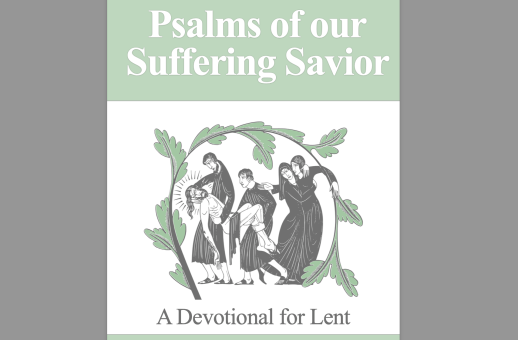
In preparation for Easter, I put together a devotional book. If you don’t have something to go through, I encourage you to check it out.
Here’s the link to the free e-book, I hope you find it helpful: Psalms of Our Suffering Savior
Observations from a Hospice Chaplain

It is counterintuitive, but one of the wisdom literature books in the Bible, Ecclesiastes, says it’s better to go to a funeral than a feast. Why would it be better to go to a funeral than a feast? Because a funeral is the destination of all people, the living should consider that reality and take it to heart.
As a hospice chaplain, I think about the reality of death. Our culture often doesn’t. We live in a “society that often isolates death and dying from the flow of daily life, unlike almost every other society in history… The modern West is an anomaly in this regard: most ages and cultures have lived much closer to the fact of human mortality.”[1]
There are various benefits to being aware of the reality of death. For one, death is a reality. Future drivers ideally care at least a little bit about their education on how to drive. We, all the time, are preparing for things that are inevitable in the future. It makes sense for us to prepare for death, as well. As the psalmist says, our years are limited, “so teach us to number our days that we may get a heart of wisdom” (Ps. 90:12).
𝟏) 𝐖𝐞 𝐚𝐫𝐞 𝐢𝐧 𝐏𝐫𝐨𝐜𝐞𝐬𝐬.
Little everyday decisions shape us into the type of people we will be. We are in the process of becoming. Death reminds us that the way we live every day matters.
Be aware of your trajectory.
𝟐) 𝐏𝐞𝐫𝐬𝐩𝐞𝐜𝐭𝐢𝐯𝐞 𝐌𝐚𝐭𝐭𝐞𝐫𝐬.
“A joyful heart is good medicine, but a crushed spirit dries up the bones” (Proverbs 17:22). I have definitely seen this lived out. Our attitude and perspective matter in life and affect the way we die.
Cultivate a heart of thanksgiving.
𝟑) 𝐋𝐢𝐯𝐞 𝐰𝐢𝐭𝐡 𝐭𝐡𝐞 𝐄𝐧𝐝 𝐢𝐧 𝐌𝐢𝐧𝐝.
I don’t think many people will wish they had spent more time on their iPhones when they are lying on their deathbeds. Ask yourself: “Am I valuing what is valuable?”
Don’t waste your time (what your life is made up of!) on pointless pursuits.
𝟒) 𝐑𝐞𝐥𝐚𝐭𝐢𝐨𝐧𝐬𝐡𝐢𝐩𝐬 𝐌𝐚𝐭𝐭𝐞𝐫.
On our deathbed, what will matter most is not the plaques on our walls or the money in our bank account. It is the relationships made, the people we invested in, and the people standing around our bed. Vivek H. Murthy, who served as the surgeon general of the United States, said, “When I think back on the patients I cared for in their dying days,… their status in the eyes of society were never the yardsticks by which they measured a meaningful life. What they talked about were relationships. The ones that brought them great joy. The relationships they wish they’d been more present for. The ones that broke their hearts. In the final moments, when only the most meaningful strands of life remain, it’s the human connections that rise to the top.”[2]
Make time for relationships even if it means less money.
𝟓) 𝐃𝐢𝐠𝐧𝐢𝐭𝐲 𝐌𝐚𝐭𝐭𝐞𝐫𝐬.
Christians specifically believe that “what is suffered by one can be suffered by all, and that every body is a fragile temple of God’s Spirit and worthy of care.”[3] The dignity of every person, even in their dying days, is a precious and important value. And caring for people and helping them die well matters. The truth is, dying for most people will be messy in a biological sense. However, those with knowledge and skill can provide compassionate care to the bodily needs of dying persons. I have been honored to see hospice nurses and aids provide this tenderhearted care.
Honor others (even if they’re radically different or difficult).
𝟔) 𝐏𝐞𝐨𝐩𝐥𝐞 𝐚𝐫𝐞 𝐏𝐞𝐨𝐩𝐥𝐞.
We all die in the same way. No matter how competent, tough, resilient, and successful, we will need help. We are all human. “Nothing human is alien; no joy and no sorrow, no way of living and no way of dying.”[4] As John Donne, the pastor poet, said, “Death comes equally to us all, and makes us all equal when it comes.” Or as Jerome, the theologian, said, “He whom we look down upon, whom we cannot bear to see, the very sight of whom causes us to vomit, is the same as we are, formed with us from the self-same clay, compacted of the same elements. Whatever he suffers, we also can suffer.”
Don’t assume that something bad that happens to someone else, can’t happen to you; it can.
𝟕) 𝐓𝐡𝐞𝐫𝐞 𝐢𝐬 𝐦𝐨𝐫𝐞 𝐭𝐨 𝐏𝐞𝐨𝐩𝐥𝐞 𝐭𝐡𝐚𝐧 𝐢𝐬 𝐕𝐢𝐬𝐢𝐛𝐥𝐞.
There’s a lot more to everyone around us if we have eyes to see and ears to hear. What we see is just the tip of the iceberg; everyone has a lot under the surface, a history.
Take time to get to know people and don’t prejudge.
𝟖) 𝐓𝐡𝐞𝐫𝐞 𝐢𝐬 𝐚 𝐓𝐢𝐦𝐞 𝐭𝐨 𝐛𝐞 𝐒𝐚𝐝.
“There is a time to weep, and a time to laugh; a time to mourn, and a time to dance” (Ecclesiastes 3:4). Grief is the price we pay for love. Tears tell a tale of love.
When appropriate lean into both sorrow and joy, they’re important and related.
𝟗) 𝐏𝐫𝐞𝐬𝐞𝐧𝐜𝐞 𝐌𝐚𝐭𝐭𝐞𝐫𝐬.
People respond to the presence of people. Physical presence matters. I think of 2 John 12: “Though I have much to write to you, I would rather not use paper and ink. Instead I hope to come to you and talk face to face, so that our joy may be complete.” FaceTime is great but it can’t replace face time.
When present be present, and prioritize physical presence over technological alternatives.
𝟏𝟎) 𝐃𝐨𝐧’𝐭 𝐰𝐚𝐢𝐭 𝐭𝐨 𝐋𝐢𝐯𝐞.
Don’t wait to rest and relax until you retire. I’ve met people who have said, “When I retire I will ___.” But, when they retired, they got the diagnosis.
Remember you’re going to die, and you don’t know when, so live while you’re alive.
𝟏𝟏) 𝐎𝐮𝐫 𝐁𝐨𝐝𝐢𝐞𝐬 𝐖𝐢𝐥𝐥 𝐅𝐚𝐢𝐥.
If we live long enough, no matter who we are, our bodies will become frail and fail. No matter how healthy, no matter how strong, our bodies can and will fail; and they can fail when least expected.
Take care of your body but know there will come a day when it will fail more and more.
𝟏𝟐) 𝐌𝐞𝐧𝐝 𝐰𝐡𝐚𝐭 𝐧𝐞𝐞𝐝𝐬 𝐌𝐞𝐧𝐝𝐞𝐝.
As my brother, and I’m sure others have said, “The best time to plant a tree was 30 years ago, the second best time is now.” It’s the same with relationships, end-of-life planning, and anything important.
If there’s something important that needs doing, do it.
[1] Amy Plantinga Pauw, “Dying Well” in Dorothy C. Bass, *Practicing Our Faith*, 163.
[2] Vivek H. Murthy, *Together: The Healing Power of Human Connection in a Sometimes Lonely World*, 284.
[3] Stephanie Paulsell, “Honoring the Body” in Bass, *Practicing Our Faith*, 17.
[4] Henri Nouwen, *The Wounded Healer*.
Photo by Dominik Lange
Can someone who committed suicide still go to heaven?

Can someone who committed suicide still go to heaven? Is suicide unforgivable? How could someone trust Jesus for the next life and not trust Jesus to get them through this life?
My Friend’s Story
I’ve done a few funerals for friends who committed suicide. It doesn’t get easier; they were people I loved and tried to help. I was devasted when they died.
I could share many good stories about them. But I’ll focus on “Steve.” Steve had grit and determination. He had stubborn persistence and a strong work ethic. His work ethic was seen, for example, when he worked through a sandstorm on a mission trip. I remember many talks with Steve about the Lord. Steve professed faith in Jesus and shared the good news of Jesus with others even when he had a lot he was going through. He had a kind smile and a compassionate heart.
Steve, however, was also struggling. He was fighting to hold on to hope and to hold on to life. I visited him in a hospital after a suicide attempt a few weeks before his passing. I came into his room, and he was sleeping. A nurse was in the room with him, and I asked her if I could wake him. She said it was fine. So, I woke him up. I remember his sleepy smile… We talked for a little bit, and I asked him what he thought about God and what he thought God thought about him. He said, rather weakly, “I still think He loves me.”
Steve said with every suicide attempt, he’d pray: “God, if this isn’t Your will, protect me.” I told Steve that he did not have to ask God’s will in this regard. God had made it clear it is not His will that he take his own life. The Bible says, “Thou shall not murder.” The Bible also tells you that you are a precious treasure made in His image (Gen. 1:27). And God has demonstrated His love for you. He didn’t just say it, He showed it.
John 3:16 says, “For God so loved the world that He did something about it, He gave His only Son so that whoever believes in Him will not perish but have eternal and abundant life.” The Bible says all that and the Bible says, that in Christ Jesus, you are God’s workmanship, God’s work of art, that He prepared beforehand for good works (Eph. 2:10). I encouraged him that God has good works for him to do. “God has a purpose for your life… God can use your struggles to help others…”
We also read Isaiah 61:1-3 together:
“The Spirit of the Lord GOD is upon me,
because the LORD has anointed me
to bring good news to the poor;
he has sent me to bind up the brokenhearted,
to proclaim liberty to the captives,
and the opening of the prison to those who are bound;
to proclaim the year of the LORD’s favor,
and the day of vengeance of our God;
to comfort all who mourn;
to grant to those who mourn in Zion—
to give them a beautiful headdress instead of ashes,
the oil of gladness instead of mourning,
the garment of praise instead of a faint spirit;
that they may be called oaks of righteousness,
the planting of the LORD, that he may be glorified.”
Steve was in a dark place. There was a deepening darkness over him. Even while many people were striving to help him, regular people in his community and professionals. Yet, he was still in turmoil.
Steve should not have taken his own life. But I’m thankful that our sins and struggles do not nullify Jesus’ saving work. The mortal sin, the one unforgivable sin, is the sin of not trusting Jesus for salvation. Yes, suicide is a sin but so is selfishness. If I selfishly speed on the highway and get struck by a semi-truck, my sin at the time of death does not in any way negate the salvation of Jesus. I praise the Lord that even when we are faithless, He remains faithful, for He cannot deny Himself, He cannot deny His own character (2 Tim. 2:13).
Our World is Broken but Jesus was Broken for the Broken World
I want to say a few things about death, suffering, and the difficult complexities we face. Ecclesiastes, an Old Testament book in the Bible, says, “It is better to go to a funeral than a feast. For death is the destiny of every person, and the living should take this to heart” (7:2). That is a strange thing to say. But it is true. Because it is at a funeral that we consider things that we would not consider at a feast.
So, why death? Why suffering? For us to consider those questions, we need to go all the way back to the very beginning…
We all experience loss and grief. But it wasn’t meant to be this way. We sense that don’t we? We know death does not feel right. It feels foreign and wrong. Because it is. The Bible explains the origin of death and confirms it wasn’t meant to be this way. When God made the world, He made everything and it was good, even “very good” (Gen. 1:31). Why then is the world no longer completely good? Why is their death, suffering, mental illness?
The first humans, our ancestors Adam and Eve, dwelt in perfect fellowship with God in the Garden of Eden but after they sinned, they were separated from God (Gen. 3). In that same chapter, there was relational conflict as Adam and Eve blamed each other and the curse of suffering and pain was introduced. And so, Romans 8 says that the whole creation is groaning. This world was once a paradise, but it is a paradise that got polluted and poisoned by sin and so in life, we experience both great joys and great sorrows. We live in a broken world. A broken world in which sadly the second leading cause of death for persons aged 25-34 is suicide. Death is an unnatural thing that even in the best of circumstances causes great grief. It causes grief and is unnatural because it was not part of God’s original good design.
So then, is there any hope or help? Praise the LORD there is! Even in Genesis 3:15, it’s foreshadowed. Jesus! Jesus will crush Satan, sin, and death. Christianity acknowledges the emptiness and brokenness of the world and offers hope, newness, and abundant life. Jesus shared in humanity’s pain and suffering and He provides the redemption and restoration we need.
Why could someone who trusted Jesus for the next life not trust Him to get him through this life?
Why could someone who trusted Jesus for the next life not trust Him to get him through this life? Because this world is broken, and we are broken. Thankfully, however, sinlessness does not save us. Jesus saves us.
The Bible speaks to the difficult subject of suicide and many other difficult topics. We have examples in Scripture and history where saints have sometimes struggled with depression and wanted to die. Jonah, Elijah, and Moses each asked God to kill them (Num. 11:12-15; 1 Kings 19:4; Jonah 4:1-11) and Jesus Himself was tempted by Satan to take His own life (Matt. 4:4:5-6; Lk. 4:9-11). We know that Jesus can sympathize with our weaknesses because, as Hebrews 4:15 says, He was tempted in every way that we are, yet He never sinned.
God has a heart of a loving father for us. He knows life is hard. He knows sin has deeply ruined the world and wrecked our bodies in many ways. God gets we’re broken, and He longs to fix us, that’s why He sent Jesus. Jesus came for the suicidal.
In the song, “It Is Well With My Soul,” we’re reminded that through Jesus’ sacrifice on the cross, all those who trust in Him have their sin—all their sin—paid for. The song says, “My sin, not in part, but the whole, was nailed to the cross and I bear it no more.”
Jesus saves. So, can someone who committed suicide still go to heaven? It depends. Did they trust Jesus for salvation? That’s the question.
Photo by Emma Steinhobel
How to Die Well

We are all going to die. But that does not mean that we are all going to die well. If we are going to die well, first we must remember death (memento mori).[1]
Second, we must look to and learn from Jesus. Jesus, as the perfect Son of God, lived and died well. We’d be wise to take our cues in life and death from Him. Below are eight ways we can die well.
Anticipate
“…Jesus knew that His hour had come to depart out of this world to the Father…” (John 13:1).
We don’t always know when we’re going to die, but we do know we will die (Heb. 9:27). It is wise to anticipate and expect it and try as best we can to be ready for it by God’s grace and for His glory.
I think we best anticipate our death by living each day as if today may be our last day. The truth is, we could meet our Maker today.
Believe
“Believe in the Lord Jesus, and you will be saved” (Acts 16:31).
That’s number one. That’s most important. Amazingly, God loved the world, the broken, fallen world, so much that He sent Jesus into the fractured world, so that whosoever believes in Him would not forever perish but rather of eternal and abundant life (John 3:16). So, if you have not trusted in Jesus and repented of your sins, do so today. Today is the day of salvation. Tomorrow is not guaranteed.
Love
Jesus “loved His own who were in the world” and “He loved them to the end” (John 13:1).
Being ready to die well means living in love. Jesus loved to the end. Dying well for us too means loving until the end.
Forgive
Jesus, from the cross, said, “Father, forgive them, for they know not what they do” (Luke 23:34).
How can we hold unto hurts in life, when Jesus forgave from the cross? How can we hold unto hurts in life, when Jesus forgave at the cost of His life?
Jesus modeled forgiveness from first to last—He came to earth to forgive and left forgiving. How can we who have been forgiven, not forgive (Matt. 6:7-15; 18:21-35)?
Tell
Jesus said, “Truly, I say to you, today you will be with me in paradise” (Luke 23:43).
Even as Jesus took upon Himself the worst ordeal that we can fathom and that was completely undeserved, He still had the good news of salvation on His lips. The one true King hung on the cross—a perfect rose between two criminal thorns—and shared the message of salvation with the underserving.
If the message of salvation was on the King’s lips on the cross, how much more should it be on ours?! So, if we are to die well, we must tell well. We must share the reason for the hope within us (1 Peter 3:15). We must share the reason why even while we grieve, we have hope (1 Thess. 4:13-18).
Provide
“When Jesus saw His mother and the disciple whom He loved standing nearby, He said to His mother, ‘Woman, behold, your son!’ Then He said to the disciple, ‘Behold, your mother!’ And from that hour the disciple took her to his own home” (John 19:26-27).
Jesus cared for His mother and so He made provisions for her. If we are to die well, we, like Jesus, will make the necessary provisions to care for our loved ones. This does not mean that those provisions need to be lavish and lush, but I do think we should do what we can to help those in our care.
Trust
Jesus called out with a loud voice: “’Father, into your hands I commit my spirit!’ And having said this He breathed His last” (Luke 23:46).
In Jesus’ dying breath He did what He had always done, He breathed in and breathed out trust (Matt. 6:25-34). God has proven Himself in life, we can trust Him in death. Further, Jesus died and was raised to life to bring us to God and thereby Jesus proved that God is truth worthy.
When we trust God in life, it prepares us to trust Him in death. We must all pass through “the Jordan” but we’re helped when we recall God has been with us the whole journey. So, may our dying breath and our last mind glimmer be one of trust. May our faith not fail when are frame is frail and our skin is pale, like an anchor deep may our trust be tethered to the lamb who is the conquering lion.
Receive
“Jesus, knowing that all was now finished, said (to fulfill the Scripture), ‘I thirst.’ A jar full of sour wine stood there, so they put a sponge full of the sour wine on a hyssop branch and held it to His mouth. When Jesus had received the sour wine, He said, ‘It is finished,’ and He bowed His head and gave up His spirit” (John 19:28-30).
Jesus shared a need. He said, “I thirst.” In part, this is connected to a prophecy about Jesus the Messiah (see Ps. 69:21). But I believe another application is it shows us that it is okay to for people that are suffering to seek alleviation of suffering. Proverb 31:6 says to “give strong drink to the one who is perishing.”
So, we see it is okay, and I believe even right, to receive medical help to lessen pain and provide comfort.
—
[1] I found Matthew McCullough’s book, Remember Death: The Surprising Path to Living Hope, really helpful and eyeopening.
The Bible on the Shortness of Life

What does the Bible say about the length of our days? It says are days are short. Here’s the Bible on the shortness of life:
Job 8:9
“For we are but of yesterday and know nothing,
for our days on earth are a shadow.”
Psalm 39:4-5
“O Lord, make me know my end
and what is the measure of my days;
let me know how fleeting I am!
Behold, you have made my days a few handbreadths,
and my lifetime is as nothing before you.
Surely all mankind stands as a mere breath!”
Psalm 90:10
“The years of our life are seventy,
or even by reason of strength eighty;
yet their span is but toil and trouble;
they are soon gone, and we fly away.”
Psalm 103:15-16
“As for man, his days are like grass;
he flourishes like a flower of the field;
for the wind passes over it, and it is gone,
and its place knows it no more.”
James 4:13-15
“Come now, you who say, ‘Today or tomorrow we will go into such and such a town and spend a year there and trade and make a profit’—yet you do not know what tomorrow will bring. What is your life? For you are a mist that appears for a little time and then vanishes. Instead you ought to say, ‘If the Lord wills, we will live and do this or that.’”
What hope is there in the face of death? In the face of the shortness of life?
*Photo by Scott Rodgerson
Do we live for a mere inscription on a tomb?

Is there meaning to this madness? Is it just a rat race and then nothing but a cold, silent, and rotten end? Do we live for a mere inscription on a tomb? An inscription that will inevitably fade with the passage of time?
Seneca Said,
“When you see a man often wearing the robe of office, when you see one whose name is famous in the Forum, do not envy him; those things are bought at the price of life. They will waste all their years, in order that they may have one year reckoned by their name… Some, when they have crawled up through a thousand indignities to the crowning dignity, have been possessed by the unhappy thought that they have but toiled for an inscription on a tomb” (“On the Shortness of Life“).
Christ gives much more to live for. Christ gives us motivation for going “through a thousand indignities.” Christ gives meaning and motivation because through His resurrection our labor in the Lord—whatever it is—is not in vain (1 Cor. 15:58)! We can please the Lord and work heartedly unto the Lord in whatever we do (1 Cor. 10:31; Col. 3:23-24)!
So, the goal of a Christian is not to “wear the robe of office” or be “famous in the Forum.” The goal of a Christian is to put a smile on the face of God their Father and hear: “Well done, good and faithful servant; thou hast been faithful over a few things, I will make thee ruler over many things: enter thou into the joy of thy Lord.”
Perhaps that will entail being famous in the Forum or wearing the robe of office but the Christian is indifferent. The Christian’s goal is the same whether a pauper a prince: “He must become greater; I must become less” (Jn. 3:10). Christians know that when they do what’s right, they are still unworthy servants; who have only done what was their duty (Lk. 17:10).
So, no; we, or at least Christians, do not live for an inscription on a tomb. But rather for the One who forever takes us beyond the tomb. We live for the veil to lift so we can see the full marvelous glory of God; so we can continually taste of the goodness of God. It is about God and His glory. He deserves all glory and our very purpose is found in enjoying His glory and glorifying Him in the myriads ways that He has called us to.
Christians “crawl” up through a thousand indignities to the crowning dignity of eternal and endless delight.
So, no matter what they tell us, or no matter what we feel, there is a telos. There is a point. There is meaning.
Our end does not have to be the grave because of God.
_
*Photo by Ronni Kurtz
Awaking Relevance: Death?
How do we face the reality of death?
When I was seven I remember weeping with my mom and dad after hearing that my grandma died. I remember kissing her bodies’ cold dead lips at the open casket. I remember the hardness of her skin.
When I was 13 I remember hearing the news right before Thanksgiving that my best friend had been killed in a tragic hunting accident. I remember the silence. The shock and the pain. The questions. The emptiness. The deep sense that it was not right. It was not supposed to be like that.
When I was in my mid-20s I remember hearing that a dear friend that I had met with a few days before and encouraged to keep fighting against his drug addiction had committed suicide. I remember meeting with his family and sitting with them and crying alongside them. I remember his funeral and how his mother was late because she didn’t want to say bye. I remember his mom and girlfriend weeping at his casket and I remember helping them say their final goodbyes.
I remember hearing that my brother-in-law that taught me how to drive and meant so much to me died. His son found him in the kitchen after a massive heart attack. I remember getting a group text message three months later about one of my other brothers-in-law. I was on the campus of George Mason University and the world stopped. My brother-in-law who had been like a brother and father to me had died.
I remember a dear friend that was struggling with depression. I remember first hearing that he had lost the battle and had taken his own life. I remember deeply wrestling that week with what to say at his funeral.
I remember death. I remember the bitterness. I know it is a dark reality.
Death is coming for us all. One way or another. That’s the cold stark truth.
It is appointed for each person to die once.[1]
As Solomon, the great philosopher said, “The fate of the sons of men and the fate of beasts are the same. As one dies so dies the other.”[2]
My own dear wife, because of various health issues, has a shorter life expectancy than most people her age. However, even the concept of “life expectancy” admits the reality of death but seems to try to hide it. We will all die. It would be more accurate to talk about “death expectancy.” But it’s more palatable to say “life expectancy.”
The truth is though, that we should remember death, and remember death often, because we’re all gonna die. We are all terminal. We have the devastating condition known as mortality.
There was a time when danse macabre, or pictures of the “dance of the dead,” were common (see the picture below for an example). The purpose of these pictures “was to remind the viewer not only that death was always close to them and could strike at any moment, but that everyone was equal in the face of it.”[3]
History shows that “What we really need is wisdom for how to truly live and die well.”[4]
 When we live life in light of our coming death, we’ll be better positioned to live well. Death, however, is more distant from our minds than at any other point in history.[5] We try our best to ignore and silence the disturbing reality of our own mortality.[6] So, to the question: “How do we face the reality of death?” The answer is, at least in many cases: We try to avoid thinking about it.
Reality is what it is regardless of if we accept it or think about it. I believe that we are better positioned for life if we consider and live in light of reality.
There’s a local apple orchard where I live. Their cider is the best tasting liquid I think I’ve ever had. But their cider is seasonal. It’s not available year-round. So that reality means that I need to make the most of cider season. I need to cough up the money and enjoy the cider while I can. There will come a day when I won’t be able to enjoy the cider anymore. That reality has a very real impact on the beverage choices I make.
When we realize the reality of death—and not just cognitively with our heads—then it will make a difference in our lives. We will “buy the cider” and we will enjoy every drop. Death can give us profound enjoyment of life. When we grasp and meditate on the fact that death can snatch anyone away in an instant then we will realize that “life exists to be lived to the full, that every moment must be cherished as a gift, that you should make the most of the few years granted to you.”[7]
Death, strangely, can give us the gift of life; a full and fulfilling life.
“Our modern desire to keep death at a distance, to insulate ourselves from its shadowy presence, is a form of collective denial that diminishes our capacity to feel the fragility and fleetingness of our earthly being, and saps us of our life force.”[8]
That’s why we want to consider death here. We are different from animals. We can consider the concept of both life and death. We know that we will die, and that those near us, our loved ones, will die as well.[9] We would do well to take advantage of this ability.
Humans realize “loss is universal, not exceptional. It’s guaranteed, not unexpected. Every relationship is lost to time. So is every penny of everyone’s wealth, and ultimately so is every life. Loss isn’t surprising. It is basic to the course of every life.”[10]
When we consider the constant reality of the presence of death it helps us to see both how precious and precarious life is. If we don’t acknowledge the haunting reality of death, we are unlikely to truly prize life. Just as money is valuable because it is fleeting and limited so is life.
You might be thinking, “Why would we want to consider anything related to death?” First, it is important for me to challenge you to consider death because I don’t think you have a lot of people telling you to do that. And death is a lot more sanitized than it used to be. I’m not saying that’s a bad thing but the truth is “wakes,” “calling hours,” or “viewings” used to take place in homes and death was a lot easier to consider because it was harder to forget.[11] Now, however, it’s easy to put off thinking about death almost entirely.
But remembering death brings a needed perspective change to our lives.
The other day I was on the couch and my favorite baseball team, the Cleveland Indians, were on and I just wanted to chill and watch the game. But, my kids wanted to spend some quality time with me. They wanted to wrestle. So, I lay there for a little bit but then I remembered something… I remembered death. I remembered to think of things in light of death and so you know what I did? I got up and wrestled with my kids. It was great! I hurt my toe. But it was great!
If we remember death, it will absolutely have an impact on us.
Psalm 39 somewhat strangely says, “O LORD, make me know my end and what is the measure of my days; let me know how fleeting I am! Surely all mankind stands as a mere breath!”
This Psalm says, “let me know how fleeting I am.” As far as prayer requests go, this one is a strange one… Imagine some guy in the corner saying, “I really want you to pray that I would know the shortness of my life”? That’s a funny picture.
So, why would the person who wrote Psalm 39 ask God for that?
I think of my kids playing with bubbles in the front yard. They blow bubbles. Pop. Pop. Pop.
The Psalm says we are a mere breath.
Pop, pop, pop, and we’re gone.
We don’t know when, we don’t know how, but just like a bubble we will soon pass away.
When we realize that it changes the way we think, and it changes the way we live. That’s why the person that wrote Psalm 39 asked that they would know how fleeting they are.
“We must all die; we are like water spilled on the ground, which cannot be gathered up again.”[12] Death is the way of all the earth. And we are always but a step from it. “We must all die; we are like water spilled on the ground, which cannot be gathered up again.”[13] Death is the way of all the earth. Even the wise die. “The stupid and the senseless alike perish.”[14]
So, I’m telling us to remember death because we’re unlikely to. I’m telling us to remember death because we’re likely to think we’re the center of the universe, but death reminds us that we’re not.[15] I’m telling us to remember death because death helps us to put things in the right perspective and remember the things that really matter.
When we remember things it helps us chart the right course but when we forget even little things it causes us all sorts of problems. That is why “it is better to go to a funeral than a feast. For death is the destiny of every person, and the living should take this to heart.”[16] Therefore, remember death while you yet have life. Let the reality of death give you perspective and wisdom in life.
You may have an elaborate sandcastle, but the tide is rising. “Death has an unmatched ability to expose the flimsiness of the things we believe give substance to our lives.”[17] We are used to commanding our destiny. We make plans and we accomplish goals. But no one has authority over the day of death.[18]
When you’re on vacation and you have limited time, you ironically wear yourself out making the most of the time. You know the time’s limited so do you refuse to have fun? No! You capitalize on the time and make sure you spend good time with your family… That’s death for us.
Even though flowers wither in the autumn doesn’t mean we shouldn’t enjoy their beauty. If anything, it means we must enjoy their beauty while we can. It’s the same with the beauty of autumn. There’s a short window of time when the sky is ablaze with the color of the trees. That scarcity makes autumn all the more precious and beautiful.
The shortness of life should spur us on to make the most of life. Our time is short. So, we should consider how we should live and why?
What hope is there in the face of death?
The Christian Scriptures say a lot about our coming death. It says a lot about how we should prepare for it and live in light of its reality. Ecclesiastes tells us to enjoy life while we can (9:9-10). This makes sense when we are reminded how amazingly short our lives really are (see e.g. Job 14:2; Ps. 90:2-12; 103:14-17; James 4:13-16). And so, in light of the fleeting nature of life, we are told to “number our days that we may get a heart of wisdom” (Ps. 90:12).
The Christian Scripture points to death as confirmation that something has gone terribly wrong in the world. Thankfully, however, that’s not where Scripture leaves off. Scripture says that death is not the end. It is not the termination of all consciousness.
When Jesus’ close friend Lazarus died, Jesus wept (See Jn. 11:1-54). Jesus did not react with cold detachment. Jesus intimately cares. Jesus is heartbroken. One of the reasons He’s heartbroken is because death is not the way it was supposed to be. That’s partly why we’re repulsed by it.
The Bible teaches that God has no pleasure in death (Ezekiel 18:32; 33:11; 1 Timothy 2:4, 6; 2 Peter 3:9; Titus 2:11). And so He did something about it. He provided a way for people to be saved from death; the death the Bible says that was deserved.
Death is deserved because of sin. Just as a ticket is the wages of speeding, so death is the wages of sin. Just as speeding is dangerous and destructive so is sin. And so it’s taken seriously and punished to minimize its destructive impact.
So “death spread to all, because all sinned.”[19] Because of sin, no one can live and not see death.[20] “Judgment in Scripture,” however, “is anything but arbitrary or capricious… Most often, judgment is a matter of God leaving an individual or a society to the logic of their own settled choices.”[21]
Christ brought rescue from sin’s penalty but its presence remains until He returns. Soon death will be no more, the Christian Scripture teaches. But not until then. Yet, there is rescue from both the penalty and presence of death through Christ.
So, what hope does Christianity give in light of the grim reality of death? The Bible talks about resurrection. It talks about the resurrection of Jesus the Messiah and it talks about the eventual resurrection, to true and everlasting life, for all those who trust and follow Him.
Perhaps this is getting a little out there for you now. Too much like an episode of The X-Files or Stranger Things.
I’d encourage you to at least read on and check out the next post. Partly because I believe, as Matthew McCullough has said, “It is Resurrection or vanity.”[22]



 in X
in X 