Free e-Book
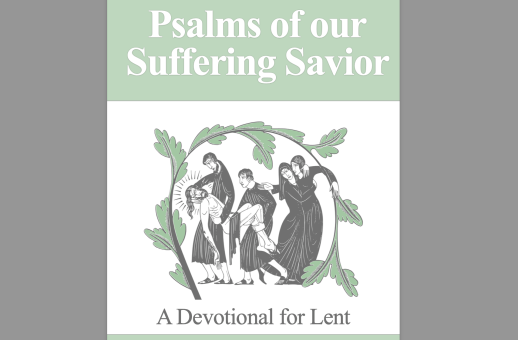
In preparation for Easter, I put together a devotional book. If you don’t have something to go through, I encourage you to check it out.
Here’s the link to the free e-book, I hope you find it helpful: Psalms of Our Suffering Savior
Biography As A Form of Discipleship: Edwards, Spurgeon, & Lloyd-Jones (pt. 2)

Different Levels of Gifting, Same Stewardship
Lloyd-Jones had a profound memory, “it was as if he was unraveling an endless ball of wool.”[1] Edwards had a keen intellect being the foremost of American thinkers. Spurgeon was “the Prince of Preachers.” As we can see by these small examples, these men were especially gifted by God but they were not merely gifted, they were also faithful with the gifts God entrusted to them. We will all be held accountable for what God has entrusted to us but praise God I am not held accountable for the intellect of Edwards. That, however, in no way clears me from being faithful. These men were not merely amazingly gifted but amazingly faithful. We may not be able to preach like Spurgeon but we can seek by God’s empowering to be faithful like him.
We are all stewards entrusted with different amounts, some 30, 60, and a 100 fold, but we must all be faithful (Matt. 13:8; 25:14-30; Luke 12:35-48; 1 Peter 4:10). I have not been entrusted with the same stewardship as the men of whom we are seeking to emulate, and it is highly unlikely that you have either. However, these men were not merely gifted, they were all entirely dedicated to the Lord (we will turn to this in more detail shortly). Michael Jordan, arguably the best basketball player of all time, still worked hard. What made him so great was that he was not just talented but also tough in his discipline. The men we are looking at were gifted, there is no doubt, but they were also incredibly faithful. So the first thing we see to emulate from them is their faithfulness.
They were Consumed with God’s Glory
All three of these men here were greatly concerned for the glory of God, even if this desire came to fruition differently in the lives of each man. They did not all, like Edwards, write The End for Which God Created the World, but they all would have agreed with what he wrote and desired, like him, to glorify God with their utmost ability.
It is said that though “Edwards was intellectually brilliant and theologically commanding, his true greatness lay in his indefatigable zeal for the glory of God.”[2] Likewise, “The chief element of Spurgeon’s entire career” was not his preaching, or anything else; it “was his walk with God.”[3] This was also central to Lloyd-Jones: “A God-centered theology was not an addition to his personal life, it was central to it… His jealousy for God’s glory… flowed from his knowing something of being in the presence of God.”[4] In fact, Lloyd-Jones’ concerned for God’s glory, told Iian H. Murray, his biographer, that the biography should be done “for God’s glory only.”[5]
We should, like these men, seek in whatever we do to glorify God. We must, however, remember that we are all gifted differently and thus the route we take may be different than that of these three men. We are all called to different things, but we are all called to seek to glorify God in whatever we do.
They had an All-Encompassing Commitment to Christ[6]
This section is one of the most significant sections. We must remember, however, that these men’s complete commitment to God was not something they mustered up on their own. God gave even that to them. He showed Himself glorious to them, more glorious than anything else, and their complete devotion followed.[7] These men invested all, their time and talent, indeed, their heart, soul mind, and strength because they had been granted eyes to see that God and His glory were worth it.
Their all-encompassing commitment to Christ flowed out of their understanding of the glory of Christ. Not only did these men see that God was glorious and thus worthy for themselves to entirely comment to but also that He was Lord of all. They understood the language in the New Testament that says that Jesus is our Master/Lord and we are slaves, which clearly implies that we do whatever He says, whenever He says it.[8]
Benjamin B. Warfield said that Edwards committed himself without reserve to God. His whole spirit panted to be in all its movement subjected to God’s government.[9] Edwards explained his reasoning for his total commitment. He said,
If God be truly loved, he is loved as God; and to love him as God, is to love him as the supreme good. But he that loves God as the supreme good, is ready to make all other good give place to that; or, which is the same thing, he is willing to suffer all for the sake of this good.[10]
Edwards was entirely committed to God because He is “the supreme good.”
Spurgeon commenting on first Kings 18:21 said, “If God be God, serve him, and do it thoroughly; but if the world be God, serve it, and make no profession of religion.” Later he goes on to tell us, “Either keep up your profession, or give it up… Let your conduct be consistent with your opinions.”[11] What Spurgeon was saying is, if the Bible and the gospel are true we must live as though they are. We must live in line with what we believe. As the scriptures say, “The LORD is God; there is no other… therefore be wholly true to the LORD our God, walking in His statutes and keeping His Commandments” (1 Kings 8:60-61).
Spurgeon lived out what he said. People told Spurgeon that he would break down his constitution by preaching ten times a week among all his other labors. But Spurgeon’s desire, like Paul’s, was to spend and be spent. Spurgeon could say, “If I had fifty constitutions I would rejoice to break them down in the service of the Lord Jesus Christ.”[12]
Spurgeon gave his money, time, and self completely to the Lord. God used Spurgeon greatly. He wrote over 140 books, penned around 500 letters a week, spoke to thousands of people each week, started an orphanage, started a pastor’s college, and led countless people to Christ among other things. That was all possible because he gave himself entirely to the Lord. One of Spurgeon’s biographers, Arnold Dallimore said, “Early in life he had lost all consideration of his own self, and his prayer that he might be hidden behind the cross, that Christ alone might be seen, had expressed his heart’s chief purpose.”[13] Dallimore also said, “Spurgeon was characterized by an earnestness that almost defies description.”[14]
Lloyd-Jones, too, saw that “our supreme duty is to submit ourselves unreservedly to Him.”[15] In fact, “Essential Puritanism,” Lloyd-Jones argued, “put its emphasis upon a life of spiritual, personal religion, an intense realization of the presence of God, a devotion of the entire being to Him.”[16] You can see that Lloyd-Jones did exactly that all over the place in his life, he gave himself to God and the work that He had for him. “When God calls us,” Lloyd-Jones said, “He is to be obeyed in spite of all natural feelings.”[17] Lloyd-Jones not only said this but practiced it himself because he was entirely commented to Christ.
God is looking for individuals in this generation who will rise above the status quo of contemporary Christianity and say with Lloyd-Jones, Spurgeon, and Edwards, “‘I am completely Yours.’”[18] We must resolve, as Edwards did, to be the jar of clay through which God will display his surpassing power. We must seek for pleasure in God above all things. We must seek to be so heavenly-minded that we can be of some earthly good. We must do all this with all the power that God so mightily works in us by His grace. “If one is to impact this world for Jesus Christ, he must live as Edwards did, with extraordinary purpose and firm determination.”[19]
Notes
[1] Murray, The Fight of Faith, 376 see also 406n1, 453, 759.
[2] Steven J. Lawson, The Unwavering Resolve of Jonathan Edwards (Lake Mary, Florida: Reformation Trust Publishing, 2008), 4.
[3] Arnold Dallimore, Spurgeon: A New Biography, (Carlisle, PA: The Banner of Truth Trust, 1999), 177.
[4] Murray, The Fight of Faith, 764-65.
[5] Ibid., 729 see also xxiv.
[6] See Deut. 6:5; 1 Kings 8:61; Matt. 8:22; 22:37-38; Mark 12:30 (heart, soul, mind and strength, i.e. total devotion); Luke 10:27; 14:25-33; 16:13; Rom. 14:7-8; 1 Cor. 7:35 (Paul wants to secure an “undivided devotion to the Lord”); 10:31; 2 Cor. 5:9; 14-15; Phil. 3:7-8; Col. 3:17, 23, and 1 John 2:3-6 for some examples of the all-inclusive nature of the call of Christ. Also in Romans 12:1, we are told to present our bodies as a living sacrifice because that is our reasonable (logical) worship. Thomas R. Schreiner says, “Paul used the term with the meaning ‘rational’ or ‘reasonable,’ as was common in the Greek language. His purpose in doing so was to emphasize that yielding one’s whole self to God is eminently reasonable. Since God has been so merciful, failure to dedicate one’s life to him is the height of folly and irrationality” (Thomas R. Schreiner, Romans [Grand Rapids: Baker Academic, 1998], 645 [italics mine].). In addition, Schreiner points out that “the word ‘bodies’ here refers to the whole person and stresses that consecration to God involves the whole person… Genuine commitment to God embraces every area of life” (Ibid., 644. Italics mine). Christianity is all-encompassing.
[7] God often shows His glory to us before He calls us to comment to Him in unreserved obedience. Note, for example, in the Decalogue. God gives the commands but first He adds a relational and redemptive element, namely, “I am the LORD your God [relational], who brought you out of the land of Egypt, out of the house of slavery [redemptive]” (Deut. 5:6). This same thing is seen throughout Scripture, both OT and NT.
[8] “Edwards would say that actions do reveal something about a man’s will and heart. Professing Christ implies being subject to him in practice, it entails the promise of universal obedience to him” (Iain H. Murray, Jonathon Edwards: A New Biography, (Carlisle, PA: The Banner of Truth Trust, 2008), 336). Edwards understood that “none profess to be on Christ’s side, but they who profess to renounce his rivals” (Idem, Jonathon Edwards: A New Biography, 337). Lloyd-Jones clearly saw that one cannot “receive Christ as Saviour without receiving Him as Lord” (Idem, The Fight of Faith, 470).
[9] Murray, Edwards, 98.
[10] Jonathon Edwards, Charity and its Fruits, (Carlisle, Pennsylvania: The Banner of Truth Trust, 2005), 257.
[11] C. H. Spurgeon, sermon “Elijah’s Appeal to the Undecided” from 1 Kings 18:21 (italics mine).
[12] Dallimore, Spurgeon: A New Biography, 132.
[13] Ibid., 239.
[14] Ibid., 76.
[15] Murray, The Fight of Faith, 181 (italics mine).
[16] Ibid., 460n1 (italics mine).
[17] Ibid., 588.
[18] Lawson, The Unwavering Resolve of Jonathan Edwards, 60.
[19] Ibid.
Biography As A Form of Discipleship: Edwards, Spurgeon, & Lloyd-Jones (pt. 1)
Introduction
We have clear scriptural warrant for emulation. We see this through Jesus’ earthly ministry; He made disciples and in the Great Commission, He instructed us to make disciples (Matt. 28:19). We see this precedence all throughout the New Testament. We will examine a few examples to establish the usefulness and biblical grounds for Christian biography.
The writer of Hebrews instructs us to be “imitators of those who through faith and patience inherit the promises” (Heb. 6:12). He also encourages us with the thought of all the saints that have gone before us. He says, “Let us also lay aside every weight, and sin which clings so closely, and let us run with endurance the race set before us” (12:1). Of course, he wisely reminds us that our supreme example is Jesus (12:2). Again, he says, “Remember your leaders, those who spoke to you the word of God. Consider the outcome of their way of life, and imitate their faith” (13:7). I think here, we can deduce that many times it is a good principle to wait to imitate leaders until we have considered “the outcome of their way of life.” This also shows us that we should not imitate them wholesale but evaluate them. We can emulate good Christian leaders, and that is fine, but we must always remember that only “Jesus Christ is the same yesterday and today and forever” (13:8).
Paul tells us to “honor such men” (Phil. 2:29)[1] who are faithful in service to the Lord. Paul even urged people to imitate himself (1 Cor. 4:16), but only as much as he imitated Christ (1 Cor. 11:1).[2] I wonder if one reason for this is proximity. It is one thing to ask, “What would Jesus do,” it is another thing to see someone who by our evaluation tends to do things that Jesus would have done had He faced similar circumstances. It is easier to understand what love is when it has flesh on. Paul continues to say imitate me, but not just me, but also those who follow my example (Phil. 3:17). Thus, in as much as Jonathan Edwards, Charles Spurgeon, and Lloyd-Jones follow Paul as he followed Christ we should seek to learn from biography’s and emulate them.[3]
It is helpful for most human beings to see something demonstrated before they attempt to do it themselves; it is just how we tend to learn. This is also what we see when it comes to spiritual matters. We need someone to imitate because we are naturally imitators, but not just anyone. Imitators (mimetes) simply means ones who follow. We see this in some of its related words: a “mime” is someone who acts out an imitation of another person or animal. And a “mimeograph” is a machine that makes copies from a template. Thus, we see the template/person we chose to copy/imitate is vital because if we do our job well we will be a lot like them.
The New Testament shows us the importance of discipleship and there is even a sense in which those who have died can still teach us.[4] Look for example at the impact that Jonathon Edwards has had on John Piper or the impact of both Edwards and Spurgeon on Lloyd-Jones.[5]
Then look at the impact that Piper has had on many others. It reminds me of Paul’s exhortation to Timothy (2 Tim 2:1-2). Obviously, Paul is an apostle and Edwards is not, but the principle still applies. We in the 21st century have an unprecedented opportunity to entrust good teaching to faithful men who will teach others also. Biographies are a good source to use when discipling men. It is helpful for us to see men who though they are dead, still speak by the life of faith they lived. However, we must remember to evaluate them in light of Christ and see where they succeeded in following Him and where they failed.[6] We must learn from both the good and the bad. To this, we will turn momentarily but first, we will look at the unique way that God gifts certain people differently yet expects everyone, though not equally gifted, to be equally faithful.
Notes
[1] In this verse, in the Greek, we see the present imperative so Paul is commanding them to continually honor faithful men, in this case, Epaphroditus.
[2] In both these verses from First Corinthians, we see the present imperative tells us to habitually follow the command. It is to be our long-term commitment, our lifestyle, to imitate Paul as he imitates Christ.
[3] We could look at many other texts here to establish the legitimacy, indeed, the blessing of biographies however; we do not have the space for that here. Here are some further texts to look at Phil. 4:8-9; 1 Thess, 1:6, 7; 2 Thess. 3:9.
[4] The Hebrew writer reminds us that we can learn even from Abel though he has long since been dead. Even Abel “through his faith, though he died, he still speaks” (Heb. 12:4) Even though we do not know very much about him we can still learn from what he “speaks” with his demonstration of faith.
[5] Iian H. Murray, D. M. Lloyd-Jones: The Fight of Faith, (Carlisle, PA: The Banner of Truth Trust, 2009), 421 see also idem, D. M. Lloyd-Jones: The First Forty Years, (Carlisle, PA: The Banner of Truth Trust, 2008), 196n1.
[6] As J. C. Ryle has said, “The best of men are only men at their very best. Patriarchs, prophets, and apostles,—martyrs, fathers, reformers, puritans,—all, all are sinners, who need a Saviour: holy, useful, honourable in their place,—but sinners after all” (Murray, D. M. Lloyd-Jones: The Fight of Faith, 752).
Photo by Aaron Burden
4 Benefits of a Book Club

I recently became part of a book club. It has already been beneficial. I also asked my sister, a long-time “book cluber,” for her perspective. She, in turn, phoned her book club friends and they shared their thoughts too. Below are the 4 benefits of a book club that especially stuck out.
Accountability & Encouragement
Reading is important. There is much to gain from reading but we have to read to get those gains. And what we get from reading is not tangible. We can see a book but it’s difficult to see the impact a book has. Reading also takes concentrated effort. Reading is difficult in our age of distraction, especially if we’re out of practice.
With anything difficult, positive peer pressure is helpful. Atomic Habits, one of our book club books, says this:
One of the most effective things you can do to build better habits is to join a culture where your desired behavior is the normal behavior. New habits seem achievable when you see others doing them every day… Your culture sets your expectation for what is “normal.” Surround yourself with people who have the habits you want to have yourself. You’ll rise together.1
Discovery & Expansion
There are some books I would never choose to read. I used to only read nonfiction books but now I read about every genre. In fact, and I feel embarrassed to admit this now, there was a time when I didn’t want to read the Harry Potter book series. I told people that when I’m sitting in a nursing home then I’ll start them.2 Thankfully my son convinced me. I have the last book to finish but it’s been really good.
C.S. Lewis talks about the importance of reading old books “because they are unlikely to go wrong in the same direction.” Reading widely gives us a perspective we would not otherwise have. Reading can also help us “walk in someone else’s shoes.” Thus, reading widely can help us obtain wisdom and empathy. Getting out of our reading “comfort zone” might just help us see something we would otherwise be blind to. Of course, we must always be discerning readers.
Diverse Perspective
To misappropriate “A Whole New World” from Aladdin:
Books show you the world
shining, shimmering, splendid
books can open your eyes
take you wonder by wonder
over, sideways, and under
on a magic book ride
a whole new world
a new fantastic point of view
Or as Peter Kreeft has said, “There’s a real place you can go where you can really find magic. You can get into other worlds there… Like getting into Narnia through the wardrobe. There are thousands of other worlds there, and holes to get into each one… It’s called a library.”3
A book club is like a magic boost. One of the great things about book club is you not only read books that you otherwise might not read but you have conversations with people and perspectives that you otherwise wouldn’t have. When echo chambers are in vogue, it’s important to seek out real conversation and even, perish the thought, disagreement. If we are to learn to be patient with people with different perspectives, it’s helpful to sit across from those people, to hear them and not just soundbites.
Seeking out diversity in book clubs, both in books read and people reading, is important because “even as we live with increasing diversity, it’s easier than ever to restrict our contact, both online and off, to people who resemble us in appearance, views, and interests. That makes it easy to dismiss people for their beliefs or affiliations when we don’t know them as human beings. The result is a spiral of disconnection that’s contributing to the unraveling of civil society today.”4
Social Connection
Social connection is vital. In fact, in Vivek H. Murthy’s book, Together, he says, “People with strong social relationships are 50 percent less likely to die prematurely than people with weak social relationships… weak social connections can be a significant danger to our health.”5 So not trying to oversell this, but being part of a book club can help you live longer!
One mother said one of the benefits of book club is “guaranteed grown-up conversation once a month.” In my observation, “grown-up conversation” is sadly lacking in many people’s lives. We might talk with people a little or a lot, but is our talk deep and meaningful? A book club can help people have not only relationships but also meaningful relationships through the important themes discussed in the books that are read. Many books, as one respondent said, “show us the depths and height of the human heart.” A book club also allows deep and meaningful conversations for introverts and extroverts without it being too awkward.
If you’re not part of a book club, you should join one. You will reap a bunch of benefits. You might even live longer.
- James Clear, Atomic Habits, p. 117. ↩︎
- I now say this about the Wheel of Time series. Although, I have enjoyed a Wheel of Time graphic novel as well as the Wheel of Time TV show. Most of my nine siblings get angry at me for talking about their cherished book series in this way. ↩︎
- Peter Kreeft, Making Sense of Suffering. ↩︎
- Vivek H. Murthy, Together: The Healing Power of Human Connection in a Sometimes Lonely World, p. 134. ↩︎
- Vivek H. Murthy, Together: The Healing Power of Human Connection in a Sometimes Lonely World, p.13. ↩︎
My Ten Favorite Books I read in 2021

Here are my ten favorite books that I read in 2021:
C.S. Lewis, The Four Loves
It was my second time reading it but enjoyed it more this time.
Carl R. Trueman, The Rise and Triumph of the Modern Self
I found Trueman’s account very helpful and accessible. I appreciated the sweeping nature of the book, taking into account court cases, philosophers, pornography, and entertainment. Not exhaustive but a fair and I believe accurate overview. Overall, The Rise and Triumph of the Modern Self was definitely one of the best books I read all year.
J.P. Moreland, Scientism and Secularism
Moreland gave a helpful and accessible explanation of the problems with scientism.
John Steinbeck, The Grapes of Wrath
The Grapes of Wrath transports you back to the sad and seemingly hopeless story of a family of “Okies” during the Dust Bowl. It paints a picture of what life was like for a lot of people and thereby cultivates empathy and understanding of other people and their varied journeys.
Paul David Tripp, Lead
Tripp is one of my all time favorite authors and now he has written one of my favorite books on leadership. I have a bunch of highlights in this book, perhaps more than any other book I read this year. Tripp offers a lot of timely wisdom for leaders in Christian ministry.
Randy Newman, Questioning Evangelism
Perhaps the only thing I think is a little unhelpful about this book is its title. When you read the title you might think the book is calling evangelism into question. That, however, is not the purpose of the book. The book is about the important place that questions play in evangelism. I found the book quite helpful.
Richard Bauckham, The Theology of the Book of Revelation
I read a few books on the book of Revelation this past year and this one sticks out to me as the most helpful. I’m thankful for Richard Bauckham and his scholarship.
Sam Alberry, Why does Gos care who I sleep with?
Alberry wrote a very relevant and helpful book. I hope this book is read widely. I think a lot of people will be helped by it.
Timothy Z. Witmer, The Shepherd Leader
I recently transitioned to Care Pastor at my church and found this book very helpful in looking at what the Bible says on pastoral care.
Vivek H. Murthy, Together
I read the lion’s share of this book in 2020 but only recently finished it. It is a timely and well written book on the importance of relationships.
I try to track my reading on Goodreads. If you want to “be friends” on Goodreads you can do so here.
The 10 Most Popular Posts of 2020

Here are the ten most popular posts of 2020.
What if Satan wants to destroy the Church more than the country?

In the book of Revelation the Church is not called to react to the End or the antichrist by moralistic, militaristic, or political means. The Church is called to return to Messiah Jesus, remembering that those who continue faithful to the End will receive the “crown of life.” The way of resistance of evil, is the way of Christ. That is, loving Christ Jesus, and loving others. Taking up our crosses and following Jesus and loving others, even when it hurts, is a sure sign that we don’t and won’t have the “mark of the beast.”… Read More.
Statistics and Comfort in Calamity

Some sources are saying that the mortality rate of COVID-19 looks to be 2%. However, it is too early to say. The percentage will be bigger or smaller depending on various factors (such as the age of the people infected, access to the needed medical treatment, etc.). I think we should acknowledge a few things about the statistic. First, 2% looks like a small number. And it is. At least, relative to a larger number… Read More.
Why do Black Lives & LGBTQ+ Lives Matter?

Why do black lives and LGBTQ+ lives matter? This is an important question because some people have views that don’t support the idea of lives mattering. For example, Charles Darwin, the most famous proponent of evolution titled his book, On the Origin of Species by Means of Natural Selection, or the Preservation of Favored Races in the Struggle of Life. And in his book, The Decent of Man, he says, “The Western nations of Europe… now so immeasurably surpass their former savage progenitors… Read More.
We Harvest what we Plant

“If you sow to the flesh you will reap from the flesh, reap corruption. But if you sow to the Spirit you will reap from the Spirit, reap eternal life” (Gal. 6:8). Sowing and reaping are not things most of us are really familiar with, let alone sewing and weeping. So, what does it mean to sow? To sow means to plant seeds. What does it mean to reap? To reap means to gather, to harvest what was planted… Read More.
Unrest and Our Rest

I have friends that are cops. I have friends that are black. I have friends that think COVID-19 is a hoax and friends that I couldn’t coax out of their house if I tried.
Friends, we are in a time of unrest; economic, social, political, and physical. I’m not trying to be dour or dark. I believe that is an accurate articulation of our current time. And yet people are pining for peace and rest. Where is this peace and rest to be found?… Read More.
The Ten Best Books I Read in 2020
Check out the top ten books I read in 2020 here.
Sometimes life gives you a gift that you want to lose but you have to use.

Do you view singleness as a gift? Sometimes we receive gifts that we don’t want to use, don’t know how to use, or don’t even want to possess. I am afraid many of us feel this way about singleness. We don’t know what to do with it, we don’t know why we’re stuck with it, and we just want to get rid of it.
The Apostle Paul saw singleness as a gift… Read More.
Living as Canceled Christians
 It happened to the elect exiles to whom Peter wrote. Our voice can vanish too. We are not immune. We can be canceled.
But are we ready? Can we stand in the storm or will our house be blown to smithereens? Will it crumble on the sand that it is laid or is its foundation deep and solid? Will our life vanish and wither? Where is our source of life?… Read More.
A few helpful resources before you vote…
 I highly suggest that you check out Jonathan Leeman’s article: “What Makes a Vote Moral or Immoral? The Ethics of Voting.” And I found Justin Taylor’s article “The Case Against Pro-Lifers Voting for Joe Biden” helpful too. Taylor quotes John Piper: “No endorsement of any single issue qualifies a person to hold public office. Being pro-life does not make a person a good governor, mayor, or president. But there are numerous single issues that disqualify a person from public office.”… Read More.
Why did Jesus flip over tables?
 “And He entered the temple and began to drive out those who sold and those who bought in the temple, and he overturned the tables of the money-changers and the seats of those who sold pigeons. And He would not allow anyone to carry anything through the temple” (Mark 11:15-16).
Why did Jesus drive out those who sold and bought in the temple? Why did He flip over tables? That seems pretty extreme. Why was He so worked up?… Read More.
How to Evaluate Christian Leaders?

Recently, I’ve seen a lot of Christian leaders be criticized or criticize, and even call other Christian leaders names because of disagreement on such things as politics, the pandemic, and policies regarding justice. And not surprisingly, those who are not leaders are also jumping into the fray and lobbing grenades too.
How many people actually think through the appropriate way to evaluate Christian leaders?… Read More
*Photo by Aaron Burden
The Ten Best Books I Read in 2020
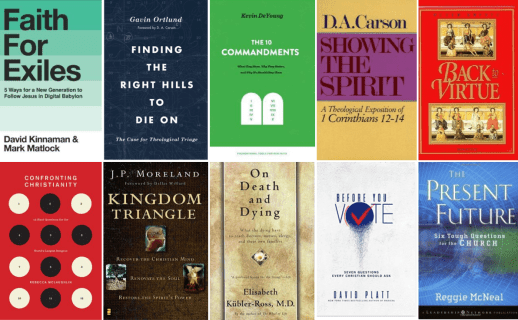
Here are my ten favorite books that I read in 2020 (they’re listed in alphabetical order by the author’s last name):
- D.A. Carson, Showing the Spirit: A Theological Exposition of 1 Corinthians 12–14
- Kevin DeYoung, The Ten Commandments: What They Mean, Why They Matter, and Why We Should Obey Them
- David Kinnaman, Faith for Exiles: Five Ways to Help Young Christians Be Resilient, Follow Jesus, and Live Differently in Digital Babylon
- Peter Kreeft, Back to Virtue: Traditional Moral Wisdom for Modern Moral Confusion
- Elisabeth Kübler-Ross, On Death and Dying
- Rebecca McLaughlin, Confronting Christianity: 12 Hard Questions for the World’s Largest Religion
- Reggie McNeal, The Present Future: Six Tough Questions for the Church
- J.P. Moreland, Kingdom Triangle: Recover the Christian Mind, Renovate the Soul, Restore the Spirit’s Power
- Gavin Ortlund, Finding the Right Hills to Die on: The Case for Theological Triage
- David Platt, Before You Vote: Seven Questions Every Christian Should Ask
And five runner-ups:
- Andy Crouch, Playing God: Redeeming the Gift of Power
- Albert Mohler Jr., The Gathering Storm: Secularism, Culture, and the Church
- Tony Reinke, Competing Spectacles: Treasuring Christ in the Media Age
- Deepak Reju, On Guard: Preventing and Responding to Child Abuse at Church
- Mark Dark Vroegop, Clouds, Deep Mercy: Discovering the Grace of Lament
Here are my favorite books from last year.
10 Ways to Read More Books in 2021

I read 70+ books in 2020.[1] Below I’ll tell you how.
“If you ain’t cheating, you ain’t trying.” I don’t think you should cheat. Cheating is wrong. But you should, however, make the most of every advantage you have as best as you can.
That’s what I seek to do with reading. I take advantage of everything I can.
I read all sorts of books for all sorts of reasons. Depending on the reason for reading and the type of book, I will read it in a different way. Some people shun audiobooks. But, I personally don’t get that. There are all sorts of reasons for reading and all sorts of ways that people retain things best.
As I said, I think we should wisely take advantage of everything we can as best as we personally can.[2]
Here are nine things I’ve used to my advantage:
1) Time
Time is the most precious commodity there is. Even little bits of gold have value, how much more small slots of time!
You can get a lot read when you make the most of small time slots. Waiting can easily turn into productive reading. I always have a book on hand. And my wife often listens to audiobooks while doing dishes or laundry.
2) Old fashioned books
Always have one with you. You never know when you’ll be able to get a few paragraphs or a few pages read.
3) Kindle app on my phone
It’s always with me. I always have a book I’m reading on Kindle.
4) Hoopla or Libby
Hoopla and Libby are free apps and one of them should be available through your local library. I’ve used them both at different times to listen to tons of books.
5) Audible
Audible is an audiobook service. My wife and I had a membership for a long time. It was great.
6) ChristianAudio
ChristianAudio is an audiobook service that provides Christian audiobooks. You can signup for a free audiobook a month.
7) Speechify
Speechify is an amazing app. It was created by Cliff Weitzman, someone with dyslexia, to help people with dyslexia.
With Speechify you can take a picture of a page in a book and it will convert it to audio. I will sometimes buy a book on Kindle and take a screenshot of each page of the Kindle book and load it on to Speechify. In this way, I can listen to the book.
I can also still make notes. If something sticks out to me that I want to capture I’ll take a screenshot on the Speechify app. Then I’ll search the keywords from the screenshot on the Kindle book and highlight and make any notes I want to make.
Speechify has been a huge blessing to me. I read very slowly but when I use Speechify I can read over 650 words per minute. Speechify probably triples my reading speed but I’m still able to retain what I read and make notes.
8) A community of book lovers
I have multiple friends (including my wife!) that love to talk books and encourage the reading of good books.
9) Goodreads
Goodreads is a social media site for reading. Goodreads allows you to track and review books you’ve read as well as receive recommendations from friends. You can see my Goodreads account here.
10) Pocket (very helpful but not for books)
Pocket is an app that allows you to save articles to your “pocket.” It’s a great way to save and organize articles. But, the thing I enjoy most is that it has a function that allows you to listen to articles.
Quotes from The Christian Faith by Michael Horton

“A mystery is inexhaustible, but a contradiction is nonsense. For example, to say that God is one in essence and three in persons is indeed a mystery, but it is not a contradiction. Believers revel in the paradox of the God who became flesh, but divine and human natures united in one person is not a contradiction. It is not reason that recoils before such miracles as ex nihilo creation, the exodus, or the virginal conception, atoning death, and bodily resurrection of Jesus Christ. Rather, it is the fallen heart of reasoners that refuses to entertain even the possibility of a world in which divine acts occur” (Michael Horton, The Christian Faith, 101).
“Faithful reasoning neither enthrones nor avoids human questioning. Rather, it presupposes a humble submission to the way things actually are, not the way we expect them to be. Faithful reasoning anticipates surprise, because it is genuinely open to reality. If reality is always exactly what we assumed, then the chances are good that we have enclosed ourselves in a safe cocoon of subjective assertions. Unbelief is its own form of fideism, a close-mindedness whose a priori, untested, and unproven commitments have already restricted the horizon of possible interpretations” (Horton, The Christian Faith, 102).
“Ethical imperatives are extrapolated from gospel indicatives. The gospel of free justification liberates us to embrace the very law that once condemned us” (Ibid., 640).
“In the Greek language we must differentiate between the indicative mood, which is declarative (simply describing a certain state of affairs), and the imperative mood, which sets forth commands). For example, in Romans Paul first explains who believers were in Adam and their new status in Christ (justification) and then reasons from this indicative to the imperatives as a logical conclusion: ‘Do not present your members to sin as instruments for unrighteousness, but present yourselves to God as those who have been brought from death to life…’ (Ro 6:13). He concludes with another imperative (command), but this time it is really an indicative: ‘For sin will have no dominion over you, since you are not under law but under grace’ (v.14)” (Ibid., 649).
“Where most people think that the goal of religion is to get people to become something that they are not, the Scriptures call believers to become more and more what they already are in Christ” (Ibid., 652).
“Although we cannot work for our own salvation, we can and must work out that salvation in all areas of our daily practice. When God calls, ‘Adam, where are you?’ the Spirit leads us to answer, ‘In Christ’ (Ibid., 662).
“It is crucial to remind ourselves that in this daily human act of turning, we are always turning not only from sin but toward Christ rather than toward our own experience or piety” (Ibid., 663).
10 Quotes on Preaching

“Expository preaching is the best method for displaying and conveying your conviction that the whole Bible is true… A careful expository sermon makes it easier for the hearers to recognize that the authority rest not in the speaker’s opinions or reasoning but in God, in his revelation through the text itself… Expository preaching enables God to set the agenda for your Christian community… Expository preaching lets the text set the agenda for the preacher as well… Exposition can prevent us from riding our personal hobbyhorses and pet issues… A steady diet of expository sermons also teaches your audience how to read their own Bibles” (Timothy Keller, Preaching, 32-38).[1]
“Expository sermons help us let God set the agenda for our lives…. Secondly, expository preaching treats the Bible as God treated it, respecting particular contexts, history and style of the human authors” (Peter Adams, Speaking God’s Words: A Practical Theology of Preaching, 128).
Read More…“An expository sermon may be defined as a message whose structure and thought are derived from a biblical text, that covers the scope of the text, and that explains the features and context of the text in order to disclose the enduring principle for faithful thinking, living, and worship intended by the Spirit, who inspired the text” (Bryan Chapell, Christ-Centered Preaching, 31).



 in X
in X 